Pine Timber
CN → US| HS Code | Tariff Rate | Origin | Destination | Doc |
|---|---|---|---|---|
| 4407110043 | 35.0% | CN | US | Official Doc |
| 4403210165 | 35.0% | CN | US | Official Doc |
| 4401110000 | 35.0% | CN | US | Official Doc |
Product Images
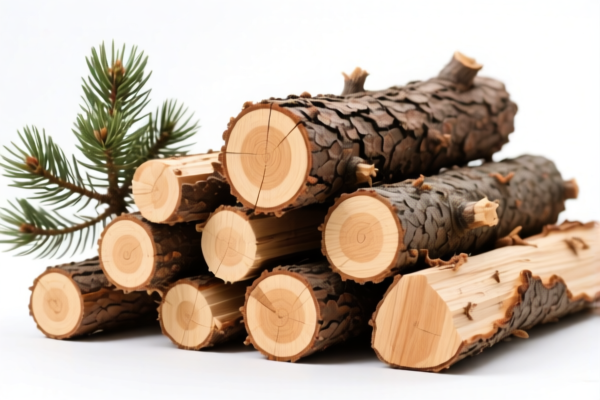
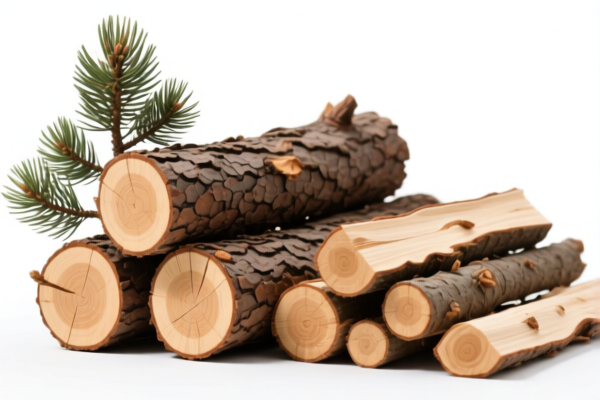
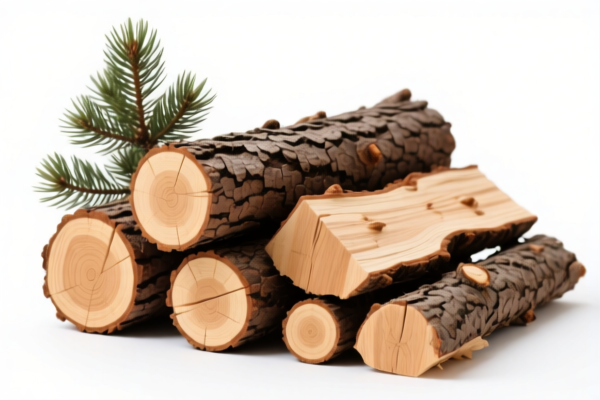
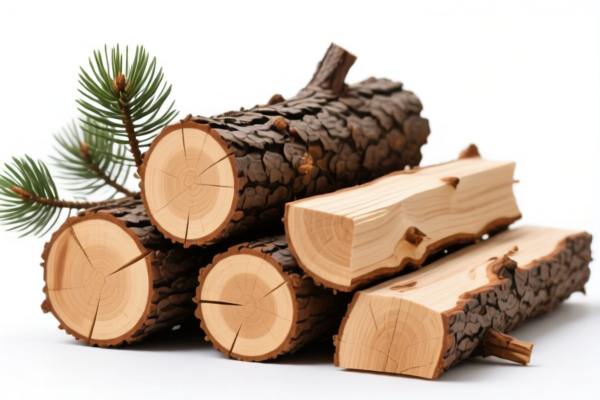
AI Analysis
🌲 Pine Timber (Wood & Wood Products)
🌐 HS Code Reference & Customs Clearance Guide | 2026 Latest Tariff Analysis | Professional Customs Strategy
📌 Part I: Product Definition & Classification: Do You Really Understand "Pine Timber"?
Pine timber, as a representative of coniferous wood (needle-leaved wood), is widely used in construction, furniture making, and fuel applications. In international trade, its classification depends strictly on its physical form and intended use. Since the input "Pine Timber" is generic, the following analysis covers the three most common downstream classifications based on the provided data.
⚠️ Key Distinction Points:
- If it is raw/rough wood intended for further processing (not fuel) →归入 4407.11.00.43 (Sawn Wood) or 4403.21.01.65 (Treated/Other Wood).
- If it is raw/rough wood specifically intended for combustion/fuel → 归入 4401.11.00.00 (Fuel Wood).
- Critical Note: Without specifying "sawn" or "treated," customs may default to the broadest category. However, "Pine" is explicitly matched to coniferous codes.
📦 Part II: HS Code Classification Details (2026 Latest Tariff Authority Comparison)
| HS Code | Product Description | Applicable Scenario | Tax Rate (China Origin → US) |
|---|---|---|---|
4407.11.00.43 |
Pine wood, sawn or chipped longitudinally, of a thickness >6mm | Furniture parts, construction lumber, veneer sheets | 35.0% |
4403.21.01.65 |
Pine wood, otherwise prepared (treated, coated, etc.), non-coniferous fallback logic | Treated beams, preserved timber, industrial wood products | 35.0% |
4401.11.00.00 |
Pine wood, in logs, billets, branches, or chips, for fuel | Firewood, biomass fuel, raw fuel wood | 35.0% |
🔍 Important Reminder:
- All three codes are classified under Coniferous Wood (Needle-leaved).
- Despite different end-uses (lumber vs. fuel), the total tariff rate is identical (35%) due to current trade policies.
- Do not confuse "Pine Timber" with "Softwood Veneer" or "Wood Chips for Pulp" (different HS codes).
💰 Part III: 2026 Latest Tariff Rate Breakdown (Including Additional Taxes)
✅ Applicable Country: United States (US)
✅ Country of Origin: China (CN)
✅ Effective Time: From November 10, 2025 onwards
🎯 1. 4407.11.00.43 —— Pine Wood, Sawn/Chipped (>6mm)
| Item | Details |
|---|---|
| Base Tariff | 0.0% (ad valorem) |
| Section 301 Additional Tariff | +25.0% (Added by USITC) |
| Section 122 Tariff | +10.0% (Specific trade measure) |
| Total Tariff Rate | 35.0% |
| Tax Calculation | CIF Value × 35% |
| De Minimis Exemption Available? | ❌ NO (High-risk category for customs audit) |
| Legal Basis Path | Base: 0% → Sec301: +25% → Sec122: +10% |
📌 Explanation:
- Base Rate: Most wood products have a low or zero base MFN rate.
- Section 301: A 25% surcharge on Chinese wood products is standard under trade remedy laws.
- Section 122: An additional 10% applies to specific timber categories under current enforcement.
- Total 35%: This is a high-cost category. Profit margin calculations must include this full 35%.
🎯 2. 4403.21.01.65 —— Pine Wood, Otherwise Prepared
| Item | Details |
|---|---|
| Base Tariff | 0.0% |
| Section 301 Additional Tariff | +25.0% |
| Section 122 Tariff | +10.0% |
| Total Tariff Rate | 35.0% |
| Tax Calculation | CIF Value × 35% |
| De Minimis Exemption Available? | ❌ NO |
| Legal Basis Path | Base: 0% → Sec301: +25% → Sec122: +10% |
📌 Note:
- This code often applies when wood is treated, painted, or mechanically processed beyond simple sawing.
- If the wood is merely "rough-sawn" but not >6mm thick, it might fall here.
- Same high tariff as sawn wood. No advantage in switching codes for cost saving.
🎯 3. 4401.11.00.00 —— Pine Wood, for Fuel
| Item | Details |
|---|---|
| Base Tariff | 0.0% |
| Section 301 Additional Tariff | +25.0% |
| Section 122 Tariff | +10.0% |
| Total Tariff Rate | 35.0% |
| Tax Calculation | CIF Value × 35% |
| De Minimis Exemption Available? | ❌ NO |
| Legal Basis Path | Base: 0% → Sec301: +25% → Sec122: +10% |
📌 Key Insight:
- Even if classified as fuel wood, the 301 and 122 tariffs still apply.
- Misclassifying "lumber" as "fuel" to avoid tariffs is a common audit trigger and can lead to severe penalties.
- Ensure the End-Use Declaration matches the physical state (e.g., chips/logs vs. boards).
🛠️ Part IV: Customs Clearance Practical Advice (Real-World Pitfall Guide)
✅ 1. Essential Documentation Checklist (Non-negotiable)
| Document | Required? | Explanation |
|---|---|---|
| ✅ Product Specifications | ✔️ | Must state: Species (Pinus sylvestris, etc.), Moisture Content, Dimensions, Treatment Type (e.g., Kiln Dried, Preservative). |
| ✅ Phytosanitary Certificate | ✔️ | Mandatory for all wood. Must be issued by the country of origin. |
| ✅ ISPM 15 Marking | ✔️ | If packaging uses wood pallets/crates, they must bear the heat-treated/chipboard mark. |
| ✅ Commercial Invoice | ✔️ | Must clearly describe the product (e.g., "Sawn Pine Lumber" vs. "Fuel Wood"). Do not use generic terms like "Wood Pieces." |
| ✅ Packing List | ✔️ | Detailed weight/volume breakdown. |
| ✅ Fumigation Certificate | ✔️ | If applicable for pest control. |
✅ 2. Declaration Tips (Key Mantras)
🔥 “Species Clear, Form Exact, Treatments Stated, Tariffs Accurate!”
| Scenario | Correct Declaration | Wrong Action |
|---|---|---|
| Sawn boards for construction | 4407.11.00.43 |
Declare as "Wood Chips" → High Audit Risk |
| Treated beams for outdoor use | 4403.21.01.65 |
Declare as "Untreated" → Phyto Rejection |
| Raw logs for fireplaces | 4401.11.00.00 |
Declare as "Lumber" → Wrong HS Code Penalty |
| Wooden Pallets (Packaging) | Separate Line Item | Mix with Product → Valuation Errors |
✅ 3. Special Cases Handling
| Situation | Handling Advice |
|---|---|
| Mixed Wood Products | If shipment contains Pine + Oak, declare separately. Pine is 4407.11, Oak is 4407.25. Do not mix. |
| Wood with High Moisture | Ensure moisture content is declared. If >20%, it may be rejected as "fresh wood" without proper treatment. |
| Wood from Protected Areas | Verify CITES compliance. While Pine is generally not CITES-listed, ensure no endangered species mixing. |
| Pre-treated Wood | If chemical treatment is used, provide MSDS (Material Safety Data Sheet) for hazardous goods check. |
🌍 Part V: Global Market Comparison (2026 Latest)
| Country/Region | Recommended HS Code | Tariff (China Origin) | Certification Requirements | Remarks |
|---|---|---|---|---|
| 🇺🇸 USA | 4407.11.00.43 / 4401.11.00.00 |
35% (301+122) | Phytosanitary + ISPM 15 | Highest duty burden among major markets. |
| 🇨🇳 China | 4407 or 4403 |
5-10% (Import Duty) | N/A (Import) | Low duty, but high inspection. |
| 🇪🇺 EU | 4407.11 |
0-4% (General) | FLEGT / Timber Regulation | Strict legality proof required. |
| 🇬🇧 UK | 4407.11 |
0-5% | UK Timber Due Diligence | Post-Brexit rules apply. |
| 🇯🇵 Japan | 4407.11 |
3-5% | ISPM 15 + Pest Check | High quality standards for appearance. |
📌 Conclusion:
- The US market is the most expensive for Chinese pine timber due to the 35% combined tariff.
- EU and Japan have stricter phytosanitary and legality checks but lower tariffs.
- Consider supply chain diversification (e.g., sourcing from Russia, Canada, or Southeast Asia) if targeting the US to avoid the 301/122 tariffs.
📌 Part VI: Common Mistakes & Pitfall Guide (Lessons Learned)
❌ Mistake 1: Declaring "Pine Lumber" as "Wood Chips" to reduce inspection intensity
👉 Consequence: Customs seizure, fines, and potential blacklisting for misdeclaration.
✅ Correction: Always match the physical form (sawn vs. chipped) in the description.
❌ Mistake 2: Forgetting the ISPM 15 mark on pallets
👉 Consequence: The entire shipment is quarantined or destroyed.
✅ Correction: Ensure all wooden packaging is heat-treated and marked.
❌ Mistake 3: Misidentifying the HS Code for treated wood
👉 Consequence: If treated with heavy metals, it may be classified as hazardous waste (Waste Wood).
✅ Correction: Provide chemical composition for treated wood.
❌ Mistake 4: Ignoring the Section 122 Tariff
👉 Consequence: Underestimating landed cost by 10%.
✅ Correction: Factor in the 35% total (0% base + 25% Sec301 + 10% Sec122) in pricing.
🎯 Part VII: Conclusion: Professional Declaration, Cost Efficiency!
🎯 Remember the Mantra:
🔹 "Pine is Coniferous, Form Determines Code."
🔹 "US Tariff 35%, Don't Get Caught Without Phyto."
🔹 "ISPM 15 on Pallets, or Say Goodbye to Your Container."
📌 Pro Tip:
If your pine timber is processed into furniture components (not just timber), consider if it fits HS 9403 (Furniture), which may have different tariff structures. However, raw "Pine Timber" is strictly Chapter 44.
📣 Immediate Action:
📞 Contact a licensed customs broker + Provide Phytosanitary Certificate + Verify ISPM 15 Marking
🚀 Ensure smooth customs clearance, avoid delays, and protect your profit margins!
✨ Professional Customs Clearance Starts with Accurate Classification!
💼 Your Every Dollar of Tariff is Worth Calculating Precisely!
Customer Reviews
About HS Code Classification
The Harmonized System (HS) is an internationally standardized nomenclature developed by the World Customs Organization (WCO) to classify traded products. Over 200 countries use the HS system as the basis for customs tariffs, trade statistics, and import/export regulations.
Each HS code follows a hierarchical structure:
- Chapter (2 digits) — Broad category of goods (e.g., Chapter 84: Machinery and Mechanical Appliances)
- Heading (4 digits) — More specific grouping within the chapter
- Subheading (6 digits) — Internationally standardized breakdown, used by all WCO member countries
- National subdivisions (8-10 digits) — Country-specific extensions for further classification, such as US HTSUS 10-digit codes
Correct HS code classification is essential for smooth customs clearance, accurate duty payment, and compliance with trade regulations. Misclassification can lead to customs delays, overpayment of duties, or penalties.
When importing from CN to US, the applicable tariff rates may include:
- Most-Favored-Nation (MFN) rate — The standard duty rate applied to WTO members
- General rate — Applied to countries without trade agreements
- Trade remedy duties — Additional tariffs such as Section 301 (anti-dumping), Section 232 (national security), or countervailing duties
The information provided on this page is for reference purposes only. For official classification, please consult with your local customs authority or a licensed customs broker.