Pine Timber Logs
CN → US| HS Code | Tariff Rate | Origin | Destination | Doc |
|---|---|---|---|---|
| 4403220130 | 35.0% | CN | US | Official Doc |
| 4403210130 | 35.0% | CN | US | Official Doc |
| 4407110043 | 35.0% | CN | US | Official Doc |
| 4401120000 | 35.0% | CN | US | Official Doc |
| 4403950127 | 35.0% | CN | US | Official Doc |
Product Images
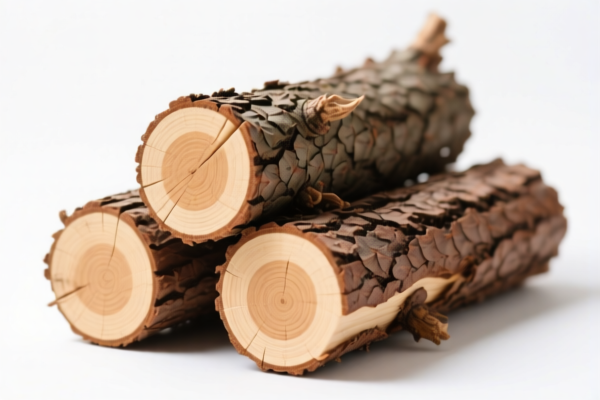
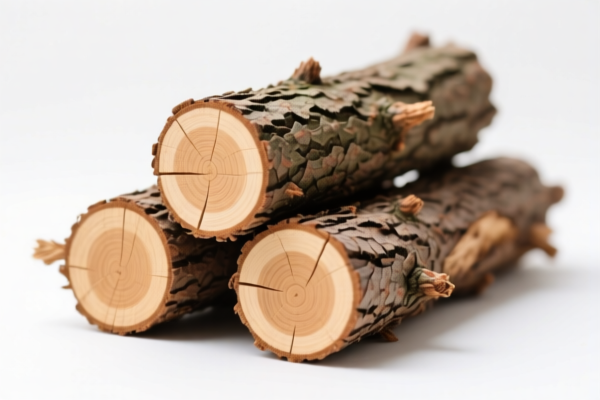
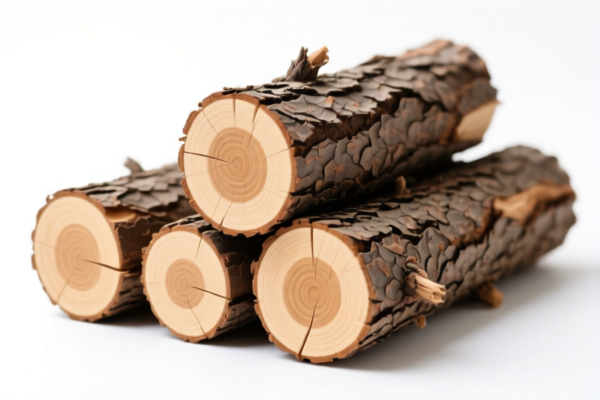

AI Analysis
🌲 Pine Timber Logs (Industrial & Raw Wood)
🌐 HS Code Reference & Customs Clearance Guide | 2026 Latest Tariff Analysis | Professional Clearance Strategy
📌 I. Product Definition: What Exactly Are "Pine Timber Logs"?
Pine Timber Logs represent the raw material stage of coniferous wood, primarily sourced from pine species (Pinus). In international trade, the classification depends heavily on the processing level and intended use. They are generally categorized into two main streams:
- Raw Pine Logs (Unprocessed/Basic Processing): These are logs that have been debarked, delimbed, or roughly squared but retain their natural cylindrical or near-cylindrical shape. They are primarily used for sawing into lumber, veneer, or pulp.
- Fuel Wood (Industrial Raw Material): Logs intended specifically for burning as fuel or industrial raw material, often classified differently if not for sawing/pulp.
⚠️ Critical Distinction:
- If the wood is processed for construction/lumber (debarked/delimited pine) → Classify under 4403 (Wood in the rough, whether or not stripped of bark or sapwood). - If the wood is classified as fuel or generic raw timber without specific pine processing → Classify under 4401 (Fuel wood). - If misidentified (e.g., calling Birch "Pine") → Customs may apply general wood tariffs under 4403.95/96, though the tax rate remains similar in this specific dataset.
📦 II. HS Code Classification Details (2026 Latest Tariff Authority)
Based on the provided data, here are the precise classifications for Pine Timber Logs and related variants:
| HS Code | Product Description | Application Scenario | Key Characteristics |
|---|---|---|---|
4403.22.01.30 |
Industrial Pine Timber (Raw) | Industrial construction, heavy-duty sawing | Matched Pine Timber Logs; Coniferous/Pine classification |
4403.21.01.30 |
Raw Pine Logs | Standard lumber production, veneer peeling | Raw Pine Logs; Coniferous/Pine definition |
4403.95.01.27 |
Bark Logs (Non-Pine) | General wood products, generic raw material | Matched Birch Logs (Similar form); Non-pine but same log shape |
4403.96.01.23 |
Pulp/造纸 Wood Logs | Pulp manufacturing, paper production | Matched Birch Logs; Unprocessed, pulp-grade morphology |
4401.12.00.00 |
Fuel Wood Logs | Industrial heating, energy generation | Matched Log Shape; Inferred as Fuel Wood |
🔍 Key Insight:
-4403.2xcodes are specific to Pine/Coniferous logs used for structural or material purposes. -4403.9xcodes apply to other conifers (like Birch in this context) but share the "log" morphology. -4401.12is for Fuel Wood. If you ship pine logs and declare them as fuel, this code applies.
💰 III. 2026 Latest Tariff Rate Breakdown (Including Surcharges & Policy Add-ons)
✅ Applicable Country: United States (US)
✅ Origin: China (CN)
✅ Effective Date: 2025/2026 Period (Including subsequent imports)
All HS Codes listed below carry the same total tax burden due to current trade policies.
🎯 1. 4403.22.01.30 & 4403.21.01.30 —— Pine Timber Logs (Industrial & Raw)
| Item | Content |
|---|---|
| Base Tariff | 0.0% (ad valorem) |
| Retaliatory Tariff (Section 301) | +25.0% |
| Section 122 Tariff | +10.0% |
| Total Tax Rate | 35.0% |
| Tax Calculation | CIF Value × 35% |
| De Minimis Exemption | ❌ Not Eligible |
| Legal Basis Path | Base Duty → Section 301 Footnote → Section 122 Provision |
📌 Explanation:
- "Base 0%": Pine logs generally have a low or zero base MFN (Most Favored Nation) rate. - "25% Retaliatory Tariff": This is the standard Section 301 tariff on Chinese wood products. - "10% Section 122 Tariff": This is an additional duty under Section 122 of the Trade Expansion Act of 1962, often applied to national security or trade deficit concerns on specific imports. - Total 35%: This is a high barrier. Importers must factor this into landed cost immediately.
🎯 2. 4403.95.01.27 & 4403.96.01.23 —— Birch/Other Logs (Morphological Match)
| Item | Content |
|---|---|
| Base Tariff | 0.0% |
| Retaliatory Tariff | +25.0% |
| Section 122 Tariff | +10.0% |
| Total Tax Rate | 35.0% |
| Tax Calculation | CIF Value × 35% |
| De Minimis Exemption | ❌ Not Eligible |
📌 Note:
- Even if declared as "Birch" (4403.95/96) instead of "Pine," the tax rate remains 35%. - However, misdeclaration is illegal. If you ship Pine but declare Birch, you risk penalties for fraud, not just a tax refund.
🎯 3. 4401.12.00.00 —— Fuel Wood Logs
| Item | Content |
|---|---|
| Base Tariff | 0.0% |
| Retaliatory Tariff | +25.0% |
| Section 122 Tariff | +10.0% |
| Total Tax Rate | 35.0% |
| Tax Calculation | CIF Value × 35% |
| De Minimis Exemption | ❌ Not Eligible |
📌 Note:
- If pine logs are intended for fuel (not lumber/pulp), they fall under4401. - Same 35% tax, but different inspection requirements (Phytosanitary certificates for fuel wood may differ from timber logs).
🛠️ IV. Customs Clearance Practical Advice (Real-World Pitfall Avoidance)
✅ 1. Required Documentation Checklist
| Document | Must Provide? | Description |
|---|---|---|
| ✅ Commercial Invoice | ✔️ | Must clearly state "Pine Timber Logs" or "Industrial Wood." |
| ✅ Packing List | ✔️ | Detail weight, volume, and number of logs. |
| ✅ Phytosanitary Certificate | ✔️ | Critical! Issued by the origin country's customs/agriculture dept. to prove wood is free of pests. |
| ✅ Fumigation Certificate | ✔️ | If required by destination port standards (ISPM 15). |
| ✅ Bill of Lading | ✔️ | Clean on-board bill of lading. |
| ✅ Species Declaration | ✔️ | Explicitly state species (e.g., Pinus sylvestris, Pinus radiata). |
✅ 2. Declaration Strategy (Key Mantra)
🔥 "Species True, Process Clear, Tax 35% Always, Fraud Never!"
| Scenario | Correct Declaration | Incorrect Action |
|---|---|---|
| Pine Logs for Lumber | 4403.22.01.30 or 4403.21.01.30 |
Declaring as "Fuel Wood" (4401) to avoid scrutiny → High Risk |
| Pine Logs for Pulp | 4403.21.01.30 (if small/delimited) |
Declaring as "Birch" → Illegal Misclassification |
| Pine Logs for Fuel | 4401.12.00.00 |
Declaring as "Lumber Timber" → Wrong Duty Purpose |
| Mixed Species | Do Not Mix | Mixing Pine and Birch in one shipment → Customs Audit Trigger |
✅ 3. Special Circumstances Handling
| Situation | Handling Advice |
|---|---|
| Bark Still Attached? | 4403 allows "stripped of bark or sapwood." If bark is present, it’s still 4403, but must be declared accurately. |
| Green (Wet) vs. Dry? | 4403 covers logs regardless of moisture. Dryness affects valuation (CIF), not HS code. |
| Origin: Not China? | If from Canada/USA, Section 301/122 surcharges may NOT apply. Base tariff might be lower. Verify origin certificate! |
| Small Quantity (< $800)? | ❌ No De Minimis! Wood products are often excluded from $800 de minimis exemption due to phytosanitary risks. |
🌍 V. Global Market Comparison (2026 Latest)
| Country/Region | Recommended HS Code | Tariff (China Origin) | Certification | Note |
|---|---|---|---|---|
| 🇺🇸 USA | 4403.21.01.30 / 4403.22.01.30 |
35% (0% + 25% + 10%) | Phytosanitary + Fumigation | Highest barrier due to Section 122/301 |
| 🇨🇳 China | 4403.21.00.00 |
~5-8% | N/A | Importing pine logs for domestic use |
| 🇪🇺 EU | 4403.49.00 |
~0-2% (if no GSP) | EPPO Phytosanitary | Strict EU Wood Regulation (EUTR) |
| 🇯🇵 Japan | 4403.49.00 |
~5% | Phytosanitary | Focus on pest-free status |
📌 Conclusion:
- USA is the most expensive market for Chinese pine logs due to the 35% combined tariff. - EU and Japan focus more on phytosanitary compliance than high tariffs, but enforcement is strict.
📌 VI. Common Errors & Pitfall Guide (Blood & Tears Lessons)
❌ Mistake 1: Declaring "Pine Logs" as "Birch Logs" to avoid specific pine tariffs.
👉 Consequence: Customs inspection reveals species mismatch → Penalties + Seizure. (Note: Tax rate is same 35%, so no gain, only risk!)
❌ Mistake 2: Ignoring the Phytosanitary Certificate.
👉 Consequence: Shipments held at port, fumigated at importer's cost, or returned/destroyed.
❌ Mistake 3: Assuming De Minimis ($800) applies.
👉 Consequence: Small shipments still face full 35% tax + handling fees because wood is excluded from low-value exemptions in many jurisdictions.
❌ Mistake 4: Confusing "Fuel Wood" (4401) with "Timber Logs" (4403).
👉 Consequence: Wrong HS code leads to incorrect inspection protocols. If you ship lumber-grade logs as fuel, customs may reject the declaration for safety reasons.
✅ Correct Practice:
"Pine Timber Logs, De-barked, Unprocessed, Species: Pinus sylvestris, HS 4403.22.01.30, Phytosanitary Cert Attached"
🎯 VII. Conclusion: Professional Declaration Saves Money!
🎯 Remember the Mantra:
🔹 "Pine Logs: 35% Tax (0+25+10)."
🔹 "Phytosanitary is King, Without It, No Entry."
🔹 "Don't Misdeclare Species, The Risk is Not Worth It."
📌 Pro Tip:
- If your pine logs are originating from outside China (e.g., Russia, Canada), verify if Section 301/122 applies. If not, your tax could be 0-5%.
- Apply for an Advance Ruling if your shipment volume is large, to confirm the exact sub-heading with US CBP.
📣 Immediate Action:
📞 Engage a licensed customs broker + Ensure Phytosanitary Certificate + Declare Exact Species
🚀 Let your Pine Logs clear smoothly, avoid delays, and maximize your margin!
✨ Professional Customs Clearance Starts with Accurate Classification!
💼 Every percentage point of tax matters in the wood trade!
Customer Reviews
About HS Code Classification
The Harmonized System (HS) is an internationally standardized nomenclature developed by the World Customs Organization (WCO) to classify traded products. Over 200 countries use the HS system as the basis for customs tariffs, trade statistics, and import/export regulations.
Each HS code follows a hierarchical structure:
- Chapter (2 digits) — Broad category of goods (e.g., Chapter 84: Machinery and Mechanical Appliances)
- Heading (4 digits) — More specific grouping within the chapter
- Subheading (6 digits) — Internationally standardized breakdown, used by all WCO member countries
- National subdivisions (8-10 digits) — Country-specific extensions for further classification, such as US HTSUS 10-digit codes
Correct HS code classification is essential for smooth customs clearance, accurate duty payment, and compliance with trade regulations. Misclassification can lead to customs delays, overpayment of duties, or penalties.
When importing from CN to US, the applicable tariff rates may include:
- Most-Favored-Nation (MFN) rate — The standard duty rate applied to WTO members
- General rate — Applied to countries without trade agreements
- Trade remedy duties — Additional tariffs such as Section 301 (anti-dumping), Section 232 (national security), or countervailing duties
The information provided on this page is for reference purposes only. For official classification, please consult with your local customs authority or a licensed customs broker.