Pine Timber Unstripped or Roughly Squared
CN → US| HS Code | Tariff Rate | Origin | Destination | Doc |
|---|---|---|---|---|
| 4407110044 | 35.0% | CN | US | Official Doc |
| 4407110042 | 35.0% | CN | US | Official Doc |
| 4403210130 | 35.0% | CN | US | Official Doc |
| 4403220120 | 35.0% | CN | US | Official Doc |
| 4403980023 | 35.0% | CN | US | Official Doc |
Product Images
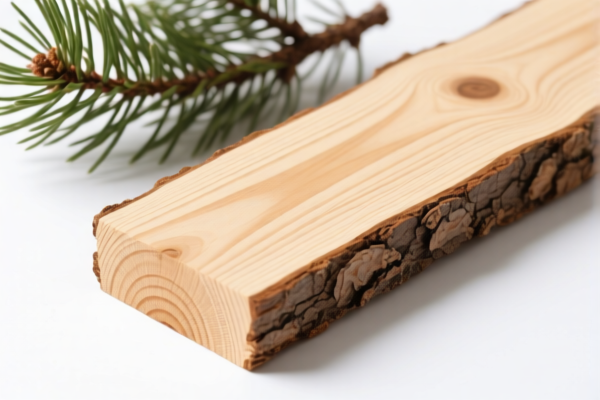
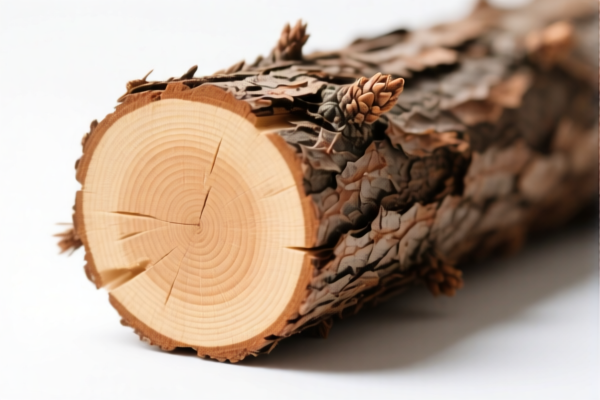
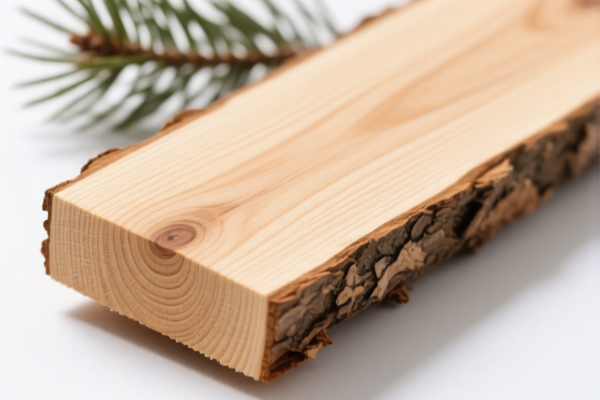
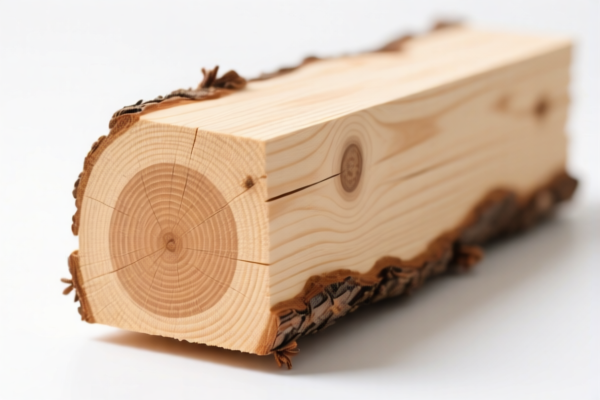
AI Analysis
🌲 Pine Timber: Unstripped or Roughly Squared (Logs & Unprocessed Wood)
🌐 HS Code Reference & Customs Clearance Guide | 2026 Latest Tariff Analysis | Professional Customs Strategy
📌 1. Product Definition & Classification: What is "Pine Timber"?
In international trade, Pine Timber refers to wood derived from pine trees (Genus Pinus). The key distinction in your query lies in the processing state: "Unstripped" (bark still attached) or "Roughly Squared" (edges squared off but not planed/smoothed).
These products fall under Chapter 44: Wood and articles of wood. Specifically, they are classified based on their level of processing: * Logs (Chopped/Unprocessed): Often classified under Heading 4403. * Sawn Wood (Roughly Processed): Often classified under Heading 4407.
⚠️ Key Distinction Point:
- If the wood is in its natural log form (unbarked or roughly squared but not sawn into standard lumber dimensions), it typically falls under 4403.
- If the wood has been sawn longitudinally but remains "unplaned" or "roughly squared" (edges are squared, but faces are rough), it falls under 4407.
- Crucial Note: All items in your provided dataset carry a 35.0% Total Tax Rate due to specific trade restrictions (Section 301 + Section 122/IEEPA).
📦 2. HS Code Classification Details (2026 Latest Tariff Reference)
Based on the provided data, here is the precise mapping for Pine Timber (Unstripped/Roughly Squared):
| HS Code | Product Description | Processing State | Key Characteristic |
|---|---|---|---|
4407.11.00.44 |
Other Pine Timber, Unplaned or Roughly Sawn | Sawn Wood | Material: Pine. Shape: Unplaned or roughly sawn. |
4407.11.00.42 |
Other Pine Timber, Unplaned or Roughly Sawn (Other Category) | Sawn Wood | Material: Pine. Shape: Unplaned or roughly sawn. "Other" sub-category. |
4403.21.01.30 |
Unbarked Pine Logs | Raw Logs | Material: Pine. Shape: Log. Unbarked fits "rough sawn/log" characteristics. |
4403.22.01.20 |
Unbarked Pine Logs | Raw Logs | Material: Pine. Shape: Log. Unbarked fits coniferous log category. |
4403.98.00.23 |
Unbarked Eucalyptus Logs | Raw Logs | Material: Eucalyptus (Not Pine). Shape: Log. Defined as Eucalyptus pulpwood. |
🔍 Critical Alert:
- Items4403.21.01.30and4403.22.01.20are Pine Logs. - Items4407.11.00.44and4407.11.00.42are Pine Sawn Wood (Roughly Squared). - Item4403.98.00.23is Eucalyptus, NOT PINE. Ensure your product is actually Pine before using this code. Misclassification here is a common customs violation.
💰 3. 2026 Latest Tariff Rate Breakdown (Including Surcharges & Policy Add-ons)
✅ Applicable Country: USA (US)
✅ Origin: China (CN) (Implied by the 35% rate structure matching US-China trade war tariffs)
✅ Effective Date: Current Trade Policy Enforced
🎯 1. Pine Timber: Unplaned/Roughly Sawn (4407.11.00.44 / 4407.11.00.42)
| Item | Content |
|---|---|
| Base Tariff | 0.0% (Ad Valorem) |
| Section 301 Surcharge | +25.0% (USITC Footnote) |
| Section 122 / IEEPA Surcharge | +10.0% (Targeted Chinese Products) |
| Total Tariff Rate | 35.0% |
| Tax Calculation | CIF Value × 35% |
| De Minimis Exemption? | ❌ NO (Cannot use Section 321 for de minimis if classified here due to high value/strict controls) |
| Legal Basis Path | USITC:4407.11.00.44 → Section 301: +25% → Section 122/IEEPA: +10% |
📌 Explanation:
- 0% Base: Standard MFN (Most Favored Nation) rate for many wood products is often low or zero.
- 25% Section 301: The primary tariff imposed under the U.S.-China Trade War (List 3/4).
- 10% Section 122/IEEPA: Additional tariff on specific Chinese goods, often overlapping with Section 301.
- Total 35%: This is a high-cost entry barrier. You must factor this into your landed cost calculation.
🎯 2. Pine Logs: Unbarked (4403.21.01.30 / 4403.22.01.20)
| Item | Content |
|---|---|
| Base Tariff | 0.0% |
| Section 301 Surcharge | +25.0% |
| Section 122 / IEEPA Surcharge | +10.0% |
| Total Tariff Rate | 35.0% |
| Tax Calculation | CIF Value × 35% |
| De Minimis Exemption? | ❌ NO |
| Legal Basis Path | USITC:4403.21.01.30 → Section 301: +25% → Section 122/IEEPA: +10% |
📌 Note:
- Logs are raw materials. The 35% rate applies equally to logs and rough-sawn pine.
- Phytosanitary Rules: Logs often require stricter ISPM 15 phytosanitary certification to prevent pest introduction. Ensure you have valid fumigation/heat treatment certificates.
🛠️ 4. Customs Clearance Practical Advice (Pitfall Avoidance Guide)
✅ 1. Required Documentation Checklist
| Document | Mandatory? | Description |
|---|---|---|
| ✅ Commercial Invoice | ✔️ | Must clearly state: "Pine Timber, Unbarked/Roughly Squared", HS Code, Origin. |
| ✅ Packing List | ✔️ | Detail weight, dimensions, number of bundles/logs. |
| ✅ Phytosanitary Certificate | ✔️ | CRITICAL for Logs (4403). Issued by origin country's plant protection agency. |
| ✅ ISPM 15 Marking | ✔️ | For all wood packaging/materials. If timber itself is raw, it still needs treatment proof. |
| ✅ Bill of Lading (B/L) | ✔️ | Must match invoice description. |
| ✅ Fumigation Certificate | ✔️ | If not covered by Phytosanitary Certificate. |
| ✅ Origin Certificate | ✔️ | To prove Chinese origin (since tariffs apply). |
✅ 2. Declaration Tips (Key Mnemonics)
🔥 "Logs need Certs, Sawn needs Specs. Name it right, 35% hits tight!"
| Scenario | Correct Declaration | Wrong Practice |
|---|---|---|
| Raw Logs (Unbarked) | 4403.21.01.30 / 4403.22.01.20 |
Misclassifying as Sawn Wood (4407) to avoid phytosanitary checks → Seizure! |
| Roughly Squared Lumber | 4407.11.00.44 / 4407.11.00.42 |
Calling it "Furniture" or "Finished Wood" → High Penalty! |
| Eucalyptus vs. Pine | Check Species! | Declaring Eucalyptus (4403.98.00.23) as Pine → False Declaration! |
| Packaging | Declare separately if high value | Wood pallets should be ISPM 15 compliant. |
✅ 3. Special Case Handling
| Situation | Handling Advice |
|---|---|
| Mixed Shipment (Logs + Sawn) | Declare separately under 4403 and 4407. Do not mix codes. |
| OEM/Custom Dimensions | Provide detailed drawings. "Roughly Squared" means edges are squared, but faces are rough-sawn. If planed, it becomes 4409 (higher tariff complexity). |
| Pest Inspection Risk | Pine is susceptible to bark beetles. Ensure logs are debarked or treated. If debarked, still declare as "Unbarked" if bark was removed after harvest but before export? No, "Unbarked" means bark is still ON. If bark is removed, it's "Debarked". Clarify with supplier. |
| Value Fluctuation | Tariffs are ad valorem (35%). A 10% increase in CIF value increases tax burden by 3.5% of CIF. Negotiate Incoterms carefully. |
🌍 5. Global Market Comparison (2026 Latest)
| Country/Region | Recommended HS Code | Tariff (China Origin) | Certification | Note |
|---|---|---|---|---|
| 🇺🇸 USA | 4403.21/4407.11 |
35% (25% + 10%) | Phytosanitary + ISPM 15 | Highest Tariff. Heavy enforcement. |
| 🇨🇳 China | 4403.21/4407.11 |
0% - 5% | N/A | No surcharges. |
| 🇪🇺 EU | 4403.21/4407.11 |
0% - 3% | FSC/PEFC (Voluntary) | Low tariffs, strict sustainability rules. |
| 🇨🇦 Canada | 4403.21/4407.11 |
0% | Phytosanitary | CUSMA benefits may apply if Canadian origin. |
| 🇲🇽 Mexico | 4403.21/4407.11 |
0% - 5% | Phytosanitary | USMCA benefits if Mexican origin. |
📌 Conclusion:
- USA is the only market with the 35% punitive tariff.
- Phytosanitary compliance is non-negotiable for Logs (4403).
- Species Verification is critical: Do not mix Pine and Eucalyptus.
📌 6. Common Errors & Pitfall Guide (Lessons Learned)
❌ Error 1: Misclassifying Eucalyptus Logs (4403.98.00.23) as Pine Logs (4403.21...).
👉 Consequence: Customs audit failure, penalties, and potential seizure. Always verify the species.
❌ Error 2: Declaring Unbarked Logs as Debarked Logs without proper certification.
👉 Consequence: Failure to meet phytosanitary requirements → Quarantine rejection.
❌ Error 3: Failing to disclose ISPM 15 status for wooden packaging.
👉 Consequence: Shipment held at port for fumigation or destruction of packaging.
❌ Error 4: Assuming "Roughly Squared" means "Finished."
👉 Consequence: If the wood is planed/sanded, it falls under 4409 (Moulding), not 4407. Misclassification leads to tariff discrepancies.
✅ Correct Practice:
"Pine Timber, Roughly Squared, Unbarked, Heat Treated, HS Code: 4407.11.00.44, Origin: China, CIF Value: $X, Total Tariff: 35%."
🎯 7. Conclusion: Professional Declaration, Cost Control
🎯 Remember the Mantra:
🔹 "Logs need Certs, Sawn needs Specs. 35% Tax is Fixed, Don't Take Risks!"
🔹 "Pine vs. Eucalyptus: Check First. 301 + 122 = 35% Hit!"
📌 Pro Tip:
If your timber is processed further (e.g., planed, glued), the HS Code changes, and the tariff structure may shift (though likely still high).
For Pine Timber, the 35% rate is a fixed cost of entry into the US market from China. Optimize your CIF value and ensure perfect documentation to avoid delays.
📣 Immediate Action:
📞 Contact your customs broker to pre-verify the HS Code based on your exact product specifications.
📄 Request Phytosanitary Certificates from your supplier before shipment.
🚀 Calculate Landed Cost: Add 35% to your CIF value to determine true profit margins.
✨ Professional Clearance Starts with Accurate Classification!
💼 Every percentage point counts in cross-border trade!
Customer Reviews
About HS Code Classification
The Harmonized System (HS) is an internationally standardized nomenclature developed by the World Customs Organization (WCO) to classify traded products. Over 200 countries use the HS system as the basis for customs tariffs, trade statistics, and import/export regulations.
Each HS code follows a hierarchical structure:
- Chapter (2 digits) — Broad category of goods (e.g., Chapter 84: Machinery and Mechanical Appliances)
- Heading (4 digits) — More specific grouping within the chapter
- Subheading (6 digits) — Internationally standardized breakdown, used by all WCO member countries
- National subdivisions (8-10 digits) — Country-specific extensions for further classification, such as US HTSUS 10-digit codes
Correct HS code classification is essential for smooth customs clearance, accurate duty payment, and compliance with trade regulations. Misclassification can lead to customs delays, overpayment of duties, or penalties.
When importing from CN to US, the applicable tariff rates may include:
- Most-Favored-Nation (MFN) rate — The standard duty rate applied to WTO members
- General rate — Applied to countries without trade agreements
- Trade remedy duties — Additional tariffs such as Section 301 (anti-dumping), Section 232 (national security), or countervailing duties
The information provided on this page is for reference purposes only. For official classification, please consult with your local customs authority or a licensed customs broker.