Pine Tree Communication Pole
CN → US| HS Code | Tariff Rate | Origin | Destination | Doc |
|---|---|---|---|---|
| 4421997020 | 35.0% | CN | US | Official Doc |
| 4418300100 | 38.2% | CN | US | Official Doc |
| 4403210112 | 35.0% | CN | US | Official Doc |
| 4403220112 | 35.0% | CN | US | Official Doc |
| 4418999140 | 38.2% | CN | US | Official Doc |
Product Images
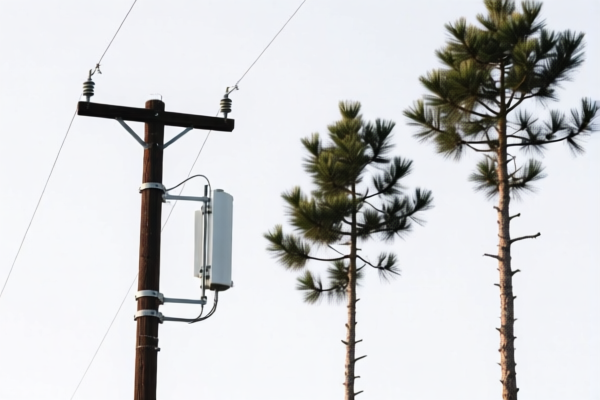
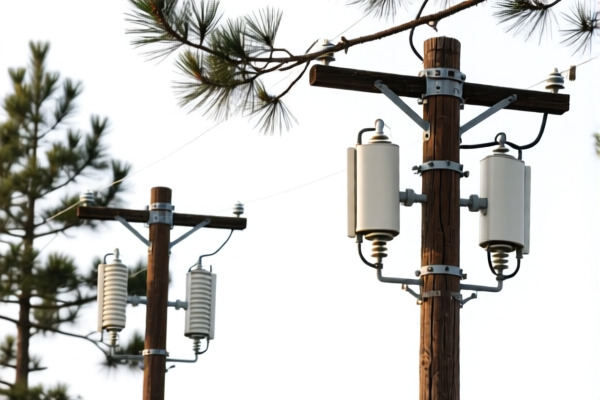
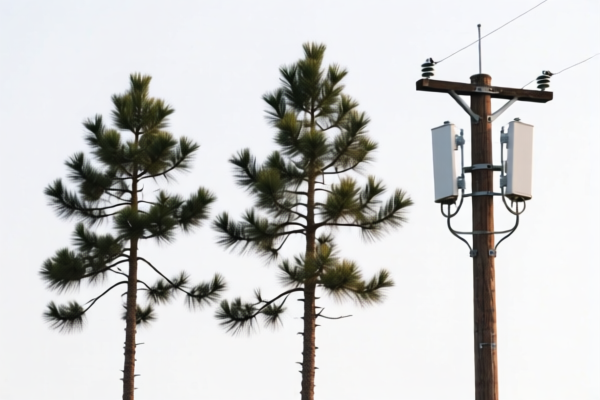
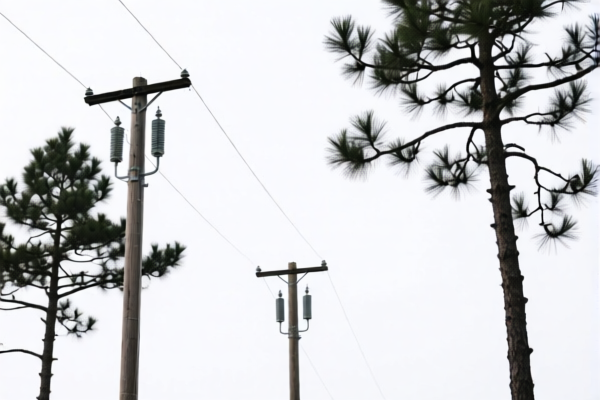
AI Analysis
🌲 Pine Tree Communication Pole (Wooden Utility Pole)
🌐 HS Code Reference & Customs Clearance Guide | 2026 Latest Tariff Analysis | Professional Customs Strategy
📌 I. Product Definition and Classification: Do You Really Understand the "Wooden Communication Pole"?
A Pine Tree Communication Pole (often referred to as a wooden utility or telecommunication pole) is a critical infrastructure component used to support telecommunication lines, power cables, and antennas. In international trade, classification depends heavily on the processing level, shape, and intended use.
The goods fall into two main categories under the Harmonized System (HS): 1. Raw/Partially Processed Timber: Treated pine logs shaped into poles/stumps (Chapter 44, Heading 4403). 2. Constructed Wooden Parts: Pre-fabricated structural elements, fences, or building components (Chapter 44, Heading 4418).
⚠️ Key Distinction Point:
- If the pole is essentially a processed log (straightened, trimmed, possibly treated but not joined to other structures) → It is classified as "Wood in the rough" or "Sawn wood shaped into poles" under 4403.
- If the pole is considered a constructed part of a fence, railing, or building infrastructure (e.g., cut to specific lengths with joints or pre-drilled holes for assembly) → It is classified as "Wooden building parts" under 4418.
📦 II. HS Code Classification Details (2026 Latest Tariff Authority Comparison)
| HS Code | Product Description | Application Scenario | Processing Level |
|---|---|---|---|
4403.21.01.12 |
Pine wood poles, shaped for telecommunication/telephone use | Raw timber processed into poles, no complex joinery | 🌲 Semi-processed Log |
4403.22.01.12 |
Pine wood poles, shaped for telephone, telegraph, or power lines | Similar to above, specific sub-category for line poles | 🌲 Semi-processed Log |
4418.30.01.00 |
Wooden building/infrastructure joinery parts (including poles as structural elements) | Poles treated as "building parts" or infrastructure joinery | 🏗️ Constructed Part |
4418.99.70.20 |
Pine poles, classified as fence posts, railings, or similar columns | Poles used as fence posts,栏杆, or general columns | 🏗️ Constructed Part |
4418.99.91.40 |
Other prefabricated wooden structural components (Catch-all) | Poles not fitting specific sub-categories, generic wooden structures | 🏗️ Constructed Part |
🔍 Key Reminder:
- "4403" Codes apply when the item is viewed primarily as timber products (logs/poles). The tax rate is typically lower on the base tariff (0%) but still subject to additional duties.
- "4418" Codes apply when the item is viewed as a manufactured wooden component (like a piece of furniture or building kit). The base tariff is higher (3.2%), but the structure is similar.
- Both categories are subject to heavy additional tariffs for US imports from China.
💰 III. 2026 Latest Tariff Rate Breakdown (Including Additional Taxes & Policy Surcharges)
✅ Applicable Country: United States (US)
✅ Origin: China (CN)
✅ Effective Date: From November 10, 2025 (including subsequent imports)
🎯 1. Category: Raw/Processed Timber Poles (4403.21.01.12 & 4403.22.01.12)
These codes classify the pine poles as wooden poles/stumps for telecommunication use.
| Item | Content |
|---|---|
| Base Tariff | 0% (ad valorem) |
| USITC Additional Tariff (Section 301) | +25% |
| IEEPA Additional Tariff | +10% (Targeting Chinese/HK products, effective Nov 10, 2025) |
| Total Tax Rate | 35.0% |
| Tax Calculation | CIF Value × 35.0% |
| De Minimis Eligibility | ❌ No (deny_de_minimis) |
| Legal Basis Path | IEEPA:9903.01.25 → USITC:4403.21.01.12 / 4403.22.01.12 |
📌 Explanation:
- Although the base tariff is 0%, the 25% Section 301 duty and 10% IEEPA duty push the total to 35%.
- These codes are preferred if the product is essentially a treated log used directly as a pole.
🎯 2. Category: Wooden Building/Infrastructure Parts (4418.30.01.00, 4418.99.70.20, 4418.99.91.40)
These codes classify the pine poles as constructed wooden parts (e.g., fence posts, railing poles, or building joinery).
| Item | Content |
|---|---|
| Base Tariff | 3.2% (ad valorem) |
| USITC Additional Tariff (Section 301) | +25% |
| IEEPA Additional Tariff | +10% |
| Total Tax Rate | 38.2% |
| Tax Calculation | CIF Value × 38.2% |
| De Minimis Eligibility | ❌ No (deny_de_minimis) |
| Legal Basis Path | IEEPA:9903.01.25 → USITC:4418.xxxxxx |
📌 Explanation:
- The base tariff is 3.2%, which is higher than the 0% for raw poles.
- The 25% + 10% additional duties still apply.
- Total rate is 38.2%.
- Use these codes if the poles are considered prefabricated structural components or fence/building materials.
🛠️ IV. Customs Clearance Practical Advice (Real-World Pitfall Avoidance Guide)
✅ 1. Required Documentation Checklist (None Can Be Missing)
| Document | Mandatory? | Explanation |
|---|---|---|
| ✅ Product Specification Sheet | ✔️ | Must include dimensions, treatment type (e.g., creosote, copper azole), length, and diameter. |
| ✅ Material Certificate | ✔️ | Proof of pine wood origin and treatment process. |
| ✅ Product Photos (Labeled) | ✔️ | Clear photos showing the pole’s shape, ends, and any pre-drilled holes or joints. |
| ✅ Commercial Invoice | ✔️ | Must clearly state "Pine Wood Communication Pole" or "Wooden Utility Pole." Avoid vague terms like "Wooden Stick." |
| ✅ Packing List | ✔️ | Detail quantity, weight, and package dimensions. |
| ✅ Import License | ✔️ | Verify if any special permits are needed for treated wood imports. |
| ✅ Phytosanitary Certificate | ✔️ | Often required for wood products to prove freedom from pests/diseases. |
✅ 2. Declaration Tips (Key Mantras)
🔥 "Describe the Process, Not Just the Object. Accuracy Saves Money!"
| Scenario | Correct Declaration | Wrong Practice |
|---|---|---|
| Raw/Treated Logs | 4403.21.01.12 or 4403.22.01.12Desc: "Pine poles, treated, for telecommunication" |
Misdeclare as "Furniture Parts" → Higher risk of audit |
| Pre-cut/Prefabricated Poles | 4418.99.91.40 or 4418.30.01.00Desc: "Prefabricated wooden structural components" |
Misdeclare as "Raw Timber" → Under-valuation risk |
| Fence Posts/Poles | 4418.99.70.20Desc: "Wooden fence posts, pine" |
Misdeclare as "Construction Material" → Incorrect duty base |
📌 Note:
- Ensure the HS Code matches the actual processing. If the pole is just a log cut to length and treated, 4403 is more accurate.
- If it has been machined into a specific structural shape (e.g., with mortise/tenon joints), 4418 is more appropriate.
✅ 3. Special Circumstances Handling
| Situation | Handling Advice |
|---|---|
| Treated Wood | Provide Phytosanitary Certificate to avoid quarantine delays. |
| Mixed Shipments | If poles are mixed with other wood products, declare separately to avoid confusion and duty miscalculation. |
| OEM Custom Poles | Provide customer drawings to prove specific dimensions and treatment requirements. |
| Destination Port Inspection | Wood poles may face X-ray and physical inspection at US ports. Ensure packaging is secure and labels are clear. |
🌍 V. Global Market Comparison (2026 Latest)
| Country/Region | Recommended HS Code | Tariff Rate (China Origin) | Certification Requirements | Notes |
|---|---|---|---|---|
| 🇺🇸 USA | 4403.21.01.12 / 4418.xxxx |
35.0% - 38.2% | Phytosanitary + Treatment Cert | High tariffs due to Section 301 & IEEPA |
| 🇨🇳 China | 4403.21.01.12 |
~5-8% | None | Lower duty for export to China |
| 🇪🇺 EU | 4403.21.01.12 |
~0-5% (if FTA) | ISPM 15 Marking | Check for wood treatment standards |
| 🇦🇺 Australia | 4403.21.01.12 |
~5% | Biosecurity Declaration | Strict wood inspection |
| 🇯🇵 Japan | 4403.21.01.12 |
~0-5% | IPPC Marking | Standard wood product rules |
📌 Conclusion:
- USA is the most challenging market due to high additional tariffs.
- Phytosanitary compliance is critical globally to avoid delays.
📌 VI. Common Mistakes & Pitfall Avoidance (Lessons Learned)
❌ Mistake 1: Declaring treated poles as "Untreated Timber"
👉 Consequence: Customs may reject the shipment or impose fines for incorrect declaration.
❌ Mistake 2: Using "Wooden Pole" without specifying "Pine" or "Treatment"
👉 Consequence: HS Code ambiguity leads to delays and potential re-classification.
❌ Mistake 3: Ignoring ISPM 15 or Phytosanitary requirements
👉 Consequence: Shipment held at port for fumigation or destruction.
❌ Mistake 4: Misclassifying as "Furniture Parts" to avoid higher duties
👉 Consequence: High risk of audit, penalties, and back-tariffs.
✅ Correct Approach:
"Pine Wood Communication Pole, Treated, Length 30ft, Diameter 8inch, ISPM 15 Compliant, for Telecommunication Use"
🎯 VII. Conclusion: Professional Declaration, Cost Efficiency, and Compliance
🎯 Remember the Mantra:
🔹 "Process Defines Code, Treatment Defines Compliance."
🔹 "35% vs 38%: A Small Difference, Big Impact on Profit."
🔹 "Phytosanitary Certificate is Your Best Friend."
📌 Pro Tip:
If your poles are sourced from Vietnam, Mexico, or Thailand, you may be eligible for IEEPA Exemptions or Lower Tariffs.
Recommend Advance Ruling application to avoid clearance risks.
📣 Immediate Action:
📞 Contact a professional customs broker + Provide Product Photos + Apply for HS Code Advance Ruling
🚀 Ensure your pine poles clear customs smoothly, efficiently, and profitably!
✨ Professional Customs Clearance Starts with Accurate Classification!
💼 Every Dollar Saved is a Dollar Earned!
Customer Reviews
About HS Code Classification
The Harmonized System (HS) is an internationally standardized nomenclature developed by the World Customs Organization (WCO) to classify traded products. Over 200 countries use the HS system as the basis for customs tariffs, trade statistics, and import/export regulations.
Each HS code follows a hierarchical structure:
- Chapter (2 digits) — Broad category of goods (e.g., Chapter 84: Machinery and Mechanical Appliances)
- Heading (4 digits) — More specific grouping within the chapter
- Subheading (6 digits) — Internationally standardized breakdown, used by all WCO member countries
- National subdivisions (8-10 digits) — Country-specific extensions for further classification, such as US HTSUS 10-digit codes
Correct HS code classification is essential for smooth customs clearance, accurate duty payment, and compliance with trade regulations. Misclassification can lead to customs delays, overpayment of duties, or penalties.
When importing from CN to US, the applicable tariff rates may include:
- Most-Favored-Nation (MFN) rate — The standard duty rate applied to WTO members
- General rate — Applied to countries without trade agreements
- Trade remedy duties — Additional tariffs such as Section 301 (anti-dumping), Section 232 (national security), or countervailing duties
The information provided on this page is for reference purposes only. For official classification, please consult with your local customs authority or a licensed customs broker.