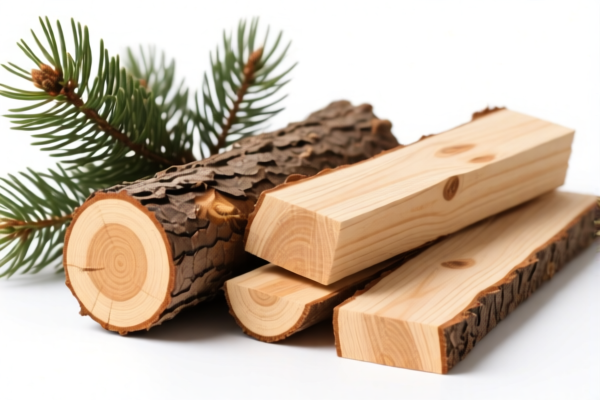
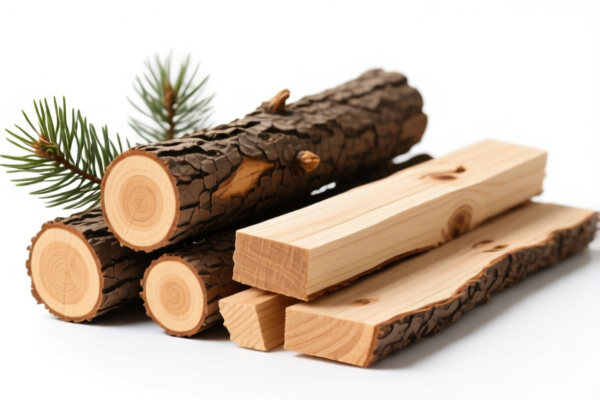
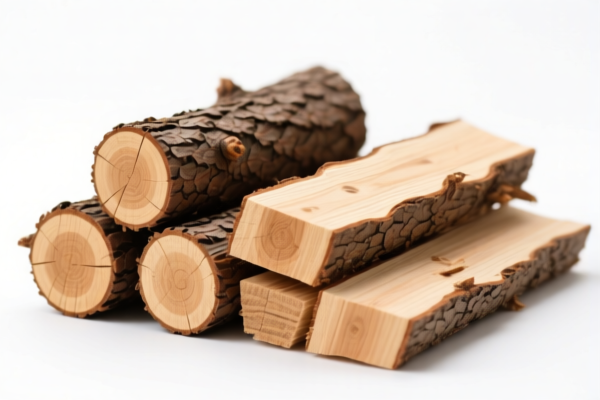
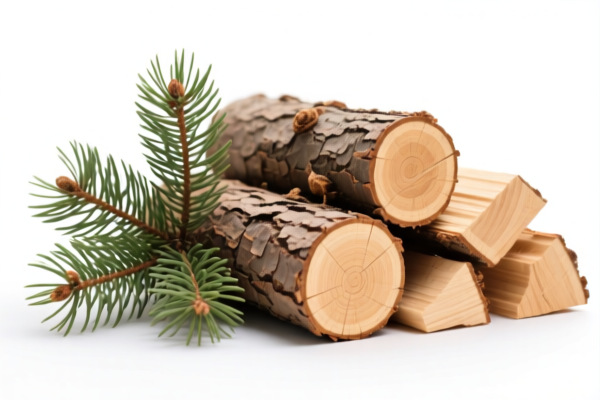
Pine Wood Block
CN → US| HS Code | Tariff Rate | Origin | Destination | Doc |
|---|---|---|---|---|
| 9403910080 | 35.0% | CN | US | Official Doc |
| 9403910010 | 35.0% | CN | US | Official Doc |
| 4407110043 | 35.0% | CN | US | Official Doc |
| 4407110046 | 35.0% | CN | US | Official Doc |
Product Images
AI Analysis
🌲 Pine Wood Block (Engineered & Sawn Timber Components)
🌐 HS Code Reference & Customs Clearance Guide | 2026 Latest Tariff Analysis | Professional Import Strategy
📌 I. Product Definition & Classification: What Exactly is a "Pine Wood Block"?
In international trade, "Pine Wood Block" is a broad descriptive term that lacks specific HS Code precision. It generally refers to processed wood material used in furniture manufacturing, construction, or industrial applications. However, US Customs and Border Protection (CBP) requires the declaration to align with the physical state (sawn, chipped, part of furniture) and specific species of the wood.
Under the provided <DATA>, pine wood blocks are classified into two primary categories:
1. Raw/Processed Lumber: Sawn, sliced, or peeled pine timber used as raw material.
2. Furniture Parts: Wooden components intended for assembly into furniture or child safety equipment.
⚠️ Critical Distinction:
- If the wood is sawn/chipped >6mm and identified by specific pine species (e.g., Eastern White, Southern Yellow) → It falls under Chapter 44 (Wood and Wood Articles).
- If the wood is a part of a finished furniture item (e.g., legs, panels) or specifically for play yards/enclosures → It falls under Chapter 94 (Furniture).
📦 II. HS Code Classification Details (Based on Provided Data)
The following HS Codes and tariffs are extracted strictly from the provided <DATA>. All listed items carry a 25.0% Total Tax (0% Base + 25% Additional).
| HS Code | Product Description | Application Scenario | Key Identifiers |
|---|---|---|---|
9403.91.00.80 |
Other furniture and parts thereof: Parts: Of wood Other | General wooden furniture parts (not for play yards) | Generic wood parts for furniture |
9403.91.00.10 |
Other furniture and parts thereof: Parts: Of wood For play yards and other enclosures for confining children | Wooden components specifically designed for cribs, playpens, or child safety gates | Child safety equipment parts |
4407.11.00.43 |
Wood sawn/chipped... of a thickness >6mm: Coniferous: Eastern white pine (Pinus strobus) and red pine (Pinus resinosa): Other | Raw or planed lumber of specific white/red pine species | Specific species: Pinus strobus/resinosa |
4407.11.00.46 |
Wood sawn/chipped... of a thickness >6mm: Coniferous: Southern yellow pine (Pinus taeda), etc.: Rough | Rough-sawn timber of Southern Yellow Pine varieties (Loblolly, Long leaf, Pitch, etc.) | Species: Pinus taeda etc.; State: Rough |
🔍 Key Insight:
- HS 9403 is for finished parts (furniture components).
- HS 4407 is for semi-finished/raw wood (lumber).
- The "Pine Wood Block" must be declared according to its intended end-use (furniture part vs. raw material) and species if it is raw timber.
💰 III. 2026 Tariff Rate Breakdown (Detailed Tax Analysis)
✅ Applicable Country: United States (US)
✅ Origin: China (CN) (Implied by 25% Additional Tariff pattern)
✅ Effective Date: As per current trade regulations (Section 301)
🎯 1. 9403.91.00.80 & 9403.91.00.10 — Wooden Furniture Parts
| Item | Detail |
|---|---|
| Base Tariff (MFN) | 0.0% |
| Additional Tariff (Section 301) | 25.0% |
| Total Tax Rate | 25.0% |
| Tax Calculation | CIF Value × 25% |
| Legal Basis | USITC Harmonized Tariff Schedule (HTSUS) Chapter 94 |
📌 Explanation:
- These codes cover wooden parts for general furniture (...80) and specifically for child enclosures (...10).
- The 25% rate is a punitive additional tariff applied to Chinese-origin goods in this category.
- No base duty applies, making the 25% the sole cost factor.
🎯 2. 4407.11.00.43 & 4407.11.00.46 — Sawn Pine Wood (Lumber)
| Item | Detail |
|---|---|
| Base Tariff (MFN) | 0.0% |
| Additional Tariff (Section 301) | 25.0% |
| Total Tax Rate | 25.0% |
| Tax Calculation | CIF Value × 25% |
| Legal Basis | USITC HTSUS Chapter 44 |
📌 Explanation:
- These codes apply to sawn wood >6mm thick.
-...43is for Eastern White/Red Pine.
-...46is for Southern Yellow Pine varieties in rough condition.
- Even though it is raw material, the 25% additional tariff still applies to Chinese-origin pine lumber.
🛠️ IV. Customs Clearance Practical Advice (Avoiding Pitfalls)
✅ 1. Required Documentation Checklist
| Document | Required? | Notes |
|---|---|---|
| Commercial Invoice | ✅ Yes | Must clearly state "Pine Wood Blocks" and specify if they are for "Furniture Parts" or "Raw Lumber". |
| Packing List | ✅ Yes | Detail dimensions, weight, and number of pieces. |
| Species Declaration | ✅ Yes | For HS 4407, explicitly name the pine species (e.g., Pinus strobus). Vague terms like "Pine" may cause delays. |
| End-Use Statement | ✅ Yes | For HS 9403, confirm if parts are for "Play Yards" (HS 9403.91.00.10) or general furniture (HS 9403.91.00.80). |
| Fumigation Certificate | ✅ Yes | Required for raw wood (ISPM 15 standard) to prevent pest introduction. |
✅ 2. Declaration Best Practices
| Scenario | Correct HS Code | Incorrect Approach |
|---|---|---|
| Wooden legs for a table | 9403.91.00.80 |
Declare as "Lumber" → Potential misclassification |
| Wooden slats for a crib | 9403.91.00.10 |
Declare as "Furniture Parts (Other)" → Missed specific category |
| Planed 2x4 Pine studs | 4407.11.00.43 or 46 |
Declare as "Furniture Part" → Wrong chapter |
| Rough Southern Yellow Pine | 4407.11.00.46 |
Declare as "Eastern White Pine" → Species mismatch |
🔥 Pro Tip:
"Specify Species, State End-Use!"
- If you are shipping raw lumber, always use Chapter 44.
- If you are shipping cut pieces for assembly, use Chapter 94.
- Never use generic "Wood Block" in the description; provide species, thickness, and intended use.
✅ 3. Special Considerations
| Issue | Solution |
|---|---|
| Pest Control | Raw pine wood must be fumigated or heat-treated. Provide phytosanitary certificate. |
| Mixed Shipments | If a shipment contains both furniture parts and raw lumber, separate the HS Codes on the invoice to avoid audit flags. |
| Value Declaration | Ensure CIF value includes cost, insurance, and freight. The 25% tax is calculated on CIF. |
🌍 V. Global Market Comparison (US Focus)
| Destination | HS Code (Pine Parts/Lumber) | Total Tax (China Origin) | Notes |
|---|---|---|---|
| 🇺🇸 USA | 9403.91.00.xx / 4407.11.00.xx |
25.0% | High additional tariff due to Section 301 |
| 🇨🇳 China | Similar codes | ~5-10% | Lower import duty for foreign pine |
| 🇪🇺 EU | 9403.30 / 4407 |
~0-5% | Generally lower duties; no major punitive tariffs |
| 🇨🇦 Canada | 9403.30 / 4407 |
~0-5% | USMCA may apply if origin is Canada/US |
📌 Conclusion:
The USA imposes a flat 25% additional tariff on these pine wood products from China. There are no base duties (0%), but the 25% additional tax is significant and non-negotiable without origin shifting.
📌 VI. Common Errors & Risk Mitigation
❌ Error 1: Declaring "Furniture Parts" for Raw Lumber
👉 Consequence: Misclassification under Chapter 94 instead of 44. May lead to penalties and delayed release for incorrect tax calculation.
❌ Error 2: Vague Species Description ("Pine")
👉 Consequence: CBP may reject the entry if the specific pine species (e.g., Pinus strobus vs. Pinus taeda) cannot be verified for HS 4407 codes.
❌ Error 3: Ignoring End-Use for Child Safety Items
👉 Consequence: Misdeclaring play yard parts as general furniture (...80 instead of ...10). While tax is the same, regulatory compliance (CPSC) is stricter for child safety products. Ensure proper labeling.
❌ Error 4: Assuming No Base Tax = No Cost
👉 Consequence: While base tax is 0%, the 25% additional tariff is substantial. Plan for cash flow impact.
✅ Correct Declaration Example:
"Wooden Furniture Parts, Pine, Unassembled, For Use in Tables, Model XYZ"
OR
"Sawn Eastern White Pine Lumber, Thickness 10mm, Rough Sawn, for Construction Use"
🎯 VII. Conclusion: Precision Pays Off
🎯 Key Takeaway:
🔹 "Pine Wood Block" is not a valid HS Code.
🔹 Use9403.91for Furniture Parts (Child enclosures vs. General).
🔹 Use4407.11for Raw/Sawn Lumber (Specify Species).
🔹 Budget for 25% Total Tax on China-origin goods.
📌 Action Plan:
1. Identify End-Use: Is it for furniture assembly or raw material?
2. Identify Species: For lumber, specify Pinus strobus, Pinus taeda, etc.
3. Select Correct HS: Match description to 9403 or 4407 subheadings.
4. Prepare Docs: Invoice, Packing List, Phytosanitary Certificate.
📣 Final Advice:
📞 Consult a Customs Broker for pre-classification if you are unsure about the "part vs. raw material" distinction.
🚀 Accurate classification saves time and avoids costly penalties at US ports of entry.
✨ Clear Classification, Smooth Clearance!
💼 Every Pinewood Block, Accurately Declared!
Customer Reviews
About HS Code Classification
The Harmonized System (HS) is an internationally standardized nomenclature developed by the World Customs Organization (WCO) to classify traded products. Over 200 countries use the HS system as the basis for customs tariffs, trade statistics, and import/export regulations.
Each HS code follows a hierarchical structure:
- Chapter (2 digits) — Broad category of goods (e.g., Chapter 84: Machinery and Mechanical Appliances)
- Heading (4 digits) — More specific grouping within the chapter
- Subheading (6 digits) — Internationally standardized breakdown, used by all WCO member countries
- National subdivisions (8-10 digits) — Country-specific extensions for further classification, such as US HTSUS 10-digit codes
Correct HS code classification is essential for smooth customs clearance, accurate duty payment, and compliance with trade regulations. Misclassification can lead to customs delays, overpayment of duties, or penalties.
When importing from CN to US, the applicable tariff rates may include:
- Most-Favored-Nation (MFN) rate — The standard duty rate applied to WTO members
- General rate — Applied to countries without trade agreements
- Trade remedy duties — Additional tariffs such as Section 301 (anti-dumping), Section 232 (national security), or countervailing duties
The information provided on this page is for reference purposes only. For official classification, please consult with your local customs authority or a licensed customs broker.