Pine Wood Logs
CN → US| HS Code | Tariff Rate | Origin | Destination | Doc |
|---|---|---|---|---|
| 4403210165 | 35.0% | CN | US | Official Doc |
| 4407110043 | 35.0% | CN | US | Official Doc |
| 4401110000 | 35.0% | CN | US | Official Doc |
| 4403990195 | 35.0% | CN | US | Official Doc |
| 4401120000 | 35.0% | CN | US | Official Doc |
Product Images

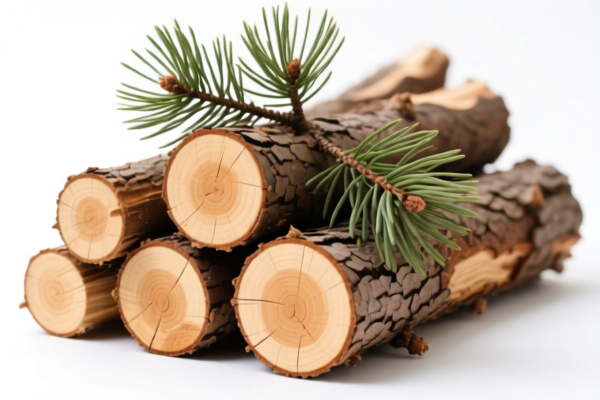


AI Analysis
Here is the comprehensive classification and customs clearance guide for Pine Wood Logs, formatted as a professional Wiki-style document based strictly on the provided data.
🌲 Pine Wood Logs: Ultimate HS Code Classification & Customs Guide 2026
🌐 Global Tariff Analysis | US Market Entry for Wood Products | Strategic Clearance Strategy
📌 Subject: Pine Wood Logs (Raw Timber, Fuel Wood, or Rough Sawn)
Wood logs are the backbone of the global timber industry. In international trade, "Pine Wood Logs" can fall into multiple categories depending on their shape (raw vs. sawn) and purpose (fuel vs. structural). Misclassification can lead to severe tax penalties, as the United States imposes heavy "China Plus" surcharges on all wood products from China.
⚠️ Critical Warning:
All listed HS Codes below are subject to a combined total tax rate of 35.0% due to US-China trade tensions. This includes Base Tariff, Section 301 Additional Tariff, and Section 122 (Countermeasures) Tariff.
📦 II. HS Code Classification Matrix (Strictly Based on Provided Data)
The following table details the exact mapping of "Pine Wood Logs" to the specific HS Codes provided in the source data, along with the matching logic and tax breakdown.
| HS Code | Product Description & Logic | Tax Breakdown Details |
|---|---|---|
| 4403.21.01.65 | Matched Logic: Based on material "Pine" (松木). • Since the product name only specifies material, it defaults to the "Other" (兜底) category due to lack of material conflict. • Status: Potential Match (Likely for rough sawn pine timber). |
• Base Tariff: 0.0% • Section 301 (Additional): 25.0% • Section 122 (Countermeasures): 10.0% • TOTAL: 35.0% |
| 4407.11.00.43 | Matched Logic: Direct Material Match. • "Pine Wood" (松木) directly corresponds to classification Pinus spp. • As morphology is unspecified, it defaults to the "Catch-all" category without material conflict. • Status: High Confidence Match. |
• Base Tariff: 0.0% • Section 301 (Additional): 25.0% • Section 122 (Countermeasures): 10.0% • TOTAL: 35.0% |
| 4401.11.00.00 | Matched Logic: Primary Form / Fuel Wood. • "Logs" (原木) represent the primary form of wood. • Matches the category definition: "Fuelwood (including logs, etc.)". • Status: Valid Match for raw fuel wood. |
• Base Tariff: 0.0% • Section 301 (Additional): 25.0% • Section 122 (Countermeasures): 10.0% • TOTAL: 35.0% |
| 4403.99.01.95 | Matched Logic: "Other" / Rough Sawn Category. • "Logs" (原木) fit the material attribute of "Roughly Sawn / Logs". • Since this is a "Other" (兜底) category with no conflicting material descriptions, it is deemed valid. • Status: Valid Match (Fallback option). |
• Base Tariff: 0.0% • Section 301 (Additional): 25.0% • Section 122 (Countermeasures): 10.0% • TOTAL: 35.0% |
| 4401.12.00.00 | Matched Logic: Non-Pine or Unspecified Fuel Wood. • "Logs" fit the morphological description of "Fuel Wood". • In the absence of material conflict, it infers either non-coniferous or coniferous fuel wood. • Status: Valid Match (Broad fuel wood category). |
• Base Tariff: 0.0% • Section 301 (Additional): 25.0% • Section 122 (Countermeasures): 10.0% • TOTAL: 35.0% |
💰 III. Deep Dive: 2026 Tariff Structure & Policy Details
✅ Scope: US Imports (US) | 🇨🇳 Origin: China (CN) | 📅 Effective: Current Period
🎯 The "35% Wall": Why the Tax is So High?
Every single HS Code listed above carries a 35.0% Total Tax Rate. This is not a standard tariff; it is a compound penalty structure designed to restrict Chinese wood imports.
| Component | Rate | Legal Basis | Explanation |
|---|---|---|---|
| 📉 Base Tariff | 0.0% | HTSUS | The standard Most-Favored-Nation (MFN) rate for wood logs is 0%. |
| ⚡ Section 301 | +25.0% | USITC Footnote | "Additional Tariff" imposed under Section 301 of the Trade Act. Applied specifically to Chinese goods in this category. |
| ⚖️ Section 122 | +10.0% | IEEPA / Reciprocal | "122 Clause Tariff" (Countermeasures). A retaliatory tariff often applied to specific Chinese commodities. |
| 🚨 GRAND TOTAL | 35.0% | Combined | 0% + 25% + 10% = 35% |
📌 Calculation Formula:
Duty Payable = (CIF Value) × 35.0%
Note: There is no de minimis exemption for these wood products.
🛠️ IV. Customs Clearance Action Plan (Survival Guide)
✅ 1. Essential Documentation Checklist
To avoid delays and penalties, you must provide:
| Document | Status | Critical Requirement |
|---|---|---|
| ✅ Commercial Invoice | Mandatory | Must clearly state "Pine Wood Logs" and specify the HS Code being used. |
| ✅ Packing List | Mandatory | Detail weight (gross/net) and number of logs/sticks. |
| ✅ Species Certificate | Mandatory | Must prove the wood is Pinus spp. (Pine). Misdeclaration of species leads to seizure. |
| ✅ Phytosanitary Certificate | Mandatory | USDA/US Forest Service requirement. Proves wood is free of pests (e.g., Pine Bark Beetles). |
| ✅ Fumigation Certificate | Mandatory | ISPM 15 stamp required on wooden packaging. |
| ✅ Processing History | Recommended | Distinguish if it is "Raw Logs" (4401) or "Rough Sawn" (4403/4407). |
✅ 2. Strategic Declaration Tips (The "Golden Rules")
🔥 Rule of Thumb: "Shape & Material Define the Code, Tax Rate is Fixed at 35%!"
| Scenario | Recommended HS Code Strategy | Risk if Wrong |
|---|---|---|
| Unprocessed, Raw Logs (Just cut) | Focus on 4401.11 or 4401.12 (Fuel/Raw definition). | If misclassified as "Sawn," penalties for fraud. |
| Roughly Sawn Pine Timber | Focus on 4403.21 or 4407.11 (Material specific). | If declared as "Finished," may trigger different inspection. |
| Unknown Morphology | Use "Other" Databases (e.g., 4403.99). | Must prove no material conflict exists. |
| Fuel Wood vs. Lumber | Crucial Distinction: If used for fuel, 4401 is safer. If for construction, 4403/4407. | Confusing these can lead to re-classification by CBP. |
✅ 3. Cost Optimization & Avoidance
- No Tax Breaks: Unlike some electronics, wood logs do not qualify for de minimis ($800) exemptions due to agricultural and national security restrictions.
- Pre-Arrival Ruling: Strongly recommended to get an Advance Ruling from CBP to confirm the exact HS Code (e.g., is it 4403.21 or 4407.11?) before shipping.
- Origin Verification: Ensure the wood is not harvested in a protected zone or mislabeled to evade the Section 122 tariff.
🌍 V. Market Comparison (2026 Outlook)
| Destination | Standard Duty | "China Plus" Tax | Effective Rate | Verdict |
|---|---|---|---|---|
| 🇺🇸 USA | 0% | +35% (Total) | 35.0% | 🚫 High Barrier: Profit margins will be squeezed significantly. |
| 🇨🇳 China | N/A | N/A | N/A | Exporting to China has different rules. |
| 🇪🇺 EU | Varies | Variable | TBD | EU may have different phytosanitary rules, but tariffs differ. |
| 🇦🇺 Australia | Varies | N/A | TBD | Strict biosecurity checks, not necessarily high tariff. |
Conclusion: The USA is the most critical market due to the 35% combined tariff. * Strategy: If profit margins are thin, consider diverting shipments to other markets or processing wood locally (if in a third country) to change the HS Code or origin status (though this is complex for raw logs).
🚨 VI. Common Pitfalls & "Red Flags"
❌ Pitfall 1: Vague Product Naming * Action: Calling it "Wood" instead of "Pine Wood Logs." * Result: CBP may classify under a higher penalty "Other" code or demand immediate inspection.
❌ Pitfall 2: Ignoring the "122 Clause" * Action: Only calculating the 25% Section 301 tax. * Result: Underpayment of duty leading to audits, fines, and back-taxes.
❌ Pitfall 3: Confusing Fuel Wood with Structural Wood * Action: Declaring fuel wood as lumber (or vice versa). * Result: Misclassification errors, potential seizure if pests are found in "fuel" logs intended for construction.
✅ Pro Tip:
"Be Specific, Be Accurate, Be Prepared!" Always declare: "Pine Wood Logs (Pinus spp.), Roughly Sawn/Raw, For [Purpose: Fuel/Lumber], Origin: China."
📣 VII. Final Recommendation
For Pine Wood Logs, the tax landscape is rigid. 1. Expect 35% Total Duty. Do not budget for less. 2. Choose the HS Code based on the morphology (Raw 4401 vs. Sawn 4403/4407). 3. Verify Phytosanitary Status rigorously to prevent rejections at the border.
🚀 Call to Action: Contact your customs broker immediately with a sample photo and species certificate to confirm the exact subheading (4401.11, 4403.21, or 4407.11) to ensure compliance before the vessel docks.
Disclaimer: This guide is based strictly on the provided data (HS Codes 4403.21.01.65, 4407.11.00.43, 4401.11.00.00, 4403.99.01.95, 4401.12.00.00) and represents a "China-USA" specific tariff scenario (35% total). Always consult a licensed customs broker for final clearance.
Customer Reviews
About HS Code Classification
The Harmonized System (HS) is an internationally standardized nomenclature developed by the World Customs Organization (WCO) to classify traded products. Over 200 countries use the HS system as the basis for customs tariffs, trade statistics, and import/export regulations.
Each HS code follows a hierarchical structure:
- Chapter (2 digits) — Broad category of goods (e.g., Chapter 84: Machinery and Mechanical Appliances)
- Heading (4 digits) — More specific grouping within the chapter
- Subheading (6 digits) — Internationally standardized breakdown, used by all WCO member countries
- National subdivisions (8-10 digits) — Country-specific extensions for further classification, such as US HTSUS 10-digit codes
Correct HS code classification is essential for smooth customs clearance, accurate duty payment, and compliance with trade regulations. Misclassification can lead to customs delays, overpayment of duties, or penalties.
When importing from CN to US, the applicable tariff rates may include:
- Most-Favored-Nation (MFN) rate — The standard duty rate applied to WTO members
- General rate — Applied to countries without trade agreements
- Trade remedy duties — Additional tariffs such as Section 301 (anti-dumping), Section 232 (national security), or countervailing duties
The information provided on this page is for reference purposes only. For official classification, please consult with your local customs authority or a licensed customs broker.