Pine Wood Lumber
CN → US| HS Code | Tariff Rate | Origin | Destination | Doc |
|---|---|---|---|---|
| 4407110043 | 35.0% | CN | US | Official Doc |
| 4407110001 | 35.0% | CN | US | Official Doc |
| 4409104010 | 35.0% | CN | US | Official Doc |
| 4409104090 | 35.0% | CN | US | Official Doc |
| 4418300100 | 38.2% | CN | US | Official Doc |
| 4418810000 | 38.2% | CN | US | Official Doc |
Product Images
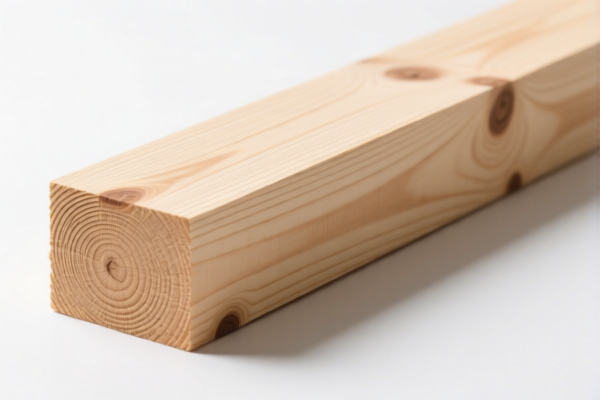
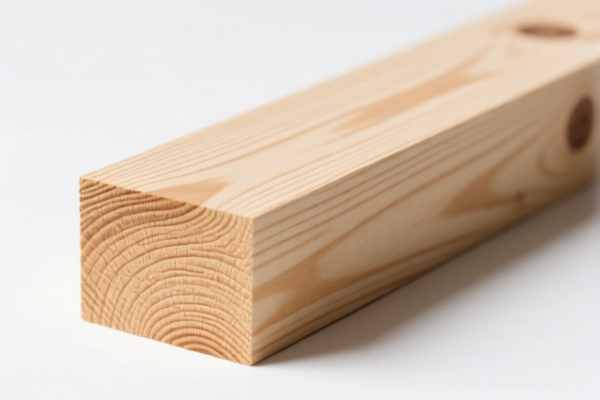
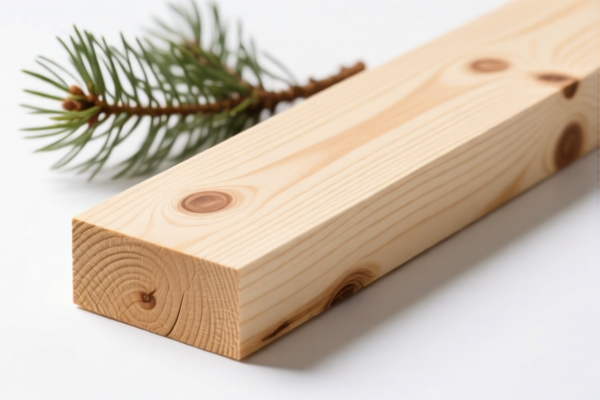
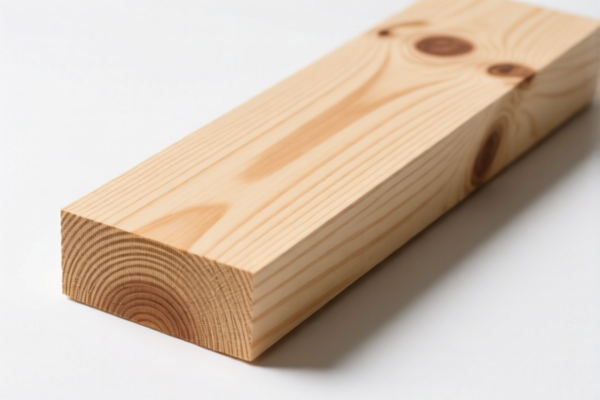
AI Analysis
🌲 Pine Wood Lumber: HS Code Classification & U.S. Customs Clearance Guide (2026)
🌐 HS Code Reference & Customs Strategy | Latest Tariff Analysis | Expert Entry Guidance
📌 I. Product Definition & Classification: What Exactly is "Pine Wood Lumber"?
Pine wood lumber refers to processed wood products derived from pine trees, primarily used in construction, furniture manufacturing, and carpentry. In international trade, the classification depends heavily on the processing method (sawed, planed, molded) and specific application (structural, decorative, or specific components).
⚠️ Key Distinction Points: - Raw/Basic Processing: If the wood is simply sawn or chipped longitudinally without further shaping → Classified under 4407. - Shaped/Profiled: If the wood has been tongue-and-groove, chamfered, or otherwise shaped along its length → Classified under 4409. - Specific Carpentry Items: If formed into specific structural joints, glulam beams, or specialized building components → Classified under 4418.
📦 II. HS Code Classification Details (2026 Latest Tariff Schedule)
| HS Code | Product Description | Application/State | Tax Rate (China Origin → US) |
|---|---|---|---|
4407.11.00.43 |
Pine Wood Lumber; Pine Material; State: Unprocessed Coniferous Wood | Basic sawn timber, rough edges, untreated | 35.0% |
4407.11.00.01 |
Pine Wood Lumber; Pine Material; State: Longitudinally Sawed or Splitted | Standard lumber for general construction | 35.0% |
4409.10.40.10 |
Pine Wood Lumber; Pine Material; Purpose: Wood Molded Parts | Shaped wood (tongue/groove, chamfered) | 35.0% |
4409.10.40.90 |
Pine Wood Lumber; Pine Material; Purpose: Molded Pieces | Other shaped/patterned wood profiles | 35.0% |
4418.30.01.00 |
Pine Wood Lumber; Pine Material; Purpose: Building Joinery & Carpentry | Specific carpentry items, joinery pieces | 38.2% |
4418.81.00.00 |
Pine Wood Lumber; Pine Material; Purpose: Structural Timber (Glulam) | Engineered wood, glued laminated timber | 38.2% |
🔍 Critical Reminder: - Simple Sawn Wood falls under
4407(Tax: 35%). - Shaped/Profiled Wood falls under4409(Tax: 35%). - Specific Structural/Joinery Components fall under4418(Tax: 38.2%). - Do not confuse "basic lumber" with "engineered structural timber" (Glulam), as the latter carries a higher base duty.
💰 III. 2026 Latest Tariff Rate Breakdown (Including Surtaxes)
✅ Applicable Country: United States (US)
✅ Origin: China (CN)
✅ Effective Time: Current enforcement (Including Section 301 & IEEPA surcharges)
🎯 1. 4407.11.00.43 & 4407.11.00.01 — Basic Pine Sawn Wood
| Item | Content |
|---|---|
| Base Duty Rate | 0.0% (Ad Valorem) |
| Section 301 Surtax | +25.0% (Under USITC Footnote for Chinese Wood Products) |
| IEEPA Surtax | +10.0% (Section 122 Tariff for China/HK products) |
| Total Tax Rate | 35.0% |
| Tax Calculation | CIF Value × 35% |
| De Minimis Exemption | ❌ Not Applicable (Deny de minimis for these codes) |
| Legal Basis Path | IEEPA:122 → USITC:4407.11.00 → FOOTNOTE:Section 301 |
📌 Explanation: - The Base Rate is 0%, meaning the product is not subject to normal MFN duties. - However, the 25% Section 301 Surtax applies due to the "List 4" classification for wood products. - The 10% IEEPA (Section 122) is an additional layer of surcharge targeting Chinese imports. - Total Effective Rate: 35%. This is a significant cost factor.
🎯 2. 4409.10.40.10 & 4409.10.40.90 — Shaped/Profiled Pine Wood
| Item | Content |
|---|---|
| Base Duty Rate | 0.0% |
| Section 301 Surtax | +25.0% |
| IEEPA Surtax | +10.0% |
| Total Tax Rate | 35.0% |
| Tax Calculation | CIF Value × 35% |
| De Minimis Exemption | ❌ Not Applicable |
| Legal Basis Path | IEEPA:122 → USITC:4409.10.40 → FOOTNOTE:Section 301 |
📌 Note: - Even though the product is more processed (shaped), the total tax rate remains 35% because the base duty for many wood profiles is also 0%. - Ensure the description clearly states "Longitudinally shaped" or "Tongue and Groove" to justify
4409.
🎯 3. 4418.30.01.00 & 4418.81.00.00 — Structural Joinery & Glulam
| Item | Content |
|---|---|
| Base Duty Rate | 3.2% |
| Section 301 Surtax | +25.0% |
| IEEPA Surtax | +10.0% |
| Total Tax Rate | 38.2% |
| Tax Calculation | CIF Value × 38.2% |
| De Minimis Exemption | ❌ Not Applicable |
| Legal Basis Path | IEEPA:122 → USITC:4418 → FOOTNOTE:Section 301 |
📌 Important: - These codes have a non-zero base duty of 3.2%. - Therefore, the total tax is 3.2% + 25% + 10% = 38.2%. - Glulam (Glued Laminated Timber) under
4418.81.00.00is critical for modern construction. Misclassifying glulam as simple lumber (4407) to save 3.2% is a high-risk audit target.
🛠️ IV. Customs Clearance Practical Advice (Pitfall Avoidance Guide)
✅ 1. Required Documentation Checklist
| Document | Must Provide | Explanation |
|---|---|---|
| ✅ Commercial Invoice | ✔️ | Must specify "Pine Wood Lumber," grade, and dimensions. |
| ✅ Packing List | ✔️ | Detail number of boards, total volume (CBM/M3). |
| ✅ Phytosanitary Certificate | ✔️ | Mandatory for all wood products from China. Proof of fumigation/treatment. |
| ✅ ISPM 15 Marking | ✔️ | Pallets/packaging must show the IPPC stamp to prevent rejection. |
| ✅ Product Photos | ✔️ | Show end-grain to confirm wood type (Pine) and processing state (sawn vs. molded). |
| ✅ Bill of Lading | ✔️ | Standard shipping document. |
✅ 2. Classification Strategy (Key Rules)
🔥 "Check the Shape, Check the Use, Don't Guess the Rate!"
| Scenario | Correct Classification | Wrong Action | Consequence |
|---|---|---|---|
| Rough-sawn pine boards for framing | 4407.11.00.43/01 |
Misclassifying as 4418 |
Overpay 3.2% base duty. |
| Tongue-and-groove pine flooring boards | 4409.10.40.10/90 |
Misclassifying as 4407 |
Incorrect entry; may trigger inspection. |
| Custom pine beams for roof structure (Glued) | 4418.81.00.00 |
Misclassifying as 4407 |
Underpaying 3.2%; potential penalty. |
| Pine wood for furniture (not structural) | 4407 or 4409 |
Misclassifying as 4418 |
Overpaying base duty. |
✅ 3. Special Circumstances Handling
| Situation | Handling Advice |
|---|---|
| Wood Fumigation Failure | If the Phytosanitary Certificate is missing or the ISPM 15 mark is absent, goods will be re-exported or destroyed at importer's expense. |
| Mixed Wood Loads | If pine is mixed with non-pine woods, customs may classify the highest duty rate applicable to the entire lot or require segregation. |
| Value Declaration | Ensure CIF value includes freight and insurance. The 35%~38.2% tax is applied to the CIF value, not just the product cost. |
| Anti-Dumping/Countervailing | Check if specific pine species are subject to additional AD/CVD orders. While the data provided shows standard surtaxes, always verify current USITC lists. |
🌍 V. Global Market Comparison (2026)
| Country/Region | Recommended HS Code | Estimated Total Tax (China Origin) | Key Requirements | Note |
|---|---|---|---|---|
| 🇺🇸 USA | 4407.11 / 4409.10 / 4418 |
35.0% - 38.2% | ISPM 15, Phytosanitary Cert | High surtaxes due to Section 301 & IEEPA. |
| 🇨🇳 China | 4407 / 4409 / 4418 |
~5% - 10% | Import License (if restricted) | Lower rates, but export taxes may apply. |
| 🇪🇺 EU | 4407 / 4409 / 4418 |
~0% - 4% | FLEGT/EUTR Compliance | Strict wood legality verification. |
| 🇨🇦 Canada | 4407 / 4409 / 4418 |
~0% (If CUSMA compliant) | Certificate of Origin | Zero duty for Canadian pine, but Chinese pine faces MFN rates + potential tariffs. |
📌 Conclusion: - The US market imposes the highest effective tariff burden on Chinese pine lumber due to layered surtaxes. - EU and Canada have stricter non-tariff barriers (legality/proof of origin) but lower or zero tariff rates for compliant goods.
📌 VI. Common Mistakes & Pitfalls (Lessons Learned)
❌ Mistake 1: Assuming all wood has the same tax rate.
👉 Consequence: Misclassifying Glulam (4418) as Sawn Timber (4407) leads to underpayment of 3.2% on the total value, resulting in back-taxes and penalties upon audit.
❌ Mistake 2: Ignoring ISPM 15 marking. 👉 Consequence: Immediate rejection by US CBP. The goods are considered a biosecurity risk.
❌ Mistake 3: Declaring "Wood" vaguely. 👉 Consequence: Customs officers may classify the goods under the most specific or highest duty code available, or request detailed sampling, causing delays.
✅ Correct Declaration Example:
"Pine Wood Lumber, Sawn Lengthwise, Untreated, for Construction Use, HS Code 4407.11.00.43, Origin: China, ISPM 15 Marked Pallets"
🎯 VII. Conclusion: Precision Saves Money!
🎯 Remember the Key Rules:
🔹 "Shape determines the Chapter: Sawn=4407, Shaped=4409, Structural=4418."
🔹 "Tax is Layered: Base + 25% (301) + 10% (IEEPA) = 35% or 38.2%."
🔹 "No Phytosanitary Certificate = No Entry!"
📌 Pro Tip: If your pine wood is sourced from Canada, Mexico, or other CUSMA/USMCA countries, you may qualify for 0% duty (subject to specific rules of origin). For Chinese-origin pine, budget for the 35-38.2% total cost.
📣 Immediate Action:
📞 Consult with a licensed customs broker for Pre-Ruling if the processing state (sawn vs. molded vs. glued) is ambiguous.
🚀 Ensure your supplier provides valid ISPM 15 documentation before shipment to avoid costly demurrage fees at US ports.
✨ Professional Customs Clearance Starts with Accurate Classification!
💼 Every percentage point of duty is a margin of profit lost if not managed correctly!
Customer Reviews
About HS Code Classification
The Harmonized System (HS) is an internationally standardized nomenclature developed by the World Customs Organization (WCO) to classify traded products. Over 200 countries use the HS system as the basis for customs tariffs, trade statistics, and import/export regulations.
Each HS code follows a hierarchical structure:
- Chapter (2 digits) — Broad category of goods (e.g., Chapter 84: Machinery and Mechanical Appliances)
- Heading (4 digits) — More specific grouping within the chapter
- Subheading (6 digits) — Internationally standardized breakdown, used by all WCO member countries
- National subdivisions (8-10 digits) — Country-specific extensions for further classification, such as US HTSUS 10-digit codes
Correct HS code classification is essential for smooth customs clearance, accurate duty payment, and compliance with trade regulations. Misclassification can lead to customs delays, overpayment of duties, or penalties.
When importing from CN to US, the applicable tariff rates may include:
- Most-Favored-Nation (MFN) rate — The standard duty rate applied to WTO members
- General rate — Applied to countries without trade agreements
- Trade remedy duties — Additional tariffs such as Section 301 (anti-dumping), Section 232 (national security), or countervailing duties
The information provided on this page is for reference purposes only. For official classification, please consult with your local customs authority or a licensed customs broker.