Pine Wood Pole Log
CN → US| HS Code | Tariff Rate | Origin | Destination | Doc |
|---|---|---|---|---|
| 4404100080 | 35.0% | CN | US | Official Doc |
| 4417008010 | 40.1% | CN | US | Official Doc |
| 4417008090 | 40.1% | CN | US | Official Doc |
| 4421997040 | 35.0% | CN | US | Official Doc |
| 4404100090 | 35.0% | CN | US | Official Doc |
Product Images
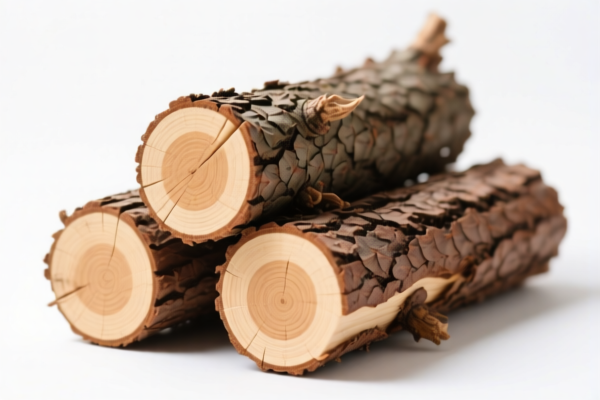
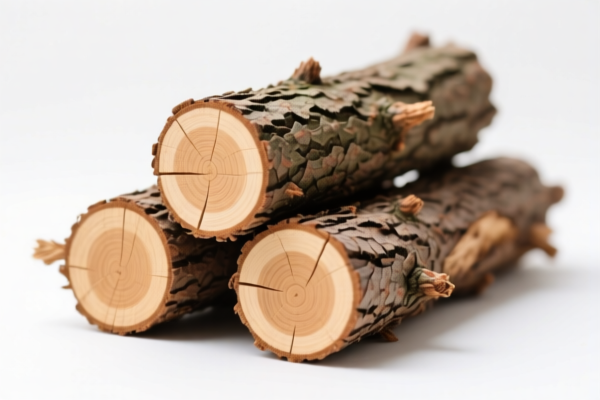


AI Analysis
🌲 Pine Wood Pole Logs: HS Code Classification & 2026 Tariff Strategy
🌐 HS Code Reference & Customs Clearance Guide | 2026 Latest Tariff Analysis | Professional Customs Strategy
📌 1. Product Definition & Classification: What Are "Pine Wood Pole Logs"?
In international trade, "Pine Wood Pole Logs" refer to timber products specifically shaped or prepared for use as poles, piles, or posts. They are not raw, unprocessed tree trunks but rather timber products that meet specific morphological requirements (e.g., cylindrical, sawn, or roughly hewn) for construction, fencing, or industrial support.
The classification depends heavily on the degree of processing: * Pole Posts/Piles: Timber prepared as poles, pile, or roughly squared timber, not further manufactured than being sawn, chipped, peeled, etc. (Chapter 44, Heading 44.04 or 44.17). * Wooden Tools/Handles: If the pole serves as a handle for tools, it may fall under Heading 44.17. * General Wood Products: If the shape does not fit specific headings, it may be classified under general "other wood articles."
⚠️ Key Distinction:
- If the product is specifically shaped as a pole/pile and meets the definition of Heading 44.04 or 44.17, it is classified accordingly.
- If it is a general wood post not specifically for tools or piles, it may fall under Heading 44.21.
- Coniferous Pine is a critical factor, as it determines the subheading within Chapter 44.
📦 2. HS Code Classification Details (2026 Latest Tariff Authority Comparison)
Based on the provided data, here are the possible HS Codes for Pine Wood Pole Logs, categorized by their specific morphological and functional characteristics:
| HS Code | Product Description | Morphological/Functional Feature | Tax Rate (Total) |
|---|---|---|---|
4404.10.00.80 |
Pine Wood Poles, conforming to the shape requirements for coniferous wood poles, piles, and posts | Pole/Pile Form: Sawn, chipped, or peeled into pole/post shape | 35.0% |
4417.00.80.10 |
Pine Wood Poles, fitting the characteristics of wooden tools/handles | Tool/Handle Form: Specifically identified as a handle or tool part | 40.1% |
4417.00.80.90 |
Pine Wood Poles, classified as other wooden articles in the form of poles | Other Wooden Articles: Poles not fitting specific tool/pole definitions | 40.1% |
4421.99.70.40 |
Pine Wood Poles, conforming to the category of sawn piles/posts in other wood articles | Sawn Piles/Posts: Specifically sawn posts or piles, not in Heading 44.04 | 35.0% |
4404.10.00.90 |
Pine Wood Poles, classified under other coniferous wood categories | Other Coniferous Wood: Pine wood poles not meeting specific pole/post definitions | 35.0% |
🔍 Key Insight:
- HS Code4404.10.00.80is often the most accurate for standard pine poles/piles due to its specific description of "coniferous wood poles, piles, and posts."
- HS Code4417(Tool/Handle) may apply if the poles are specifically identified as tool handles, which incurs a higher tax rate (40.1%).
- HS Code4421.99.70.40is for sawned posts/piles that do not meet the "pole" definition in 44.04.
- HS Code4404.10.00.90is a residual category for coniferous wood products not specified elsewhere.
💰 3. 2026 Latest Tariff Rate Breakdown (Including Additional Taxes & Policy Surcharges)
✅ Applicable Country: United States (US)
✅ Country of Origin: China (CN)
✅ Effective Date: From November 10, 2025 (including subsequent imports)
🎯 1. 4404.10.00.80 —— Pine Wood Poles, Coniferous (Pole/Pile Form)
| Item | Details |
|---|---|
| Base Tariff Rate | 0.0% |
| USITC Additional Tax | +25.0% (Under USITC Footnote 9903.88.01) |
| IEEPA Additional Tax | +10.0% (Section 122 Tariff on China/Hong Kong products, effective Nov 10, 2025) |
| Total Tariff Rate | 35.0% |
| Tax Calculation | CIF Value × 35% |
| De Minimis Exemption | ❌ Not Eligible (deny_de_minimis) |
| Legal Authority Path | IEEPA:9903.01.25 → IEEPA:9903.01.24 → USITC:4404.10.00.80 → FOOTNOTE:9903.88.01 |
📌 Explanation:
- The 25% USITC tax is part of the Section 301 tariffs on Chinese goods.
- The 10% IEEPA tax is an additional surcharge under the International Emergency Economic Powers Act.
- Total 35% is a significant cost burden. Pre-calculation is essential.
🎯 2. 4417.00.80.10 & 4417.00.80.90 —— Pine Wood Poles (Tool/Handle or Other Wooden Articles)
| Item | Details |
|---|---|
| Base Tariff Rate | 5.1% |
| USITC Additional Tax | +25.0% |
| IEEPA Additional Tax | +10.0% |
| Total Tariff Rate | 40.1% |
| Tax Calculation | CIF Value × 40.1% |
| De Minimis Exemption | ❌ Not Eligible (deny_de_minimis) |
| Legal Authority Path | IEEPA:9901.25 → IEEPA:9903.01.24 → USITC:4417.00.80.10/90 → FOOTNOTE:9903.88.01 |
📌 Note:
- These codes incur a higher total rate (40.1%) due to the 5.1% base tariff.
- Classification as "tool handles" or "other wooden articles" triggers this higher rate. Ensure the product description matches the functional use.
🎯 3. 4421.99.70.40 —— Pine Wood Poles (Sawn Piles/Posts)
| Item | Details |
|---|---|
| Base Tariff Rate | 0.0% |
| USITC Additional Tax | +25.0% |
| IEEPA Additional Tax | +10.0% |
| Total Tariff Rate | 35.0% |
| Tax Calculation | CIF Value × 35.0% |
| De Minimis Exemption | ❌ Not Eligible (deny_de_minimis) |
| Legal Authority Path | IEEPA:9903.01.25 → IEEPA:9903.01.24 → USITC:4421.99.70.40 → FOOTNOTE:9903.88.01 |
📌 Note:
- Similar to4404.10.00.80, this code has a 0% base tariff, resulting in a 35% total rate.
- Applicable if the product is clearly identified as a sawn post or pile rather than a "pole."
🎯 4. 4404.10.00.90 —— Pine Wood Poles (Other Coniferous Wood)
| Item | Details |
|---|---|
| Base Tariff Rate | 0.0% |
| USITC Additional Tax | +25.0% |
| IEEPA Additional Tax | +10.0% |
| Total Tariff Rate | 35.0% |
| Tax Calculation | CIF Value × 35.0% |
| De Minimis Exemption | ❌ Not Eligible (deny_de_minimis) |
| Legal Authority Path | IEEPA:9903.01.25 → IEEPA:9903.01.24 → USITC:4404.10.00.90 → FOOTNOTE:9903.88.01 |
📌 Note:
- This is a residual category for coniferous wood products.
- Total rate remains 35%. Ensure the product does not fit more specific categories like4404.10.00.80.
🛠️ 4. Customs Clearance Practical Advice (Best Practices & Pitfalls)
✅ 1. Required Documentation Checklist (Mandatory)
| Document | Mandatory? | Notes |
|---|---|---|
| ✅ Product Specification Sheet | ✔️ | Must include dimensions, shape (cylindrical, sawn), wood type (Pine), and end-use. |
| ✅ Product Photos | ✔️ | Clear images showing the shape, ends, and any markings. |
| ✅ Commercial Invoice | ✔️ | Must clearly state "Pine Wood Pole Logs" or "Pine Wood Poles" and match the HS Code. |
| ✅ Packing List | ✔️ | Detail weight, quantity, and packaging type. |
| ✅ Certificate of Origin (CO) | ✔️ | Required for China origin verification. |
| ✅ Third-Party Inspection Report | ✔️ | Optional but recommended to confirm wood type and treatment (if applicable). |
✅ 2. Declaration Tips (Key Rules)
🔥 "Shape Determines Code, Base Rate Changes Cost!"
| Scenario | Correct Declaration | Incorrect Practice |
|---|---|---|
| Standard Pine Poles/Piles | 4404.10.00.80 |
Misdeclaring as "Wooden Handles" → 40.1% |
| Sawn Posts/Piles | 4421.99.70.40 |
Misdeclaring as "General Wood" → Potential delay |
| Tool Handles | 4417.00.80.10 |
Misdeclaring as "Poles" → Under-declaration risk |
| Other Coniferous Wood | 4404.10.00.90 |
Misdeclaring as "Non-Coniferous" → Wrong HS Code |
✅ 3. Special Circumstances
| Situation | Handling Advice |
|---|---|
| Treated Wood | If wood is chemically treated (e.g., for utility poles), ensure the declaration reflects this. Treatment may affect HS Code or require additional certifications. |
| Unprocessed vs. Processed | Ensure the product is not classified as "raw timber" (Heading 44.03), which has different tariffs. "Pole logs" are processed timber. |
| Mixed Shipments | If a shipment contains different wood types or shapes, split the declaration correctly to avoid penalties. |
| OEM Custom Orders | Provide design drawings or specifications to prove the product's specific form and use. |
🌍 5. Global Market Comparison (2026 Latest)
| Country/Region | Recommended HS Code | Tariff (China Origin) | Certification Required | Notes |
|---|---|---|---|---|
| 🇺🇸 United States | 4404.10.00.80 |
35.0% | FSC/PEFC (if applicable) | High tariffs due to Section 301 and IEEPA |
| 🇨🇳 China | 4404.10.00.80 |
5-10% (Import Duty) | None | Lower import duties, but subject to domestic regulations |
| 🇪🇺 European Union | 4404.10.00 |
5-10% | FSC/PEFC | No Section 301 tariffs, but strict wood legality regulations |
| 🇯🇵 Japan | 4404.10.00 |
5-10% | Phytosanitary Certificate | No additional surcharges |
| 🇦🇺 Australia | 4404.10.00 |
5% | Biosecurity Approval | Strict biosecurity controls |
📌 Conclusion:
- The US is the most challenging market due to the 35-40% total tariff.
- Other markets have significantly lower tariffs, but compliance with wood origin and treatment regulations is critical.
📌 6. Common Mistakes & Pitfalls (Lessons Learned)
❌ Mistake 1: Misclassifying "Pine Poles" as "Wooden Handles" (4417)
👉 Consequence: Tax rate jumps from 35% to 40.1% → Higher costs.
❌ Mistake 2: Declaring "Pine Wood" as "Non-Coniferous"
👉 Consequence: Wrong HS Code → Customs delay, fines, or penalties.
❌ Mistake 3: Ignoring the 122 Clause (IEEPA 10%)
👉 Consequence: Unexpected tax liability → Profit margin erosion.
❌ Mistake 4: Failing to Provide Product Photos/Specifications
👉 Consequence: Customs cannot verify the product → Delays or rejection.
✅ Correct Approach:
"Pine Wood Poles, 10m length, 15cm diameter, untreated, for construction use, Model XYZ"
🎯 7. Conclusion: Precise Classification, Cost Control, and Smooth Clearance!
🎯 Remember the Rules:
🔹 "Pole Form = 35% (4404.10.00.80); Handle Form = 40.1% (4417.00.80.10)."
🔹 "Base Rate 0% + 25% USITC + 10% IEEPA = 35%. Base Rate 5.1% + 25% + 10% = 40.1%."
🔹 "Accurate Description Saves Money, Wrong Code Costs Fortune!"
📌 Pro Tip:
If your pine wood poles are sourced from Vietnam, Mexico, or Thailand, you may qualify for IEEPA exemptions or lower tariffs.
Apply for an Advance Ruling (Pre-classification) before shipment to avoid customs disputes.
📣 Immediate Action:
📞 Contact a Professional Customs Broker + Provide Product Specs + Apply for HS Code Advance Ruling
🚀 Ensure Your Pine Wood Poles Clear Customs Smoothly, Reduce Costs, and Boost Profits!
✨ Professional Customs Clearance Starts with Accurate Classification!
💼 Every Dollar of Cost Should Be Precisely Calculated!
Customer Reviews
About HS Code Classification
The Harmonized System (HS) is an internationally standardized nomenclature developed by the World Customs Organization (WCO) to classify traded products. Over 200 countries use the HS system as the basis for customs tariffs, trade statistics, and import/export regulations.
Each HS code follows a hierarchical structure:
- Chapter (2 digits) — Broad category of goods (e.g., Chapter 84: Machinery and Mechanical Appliances)
- Heading (4 digits) — More specific grouping within the chapter
- Subheading (6 digits) — Internationally standardized breakdown, used by all WCO member countries
- National subdivisions (8-10 digits) — Country-specific extensions for further classification, such as US HTSUS 10-digit codes
Correct HS code classification is essential for smooth customs clearance, accurate duty payment, and compliance with trade regulations. Misclassification can lead to customs delays, overpayment of duties, or penalties.
When importing from CN to US, the applicable tariff rates may include:
- Most-Favored-Nation (MFN) rate — The standard duty rate applied to WTO members
- General rate — Applied to countries without trade agreements
- Trade remedy duties — Additional tariffs such as Section 301 (anti-dumping), Section 232 (national security), or countervailing duties
The information provided on this page is for reference purposes only. For official classification, please consult with your local customs authority or a licensed customs broker.