Pine Wood Post
CN → US| HS Code | Tariff Rate | Origin | Destination | Doc |
|---|---|---|---|---|
| 4403210115 | 35.0% | CN | US | Official Doc |
| 4421997040 | 35.0% | CN | US | Official Doc |
| 4403220115 | 35.0% | CN | US | Official Doc |
Product Images


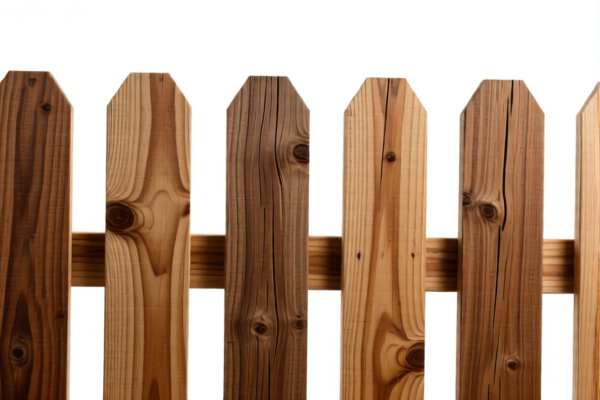
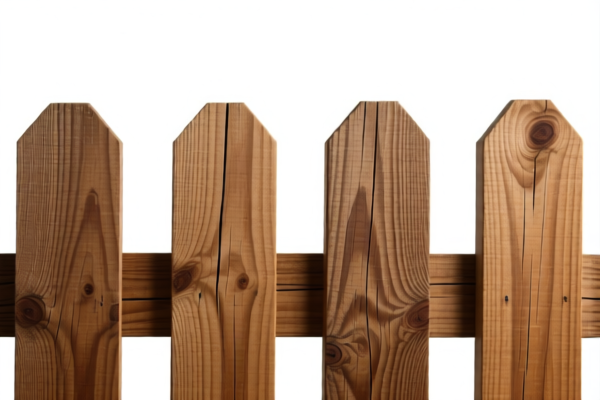
AI Analysis
🌲 Pine Wood Post (Pine Fence Post)
🌐 HS Code Reference & Customs Clearance Guide | 2026 Latest Tariff Analysis | Professional Entry Strategy
📌 I. Product Definition & Classification: Do You Really Understand "Pine Wood Posts"?
Pine Wood Posts are essential structural components used in fencing, landscaping, and construction. In international trade, the classification hinges on two critical factors: 1. Processing Method: Is it merely sawn/treated wood (Chapter 44, Head 4403) or a constructed woodworking article (Chapter 44, Head 4421)? 2. Intended Use: Is it specifically identified as a "fence post" or generally as a "post/pile"?
⚠️ Key Distinction Point:
- If the item is classified under 4403.21 or 4403.22, it is treated as "Timber": Sawed wood, typically treated but not further fabricated into a specific shape beyond a simple post/pile. The customs authority views this as raw material. - If the item is classified under 4421.99, it is treated as an "Article of Wood": A finished woodworking product (e.g., specifically shaped, processed, or categorized under general woodworking articles).
📦 II. HS Code Classification Details (2026 Latest Tariff Authority Comparison)
Based on the provided data, there are three potential HS Codes. The difference lies in the specific sub-heading for Pine wood species and the general article classification.
| HS Code | Product Description | Application Scenario | Customs Interpretation |
|---|---|---|---|
4403.21.01.15 |
Pine Wood Fence Post | Specifically marketed/use as a Fence Post. | Treated as timber; material is Pine (Softwood, Spruce/Pine/Fir). |
4421.99.70.40 |
Pine Wood Post | General Post/Pile/Rail classification. | Treated as a woodworking article ("Posts, piles, and sleepers"). |
4403.22.01.15 |
Pine Wood Fence Post | Specifically marketed/use as a Fence Post. | Treated as timber; material is Pine (Softwood, Spruce/Pine/Fir). |
🔍 Important Note:
-4403.21.01.15&4403.22.01.15: These codes explicitly mention "Fence Post" in the summary. They are classified under Chapter 44 Section 4403 (Wood, simply sawn or chipped lengthwise...). The distinction between.21and.22often relates to specific pine sub-species or treatment details not fully expanded here, but both are treated as Timber. -4421.99.70.40: This code falls under Chapter 44 Section 4421 (Other articles of wood). The summary notes it fits the classification for "sawn piles, fence posts, piles, and rails". This is a broader "Article of Wood" classification.
💰 III. 2026 Latest Tariff Rate Details (Including Surtaxes & Policy Add-ons)
✅ Applicable Country: United States (US)
✅ Origin: China (CN)
✅ Effective Date: Ongoing (Current Trade War Tariffs)
🎯 1. 4403.21.01.15 & 4403.22.01.15 —— Pine Wood Fence Posts (Timber Classification)
| Item | Detail |
|---|---|
| Base Tariff Rate | 0.0% (ad valorem) |
| Section 301 Surtax | +25.0% |
| Section 122 Surtax | +10.0% |
| Total Tax Rate | 35.0% |
| Tax Calculation | CIF Value × 35% |
| De Minimis Exemption | ❌ Not Applicable (High tariff rate disqualifies it from Section 321 de minimis thresholds in many contexts, and specifically high rates often trigger stricter scrutiny). |
| Legal Basis Path | Base: 4403 → Surtax: 301 (25%) + 122 (10%) |
📌 Explanation:
- These products are classified as sawn wood/timber. - They are subject to the Section 301 tariffs (25%) due to their origin (China). - They are also subject to the Section 122 tariffs (10%). - Total: 35%. This is a significant cost factor.
🎯 2. 4421.99.70.40 —— Pine Wood Posts (Woodworking Article Classification)
| Item | Detail |
|---|---|
| Base Tariff Rate | 0.0% (ad valorem) |
| Section 301 Surtax | +25.0% |
| Section 122 Surtax | +10.0% |
| Total Tax Rate | 35.0% |
| Tax Calculation | CIF Value × 35% |
| De Minimis Exemption | ❌ Not Applicable |
| Legal Basis Path | Base: 4421 → Surtax: 301 (25%) + 122 (10%) |
📌 Explanation:
- Even though this is classified as an "Article of Wood," it is still of Chinese origin. - It incurs the same 35% total tariff (0% base + 25% 301 + 10% 122). - Crucial Insight: While the rate is identical in this data set, the risk of misclassification differs. If Customs decides a "post" is timber (4403) instead of an article (4421), or vice versa, it may lead to delays, though the tariff burden here is the same.
🛠️ IV. Customs Clearance Practical Advice (Real-World Pitfall Avoidance Guide)
✅ 1. Required Documentation Checklist (Mandatory)
| Document | Required | Description |
|---|---|---|
| ✅ Product Description | ✔️ | Must specify: "Pine Wood Post," "Fence Post," or "Pile." Clearly state dimensions (length/diameter). |
| ✅ Material Declaration | ✔️ | Confirm 100% Pine Wood. No composite or mixed materials. |
| ✅ Treatment Certificate | ✔️ | If treated (e.g., pressure-treated), provide treatment type. Some treatments may have additional environmental regulations. |
| ✅ Commercial Invoice | ✔️ | Value must be accurate. Declare clearly as "Pine Wood Post." |
| ✅ Packing List | ✔️ | Show quantity, weight, and dimensions per package. |
| ✅ Phytosanitary Certificate | ✔️ | Critical for Wood: USDA-APHIS requires this to prevent pest introduction. |
| ✅ Marks & Numbers | ✔️ | Ensure packages are clearly marked for identification. |
✅ 2. Declaration Tips (Key Mnemonics)
🔥 "Be Specific on Wood, Declare Treatment, Certify Pests!"
| Scenario | Correct Declaration | Wrong Practice |
|---|---|---|
| Simple Sawed Post | 4403.21.01.15 or 4403.22.01.15 |
Using generic "Wooden Pole" |
| Finished/Processed Post | 4421.99.70.40 |
Using "Timber" if heavily fabricated |
| Mixed Origin | Clear separation of Chinese vs. Non-Chinese | Blending origins to avoid tariffs |
✅ 3. Special Situations Handling
| Situation | Handling Advice |
|---|---|
| Treated Wood | Ensure the treatment does not violate US EPA or state-level environmental laws. Some preservatives require specific labeling. |
| Unfinished vs. Finished | If the post is just sawn, use 4403. If it is notched, drilled, or painted specifically for use, consider 4421. However, tax rate is the same here. |
| Wood Pest Risk | No Phytosanitary Certificate = Seizure Risk. Pine wood is susceptible to pests like the Asian Longhorned Beetle. Ensure treatment (heat treatment or fumigation) is certified. |
| De Minimis (Section 321) | Avoid using Section 321 for this item. Even if value is under $800, high tariffs (35%) and wood restrictions make clearance risky. Use formal entry. |
🌍 V. Global Market Customs Comparison (2026 Latest)
| Country/Region | Recommended HS Code | Tariff (China Origin) | Certification Requirements | Remarks |
|---|---|---|---|---|
| 🇺🇸 USA | 4403.21.01.15 / 4421.99.70.40 |
35% (0% Base + 25% 301 + 10% 122) | Phytosanitary Cert. | High tariff. Strict wood pest controls. |
| 🇨🇳 China | 4403 / 4421 |
~0-5% | N/A | Lower tariff if exporting to China. |
| 🇪🇺 EU | 4403 / 4421 |
~0-5% | EUTR (Timber Regulation) | Requires due diligence on wood legality. |
| 🇦🇺 Australia | 4403 / 4421 |
~5-10% | Biosecurity Permit | Strict biosecurity on all wood. |
| 🇯🇵 Japan | 4403 / 4421 |
~0-5% | Phytosanitary Cert. | Standard wood imports. |
📌 Conclusion:
- USA is the most expensive market for Chinese Pine Wood Posts due to the 35% total tariff. - Phytosanitary compliance is universal for wood products in major markets. - No major market offers a tariff exemption for Chinese Pine Wood Posts under current policies.
📌 VI. Common Errors & Pitfall Guide (Blood & Tears Lessons)
❌ Mistake 1: Classifying as "Building Materials" generally without specifying wood type.
👉 Consequence: Customs delays, potential re-classification, and higher duty assessment if deemed incorrect.
❌ Mistake 2: Ignoring the Phytosanitary Certificate.
👉 Consequence: Shipment rejected or destroyed at US ports. USDA-APHIS is very strict.
❌ Mistake 3: Misdeclaring treatment status (e.g., claiming "Untreated" when it is Pressure-Treated).
👉 Consequence: Violation of EPA regulations, fines, and penalties.
❌ Mistake 4: Using "De Minimis" ($800) for commercial quantities.
👉 Consequence: High risk of audit, back-taxes, and penalty fees for evasion.
✅ Correct Approach:
"Pressure-Treated Pine Wood Fence Posts, 4-inch diameter, 8-foot length, Heat Treated per ISPM 15, Phytosanitary Certificate Attached, HTS: 4403.21.01.15"
🎯 VII. Conclusion: Professional Declaration Saves Money!
🎯 Remember Mnemonic:
🔹 "Wood Needs Pest Cert, Tariff is 35%, De Minimis is Risky!"
🔹 "HS Code Specifics, Avoid Delays, 35% Cost Must Be Factored!"
📌 Pro Tip:
- If possible, explore supply chain diversification. Wood products from Vietnam or Thailand may avoid the 25% Section 301 tariff (check current rules of origin).
- Always request a Pre-Ruling from US Customs (CBP) if the product has unique features not clearly defined in the tariff schedule.
📣 Immediate Action:
📞 Contact a licensed Customs Broker
📦 Ensure Phytosanitary Certificate is ready before shipment
🚀 Let your Pine Wood Posts clear smoothly, avoid penalties, and maximize profit!
✨ Professional Customs Clearance Starts with Accurate Classification!
💼 Every cent of cost deserves precise calculation!
Customer Reviews
About HS Code Classification
The Harmonized System (HS) is an internationally standardized nomenclature developed by the World Customs Organization (WCO) to classify traded products. Over 200 countries use the HS system as the basis for customs tariffs, trade statistics, and import/export regulations.
Each HS code follows a hierarchical structure:
- Chapter (2 digits) — Broad category of goods (e.g., Chapter 84: Machinery and Mechanical Appliances)
- Heading (4 digits) — More specific grouping within the chapter
- Subheading (6 digits) — Internationally standardized breakdown, used by all WCO member countries
- National subdivisions (8-10 digits) — Country-specific extensions for further classification, such as US HTSUS 10-digit codes
Correct HS code classification is essential for smooth customs clearance, accurate duty payment, and compliance with trade regulations. Misclassification can lead to customs delays, overpayment of duties, or penalties.
When importing from CN to US, the applicable tariff rates may include:
- Most-Favored-Nation (MFN) rate — The standard duty rate applied to WTO members
- General rate — Applied to countries without trade agreements
- Trade remedy duties — Additional tariffs such as Section 301 (anti-dumping), Section 232 (national security), or countervailing duties
The information provided on this page is for reference purposes only. For official classification, please consult with your local customs authority or a licensed customs broker.