Pine Wood Rough Bridge Pile
CN → US| HS Code | Tariff Rate | Origin | Destination | Doc |
|---|---|---|---|---|
| 4407110052 | 35.0% | CN | US | Official Doc |
| 4407110046 | 35.0% | CN | US | Official Doc |
Product Images
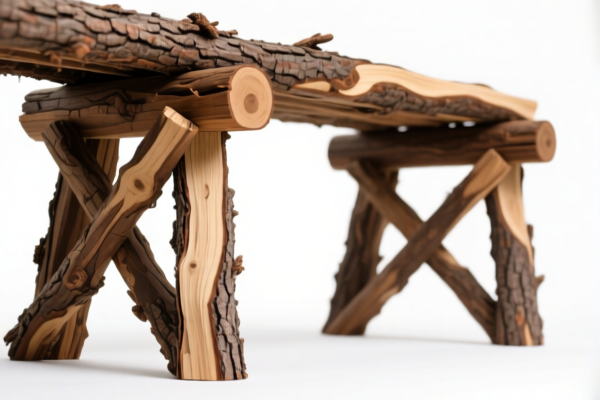
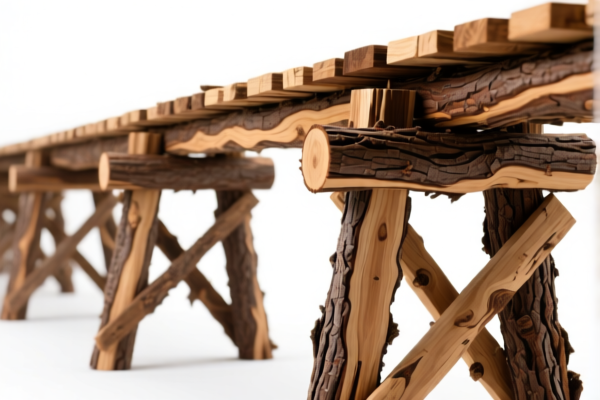
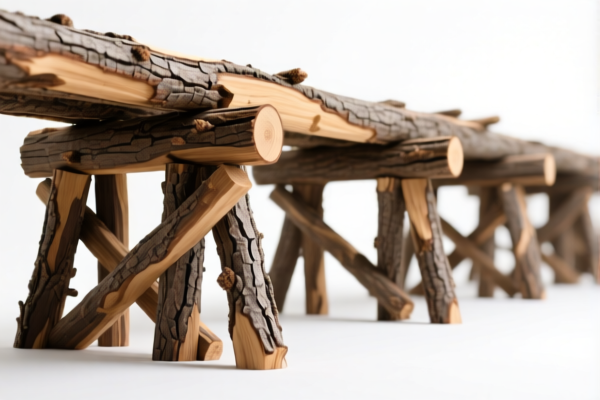
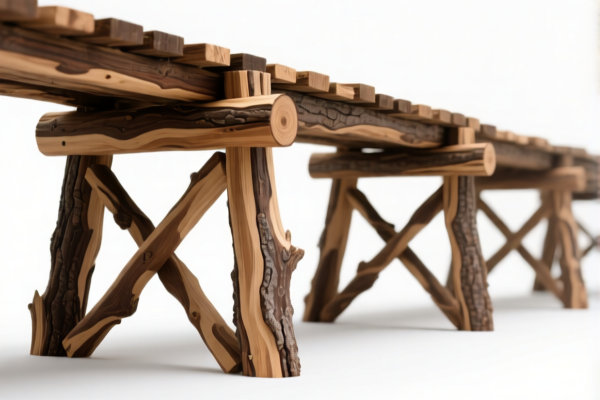
AI Analysis
🌲 Pine Wood Rough Bridge Pile (4407.11.00)
🌐 HS Code Reference & Customs Clearance Guide | 2024 Latest Tariff Analysis | Professional Logistics Strategy
📌 I. Product Definition & Classification: Do You Really Understand "Rough Pine Piles"?
Pine Wood Rough Bridge Pile, in the context of international trade, refers to timber that has been sawn or chipped lengthwise, sliced, or peeled, with a thickness exceeding 6mm, specifically prepared as rough piles for bridge construction or similar heavy-duty applications. It is classified under Coniferous Woods, specifically Pine (Pinus spp.).
In international trade, "Rough" implies the wood has not been planed, sanded, or end-jointed to a finished smoothness, but may be roughly squared. It is distinct from "S4S" (Surfaced Four Sides) or treated timber.
⚠️ Key Distinction Points:
- If the wood is treated (e.g., pressure-treated with preservatives) → It may fall under different chapters (e.g., Chapter 44 with specific treatment codes or other HS codes depending on the treatment method).
- If the wood is Planed/Sanded smoothly → It falls under "Planed" or "Sanded" subheadings, not "Rough".
- If the wood is of a Non-Coniferous species → It falls under different HS codes (e.g., hardwoods).
- This analysis strictly covers "Rough, Untreated Pine" as per the provided data.
📦 II. HS Code Classification Details (2024 Latest Tariff Authority Comparison)
Based on the provided data, there are two specific HS codes for "Rough" pine wood, differentiated by the species of pine.
| HS Code | Product Description | Applicable Scenario | Pine Species |
|---|---|---|---|
4407.11.00.52 |
Wood sawn/chipped/sliced/peeled, >6mm thick: Coniferous, Pine, Not treated, Rough, Other pine | General rough pine timber not specified as Southern Yellow Pine | Other Pine (Pinus spp.) (e.g., White Pine, Scotch Pine, etc.) |
4407.11.00.46 |
Wood sawn/chipped/sliced/peeled, >6mm thick: Coniferous, Pine, Not treated, Rough, Southern Yellow Pine | Rough piles made specifically from Southern Yellow Pine species | Southern Yellow Pine (Loblolly, Long Leaf, Pitch, Short Leaf, Slash, Virginia Pine) |
🔍 Key Reminder:
- "Rough" means the wood has not undergone final surfacing operations. If it is planed, even slightly, it may no longer qualify as "Rough" under these specific subheadings.
- "Not Treated" means no chemical preservation has been applied. Treated wood requires different classification.
- Species Identification is Critical: Customs officials will verify the specific pine species. Misdeclaring "Southern Yellow Pine" as "Other Pine" (or vice versa) can lead to delays or audits.
💰 III. 2024 Latest Tariff Rate Details (Including Surcharges)
✅ Applicable Country: United States (US)
✅ Origin: China (CN)
✅ Effective Time: Current rates apply (Subject to ongoing trade policies)
🎯 1. 4407.11.00.52 —— Other Rough Pine Wood (Untreated)
| Item | Content |
|---|---|
| Base Tariff Rate | 0.0% (ad valorem) |
| Section 301 Surcharge | +25.0% |
| Total Tax Rate | 25.0% |
| Tax Calculation | CIF Value × 25% |
| De Minimis Eligibility | ❌ No (Deny de minimis for Section 301 goods) |
| Legal Basis Path | USITC:4407.11.00.52 → Section 301: Footnote 9903.88.01 |
📌 Explanation:
- The 0% base rate applies to general wood products under normal trade relations.
- The 25% surcharge is imposed under Section 301 of the Trade Act of 1974, targeting specific Chinese imports, including certain wood products.
- Total Liability: Importers must pay 25% of the CIF value in duties. This is a significant cost factor for rough timber imports.
🎯 2. 4407.11.00.46 —— Southern Yellow Pine Rough Wood (Untreated)
| Item | Content |
|---|---|
| Base Tariff Rate | 0.0% (ad valorem) |
| Section 301 Surcharge | +25.0% |
| Total Tax Rate | 25.0% |
| Tax Calculation | CIF Value × 25% |
| De Minimis Eligibility | ❌ No (Deny de minimis for Section 301 goods) |
| Legal Basis Path | USITC:4407.11.00.46 → Section 301: Footnote 9903.88.01 |
📌 Note:
- Despite being a specific subset of pine, Southern Yellow Pine carries the same 25% total rate as other rough pine.
- This category includes specific species like Loblolly Pine (Pinus taeda), Long Leaf Pine (Pinus palustris), Pitch Pine (Pinus rigida), Short Leaf Pine (Pinus echinata), Slash Pine (Pinus elliottii), and Virginia Pine (Pinus virginiana).
- Cost Implication: There is no tax advantage for choosing Southern Yellow Pine over other pines in terms of duty rate; both are 25%.
🛠️ IV. Customs Clearance Practical Advice (Avoiding Pitfalls)
✅ 1. Required Documentation Checklist (All Are Mandatory)
| Document | Must Provide? | Notes |
|---|---|---|
| ✅ Commercial Invoice | ✔️ | Must clearly state "Rough Pine Wood," species, and dimensions. |
| ✅ Packing List | ✔️ | Must specify volume (MBF or CBM) and weight. |
| ✅ Species Verification Certificate | ✔️ | Critical to distinguish between "Other Pine" and "Southern Yellow Pine." |
| ✅ Phytosanitary Certificate | ✔️ | Required for wood products to prove absence of pests/diseases. |
| ✅ ISPM 15 Mark (if applicable) | ✔️ | If wood is processed, but since it's "Rough," ensure it meets export standards. |
| ✅ Bill of Lading | ✔️ | Standard shipping document. |
| ✅ Form I-94 or Entry Summary | ✔️ | For US customs entry filing. |
✅ 2. Declaration Tips (Key Mnemonics)
🔥 "Rough Not Planed, Species Must Be Named, 25% Tax Is Fixed, No De Minimis!"
| Scenario | Correct Declaration | Incorrect Practice |
|---|---|---|
| Rough, Untreated Pine | 4407.11.00.52 (Other) or .46 (SYP) |
Misdeclaring as "Planed Wood" → Different HS, potential penalty. |
| Treated Wood | ❌ Not these codes | Using these codes for treated wood → Severe Penalty/Seizure. |
| Non-Pine Wood | ❌ Not these codes | Using these codes for Oak, Maple, etc. → Wrong Classification. |
| Thickness < 6mm | ❌ Not these codes | These codes are for >6mm. Thinner wood falls under different HS (e.g., 4407.10). |
✅ 3. Special Situation Handling
| Situation | Handling Advice |
|---|---|
| Mixed Species Piles | If a shipment contains both "Other Pine" and "Southern Yellow Pine," split the declaration. Use .52 for one part and .46 for the other. Mixed declarations without separation are high-risk. |
| Planed vs. Rough | If the wood is slightly planed, it may be classified as "Planed" under a different subheading. Do not declare as "Rough" if it is planed. Customs may inspect and reclassify, leading to fines. |
| Treatment Status | If the wood is pressure-treated with creosote or other chemicals, it cannot be declared as "Not Treated." It may fall under Chapter 44 with treatment indicators or even Chapter 38 depending on the treatment. Consult a customs broker if treated. |
| Origin Marking | Ensure the wood is marked with the Country of Origin (e.g., "Made in China") as required by US CBP for Section 301 goods. |
🌍 V. Global Market Customs Comparison (2024 Latest)
| Country/Region | Recommended HS Code | Tariff (China Origin) | Certification Requirements | Notes |
|---|---|---|---|---|
| 🇺🇸 USA | 4407.11.00.52 / .46 |
25% (Total) | Phytosanitary, ISPM 15 | High duty due to Section 301. |
| 🇨🇳 China | 4407.11.00.52 / .46 |
Varies (Import Duty) | Phytosanitary | Check China's specific import duties. |
| 🇪🇺 EU | 4407.10.90 |
Varies (Usually 0-6%) | FSC/PEFC Certification | No Section 301 equivalent. |
| 🇬🇧 UK | 4407.10.90 |
Varies | Phytosanitary | Post-Brexit rules apply. |
| 🇯🇵 Japan | 4407.10.00 |
Varies (Usually 0-5%) | Phytosanitary | Strict pest controls. |
📌 Conclusion:
- USA is the most expensive market due to the 25% Section 301 surcharge.
- EU/UK/Japan do not impose similar broad-based surcharges on Chinese wood, making them potentially more cost-effective for raw pine imports.
- Compliance is Key: Even if tax rates are lower elsewhere, Phytosanitary and FSC/PEFC certifications are critical in Western markets.
📌 VI. Common Errors & Pitfalls (Lessons Learned)
❌ Error 1: Declaring "Planed" wood as "Rough"
👉 Consequence: Misclassification → Penalty + Back Taxes + Potential Seizure.
👉 Solution: Inspect wood surface. If smooth, it is planed.
❌ Error 2: Ignoring Species Difference
👉 Consequence: Confusion between .52 and .46. While tax rate is same, species documentation is required for compliance and potential future policy changes.
👉 Solution: Always specify the exact Pinus species.
❌ Error 3: Assuming "De Minimis" Applies
👉 Consequence: For Section 301 goods, de minimis ( <$800 ) exemption is DENIED. You must pay 25% even on small shipments.
👉 Solution: Budget for 25% duty on all shipments.
❌ Error 4: Confusing "Rough" with "Treated"
👉 Consequence: Treating wood and declaring it "Not Treated" is fraud.
👉 Solution: Clearly label treated wood and use correct HS codes for treated timber.
✅ Correct Practice:
"Rough-Sawn Pine Pile, Untreated, Pinus taeda (Loblolly), Thickness >6mm, for Bridge Construction, Origin: China"
🎯 VII. Conclusion: Professional Declaration, Cost Control, Efficiency!
🎯 Remember the Mnemonic:
🔹 "Rough Pine is 25%, Planed or Treated is Different, Species Must Be Known, No De Minimis Allowed!"
🔹 "HS Code Determines Duty, 25% is the Cost, Misdeclare Means Trouble!"
📌 Pro Tip:
- If you are importing treated pine for bridge piles, ensure you have the correct treatment certificates and not declare it as "Untreated."
- Consider pre-classification rulings from US CBP if you have large, ongoing shipments to ensure consistency.
📣 Take Action Now:
📞 Contact a Licensed Customs Broker + Provide Product Photos + Request HS Code Pre-Ruling
🚀 Ensure Smooth Clearance, Avoid Penalties, and Optimize Your Supply Chain!
✨ Professional Clearance Starts with Accurate Classification!
💼 Every Cent of Cost is Worth Precise Calculation!
Customer Reviews
About HS Code Classification
The Harmonized System (HS) is an internationally standardized nomenclature developed by the World Customs Organization (WCO) to classify traded products. Over 200 countries use the HS system as the basis for customs tariffs, trade statistics, and import/export regulations.
Each HS code follows a hierarchical structure:
- Chapter (2 digits) — Broad category of goods (e.g., Chapter 84: Machinery and Mechanical Appliances)
- Heading (4 digits) — More specific grouping within the chapter
- Subheading (6 digits) — Internationally standardized breakdown, used by all WCO member countries
- National subdivisions (8-10 digits) — Country-specific extensions for further classification, such as US HTSUS 10-digit codes
Correct HS code classification is essential for smooth customs clearance, accurate duty payment, and compliance with trade regulations. Misclassification can lead to customs delays, overpayment of duties, or penalties.
When importing from CN to US, the applicable tariff rates may include:
- Most-Favored-Nation (MFN) rate — The standard duty rate applied to WTO members
- General rate — Applied to countries without trade agreements
- Trade remedy duties — Additional tariffs such as Section 301 (anti-dumping), Section 232 (national security), or countervailing duties
The information provided on this page is for reference purposes only. For official classification, please consult with your local customs authority or a licensed customs broker.