Pine Wood Rough Preserved Poles
CN → US| HS Code | Tariff Rate | Origin | Destination | Doc |
|---|---|---|---|---|
| 4407110002 | 35.0% | CN | US | Official Doc |
Product Images
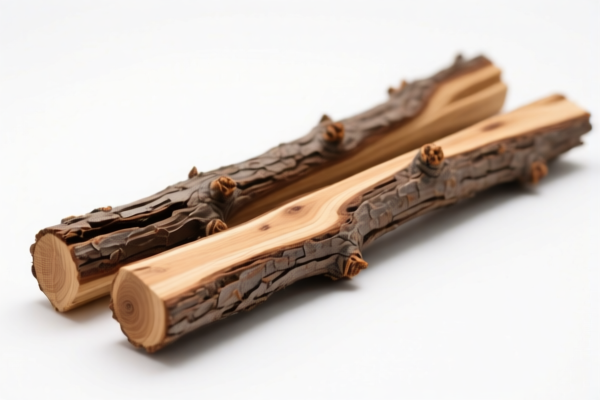
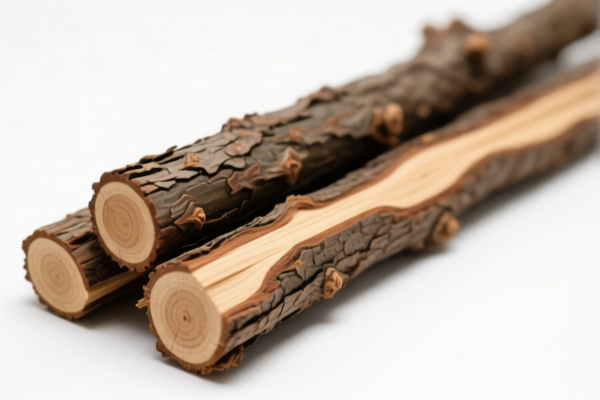
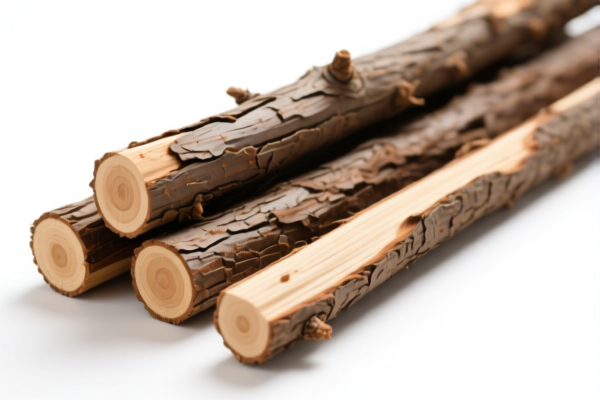
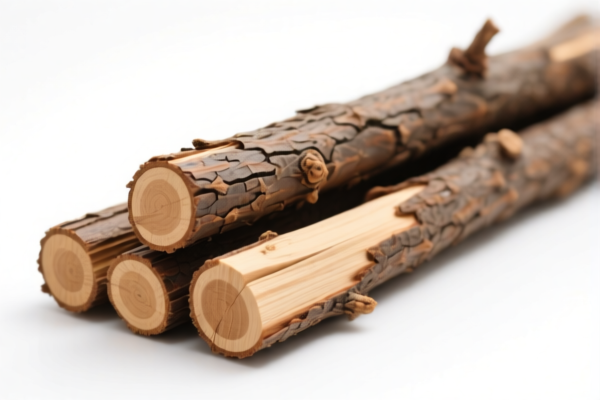
AI Analysis
🌲 Pine Wood Rough Preserved Poles (Coniferous Sawn Wood)
🌐 HS Code Reference & Clearance Guide | 2026 Tariff Structure Analysis | Professional Customs Strategy
📌 I. Product Definition and Classification: Do You Understand "Preserved Pine Wood"?
Pine Wood Rough Preserved Poles are wooden articles made from coniferous species (specifically Pinus spp.), processed lengthwise (sawn or chipped) to a thickness exceeding 6 mm, and treated with protective substances such as paint, stain, creosote, or other preservatives. In international trade, these are classified as processed timber products, distinct from raw logs or simple planks.
⚠️ Key Classification Criteria:
- Material: Must be Coniferous, specifically Pine (Pinus spp.).
- Process: Sawn, chipped, sliced, or peeled (lengthwise).
- Thickness: > 6 mm.
- Treatment: Treated with paint, stain, creosote, or preservative.
- Exclusion: If not treated, or if thickness ≤ 6 mm, or if non-coniferous, the HS code changes completely.
📦 II. HS Code Classification Details (2026 Tariff Authority Reference)
| HS Code | Product Description | Applicable Scenario | Treatment Status |
|---|---|---|---|
4407.11.00.02 |
Coniferous; of pine (Pinus spp.); other; treated with paint, stain, creosote or other preservative | Preserved pine poles, beams, or planks used for construction, fencing, or utility poles | ✅ Treated |
🔍 Critical Note:
- The subheading4407.11.00generally covers Pine wood sawn/chipped > 6mm.
- The specific suffix.02in the provided data explicitly identifies the treated variant (preserved).
- Untreated pine wood of the same specification would fall under a different suffix (e.g.,.01), but your input specifies "Rough Preserved", so.02is the correct code.
- Do not confuse with untreated lumber (lower duty) or plywood/veneer (different chapter).
💰 III. 2026 Tariff Rate Breakdown (Detailed Tax Explanation)
✅ Applicable Country: United States (US)
✅ Origin: China (CN) (Assumed based on the 25% additional duty pattern in the data)
✅ Data Source: Provided Input Data
🎯 HS Code: 4407.11.00.02 — Treated Pine Wood Poles
| Item | Content |
|---|---|
| Base Tariff (MFN) | 0.0% (Ad Valorem) |
| Additional Duty (Section 301 / USITC) | +25.0% |
| Total Tax Rate | 25.0% |
| Tax Calculation | CIF Value × 25.0% |
| De Minimis Eligibility | ❌ Not Eligible (Wood products >6mm are subject to full duty assessment) |
| Legal Basis Path | Chapter 44 (Wood) → 44.07 (Sawn Wood) → 4407.11 (Pine) → 4407.11.00.02 (Treated) |
📌 Explanation of Tax Structure:
- Base Rate (0%): Under normal Most Favored Nation (MFN) treatment, sawn wood often enjoys low or zero base duties to support construction industries.
- Additional Duty (25%): This is the critical cost driver. In the context of US-China trade (2026 framework), many wood products from China are subject to Section 301 tariffs or similar retaliatory/additional duties. The provided data explicitly states "25.0%" total tax, implying a 25% additional duty on top of a 0% base rate.
- Why 25%?: This likely reflects the ongoing trade measures applied to specific Chinese-origin wood products to protect domestic timber industries or due to trade tensions.
- Preservation Treatment: The fact that it is "treated" (creosote/paint) does not increase the duty rate further in this classification; it remains within4407.11.00.02. However, if it were not treated, the code might differ, but the duty risk remains similar for Chinese-origin pine.
🛠️ IV. Customs Clearance Practical Advice (Real-World Pitfall Avoidance)
✅ 1. Required Documentation Checklist (Non-Negotiable)
| Document | Must Provide | Description |
|---|---|---|
| ✅ Commercial Invoice | ✔️ | Must clearly state: "Pine Wood Poles, Treated with Creosote/Preservative, HS 4407.11.00.02" |
| ✅ Bill of Lading (B/L) | ✔️ | Weight, volume, and package count must match invoice. |
| ✅ Certificate of Origin (CO) | ✔️ | To prove origin (China). If from non-China, duty may be lower (check FTAs). |
| ✅ ISPM 15 Phytosanitary Certificate | ✔️ | Critical for Wood! Even if treated chemically, wood imports often require phytosanitary proof to prevent pest introduction. |
| ✅ Preservative Treatment Certificate | ✔️ | Proof of treatment (e.g., creosote concentration, paint type) to justify HS code 4407.11.00.02. |
| ✅ Packing List | ✔️ | Detail package dimensions to calculate volumetric weight. |
✅ 2. Declaration Tips (Key Mnemonic)
🔥 "Treated = 4407.11.00.02, Untreated = Different, Phytosanitary = Mandatory!"
| Scenario | Correct Declaration | Common Error |
|---|---|---|
| Pine Poles, Treated | 4407.11.00.02 |
Misdeclaring as "Untreated Wood" → High Risk of Penalty |
| Non-Pine Conifer (e.g., Spruce) | 4407.10.xxxx |
Misdeclaring as Pine → HS Code Error |
| Wood < 6mm Thick | 4408 (Veneer sheets) or 4409 (Moldings) |
Misdeclaring as Sawn Wood → Wrong Duty |
| Non-Chinese Origin | Check FTAs (e.g., ASEAN, Australia) | Assuming 25% duty applies → Overpayment |
✅ 3. Special Situations & Handling
| Situation | Handling Advice |
|---|---|
| Creosote Treatment | Ensure the treatment certificate matches the declaration. Creosote is heavily regulated in some domestic uses; for export/import, focus on phytosanitary compliance. |
| Mixed Origins | If poles are from mixed origins, each part must be declared separately. Do not lump Chinese and non-Chinese wood together. |
| Dimensional Check | Verify thickness > 6mm. If any pole is ≤ 6mm, it must be separated and declared under a different HS code (e.g., 4408 for veneer or 4409 for continuous moldings). |
| Packaging | Use pallets or crates that comply with ISPM 15 if they are made of wood. Non-wood packaging (plastic, metal) is easier to clear. |
🌍 V. Global Market Comparison (2026 Latest)
| Country/Region | Recommended HS Code | Tariff (China Origin) | Certification | Remarks |
|---|---|---|---|---|
| 🇺🇸 USA | 4407.11.00.02 |
25.0% (0% Base + 25% Add.) | Phytosanitary Certificate | High Duty Risk |
| 🇨🇳 China | 4407.11.00.02 |
0% (Import Duty) | Phytosanitary Certificate | No additional tariff for import |
| 🇪🇺 EU | 4407.11.00 |
0% (MFN Rate) | FSC/PEFC (Optional but preferred) | No Section 301 equivalent |
| 🇬🇧 UK | 4407.11.00 |
0% (UK Global Tariff) | Phytosanitary Certificate | Post-Brexit rules apply |
| 🇯🇵 Japan | 4407.11.00 |
0% (MFN Rate) | Phytosanitary Certificate | No additional duties |
📌 Conclusion:
- The USA is the only major market in this data with a significant additional tariff (25%) for Chinese-origin treated pine wood.
- EU, UK, Japan, and China impose 0% base tariff on this product, making them more cost-effective destinations if supply chains can be diversified.
- Phytosanitary requirements are universal for wood products; neglecting this leads to rejection or destruction at customs, regardless of duty rate.
📌 VI. Common Errors & Pitfall Guide (Lessons Learned)
❌ Error 1: Misclassifying Treated wood as Untreated
👉 Consequence: Customs may reclassify, leading to 25% duty + penalties.
👉 Solution: Explicitly state "Treated with Creosote/Preservative" on invoice.
❌ Error 2: Ignoring ISPM 15 for packaging
👉 Consequence: Shipment held at port for fumigation or destroyed.
👉 Solution: Ensure pallets/crates have the ISPM 15 stamp.
❌ Error 3: Not verifying Thickness > 6mm
👉 Consequence: If any item is ≤ 6mm, it falls under a different HS code, causing declaration inconsistency.
👉 Solution: Sample check dimensions before shipment.
❌ Error 4: Assuming 0% Base Duty = 0% Total Duty
👉 Consequence: Unexpected 25% bill at US customs.
👉 Solution: Budget for 25% total landed cost for US-bound goods.
✅ Correct Approach:
"Pine Wood Poles, Sawn, >6mm, Treated with Creosote, HS 4407.11.00.02, ISPM 15 Compliant Packaging, Origin: China"
🎯 VII. Conclusion: Professional Declaration, Cost Control, Compliance!
🎯 Remember the Mantra:
🔹 "Treated Pine = 4407.11.00.02, Duty 25% (US), Phytosanitary is Key!"
🔹 "HS Code determines cost, Declaration determines speed!"
📌 Pro Tip:
If your pine wood poles are originating from Vietnam, Thailand, or Malaysia, check if Section 301 duties apply (usually they do if transshipped from China, but if genuinely transformed, duty may be 0%).
Always apply for a Pre-Ruling from US Customs (CBP) for large shipments to confirm HS code and duty liability.
📣 Immediate Action:
📞 Contact a licensed customs broker + Provide Treatment Certificate + Verify ISPM 15 on packaging
🚀 Ensure your Pine Wood Poles clear customs smoothly, legally, and cost-effectively!
✨ Professional clearance starts with accurate classification!
💼 Every percentage of duty matters!
Customer Reviews
About HS Code Classification
The Harmonized System (HS) is an internationally standardized nomenclature developed by the World Customs Organization (WCO) to classify traded products. Over 200 countries use the HS system as the basis for customs tariffs, trade statistics, and import/export regulations.
Each HS code follows a hierarchical structure:
- Chapter (2 digits) — Broad category of goods (e.g., Chapter 84: Machinery and Mechanical Appliances)
- Heading (4 digits) — More specific grouping within the chapter
- Subheading (6 digits) — Internationally standardized breakdown, used by all WCO member countries
- National subdivisions (8-10 digits) — Country-specific extensions for further classification, such as US HTSUS 10-digit codes
Correct HS code classification is essential for smooth customs clearance, accurate duty payment, and compliance with trade regulations. Misclassification can lead to customs delays, overpayment of duties, or penalties.
When importing from CN to US, the applicable tariff rates may include:
- Most-Favored-Nation (MFN) rate — The standard duty rate applied to WTO members
- General rate — Applied to countries without trade agreements
- Trade remedy duties — Additional tariffs such as Section 301 (anti-dumping), Section 232 (national security), or countervailing duties
The information provided on this page is for reference purposes only. For official classification, please consult with your local customs authority or a licensed customs broker.