Pine Wood Rough Utility Pole
CN → US| HS Code | Tariff Rate | Origin | Destination | Doc |
|---|---|---|---|---|
| 4403220112 | 35.0% | CN | US | Official Doc |
| 4404100080 | 35.0% | CN | US | Official Doc |
| 4404100090 | 35.0% | CN | US | Official Doc |
| 4403210112 | 35.0% | CN | US | Official Doc |
| 4401210000 | 35.0% | CN | US | Official Doc |
Product Images


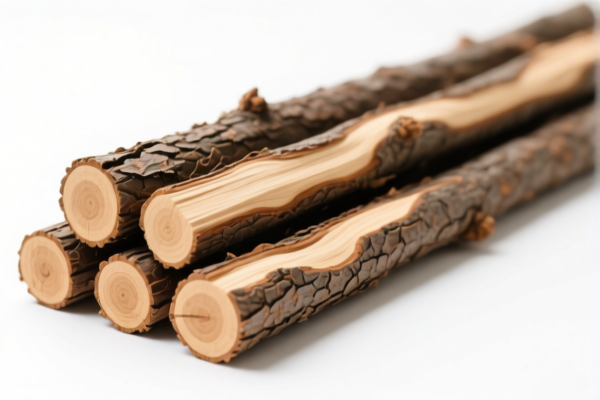

AI Analysis
🌲 Pine Wood Rough Utility Pole (Rough Wooden Posts)
🌐 HS Code Reference & Customs Clearance Guide | 2026 Latest Tariff Analysis | Professional Clearance Strategy
📌 I. Product Definition & Classification: Do You Really Understand "Pine Wood Rough Utility Poles"?
A Pine Wood Rough Utility Pole is a natural timber product processed primarily for structural support in electrical, telecommunication, or fencing applications. In international trade, its classification depends heavily on the degree of processing and the intended end-use.
Because the product is described as "Rough" (unprocessed or simply debarked/squared but not planed/smoothed), it falls under Chapter 44 (Wood and articles of wood). The key debate lies in whether it is classified as raw timber (logs/posts) or as articles of wood.
⚠️ Key Distinction Point:
- If the pole is merely cut to length and debarked, retaining its natural shape or rough-hewn state → It may be classified as raw timber or posts (4403/4404).
- If it is specifically identified as a "Utility Pole" for electrical/telecom infrastructure → It may attract specific headings for poles, piles, or stakes (4401/4404).
- Crucial Warning: Due to US-China trade tensions, pine wood products from China face significant additional tariffs (25% Section 301 + 10% IEEPA), totaling 35%.
📦 II. HS Code Classification Details (2026 Latest Tariff Authority Comparison)
| HS Code | Product Description | Application Scenario | Processing Level | Total Tax Rate (China Origin → US) |
|---|---|---|---|---|
4403.22.01.12 |
Rough pine poles, material pine, shape pole, fits coniferous wood and utility pole classification logic. | Electrical/Telecom poles made of pine, rough-hewn. | Rough/Semi-processed | 35.0% |
4404.10.00.80 |
Rough pine poles, material pine, shape pole, fits category of "Poles, piles and stakes". | Structural posts for fencing, general construction, or utility. | Continuously shaped, rough surface | 35.0% |
4404.10.00.90 |
Rough pine poles, material pine, shape pole, fits "Other" coniferous wood category judgment. | Other coniferous rough wood posts not specifically listed elsewhere. | Continuously shaped, rough surface | 35.0% |
4403.21.01.12 |
Rough pine poles, material pine, rough shape, purpose pole, fits classification explanation requirements. | Specific pine poles identified by roughness and utility purpose. | Heat-treated or not, rough, coniferous. | 35.0% |
4401.21.00.00 |
Rough pine, material pine, rough shape, fits coniferous wood primary form classification logic. | Raw pine logs/bolts, less processed than poles. | Logs, firewood, or basic timber forms. | 35.0% |
🔍 Key Reminder:
- All these HS codes share the same total tax rate of 35% for Chinese-origin pine wood products entering the US.
- The difference lies in the customs description and legal justification. Misclassification can lead to delays, even if the rate is similar, because the legal basis (Section 301 vs. IEEPA) must match the product nature.
- "Rough" (Rough) is the critical keyword. It excludes planed, smoothed, or treated wood that might fall under different chapters (e.g., Chapter 47 for pulp, though unlikely for poles).
💰 III. 2026 Latest Tariff Rate Detailed Explanation (Including Additional Taxes, Policy Add-ons)
✅ Applicable Country: United States (US)
✅ Origin: China (CN)
✅ Effective Date: From November 10, 2025 onwards (including subsequent imports)
🎯 1. All Listed HS Codes (4403.22.01.12, 4404.10.00.80, etc.) —— Pine Wood Rough Utility Poles
| Item | Content |
|---|---|
| Basic Tariff Rate | 0% (ad valorem) (Note: Pine wood often has low/zero MFN rates, but see below) |
| Section 301 Additional Tariff | +25% (From USITC Footnote 9903.88.01) |
| IEEPA Additional Tariff | +10% (Targeting China/HK products, effective Nov 10, 2025) |
| Total Tax Rate | 35.0% |
| Tax Calculation | CIF Value × 35% |
| De Minimis Exemption | ❌ Not Applicable (deny_de_minimis) (Value under $800 does not exempt this category) |
| Legal Basis Path | IEEPA:9903.01.25 → IEEPA:9903.01.24 → USITC:4403/4404 Codes → FOOTNOTE:9903.88.01 |
📌 Explanation:
- The 25% is the standard Section 301 tariff on Chinese wood products.
- The 10% is the new IEEPA tariff layer added on top.
- Total 35% is a high tariff for raw timber products.
- De Minimis ($800): Do NOT attempt to use it for pine wood poles. Pine wood is explicitly excluded from the de minimis exemption under current enforcement guidelines.
🛠️ IV. Customs Clearance Practical Advice (Battle-Tested Pitfall Avoidance Guide)
✅ 1. Documentation Checklist (None Can Be Omitted)
| Document | Must Provide | Description |
|---|---|---|
| ✅ Product Specification Sheet | ✔️ | Include species (Pine/松木), dimensions (length, diameter), treatment status (untreated/rough). |
| ✅ Product Photos | ✔️ | Clear images showing the "Rough" texture, debarked surface, and any markings/branding. |
| ✅ Commercial Invoice | ✔️ | Must clearly state "Rough Pine Wood Utility Pole" and the specific HS Code. |
| ✅ Packing List | ✔️ | Detail weight, volume, and packaging type (e.g., bulk, bundled). |
| ✅ Phytosanitary Certificate | ✔️ | Critical for Wood Products. Required to prove freedom from pests/diseases. |
| ✅ ISPM 15 Marking | ✔️ | If packaged in wooden pallets/crates, they must be heat-treated/fumigated and marked. |
| ✅ Certificate of Origin | ✔️ | To prove origin as China (CN) for tariff calculation. |
✅ 2. Declaration Tips (Key Mantras)
🔥 "Rough is Key, Species Must Be Clear, No Planed Surface, Tariff Stays Low!"
(Note: "Low" here is relative; 35% is high, but misdeclaring as "Processed Wood" could trigger higher penalties or different codes.)
| Scenario | Correct Declaration | Wrong Practice |
|---|---|---|
| Rough Utility Pole | 4403.22.01.12 or 4404.10.00.80 Describe as "Rough Pine Wood Pole" |
Describe as "Wooden Post" without "Rough" → Risk of misclassification. |
| Smooth/Planed Wood | Not applicable in this dataset. Would fall under different codes with potentially different rates. | Misdeclaring planed wood as "Rough" → Fraud/penalties. |
| Wooden Pallets | 4401 or 4421 depending on use. |
Mixing pallets with poles in one line item → Customs rejection. |
| Treated Wood | If pressure-treated, different code may apply. | Claiming "Rough" when chemically treated → Misdeclaration. |
✅ 3. Special Situation Handling
| Situation | Handling Advice |
|---|---|
| OEM Custom Poles | Provide customer order + design drawings. Ensure "Rough" description matches physical inspection. |
| Mixed Shipment | Declare poles and packaging separately. Pallets should not be hidden inside the pole declaration. |
| Wood Pests Concern | Ensure Phytosanitary Certificate is valid and matches the shipment. CBP may inspect for borers/beetles. |
| IEEPA Exemption? | No. Pine wood from China is subject to full 35% tariff. No known exemptions for utility poles. |
🌍 V. Global Market Clearance Comparison (2026 Latest)
| Country/Region | Recommended HS Code | Tariff (China Origin) | Certification Requirements | Notes |
|---|---|---|---|---|
| 🇺🇸 USA | 4403.22.01.12 / 4404.10.00.80 |
35% | Phytosanitary + ISPM 15 | Highest barrier. 35% total tax. De Minimis not allowed. |
| 🇨🇳 China | 4403 / 4404 |
0% - 5% | None (Import side) | Domestic production is cheaper. |
| 🇪🇺 EU | 4403 / 4404 |
0% - 4% | EUTR (EU Timber Regulation) | Deforestation Regulation (EUDR) applies soon. |
| 🇬🇧 UK | 4403 / 4404 |
0% - 4% | UK Timber Regulation | Similar to EU. |
| 🇯🇵 Japan | 4403 / 4404 |
5% - 10% | None | Moderate tariffs. |
📌 Conclusion:
- USA is the most challenging market due to the 35% combined tariff.
- China and EU have low/zero MFN tariffs, but EU has strict sustainability/deforestation checks.
- Pine wood from China to US is highly taxed. Consider supply chain diversification (e.g., sourcing from Vietnam, Mexico, or Canada if possible) to avoid the 35% hit.
📌 VI. Common Errors & Pitfall Guide (Blood & Tears Lessons)
❌ Error 1: Declaring "Rough Pine Pole" as "Wooden Fence Post" (Generic)
👉 Consequence: Customs may reject the classification, leading to delays and potential re-inspection.
✅ Correct: Use specific HS code 4403.22.01.12 or 4404.10.00.80 with clear "Rough" description.
❌ Error 2: Trying to ship under $800 using De Minimis (Section 321)
👉 Consequence: Seizure or Rejection. Pine wood is explicitly excluded from de minimis.
✅ Correct: Declare fully and pay 35% tariff. Plan for this cost.
❌ Error 3: Forgetting Phytosanitary Certificate
👉 Consequence: Quarantine hold. Pests detected → Whole shipment destroyed or fumigated at owner's expense.
✅ Correct: Obtain certificate from origin country's agricultural authority.
❌ Error 4: Mislabeling "Treated" Wood as "Rough/Uncalibrated"
👉 Consequence: Misclassification fraud. If treated with chemicals, different codes and regulations apply.
✅ Correct: Accurately describe treatment status.
🎯 VII. Conclusion: Professional Declaration Saves Money and Time!
🎯 Remember the Mantra:
🔹 "Rough is Key, Species is Pine, 35% Tax is Mine!"
🔹 "No De Minimis for Wood, Phytosanitary is a Must!"
🔹 "HS Code Determines Tariff, Misclassification Costs More!"
📌 Pro Tip:
If your pine wood poles are not from China (e.g., from Canada, Russia, or Southeast Asia), the 35% tariff may not apply.
Action:
1. Verify Country of Origin.
2. If non-China, apply for preferential tariff where applicable.
3. For China-origin, budget for 35% tax.
4. Consider Advance Ruling from US CBP if unsure about "Rough" vs. "Smooth" classification.
📣 Immediate Action:
📞 Contact a licensed customs broker + Provide Product Photos + Apply for CBP Advance Ruling (if high volume)
🚀 Ensure your pine wood poles clear customs smoothly, avoid delays, and protect your profit margin!
✨ Professional Customs Clearance Starts with Accurate Classification!
💼 Every Percent of Tax Matters!
Customer Reviews
About HS Code Classification
The Harmonized System (HS) is an internationally standardized nomenclature developed by the World Customs Organization (WCO) to classify traded products. Over 200 countries use the HS system as the basis for customs tariffs, trade statistics, and import/export regulations.
Each HS code follows a hierarchical structure:
- Chapter (2 digits) — Broad category of goods (e.g., Chapter 84: Machinery and Mechanical Appliances)
- Heading (4 digits) — More specific grouping within the chapter
- Subheading (6 digits) — Internationally standardized breakdown, used by all WCO member countries
- National subdivisions (8-10 digits) — Country-specific extensions for further classification, such as US HTSUS 10-digit codes
Correct HS code classification is essential for smooth customs clearance, accurate duty payment, and compliance with trade regulations. Misclassification can lead to customs delays, overpayment of duties, or penalties.
When importing from CN to US, the applicable tariff rates may include:
- Most-Favored-Nation (MFN) rate — The standard duty rate applied to WTO members
- General rate — Applied to countries without trade agreements
- Trade remedy duties — Additional tariffs such as Section 301 (anti-dumping), Section 232 (national security), or countervailing duties
The information provided on this page is for reference purposes only. For official classification, please consult with your local customs authority or a licensed customs broker.