Pipe Internal Connector
CN → US| HS Code | Tariff Rate | Origin | Destination | Doc |
|---|---|---|---|---|
| 3917400095 | 40.3% | CN | US | Official Doc |
| 3917400010 | 40.3% | CN | US | Official Doc |
| 7307199080 | 41.2% | CN | US | Official Doc |
| 7307995045 | 89.3% | CN | US | Official Doc |
| 8481909060 | 85.0% | CN | US | Official Doc |
| 8481909081 | 35.0% | CN | US | Official Doc |
Product Images
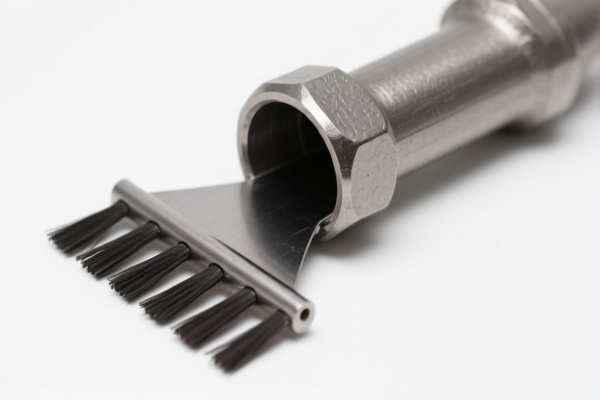
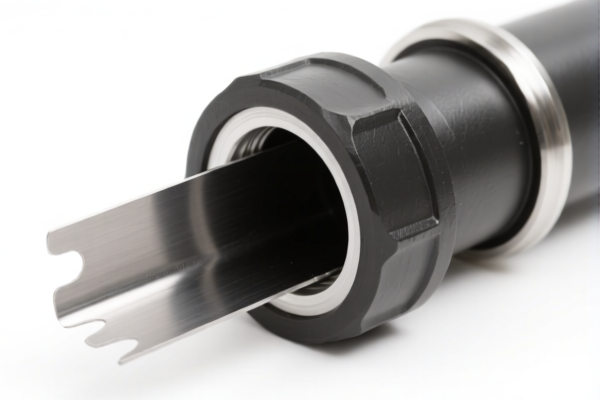
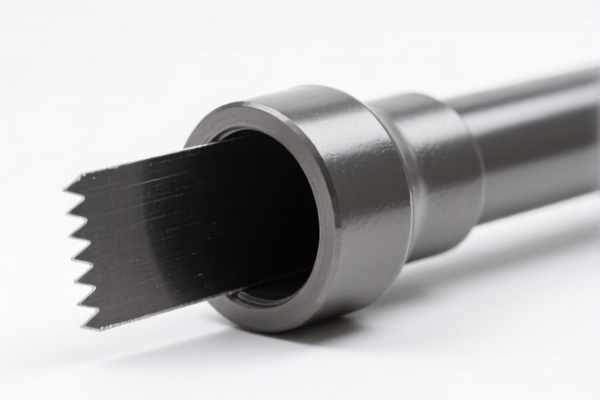
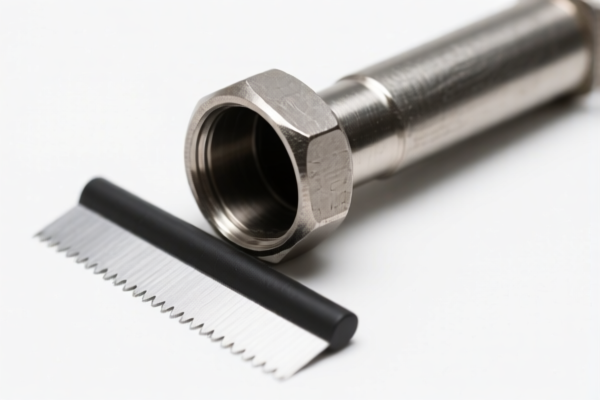
AI Analysis
🔌 Pipe Internal Connector (Plastic & Steel Fittings)
🌐 HS Code Reference & Customs Clearance Guide | 2026 Latest Tariff Analysis | Professional Clearance Strategy
📌 I. Product Definition & Classification: What is a "Pipe Internal Connector"?
In international trade, "Pipe Internal Connector" is a broad term that usually refers to fittings used to join, redirect, or control the flow of fluids through pipes, tubes, or hoses. The critical factor for HS Code classification is the material (Plastics vs. Iron/Steel) and the specific application (General vs. Specific Vehicle Brakes).
Key Distinction Points: * Plastic Fittings: Usually fall under Chapter 39. They are lightweight, corrosion-resistant, and used in plumbing, HVAC, or industrial fluid transport. * Iron/Steel Fittings: Usually fall under Chapter 73. They are used in high-pressure, high-temperature, or structural applications (e.g., oil & gas, construction). * Valve Components: If the "connector" is actually a valve body or part of a pressure-reducing valve, it falls under Chapter 84.
⚠️ Critical Note: The term "Internal Connector" is vague. Customs requires a precise description. - If it’s a simple joint/elbow of plastic → 3917.40 - If it’s a cast iron joint → 7307.19 - If it’s a steel screw-on fitting → 7307.99 - If it’s a valve body part → 8481.90
📦 II. HS Code Classification Details (2026 Latest Tariff Authority Comparison)
Based on the provided data, here are the 6 specific HS Codes relevant to pipe connectors/fittings:
| HS Code | Product Description | Material/Type | Specific Application |
|---|---|---|---|
3917.40.00.95 |
Tube or pipe fittings of plastics | Plastics | General fittings (joints, elbows, flanges) NOT for brake hoses of specific vehicles |
3917.40.00.10 |
Tube or pipe fittings of plastics | Plastics | Specific: For brake hoses of vehicles (Subheading 8701.21-29, 8702-8705, 8711) |
7307.19.90.80 |
Tube or pipe fittings of iron or steel | Iron/Steel (Cast) | Cast fittings, Other, Other Other, Other Other |
7307.99.50.45 |
Tube or pipe fittings of iron or steel | Iron/Steel (Other) | Of iron or non-alloy steel, Other. Subject to higher steel surcharge. |
8481.90.90.60 |
Taps, cocks, valves... parts thereof | Valve Parts | Valve bodies (parts of pressure-reducing/thermostatic valves) |
8481.90.90.81 |
Taps, cocks, valves... parts thereof | Steel Forgings | Steel forgings (parts of valves), NOT valve bodies |
🔍 Key Reminder: - Plastic Fittings generally have 0% Base Tariff but are NOT subject to the 25%/50% steel/aluminum surcharges. - Iron/Steel Fittings are subject to Base Tariffs (4.3%-6.2%) PLUS significant Surcharge Tariffs (25%-50%). - Valve Parts have 0% Base Tariff but are subject to the 50% steel/aluminum surcharge (for certain types) or 25% surcharge.
💰 III. 2026 Latest Tariff Rate Breakdown (Including Surcharges)
✅ Applicable Country: United States (US)
✅ Country of Origin: China (CN)
✅ Effective Date: Current tariff structures (including Section 301 and IEEPA surcharges)
🎯 1. Plastic Fittings (3917.40) — Low Risk, Low Duty
A. General Plastic Fittings: 3917.40.00.95
| Item | Content |
|---|---|
| Base Tariff | 0.0% |
| Surcharge (Section 301) | 0.0% (Plastics are NOT subject to steel/aluminum surcharges) |
| Total Tax | 0.0% |
| De Minimis Eligibility | ✅ Yes (if under $800, Section 321) |
| Legal Basis | Standard HTSUS 3917.40.00.95 |
B. Plastic Brake Hose Fittings (Specific): 3917.40.00.10
| Item | Content |
|---|---|
| Base Tariff | 0.0% |
| Surcharge | 0.0% |
| Total Tax | 0.0% |
| De Minimis Eligibility | ✅ Yes |
| Note | Must prove use in vehicles of HS 8701.21-29, 8702-8705, 8711 |
📌 Explanation: - Plastic fittings are exempt from the heavy steel/aluminum surcharges. - Total Duty = 0%. This is the most cost-effective category for plastic pipe connectors.
🎯 2. Iron/Steel Cast Fittings: 7307.19.90.80
| Item | Content |
|---|---|
| Base Tariff | 6.2% |
| Surcharge (Section 301) | +25.0% |
| Steel/Aluminum Surcharge | 0% (Not listed as 50% in source) |
| Total Tax | 31.2% |
| De Minimis Eligibility | ❌ No (Value > $800 typically, and steel items are excluded) |
| Legal Basis | HTSUS 7307.19.90.80 + Footnote 9903.88.01 |
📌 Explanation: - Total Duty = 31.2%. - Base rate is 6.2%, plus 25% Section 301 surcharge. - No additional 50% steel surcharge applies to this specific cast fitting code in the provided data.
🎯 3. Iron/Steel Other Fittings (Non-Cast): 7307.99.50.45
| Item | Content |
|---|---|
| Base Tariff | 4.3% |
| Surcharge (Section 301) | +25.0% |
| Steel/Aluminum Surcharge | +50% (Explicitly stated: "Steel, Aluminum, Copper Products Surcharge: 50%") |
| Total Tax | 79.3% |
| De Minimis Eligibility | ❌ No |
| Legal Basis | HTSUS 7307.99.50.45 + Steel Surcharge Rules |
📌 Explanation: - Total Duty = 79.3%. This is a HARDWARE HIT. - Base 4.3% + 25% Section 301 + 50% Steel Surcharge. - Why? This code is for "Other" steel fittings (e.g., malleable iron, wrought steel), which face the highest punitive tariffs. - Warning: Do NOT ship these unless you have calculated the 79.3% cost.
🎯 4. Valve Parts (Valve Bodies): 8481.90.90.60
| Item | Content |
|---|---|
| Base Tariff | 0.0% |
| Surcharge (Section 301) | +25.0% |
| Steel/Aluminum Surcharge | +50% (Explicitly stated: "Steel, Aluminum, Copper Products Surcharge: 50%") |
| Total Tax | 75.0% |
| De Minimis Eligibility | ❌ No |
| Legal Basis | HTSUS 8481.90.90.60 + Steel Surcharge Rules |
📌 Explanation: - Total Duty = 75.0%. - Although base tariff is 0%, the 50% steel surcharge applies because it is a "valve body" made of steel/iron. - Note: If it is a "Steel Forging" (
8481.90.90.81), the surcharge is only 25% (Total 25%).
🎯 5. Valve Parts (Steel Forgings): 8481.90.90.81
| Item | Content |
|---|---|
| Base Tariff | 0.0% |
| Surcharge (Section 301) | +25.0% |
| Steel/Aluminum Surcharge | 0% (Not listed as 50% in source) |
| Total Tax | 25.0% |
| De Minimis Eligibility | ❌ No |
| Legal Basis | HTSUS 8481.90.90.81 |
📌 Explanation: - Total Duty = 25.0%. - This is significantly cheaper than valve bodies (
8481.90.90.60). - Strategy: If your "internal connector" is a forged steel part of a valve, ensure it is classified as8481.90.90.81(Steel Forging) rather than8481.90.90.60(Valve Body) to save 50% in duties.
🛠️ IV. Customs Clearance Practical Advice (Avoid Pitfalls)
✅ 1. Documentation Checklist (Mandatory)
| Document | Required? | Description |
|---|---|---|
| ✅ Product Specification Sheet | ✔️ | Must specify: Material (Plastic/Iron/Steel), Type (Cast/Wrought/Forged), Application (Brake/General) |
| ✅ Technical Drawings | ✔️ | For steel fittings, drawings prove if it’s cast, forged, or other. Critical for 7307.99 vs 7307.19. |
| ✅ Commercial Invoice | ✔️ | Must accurately describe item as "Pipe Fitting, Plastic, for Water Line" or "Steel Valve Body Part". Never use vague terms like "Connector" without material. |
| ✅ Origin Certificate | ✔️ | To prove China origin (subject to surcharges). |
| ✅ HS Code Pre-Ruling | ✔️ | Highly Recommended for steel fittings due to high duties. |
✅ 2. Classification Strategy (Key Tips)
| Scenario | Correct HS Code | Duty Rate | Why? |
|---|---|---|---|
| Plastic Pipe Joint | 3917.40.00.95 |
0% | Plastics are not subject to steel surcharges. |
| Plastic Brake Fitting | 3917.40.00.10 |
0% | Specific automotive use, but still 0% duty. |
| Cast Iron Elbow | 7307.19.90.80 |
31.2% | Cast fittings have lower base + standard 25% surcharge. |
| Steel Screw-On Fitting | 7307.99.50.45 |
79.3% | "Other" steel fittings face 50% steel surcharge. Avoid if possible. |
| Steel Valve Body | 8481.90.90.60 |
75.0% | Valve bodies face 50% steel surcharge. |
| Steel Valve Forging | 8481.90.90.81 |
25.0% | Forgings only face 25% surcharge. Better than valve body. |
🔥 Golden Rule:
"Plastic is Free (0%), Steel is Expensive (25%-79%). Know your Material!"
✅ 3. Special Circumstances
| Situation | Handling Advice |
|---|---|
| Mixed Containers | If shipping plastic and steel fittings together, separate them. Steel parts will trigger high duties for the whole shipment if not declared correctly. |
| OEM Parts | Provide customer PO and design specs. If it’s a "valve part," argue it’s a forging (8481.90.90.81) not a body (8481.90.90.60) to save 50% duty. |
| Brake Hoses | If plastic, ensure it’s for the specific vehicle classes (8701.21-29, etc.) to use 3917.40.00.10. Otherwise, use 3917.40.00.95 (both 0% duty). |
| "Internal Connector" Ambiguity | If the item is a simple coupler, use Pipe Fitting (Ch 39 or 73). If it has a mechanism to control flow, it may be a Valve (Ch 84). Misclassification leads to audits. |
🌍 V. Global Market Comparison (2026 Latest)
| Country | Recommended HS Code | Duty Rate (China Origin) | Notes |
|---|---|---|---|
| 🇺🇸 USA | 3917.40.00.95 (Plastic) |
0% | Best for plastic fittings. |
| 🇺🇸 USA | 7307.99.50.45 (Steel) |
79.3% | Avoid if possible. |
| 🇨🇳 China | 3917.40.00 |
~5-6% | Standard import duty. |
| 🇨🇳 China | 7307.19 |
~6% | Standard import duty. |
| 🇪🇺 EU | 3917.40 |
0-4% | Varies by exact subheading. |
| 🇪🇺 EU | 7307.19 |
2.7-5.5% | Standard duty. |
📌 Conclusion:
- USA is the highest risk market for steel fittings due to Section 301 and Steel Surcharges.
- Plastic fittings are tariff-free in the USA, making them highly competitive.
- Steel fittings should be optimized for classification (e.g., Cast vs. Forging) to minimize the 25%-50% surcharges.
📌 VI. Common Errors & Pitfalls (Lessons Learned)
❌ Error 1: Calling a Steel Valve Body "Pipe Fitting"
👉 Consequence: If declared as 7307, it might be misclassified. If declared as 8481, it faces 75% duty. Correct classification is critical.
❌ Error 2: Assuming All Steel Fittings are 25%
👉 Consequence: 7307.99.50.45 faces 79.3%. Not all steel fittings are equal. Cast (7307.19) is cheaper than Other (7307.99).
❌ Error 3: Using "Connector" in Description
👉 Consequence: Customs may reject or audit due to lack of specificity. Use "Plastic Pipe Elbow" or "Steel Valve Body Part".
✅ Correct Practice:
"Plastic Pipe Fitting, PVC, Elbow 90°, for Water Supply" →
3917.40.00.95(0%)
"Steel Valve Body, Cast Iron, for Pressure Relief Valve" →8481.90.90.60(75%)
"Steel Forging, Part of Valve, Carbon Steel" →8481.90.90.81(25%)
🎯 VII. Conclusion: Professional Classification Saves Money!
🎯 Key Takeaway:
🔹 Plastic = 0% Duty (Safe & Profitable)
🔹 Steel Cast = 31.2% Duty (Manageable)
🔹 Steel Forging = 25% Duty (Optimal for Steel)
🔹 Steel Other/Valve Body = 75-79% Duty (Avoid or Optimize)📌 Action Plan:
1. Identify Material: Plastic or Steel?
2. If Steel: Is it Cast, Forged, or Other?
3. If Valve Part: Is it a Body or Forging?
4. Choose Correct HS Code to minimize duty.
5. Prepare Technical Docs to support classification.
📣 Immediate Action:
📞 Consult a customs broker for Pre-Ruling if shipping steel fittings.
📝 Use precise descriptions: "Material + Type + Application".
🚀 Save 50%+ in duties by choosing the right HS Code!
✨ Professional Clearance Starts with Precise Classification!
💼 Your Cost Savings Depend on Accuracy!
Customer Reviews
About HS Code Classification
The Harmonized System (HS) is an internationally standardized nomenclature developed by the World Customs Organization (WCO) to classify traded products. Over 200 countries use the HS system as the basis for customs tariffs, trade statistics, and import/export regulations.
Each HS code follows a hierarchical structure:
- Chapter (2 digits) — Broad category of goods (e.g., Chapter 84: Machinery and Mechanical Appliances)
- Heading (4 digits) — More specific grouping within the chapter
- Subheading (6 digits) — Internationally standardized breakdown, used by all WCO member countries
- National subdivisions (8-10 digits) — Country-specific extensions for further classification, such as US HTSUS 10-digit codes
Correct HS code classification is essential for smooth customs clearance, accurate duty payment, and compliance with trade regulations. Misclassification can lead to customs delays, overpayment of duties, or penalties.
When importing from CN to US, the applicable tariff rates may include:
- Most-Favored-Nation (MFN) rate — The standard duty rate applied to WTO members
- General rate — Applied to countries without trade agreements
- Trade remedy duties — Additional tariffs such as Section 301 (anti-dumping), Section 232 (national security), or countervailing duties
The information provided on this page is for reference purposes only. For official classification, please consult with your local customs authority or a licensed customs broker.