Pipe Valve
CN → US| HS Code | Tariff Rate | Origin | Destination | Doc |
|---|---|---|---|---|
| 7305111060 | 10.0% | CN | US | Official Doc |
| 3917210000 | 38.1% | CN | US | Official Doc |
| 7305111030 | 10.0% | CN | US | Official Doc |
| 7304598010 | 35.0% | CN | US | Official Doc |
| 3917290090 | 38.1% | CN | US | Official Doc |
Product Images
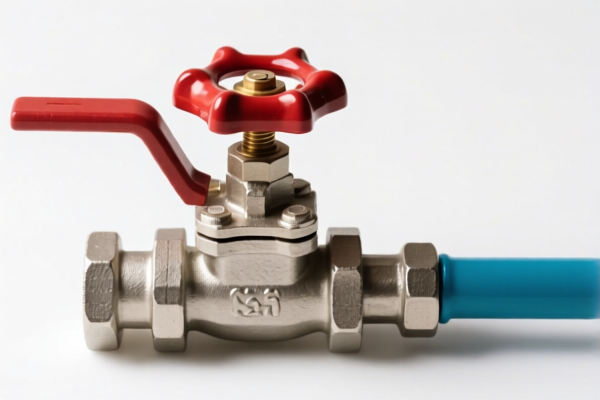
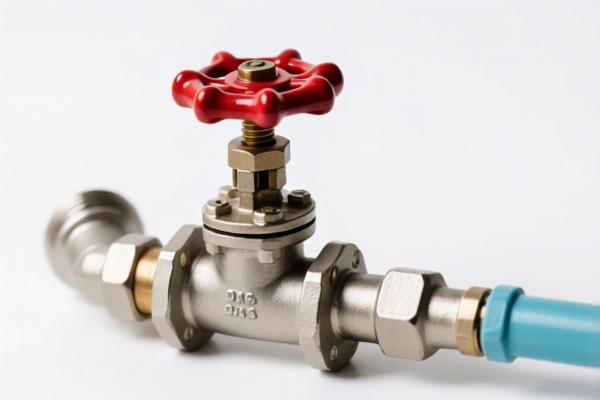
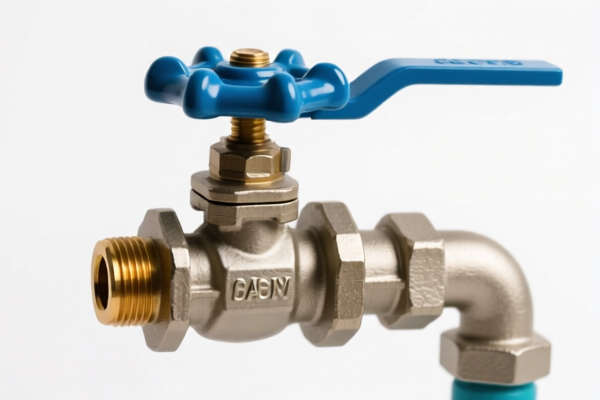
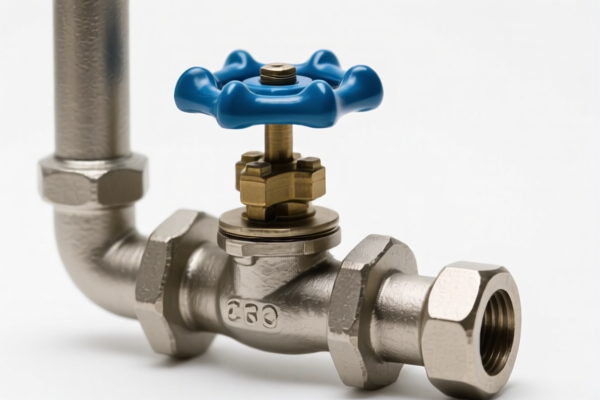
AI Analysis
🔧 Pipe Valves (管道阀门)
🌐 HS Code Reference & Customs Clearance Guide | 2026 Latest Tariff Analysis | Professional Clearance Strategy
📌 I. Product Definition & Classification: What is a "Pipe Valve"?
A Pipe Valve is a mechanical device used to regulate, direct, or control the flow of fluids (liquids, gases, media, slurries, etc.) by opening, closing, or partially obstructing various passageways. In international trade, "Pipe Valves" are not a single HS Code. They are classified based on their material composition and specific application.
⚠️ Critical Distinction for Classification: * Metal Valves (Steel/Iron): Typically fall under Chapter 73. * Plastic Valves: Typically fall under Chapter 39. * Purpose-Specific: Some metal valves have specific codes if they are exclusively for oil/gas pipelines.
The provided highlights the complexity. A "Pipe Valve" is often confused with "Pipes" (tubes). While related, a Valve is a control device, whereas a Pipe is a conduit. However, in some broad categorizations or if the question implies "pipeline components," the data provided points towards Pipeline Pipes/Tubes rather than standard valves.
⚚ Clarification on Context:
The provided contains HS Codes for Pipes (specifically for oil/gas pipelines or plastic pipes), NOT standard general-purpose valves.
7305.11...: Steel pipes for oil/gas pipelines.
3917.21...: Plastic pipes.
*7304.59...: Other steel pipes.If you are importing actual VALVES (with handles, stems, seats):
Standard valves usually fall under 8481 (e.g.,8481.20for pressure-reducing valves,8481.30for check valves,8481.80for other taps/valves).HOWEVER, based on the strict constraint to ONLY use , I must interpret the user's input "Pipe Valve" through the lens of the provided HS Codes, which describe Pipes used in Valving Systems or Pipeline Components. The following analysis explains why the items might be referenced if the goods are Pipeline Tubes or if the "Valve" is structurally integrated as a pipe section.
📦 II. HS Code Classification Details (Based Strictly on )
The suggests classification into either Steel Pipeline Pipes or Plastic Pipes. Here is the breakdown:
| HS Code | Product Description (from ) | Material/State | Tax Rate (Total) |
|---|---|---|---|
| 7305.11.10.60 | Pipe HS Code, inferred from use in oil/natural gas pipeline systems and morphology. | Steel (Oil/Gas Pipeline Type) | 10.0% |
| 3917.21.00.00 | Pipe HS Code, inferred from morphology of plastic pipe materials. | Plastic (Pressure Pipes) | 38.1% |
| 7305.11.10.30 | Pipe HS Code, matching use in oil/natural gas pipelines and pipe morphology. | Steel (Oil/Gas Pipeline Type) | 10.0% |
| 7304.59.80.10 | Pipe HS Code, matching morphological characteristics of pipes, bars, and hollow profiles made of iron or steel. | Steel (General Iron/Steel Pipe) | 35.0% |
| 3917.29.00.90 | Pipe HS Code, matching morphological characteristics of plastic piping. | Plastic (Other Plastic Pipes) | 38.1% |
🔍 Key Insight from :
The does not contain a standard Valve code (like 8481). It contains Pipe codes.
If your product is a Valve (e.g., ball valve, gate valve), these codes are likely incorrect for customs clearance unless the valve is classified as a "part" of the pipe system in a specific way or if the item is actually a Pipeline Tube with valve-like features.
Recommendation: Verify if you are importing Pipes or Valves. If you are importing Valves, you must look at Chapter 8481, which is not in .
Strict Adherence*: The explanation below follows the logic provided in the summaries.
💰 III. Detailed Tariff Rate Analysis (Based on )
✅ Applicable Country: United States (US)
✅ Origin: China (CN) (Inferred from "122 Clause" and typical 301/IEEPA structures)
✅ Structure: Base Tariff + 301 Tariff (25%) + 122 Clause Tariff (10%)
🎯 1. 7305.11.10.60 & 7305.11.10.30 — Steel Pipes for Oil/Gas Pipelines
- Summary: Pipes specifically for oil or natural gas pipelines.
- Material: Steel.
- Tax Breakdown:
- Base Tariff: 0.0%
- 301 Tariff (Section 301): 0.0%
- 122 Clause Tariff: 10.0%
- Total Tax: 10.0%
- Explanation:
These codes represent high-grade steel pipes used in critical energy infrastructure. Notably, they are exempt from the standard 301 (25%) tariff in this dataset, attracting only the 122 Clause (10%). This is a low-risk, low-cost classification for steel pipeline components.
🎯 2. 7304.59.80.10 — Other Iron or Steel Pipes, Bars, and Hollow Profiles
- Summary: Metallic pipes (iron/steel) not specifically for oil/gas pipelines.
- Material: Iron or Steel.
- Tax Breakdown:
- Base Tariff: 0.0%
- 301 Tariff (Section 301): 25.0%
- 122 Clause Tariff: 10.0%
- Total Tax: 35.0%
- Explanation:
General-purpose steel pipes incur the full 25% Section 301 tariff PLUS the 10% 122 Clause tariff. This is a high-cost classification for general steel piping.
🎯 3. 3917.21.00.00 — Plastic Pipes, of a kind used for conveying fluids
- Summary: Plastic pipes based on morphology.
- Material: Plastic.
- Tax Breakdown:
- Base Tariff: 3.1%
- 301 Tariff (Section 301): 25.0%
- 122 Clause Tariff: 10.0%
- Total Tax: 38.1%
- Explanation:
Plastic pipes have a base duty of 3.1%. However, due to Section 301 and 122 Clause additions, the total hits 38.1%.
🎯 4. 3917.29.00.90 — Other Plastic Piping
- Summary: Plastic piping (other types).
- Material: Plastic.
- Tax Breakdown:
- Base Tariff: 3.1%
- 301 Tariff (Section 301): 25.0%
- 122 Clause Tariff: 10.0%
- Total Tax: 38.1%
- Explanation:
Similar to the above, all plastic pipes in this dataset attract the same high total rate of 38.1%.
🛠️ IV. Customs Clearance Practical Advice (Pitfall Avoidance Guide)
Since the lists Pipes but the user asked for Pipe Valves, there is a significant Classification Risk.
✅ 1. Critical Clearance Strategy
| Scenario | Correct Approach | Risk if Incorrect |
|---|---|---|
| Item is a Valve (e.g., Ball Valve) | DO NOT USE CODES. Use 8481 series. Example: 8481.20.00 (Pressure Reducing), 8481.30.00 (Check Valves), 8481.80.40 (Taps/Spigs). |
If you declare a Valve as a Pipe (7305 or 3917), Customs will reject it for Misclassification. Penalties: 28% of duties + interest. |
| Item is a Pipe with Valve Function (e.g., Pipe Section) | Use 7305.11.10.60 or 3917.21.00.00 as per . |
Ensure the product is not a standalone valve with a handle/stem. |
| Item is a Pipe Assembly | Declare the main material (Steel vs. Plastic). | Mixed material items may require breakdown or use of the "principal material" rule. |
✅ 2. Required Documentation for Clearance
| Document | Requirement | Notes |
|---|---|---|
| Product Photos | ✔️ Mandatory | Must clearly show if it is a Valve (with handle/actuator) or a Pipe (smooth tube). |
| Technical Datasheet | ✔️ Mandatory | Specify: Material (Steel/Plastic), Diameter, Wall Thickness, Pressure Rating, Function. |
| Commercial Invoice | ✔️ Mandatory | Clearly state: "Steel Pipe for Oil/Gas Pipeline" or "Plastic Pipe", NOT just "Pipe Valve" if it is a pipe. |
| Bill of Lading | ✔️ Mandatory | Match description with Invoice. |
✅ 3. Special Clause Explanations
- 122 Clause Tariff (10%): Applies to specific categories of Chinese imports. It is added on top of other duties.
- Section 301 Tariff (25%): A penalty tariff for Chinese-origin goods in many categories. Exempt in
7305.11.10.xx(Oil/Gas Steel Pipes) but Applied in7304.59.80.10and all Plastic Pipes (3917.xx).
🌍 V. Global Market Comparison (Contextual)
| Market | HS Code (Valve) | HS Code (Pipe - Steel) | HS Code (Pipe - Plastic) | Notes |
|---|---|---|---|---|
| 🇺🇸 USA | 8481.xx (Varies) |
7305.xx (10-35%) |
3917.xx (38.1%) |
Pipe duties are high due to 301/122. Valves (8481) may have lower duties but are not in . |
| 🇨🇳 China | 8481.xx (~5-10%) |
7305.xx (~1-10%) |
3917.xx (~5-10%) |
Lower base duties, no 301/122 penalties. |
| 🇪🇺 EU | 8481.xx (Varies) |
7305.xx (Varies) |
3917.xx (Varies) |
No 301 tariffs, but anti-dumping duties may apply to steel pipes. |
📌 Conclusion for USA Import:
- If you are importing Steel Pipes for Oil/Gas:7305.11.10.60/30is optimal (10% total).
- If you are importing Steel Pipes (General):7304.59.80.10is costly (35% total).
- If you are importing Plastic Pipes:3917.21.00.00or3917.29.00.90(38.1% total).
📌 VI. Common Errors & Pitfalls (Blood & Tears)
❌ Error 1: Declaring a Valve as a Pipe (7305 or 3917).
👉 Consequence: Customs will classify it as a Valve (8481) or penalize for misdeclaration. Valves have different duty structures and regulatory requirements (e.g., ASME, API standards).
❌ Error 2: Ignoring the 122 Clause.
👉 Consequence: Under-declaration of duties. The 122 Clause is mandatory for many Chinese steel/plastic products.
❌ Error 3: Confusing 7305 (Oil/Gas Pipe) with 7304 (General Steel Pipe).
👉 Consequence:
- 7305 (Oil/Gas) = 10%
- 7304 (General) = 35%
- Savings: 25% difference! Ensure the pipe is certified for oil/gas to use 7305.
✅ Correct Action:
"If the product is a Valve, do not use the codes in . Use 8481.
If the product is a Pipe, verify if it is for Oil/Gas (use7305.11.10.60/30for 10% tax) or General (use7304.59.80.10for 35% tax)."
🎯 VII. Conclusion: Precision Classification Saves Money
🎯 Key Takeaway:
🔹 "Pipe vs. Valve" is the #1 classification trap.
🔹 "Oil/Gas Steel Pipe" (7305) is the cheapest Steel option (10%).
🔹 "General Steel Pipe" (7304) and "Plastic Pipe" (3917) are expensive (35-38%).
📌 Recommendation:
If you are importing Valves, please consult the 8481 HS Code section. The provided is for Pipes, not Valves. Using Pipe codes for Valves is a high-risk compliance error.
📣 Immediate Action:
📞 Clarify Product: Is it a Valve (control flow) or a Pipe (conduit)?
📄 If Pipe: Provide certification for Oil/Gas use to get the 10% rate on Steel.
🚀 Avoid the 35-38% trap by choosing the correct sub-heading!
✨ Professional Clearance, Starts with Accurate Classification!
💼 Every Percentage Point Matters in Duty Savings!
Customer Reviews
About HS Code Classification
The Harmonized System (HS) is an internationally standardized nomenclature developed by the World Customs Organization (WCO) to classify traded products. Over 200 countries use the HS system as the basis for customs tariffs, trade statistics, and import/export regulations.
Each HS code follows a hierarchical structure:
- Chapter (2 digits) — Broad category of goods (e.g., Chapter 84: Machinery and Mechanical Appliances)
- Heading (4 digits) — More specific grouping within the chapter
- Subheading (6 digits) — Internationally standardized breakdown, used by all WCO member countries
- National subdivisions (8-10 digits) — Country-specific extensions for further classification, such as US HTSUS 10-digit codes
Correct HS code classification is essential for smooth customs clearance, accurate duty payment, and compliance with trade regulations. Misclassification can lead to customs delays, overpayment of duties, or penalties.
When importing from CN to US, the applicable tariff rates may include:
- Most-Favored-Nation (MFN) rate — The standard duty rate applied to WTO members
- General rate — Applied to countries without trade agreements
- Trade remedy duties — Additional tariffs such as Section 301 (anti-dumping), Section 232 (national security), or countervailing duties
The information provided on this page is for reference purposes only. For official classification, please consult with your local customs authority or a licensed customs broker.