Pipe Wrench
CN → US| HS Code | Tariff Rate | Origin | Destination | Doc |
|---|---|---|---|---|
| 8205591000 | 42.2% | CN | US | Official Doc |
| 8203403000 | 41.0% | CN | US | Official Doc |
| 8203406000 | 38.3% | CN | US | Official Doc |
| 8205700030 | 40.0% | CN | US | Official Doc |
| 7326190080 | 87.9% | CN | US | Official Doc |
Product Images


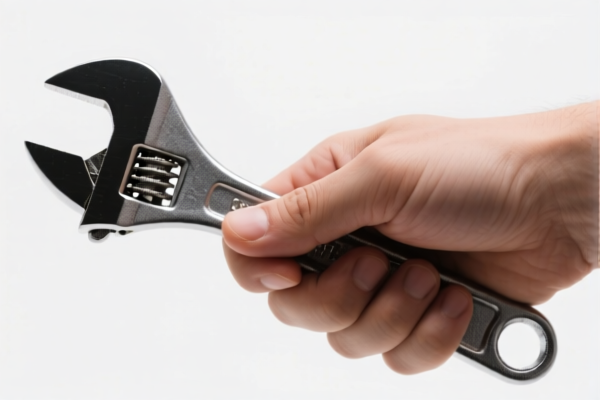
AI Analysis
🔧 Pipe Wrench (Metal Pipe Wrench)
🌐 HS Code Reference & Customs Clearance Guide | 2026 Updated Tariff Breakdown | Strategic Import Strategy
📌 I. Product Definition & Classification: Do You Truly Understand "Pipe Wrench"?
The Pipe Wrench is a heavy-duty hand tool essential for plumbing, gas fitting, and metal pipe assembly. Its primary function is to grip, turn, and hold pipes or pipe fittings. In international trade, classification depends heavily on the material composition, design specificity, and intended use.
Key Distinction in Classification: * Specific Tool Class (8205/8203): If the tool is designed specifically for gripping pipes or cutting pipes (e.g., channel-type, ratchet-type, or pipe cutter). * General Steel Article Class (7326): If the tool lacks a specific mechanical design for a single trade and is considered a general "other" steel product (often a "catch-all" category with punitive tariffs).
⚠️ Critical Classification Logic: * If it is a specialized hand tool (e.g., Channel Lock type, Ratcheting) → Likely falls under Chapter 82 (Tools). * If it is a generic steel bar or a rudimentary tool without specific tooling features → May fall under Chapter 73 (Iron/Steel Articles).
📦 II. HS Code Classification Details (2026 Tariff Authority Comparison)
| HS Code | Product Description | Classification Logic | Total Tariff Rate |
|---|---|---|---|
| 8205.59.10.00 | Metal Pipe Wrench; Matches hand tool material & pipefitter utility | Specific Hand Tool (Miscellaneous) | 42.2% |
| 8203.40.30.00 | Metal Pipe Wrench; Categorized under "Pipe Cutting Machines & Similar Hand Tools" | Specialized Tooling (Pipe Cutting) | 41.0% |
| 8203.40.60.00 | Metal Pipe Wrench; Consistent with base metal material & pipe cutting tool classification | Specialized Tooling (Other Pipe Tools) | 38.3% |
| 8205.70.00.30 | Metal Pipe Wrench; Satisfies hand tool material attributes & consistent utility | Other Miscellaneous Hand Tools | 40.0% |
| 7326.19.00.80 | Metal Pipe Wrench; "Other" steel article catch-all classification | General Steel Product (High Risk) | 87.9% |
| 7326.90.86.88 | Metal Wrench; Classified under "Other Articles of Iron or Steel" | General Steel Product (High Risk) | 87.9% |
🔍 Critical Warning: * Chapter 82 Codes (8203/8205): These are Specialized Hand Tools. They are subject to "Section I" additional duties but have lower base rates. * Chapter 73 Codes (7326): These are General Steel Articles. While the base tariff is low (2.9%), the Steel/Aluminum/Copper Additional Duty of 50% pushes the total rate to 87.9%. Avoid this classification unless your tool is non-standard.
💰 III. 2026 Updated Tariff Rate Breakdown (Detailed Policy Analysis)
✅ Applicable Country: United States (US)
✅ Origin: China (CN)
✅ Effective Date: Based on current trade actions (Section 301 & Steel Aluminuim Safeguards)
🎯 1. Chapter 82 Classification (8205.59.10.00, 8203.40.30.00, etc.)
Best for standard, specialized pipe wrenches.
| Item | Content |
|---|---|
| Base Tariff | 3.3% ~ 7.2% (Varies by specific subheading) |
| Section 301 Additional Duty | +25.0% (Mandatory for all Chinese Hand Tools) |
| Section 122 Additional Duty | +10.0% (Specific China Add-on) |
| Total Rate | 38.3% ~ 42.2% |
| Calculation Base | CIF Value × Total Rate |
| De Minimis Exemption | ❌ NO (High value threshold exceeded) |
| Legal Path | Section 301 → 122 → HTS 8203/8205 |
📌 Interpretation:
The 25% is the standard "Section 301" tariff for Chinese hand tools. The 10% is the "122 Section" specific surcharge. The Base Duty (3.3%-7.2%) depends on the exact design (e.g., is it a cutter vs. a gripper?).
🎯 2. Chapter 73 Classification (7326.19.00.80, 7326.90.86.88)
High Risk Category (General Steel Articles)
| Item | Content |
|---|---|
| Base Tariff | 2.9% (Very low base rate) |
| Section 301 Additional Duty | +25.0% |
| Section 122 Additional Duty | +10.0% |
| Steel/Al/Cu Add-on Duty | +50.0% (Crucial Penalty for Steel Articles) |
| Total Rate | 87.9% |
| Calculation Base | CIF Value × 87.9% |
| De Minimis Exemption | ❌ NO |
| Legal Path | Steel Section 232 + Section 301 + 122 |
📌 Interpretation:
The 50% additional duty applies specifically to "Steel, Aluminum, and Copper Products" under Section 232. If the US Customs officer determines your pipe wrench is a "general steel article" rather than a "tool," you will face a massive 87.9% tariff. This is the most dangerous classification to attempt.
🛠️ IV. Customs Clearance Practical Advice (Actionable Strategy)
✅ 1. Material Declaration Checklist (Mandatory)
| Document | Requirement | Purpose |
|---|---|---|
| Product Specs | ✅ Mandatory | Must explicitly state "Pipe Wrench" and material (e.g., "Forged Carbon Steel"). |
| Function Description | ✅ Mandatory | Clearly state: "Designed for gripping and rotating pipes, not general steel holding." |
| Photos (Side/Top/Bottom) | ✅ Mandatory | Must show the serrated jaws, adjustable throat, and handle design to prove it is a tool, not a raw steel bar. |
| Duty Liability Proof | ✅ Recommended | Proof that the product is a "finished tool" (e.g., finished, painted, packaged). |
| Origin Certificate (CO) | ✅ Mandatory | To prove origin (China) and prevent "transshipment" claims. |
✅ 2. Declaring Strategy (The "Tool vs. Steel" Battle)
🔥 Golden Rule: "Prove it's a Tool, Not Steel!"
| Scenario | Correct HS Code | Incorrect HS Code | Consequence |
|---|---|---|---|
| Standard Pipe Wrench (e.g., Channel Lock, Ridgid style) | 8203.40.30.00 or 8205.59.10.00 |
7326.90.86.88 |
Avoid 87.9% tariff! Aim for ~40%. |
| Ratcheting Pipe Wrench | 8205.70.00.30 |
7326.19.00.80 |
Avoid 87.9% tariff! |
| Pipe Cutting Tool | 8203.40.60.00 |
7326.90.86.88 |
Avoid 87.9% tariff! |
| Generic Steel Bar/Brace | 7326.90.86.88 |
8205... |
If you claim it's a tool but it's generic steel, you get audited and hit with 87.9% + fines. |
Key Tip: In your commercial invoice, DO NOT write "Steel Product" or "Hardware Part." Write "Metal Pipe Wrench, Hand Tool, Plumbing Equipment". Use the phrase "Hand Tool" explicitly to trigger Chapter 82.
✅ 3. Special Handling Scenarios
| Situation | Recommendation |
|---|---|
| OEM / Private Label | Provide the original design drawing from the brand to prove it's a "specialized tool" (Chapter 82), not a generic steel item. |
| Set of Tools | If the pipe wrench is part of a "Tool Kit," declare the whole kit under the dominant tool (Chapter 82), not mixed with steel articles. |
| Unfinished Tool | If the wrench is "forged but not finished," it may still be classified as a tool, but the 50% steel duty could be scrutinized. Finish it before export if possible. |
| Dispute with CBP | If CBP proposes 7326 (87.9%), demand a "Exclusion Request" for Hand Tools, or provide a Binding Ruling (BR) to override the classification. |
🌍 V. Global Market Comparison (2026 Tariff Overview)
| Region | Recommended HS Code | Estimated Duty | Notes |
|---|---|---|---|
| 🇺🇸 USA | 8203.40.30.00 / 8205.59.10.00 |
38% - 42% | HIGH RISK for Chapter 73 (87.9%). |
| 🇨🇳 China | 8203.40.30.00 |
~5-7% | No Section 301. |
| 🇪🇺 EU | 8203.40.30.00 |
0% - 3% | No Section 301. |
| 🇦🇺 Australia | 8203.40.30.00 |
5% | No Section 301. |
| 🇯🇵 Japan | 8203.40.30.00 |
0% | No Section 301. |
📌 Conclusion:
The US market is unique. The 87.9% tariff for Chapter 73 makes it financially unviable to export generic steel pipe wrenches. You MUST ensure the product is classified under Chapter 82 to keep costs near 40%.
📌 VI. Common Mistakes & Pitfalls (Lessons Learned)
❌ Mistake 1: Describing the product as "Steel Pipe Fitting" or "Steel Wrench" on the invoice.
👉 Consequence: Customs will assume Chapter 73 → 87.9% Tariff.
❌ Mistake 2: Mixing "Pipe Wrenches" with "Steel Rods" in one shipment.
👉 Consequence: The whole shipment might be re-classified as "Other Steel Articles" → 87.9% on everything.
❌ Mistake 3: Using generic "Hand Tool" descriptions without "Pipe Wrench" specificity.
👉 Consequence: Risk of misclassification to 8205.90 or 8205.70, leading to audits.
❌ Mistake 4: Assuming "Metal" = "Steel" only.
👉 Consequence: Even if it's stainless steel, if it's a tool, it's Chapter 82. If it's a generic steel article, it's Chapter 73 (plus 50%).
✅ Correct Approach:
"Pipe Wrench, Metal, Hand Tool, Plumbing, 12-inch, Adjustable, Forged Carbon Steel."
HS Code:8203.40.30.00(or similar 8205 code).
🎯 VII. Final Strategy: How to Pass US Customs Smoothly
🎯 Remember the Mantra:
🔹 "Hand Tool = 8205/8203 (~40%)"
🔹 "Steel Article = 7326 (87.9%)"
🔹 "Show the Jaws, Prove the Use!"
📌 Actionable Steps: 1. Pre-Classification: File for a Binding Ruling (Ruling Letter) from US Customs if unsure. 2. Invoice Wording: Use "Pipe Wrench" and "Hand Tool" prominently. 3. Material Proof: Ensure the product has distinct tool features (jaws, handles, adjustment mechanisms) in photos. 4. Avoid Chapter 73: Do not declare as "Other Steel Articles" unless you are willing to pay nearly 90% tax.
✨ Professional Customs Clearance Starts with Accurate Classification!
💼 Your profit margin depends on this 25% vs. 87.9% difference!
Customer Reviews
About HS Code Classification
The Harmonized System (HS) is an internationally standardized nomenclature developed by the World Customs Organization (WCO) to classify traded products. Over 200 countries use the HS system as the basis for customs tariffs, trade statistics, and import/export regulations.
Each HS code follows a hierarchical structure:
- Chapter (2 digits) — Broad category of goods (e.g., Chapter 84: Machinery and Mechanical Appliances)
- Heading (4 digits) — More specific grouping within the chapter
- Subheading (6 digits) — Internationally standardized breakdown, used by all WCO member countries
- National subdivisions (8-10 digits) — Country-specific extensions for further classification, such as US HTSUS 10-digit codes
Correct HS code classification is essential for smooth customs clearance, accurate duty payment, and compliance with trade regulations. Misclassification can lead to customs delays, overpayment of duties, or penalties.
When importing from CN to US, the applicable tariff rates may include:
- Most-Favored-Nation (MFN) rate — The standard duty rate applied to WTO members
- General rate — Applied to countries without trade agreements
- Trade remedy duties — Additional tariffs such as Section 301 (anti-dumping), Section 232 (national security), or countervailing duties
The information provided on this page is for reference purposes only. For official classification, please consult with your local customs authority or a licensed customs broker.