Pipeline Inspection Camera
CN → US| HS Code | Tariff Rate | Origin | Destination | Doc |
|---|---|---|---|---|
| 8479899595 | 37.5% | CN | US | Official Doc |
| 8479899565 | 37.5% | CN | US | Official Doc |
| 8525895030 | 35.0% | CN | US | Official Doc |
| 8525894000 | 17.5% | CN | US | Official Doc |
| 9031499000 | 35.0% | CN | US | Official Doc |
| 9031909195 | 85.0% | CN | US | Official Doc |
Product Images
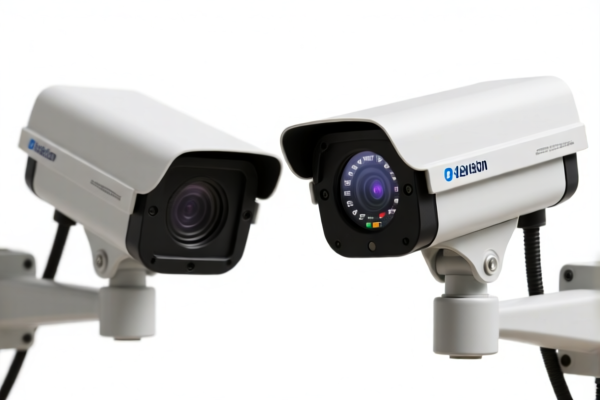
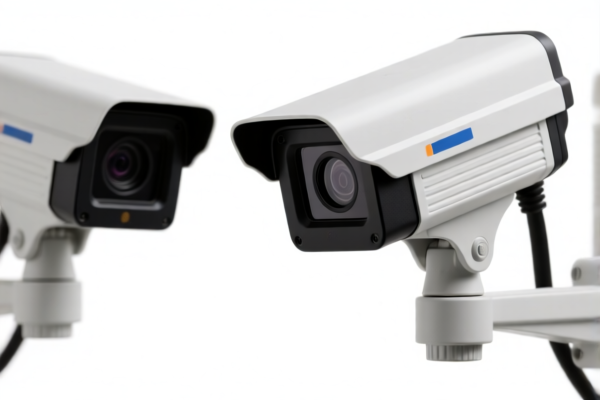
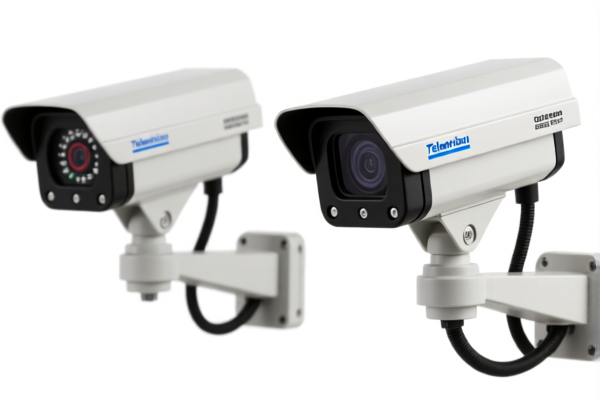
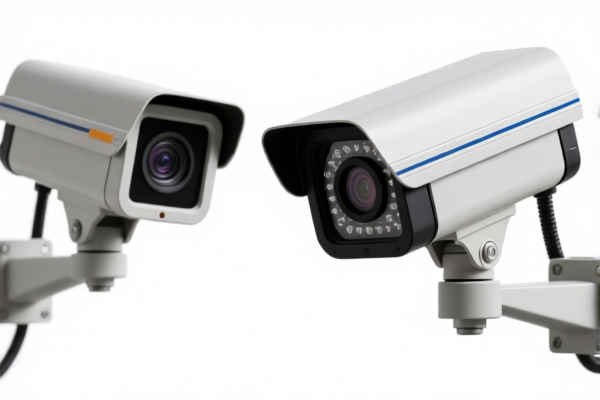
AI Analysis
🔍 Pipeline Inspection Camera (Borescope/Endoscope)
🌐 HS Code Reference & Customs Clearance Guide | 2026 Latest Tariff Analysis | Professional Clearance Strategy
📌 Part 1: Product Definition & Classification: Do You Really Understand "Pipeline Inspection Cameras"?
Pipeline Inspection Cameras (also known as Borescopes, Endoscopes, or CCTV Pipe Inspectors) are specialized optical instruments used to visually inspect the interior of pipelines, industrial machinery, or confined spaces where direct human access is impossible.
In international trade, they are NOT classified simply as "cameras" (Chapter 85). Instead, they fall under Chapter 90 (Optical Instruments) because their primary function is visual inspection/measurement via optical principles, regardless of whether they record video or still images digitally.
⚠️ Critical Distinction:
- If the device is a standalone optical instrument for inspection (even if it has a digital screen or recorder attached) →归入 Chapter 90 (9031).
- If it is a general-purpose consumer camcorder (like a handheld video recorder for hobbies) →归入 Chapter 85 (8525/8528).
- Key Test: Is it designed primarily for industrial/technical inspection? If yes, it is 9031.
📦 Part 2: HS Code Classification Details (2026 Latest Tariff Authority Comparison)
Based on the provided <DATA>, here are the relevant HS Codes and their specific tax implications. Note that for "Pipeline Inspection Cameras," the most accurate category is Optical Instruments (9031), not standard Video Cameras (8525).
| HS Code | Product Description | Applicable Scenario | Tax Rate (China→US) |
|---|---|---|---|
9031.49.90.00 |
Other optical instruments and appliances (Includes specialized inspection cameras, borescopes, pipeline CCTV systems) | Industrial pipe inspection, sewer cameras, mechanical engineering checks | 25.0% |
8525.89.50.30 |
Other Camcorders (General consumer/professional video recording devices) | Consumer camcorders, general-purpose video recorders (NOT for specific optical inspection) | 25.0% |
8525.89.40.00 |
Digital Still Image Video Cameras | Digital still cameras with video function (Not specific to optical inspection) | 7.5% |
9031.90.91.95 |
Parts and Accessories of Optical Instruments | Spare lenses, cables, probes, control units for inspection cameras | 75.0% (See Warning Below) |
🔍 Key Insight for Pipeline Cameras:
- Main Unit: Typically classified under9031.49.90.00as "Other optical instruments."
- Parts/Accessories: Spare probes, flexible shafts, or controllers may be classified under9031.90.91.95.
- Do NOT use8525codes unless the device is explicitly marketed as a general-purpose "camcorder" without specialized optical inspection features. Customs often reclassify industrial borescopes to 9031.
💰 Part 3: 2026 Latest Tariff Rate Details (Including Surcharges)
✅ Applicable Country: United States (US)
✅ Country of Origin: China (CN)
✅ Effective Time: Current 2026 Tariff Schedule (Section 301 + IEEPA)
🎯 1. 9031.49.90.00 —— Pipeline Inspection Camera (Optical Instrument)
| Item | Details |
|---|---|
| Base Tariff | 0.0% |
| Section 301 Surcharge | +25.0% |
| Total Tariff | 25.0% |
| Tax Calculation | CIF Value × 25% |
| De Minimis Exemption | ❌ Not Eligible (High tariff rate excludes $800 de minimis relief for most commercial shipments) |
| Legal Basis | USITC Heading 9031.49.90.00 → Footnote 301 Section (25%) |
📌 Explanation:
- Pipeline inspection cameras are considered "specialized optical instruments."
- They attract the standard 25% Section 301 tariff on Chinese-origin goods.
- No additional IEEPA 10% is explicitly listed in<DATA>for this code, so the total is 25%.
⚠️ 2. 9031.90.91.95 —— Parts & Accessories (Critical Warning)
| Item | Details |
|---|---|
| Base Tariff | 0.0% |
| Section 301 Surcharge | +25.0% |
| Additional Surcharge (Steel/Aluminum/Copper) | +50.0% |
| Total Tariff | 75.0% |
| Tax Calculation | CIF Value × 75% |
| De Minimis Exemption | ❌ Not Eligible |
| Legal Basis | USITC Heading 9031.90.91.95 → Footnote for metal components |
📌 Warning:
- If you import spare probes, cables, or housing parts containing steel, aluminum, or copper, and they are classified as "parts of optical instruments," they may trigger the additional 50% tariff on metal products.
- Total Tax = 75%. This is extremely high.
- Strategy: Ensure main units are declared as complete instruments (9031.49.90.00), not as parts. Avoid importing metal-heavy accessories separately if possible.
🎯 3. 8525.89.50.30 —— Other Camcorders (If Misclassified)
| Item | Details |
|---|---|
| Base Tariff | 0.0% |
| Section 301 Surcharge | +25.0% |
| Total Tariff | 25.0% |
| De Minimis Exemption | ❌ Not Eligible |
📌 Note: Even if incorrectly classified as a "camcorder," the rate is still 25%. However, misclassification risks penalties.
🎯 4. 8525.89.40.00 —— Digital Still Image Video Cameras
| Item | Details |
|---|---|
| Base Tariff | 0.0% |
| Section 301 Surcharge | +7.5% |
| Total Tariff | 7.5% |
| De Minimis Exemption | ❌ Not Eligible |
📌 Note: This lower rate applies only if the device is truly a "digital still image video camera" and not an inspection tool. Unlikely for pipeline cameras.
🛠️ Part 4: Customs Clearance Practical Advice (Real-World Pitfall Guide)
✅ 1. Required Documentation Checklist (Non-Negotiable)
| Document | Required | Notes |
|---|---|---|
| ✅ Technical Specification Sheet | ✔️ | Must detail: Optical zoom, lens type, probe diameter, illumination type, recording capability |
| ✅ Product Photos | ✔️ | Show the camera head, probe, control unit, and display. Clearly indicate it’s for industrial inspection |
| ✅ Commercial Invoice | ✔️ | Description must be precise: "Pipeline Inspection Camera, Optical Borescope, Model XYZ, for Industrial Use" |
| ✅ HS Code Pre-Ruling | ✔️ | Highly recommended. Request US CBP Advance Ruling for 9031.49.90.00 |
| ✅ FCC Certification | ✔️ | Required for electronic devices emitting RF signals |
| ✅ CE/RoHS Reports | ✔️ | Proof of compliance with environmental and safety standards |
✅ 2. Declaration Tips (Key Mantra)
🔥 “Inspection Tool, Not Consumer Cam; Optical Core, Code 9031; Metal Parts, Watch Out for 75%!”
| Scenario | Correct Declaration | Wrong Practice |
|---|---|---|
| Complete Pipeline Camera System | 9031.49.90.00 |
Declaring as 8525 (Camcorder) → Risk of reclassification |
| Spare Probe/Cable | Check if metal-heavy → 9031.90.91.95 (75%) |
Declaring as "Accessories" without detail → Audit risk |
| Software Only | 9031.90.91.95 or 8543 |
Must separate hardware and software for accurate tax |
| Bundled Kit (Camera + Software + Case) | Declare main item (9031.49.90.00) |
Splitting items unnecessarily → Higher total tax |
✅ 3. Special Case Handling
| Situation | Handling Advice |
|---|---|
| Digital Screen Attached | Still 9031.49.90.00. The screen is part of the optical instrument. |
| Wireless Transmission | Ensure FCC ID is provided. Wireless modules do not change the primary optical classification. |
| Importing Spare Parts | High Risk! If parts contain steel/aluminum, expect 75% tax. Try to include them in the main unit shipment if possible, but declare accurately. |
| OEM Custom Design | Provide client order and design specs. Prove it’s a specialized industrial tool, not a consumer toy. |
🌍 Part 5: Global Market Comparison (2026 Latest)
| Country/Region | Recommended HS Code | Tariff (China Origin) | Certification Required | Notes |
|---|---|---|---|---|
| 🇺🇸 USA | 9031.49.90.00 |
25% | FCC + RoHS | High tariff due to Section 301 |
| 🇪🇺 EU | 9031.49 |
0–4% (depending on exact subheading) | CE | No Section 301; generally lower tax |
| 🇨🇳 China | 9031.49 |
0–8% | CCC (if applicable) | Domestic trade tax varies |
| 🇯🇵 Japan | 9031.49 |
0–10% | PSE | No special surcharges |
| 🇦🇺 Australia | 9031.49 |
5% | RCM | Moderate tariff |
📌 Conclusion:
- USA is the most expensive market for pipeline inspection cameras from China due to the 25% Section 301 tariff.
- EU and Japan offer better tariff advantages (0–10%).
- Parts are extremely costly in the US (75% if metal-based). Avoid separate imports of metal accessories.
📌 Part 6: Common Mistakes & Pitfalls (Lessons Learned)
❌ Mistake 1: Classifying a pipeline camera as 8525.89.40.00 (Digital Camera) to get 7.5% tax
👉 Consequence: Customs rejects the classification because it’s an optical inspection instrument, not a general-purpose camera. Back taxes + penalties.
❌ Mistake 2: Importing spare probes as "Plastic Accessories" when they contain steel shafts
👉 Consequence: Reclassified under 9031.90.91.95 with 75% tariff. Loss of profit margin.
❌ Mistake 3: Declaring as "General Camera" without technical specs
👉 Consequence: CBP requests additional info, delaying clearance by 2–4 weeks. Delay fees + storage costs.
❌ Mistake 4: Ignoring FCC certification for wireless pipeline cameras
👉 Consequence: Seizure of goods at US port. Return or destroy shipment.
✅ Correct Approach:
"Pipeline Inspection Camera, Optical Borescope, 50mm Probe, LED Illuminated, Digital Video Recording, FCC Certified, Model XYZ"
🎯 Part 7: Conclusion: Professional Declaration, Save Costs, Avoid Risks!
🎯 Remember the Mantra:
🔹 "Inspection Tool = 9031, Not 8525"
🔹 "Metal Parts = 75% Tax, Avoid Separate Import"
🔹 "Tech Specs & FCC = Must Have"
📌 Pro Tip:
If your pipeline inspection camera is originally from Vietnam, Thailand, or Malaysia, you may qualify for preferential tariffs (lower or 0% duty).
Recommendation: Apply for an Advance Ruling (Pre-Ruling) from US CBP before shipping to confirm the correct HS Code and tax rate.
📣 Immediate Action:
📞 Contact a licensed customs broker + Provide product specs + Request HS Code Pre-Ruling
🚀 Ensure your pipeline inspection cameras clear smoothly, avoid surprises, and maximize profit!
✨ Professional Clearance Starts with Accurate Classification!
💼 Every dollar of tariff saved is pure profit earned!
Customer Reviews
About HS Code Classification
The Harmonized System (HS) is an internationally standardized nomenclature developed by the World Customs Organization (WCO) to classify traded products. Over 200 countries use the HS system as the basis for customs tariffs, trade statistics, and import/export regulations.
Each HS code follows a hierarchical structure:
- Chapter (2 digits) — Broad category of goods (e.g., Chapter 84: Machinery and Mechanical Appliances)
- Heading (4 digits) — More specific grouping within the chapter
- Subheading (6 digits) — Internationally standardized breakdown, used by all WCO member countries
- National subdivisions (8-10 digits) — Country-specific extensions for further classification, such as US HTSUS 10-digit codes
Correct HS code classification is essential for smooth customs clearance, accurate duty payment, and compliance with trade regulations. Misclassification can lead to customs delays, overpayment of duties, or penalties.
When importing from CN to US, the applicable tariff rates may include:
- Most-Favored-Nation (MFN) rate — The standard duty rate applied to WTO members
- General rate — Applied to countries without trade agreements
- Trade remedy duties — Additional tariffs such as Section 301 (anti-dumping), Section 232 (national security), or countervailing duties
The information provided on this page is for reference purposes only. For official classification, please consult with your local customs authority or a licensed customs broker.