Pipes
CN → US| HS Code | Tariff Rate | Origin | Destination | Doc |
|---|---|---|---|---|
| 3917290090 | 38.1% | CN | US | Official Doc |
| 7304490060 | 35.0% | CN | US | Official Doc |
| 7305111060 | 10.0% | CN | US | Official Doc |
| 3917210000 | 38.1% | CN | US | Official Doc |
| 7304598010 | 35.0% | CN | US | Official Doc |
Product Images
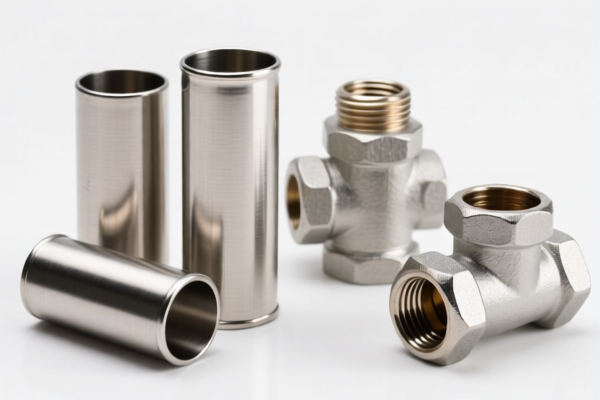
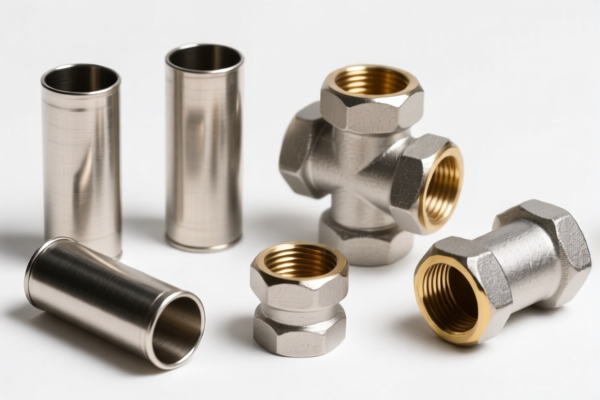
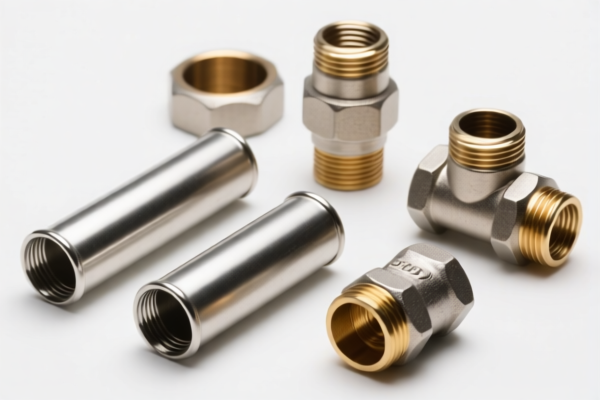
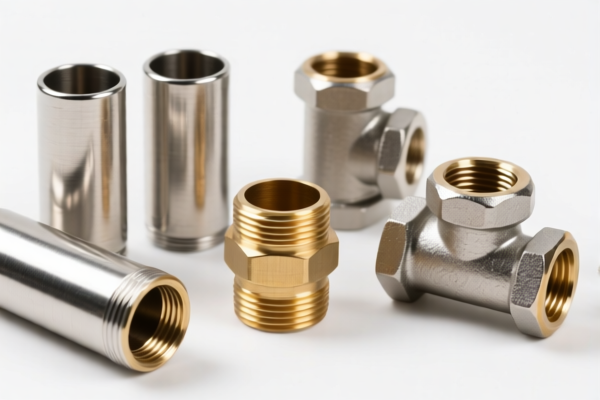
AI Analysis
🏗️ Pipes (Industrial & Construction Tubing)
🌐 HS Code Reference & Customs Clearance Guide | 2026 Latest Tariff Analysis | Professional Strategy
📌 1. Product Definition: What are "Pipes"?
In international trade, "Pipes" is a broad term covering tubular products used for conveying fluids (water, oil, gas), structural support, or mechanical protection. The critical factor for HS Code classification is Material and Function.
⚠️ Key Classification Logic:
- Plastic Pipes: Usually fall under Chapter 39 (Plastics).
- Steel/Iron Pipes: Usually fall under Chapter 73 (Articles of Iron or Steel).
- Seamless vs. Welded: Affects sub-heading within Chapter 73.
- Specific Use: Pipes specifically designed for oil/gas transmission may have different rates than general-purpose tubes.
📦 2. HS Code Classification Breakdown (Based on Provided Data)
| HS Code | Product Description | Material/Type | Tax Rate (Total) | Key Logic |
|---|---|---|---|---|
3917.29.00.90 |
Plastic Pipes, Other | Plastic (Inferred) | 38.1% | Matches "Pipes" morphology; plastic material inferred. |
7304.49.00.60 |
Other Seamless Tubes of Iron/Steel | Steel/Seamless (Inferred) | 35.0% | "Pipe" matches "Steel Tube" morphology; stainless steel inferred via "fallback" rule. |
7305.11.10.60 |
Line Pipe for Oil/Gas (Steel) | Steel/Line Pipe | 10.0% | High match for "Pipe" morphology + Oil/Gas utility; no material conflict. |
3917.21.00.00 |
Plastic Pipes, Rigid | Plastic/Rigid | 38.1% | "Pipe" matches "Tube" morphology; plastic pipes commonly fall here. |
7304.59.80.10 |
Tubes, Pipes & Hollow Profiles, Other | Steel/Other | 35.0% | "Pipe" matches "Tube/Profile"; metal (iron/steel) inferred by common sense. |
🔍 Critical Note:
- Plastic Pipes (3917.xx) and Steel Pipes (7304.xx/7305.xx) are in completely different chapters. Misclassification between these two can lead to severe penalties.
- 7305.11.10.60 offers the lowest tax rate (10%) but requires proof of "Oil/Gas Line Pipe" usage and steel material.
- 38.1% is the highest rate, applying to most plastic pipes and non-specific steel tubes.
💰 3. Detailed Tax Structure Explanation (2026 Latest)
✅ Applicable Market: USA (US)
✅ Origin: China (CN)
✅ Effective Date: From Nov 10, 2025 (including subsequent imports)
🎯 1. Plastic Pipes (3917.29.00.90 & 3917.21.00.00)
Total Tax Rate: 38.1%
| Component | Rate | Legal Basis |
|---|---|---|
| Base Duty | 3.1% | Standard MFN Rate |
| Section 301 Duty | 25.0% | USITC Footnote 9903.88.01 (Trade Remedy) |
| IEEPA Duty | 10.0% | International Emergency Economic Powers Act (China-specific) |
| Total | 38.1% | Sum of above |
📌 Explanation:
- Plastic pipes are subject to all three layers of taxation.
- The 25% Section 301 duty applies to most plastic articles from China.
- The 10% IEEPA duty is a specific surcharge on Chinese goods.
- Result: High cost impact. Plastic piping systems for construction/plumbing will face nearly 40% additional cost.
🎯 2. Steel Seamless/Other Tubes (7304.49.00.60 & 7304.59.80.10)
Total Tax Rate: 35.0%
| Component | Rate | Legal Basis |
|---|---|---|
| Base Duty | 0.0% | Often 0% for certain steel tubes |
| Section 301 Duty | 25.0% | USITC Footnote 9903.88.01 |
| IEEPA Duty | 10.0% | International Emergency Economic Powers Act |
| Total | 35.0% | Sum of above |
📌 Explanation:
- While the base duty may be 0%, the 35% surcharge makes them expensive.
- The 25% Section 301 duty applies broadly to steel products from China.
- No de minimis exemption: Small shipments do not escape these tariffs.
🎯 3. Oil/Gas Line Pipe (7305.11.10.60)
Total Tax Rate: 10.0%
| Component | Rate | Legal Basis |
|---|---|---|
| Base Duty | 0.0% | Standard MFN Rate |
| Section 301 Duty | 0.0% | Exempted (Specific exclusion for line pipe) |
| IEEPA Duty | 10.0% | International Emergency Economic Powers Act |
| Total | 10.0% | Only IEEPA applies |
📌 Explanation:
- This is the most favorable classification if the pipe is truly for oil/gas transmission.
- Key Advantage: Exempt from the 25% Section 301 duty.
- Risk: Must prove "Line Pipe" usage. If used for structural purposes, customs may reclassify to7304.xxxxand charge 35%.
🛠️ 4. Customs Clearance Practical Advice
✅ 1. Document Checklist (Essential)
| Document | Required? | Purpose |
|---|---|---|
| Product Specifications | ✔️ | Must specify: Material (Steel/Plastic), Diameter, Wall Thickness, Length. |
| Material Certificate | ✔️ | Crucial for distinguishing Plastic (3917) vs. Steel (7304/7305). |
| Usage Declaration | ✔️ | State end-use: "Construction Plumbing," "Oil/Gas Transmission," or "Structural Support." |
| Commercial Invoice | ✔️ | Clear description: "HDPE Pipe," "Seamless Steel Tube," etc. Avoid vague "Pipes." |
| Bill of Lading | ✔️ | Match weight and dimensions with invoice. |
| Certificate of Origin (CO) | ✔️ | Required for IEEPA calculation and potential FTA benefits (if applicable). |
✅ 2. Declaration Tips (Critical!)
🔥 "Know Your Material, Declare Your Use!"
| Scenario | Correct HS Code | Wrong HS Code | Consequence |
|---|---|---|---|
| Plastic Pipe for Water | 3917.21.00.00 |
7304.59.80.10 |
Rejected; penalty for wrong material. |
| Steel Pipe for Building Frame | 7304.59.80.10 |
7305.11.10.60 |
Reclassification Risk: If not for oil/gas, 35% tax applies instead of 10%. |
| Steel Pipe for Oil/Gas | 7305.11.10.60 |
7304.49.00.60 |
Savings: 10% vs. 35%. Must provide proof of use. |
| Stainless Steel Tube | 7304.49.00.60 |
7304.59.80.10 |
Subtle difference: Seamless vs. Welded/Other. Check manufacturing process. |
✅ 3. Special Cases
| Situation | Recommendation |
|---|---|
| OEM Custom Pipes | Provide client’s design specs to prove specific use (e.g., line pipe). |
| Mixed Shipment | If a container has both plastic and steel pipes, split declaration. Do not group them. |
| Unknown Material | Do not guess. Provide material test reports. If steel, specify carbon/stainless. If plastic, specify PE/PP/PVC. |
| Small Samples | Even for samples, IEEPA (10%) and Section 301 (25%) may apply if value exceeds de minimis thresholds. |
🌍 5. Global Market Comparison (2026)
| Market | Recommended HS Code | Est. Total Tax | Key Requirement |
|---|---|---|---|
| 🇺🇸 USA | 7305.11.10.60 |
10.0% | Proof of Oil/Gas use |
| 🇺🇸 USA | 3917.21.00.00 |
38.1% | No exceptions |
| 🇨🇳 China | 3917.21.00.00 |
~10-15% | Lower base duty |
| 🇪🇺 EU | 3917.21.00 |
6.5% | No IEEPA/301 |
| 🇯🇵 Japan | 3917.21.00 |
6% | No additional duties |
📌 Conclusion:
- USA is the most challenging market due to stacked tariffs (Base + 301 + IEEPA).
- Steel pipes for non-oil/gas use face a 35% effective rate.
- Plastic pipes face 38.1%.
- Oil/Gas steel pipes are the only major category with a lower effective rate (10%) due to Section 301 exemption.
📌 6. Common Errors & Pitfalls
❌ Error 1: Declaring "Steel Pipe" but shipping "Plastic Pipe"
👉 Consequence: Customs inspection will find mismatch; goods detained; fines up to 3x duty value.
❌ Error 2: Classifying all steel pipes as 7305.11.10.60 (Oil/Gas)
👉 Consequence: If not used for oil/gas, CBP will reclassify to 7304.xxxx, charging 25% more tax + penalties.
❌ Error 3: Vague Description "Pipes"
👉 Consequence: Customs cannot determine material. Will assign highest possible duty rate or reject entry.
✅ Correct Approach:
"HDPE Water Supply Pipe, 4 inch, 100 ft, ASTM D3035"
"Seamless Carbon Steel Tube, 2 inch, API 5L, for Oil Transmission"
🎯 7. Conclusion: Strategic Recommendations
🎯 Key Takeaways:
🔹 Material is King: Plastic (
3917) vs. Steel (7304/7305) is the first decision.
🔹 Use is Crucial: For steel pipes, proving "Oil/Gas Line Pipe" usage saves 25% tax.
🔹 Avoid Guessing: If material is unknown, get lab tests. Misclassification risks are high.
🔹 Plan for Costs: Budget for 10-38% tariffs for US imports.
📌 Pro Tip:
- For Steel Pipes, consider if any FTA (Free Trade Agreement) benefits apply (e.g., USMCA if from Mexico/Canada).
- For Plastic Pipes, explore if any exclusions exist in current Section 301 lists (rare, but check annually).
- Pre-Ruling: Apply for an Advance Ruling from CBP for high-volume shipments to lock in the correct HS Code and tax rate.
📣 Act Now:
📞 Consult a licensed customs broker.
📄 Prepare material certificates and usage declarations.
🚀 Optimize your supply chain to mitigate 38.1% tariff impacts.
✨ Precision in Classification, Profit in Clearance!
💼 Every Percent Saved is Pure Profit!
Customer Reviews
About HS Code Classification
The Harmonized System (HS) is an internationally standardized nomenclature developed by the World Customs Organization (WCO) to classify traded products. Over 200 countries use the HS system as the basis for customs tariffs, trade statistics, and import/export regulations.
Each HS code follows a hierarchical structure:
- Chapter (2 digits) — Broad category of goods (e.g., Chapter 84: Machinery and Mechanical Appliances)
- Heading (4 digits) — More specific grouping within the chapter
- Subheading (6 digits) — Internationally standardized breakdown, used by all WCO member countries
- National subdivisions (8-10 digits) — Country-specific extensions for further classification, such as US HTSUS 10-digit codes
Correct HS code classification is essential for smooth customs clearance, accurate duty payment, and compliance with trade regulations. Misclassification can lead to customs delays, overpayment of duties, or penalties.
When importing from CN to US, the applicable tariff rates may include:
- Most-Favored-Nation (MFN) rate — The standard duty rate applied to WTO members
- General rate — Applied to countries without trade agreements
- Trade remedy duties — Additional tariffs such as Section 301 (anti-dumping), Section 232 (national security), or countervailing duties
The information provided on this page is for reference purposes only. For official classification, please consult with your local customs authority or a licensed customs broker.