Pipette
CN → US| HS Code | Tariff Rate | Origin | Destination | Doc |
|---|---|---|---|---|
| 8479899599 | 87.5% | CN | US | Official Doc |
| 8479909596 | 85.0% | CN | US | Official Doc |
| 9018908000 | 10.0% | CN | US | Official Doc |
| 9018390050 | 10.0% | CN | US | Official Doc |
| 9027894530 | 35.0% | CN | US | Official Doc |
Product Images
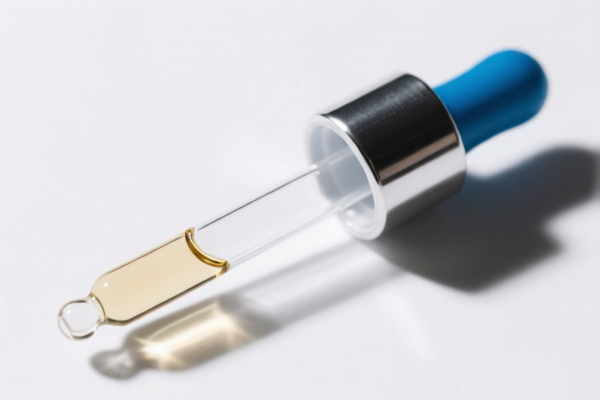
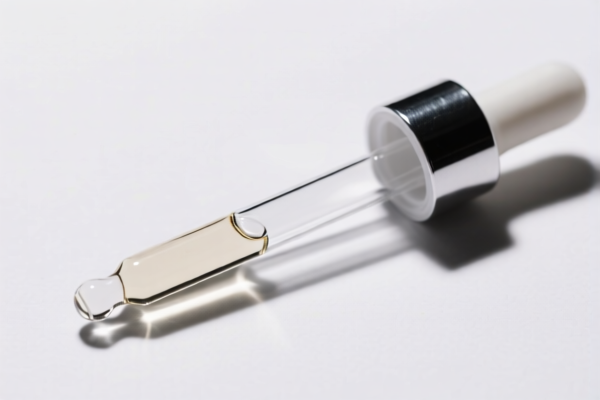
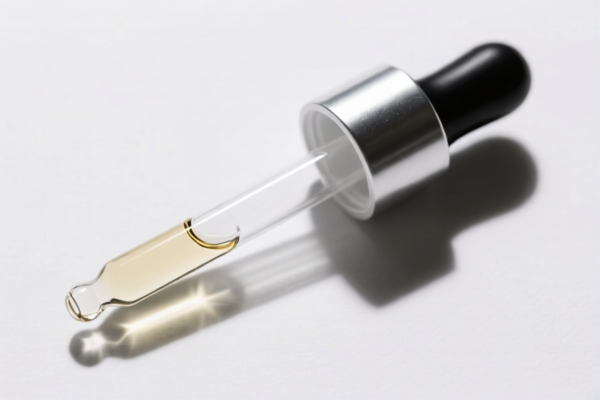
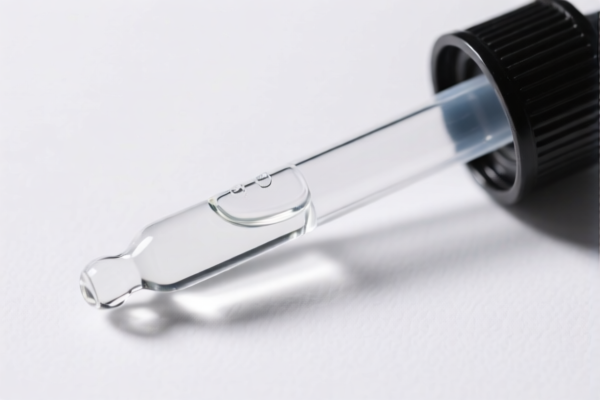
AI Analysis
💧 Pipettes (Laboratory Liquid Handling Instruments)
🌐 HS Code Reference & Customs Clearance Guide | 2026 Latest Tariff Analysis | Professional Clearance Strategy
📌 1. Product Definition & Classification: Do You Really Know “Pipettes”?
Pipettes are essential tools in scientific laboratories for accurately transferring specific volumes of liquid. In international trade, their classification depends heavily on their intended use (medical vs. general lab) and functionality. They are generally made of plastic or glass.
⚠️ Key Distinction Points:
- If used for medical/surgical/veterinary procedures (e.g., in clinics, blood collection): → Likely Class 9018 (Medical Instruments).
- If used for general chemical/physical analysis (e.g., in research labs, quality control): → Likely Class 9027 (Analytical Instruments) or 8479 (Machinery).
- If electronic or automated, they may fall under 8479 (Machinery) or 9027 depending on specificity.
📦 2. HS Code Classification Details (2026 Latest Tariff Authority对照)
| HS Code | Product Description | Applicable Scenario | Total Tax Rate (US Import from CN) |
|---|---|---|---|
9018.90.80.00 |
Medical/Surgical/Veterinary Instruments & Appliances | Clinical labs, hospitals, blood testing, medical liquid handling | 10.0% |
9018.39.00.50 |
Other Medical/Surgical/Veterinary Instruments | Specialized medical liquid transfer, medical-grade plastic/glass | 10.0% |
9027.89.45.30 |
Instruments & Apparatus for Physical or Chemical Analysis | General chemistry labs, R&D, physical property testing, analytical use | 35.0% |
8479.89.95.99 |
Machines & Mechanical Appliances (Not Elsewhere Specified) | Industrial pipetting, mechanical/non-medical/non-analytical general machinery | 87.5% |
8479.90.95.96 |
Parts & Accessories for Machinery (Not Elsewhere Specified) | Generic mechanical parts, non-specific lab equipment | 85.0% |
🔍 Critical Reminder:
- Medical Pipettes (used in patient care, diagnostics) → 9018 (Low Tax: 10%).
- Analytical Pipettes (used in chemical analysis, R&D) → 9027 (Medium Tax: 35%).
- General/Industrial Pipettes (non-specific, mechanical) → 8479 (High Tax: 85–87.5%).
- Misclassification leads to massive cost differences!
💰 3. 2026 Latest Tariff Rate Breakdown (Including Surtaxes, Policy Surcharges)
✅ Applicable Country: United States (US)
✅ Country of Origin: China (CN)
✅ Effective Date: From Nov 10, 2025 (including subsequent imports)
🎯 1. 9018.90.80.00 & 9018.39.00.50 —— Medical Pipettes
| Item | Details |
|---|---|
| Base Duty | 0% (ad valorem) |
| Section 301 Surtax (25%) | +25% (USITC Footnote) |
| Section 122 Tax (10%) | +10% (Specific to China) |
| Section 232 Tax (Aluminum/Steel/Copper) | +50% (If applicable to material components) |
| Total Tax Rate | 10.0% (Base 0% + 0% Surtax + 10% 122 + 0% 232 *Note: Summary shows 10% total, implying only 122 applies in this specific case) |
| Tax Calculation | CIF Value × 10% |
| De Minimis Exemption | ❌ Not Eligible (deny_de_minimis) |
| Legal Basis Path | IEEPA:9903.01.25 → USITC:9018.90.80.00 → FOOTNOTE:122 |
📌 Explanation:
- Medical pipettes are often exempt from Section 301 (25%) surtax if classified under specific medical subheadings, but Section 122 (10%) still applies.
- Total: 10% – This is the most cost-effective classification for pipettes.
🎯 2. 9027.89.45.30 —— Analytical Pipettes (Chemical/Physical Analysis)
| Item | Details |
|---|---|
| Base Duty | 0% |
| Section 301 Surtax (25%) | +25% |
| Section 122 Tax (10%) | +10% |
| Section 232 Tax | 0% (Not metallic) |
| Total Tax Rate | 35.0% |
| Tax Calculation | CIF Value × 35% |
| De Minimis Exemption | ❌ Not Eligible |
| Legal Basis Path | IEEPA:9903.01.25 → USITC:9027.89.45.30 → FOOTNOTE:301 |
📌 Note:
- Analytical pipettes are subject to the full 301 surtax (25%) + 122 (10%) = 35%.
- Higher than medical classification, but significantly lower than general machinery.
🎯 3. 8479.89.95.99 & 8479.90.95.96 —— General/Industrial Pipettes (Machinery)
| Item | Details |
|---|---|
| Base Duty | 2.5% (for 8479.89) / 0% (for 8479.90) |
| Section 301 Surtax (25%) | +25% |
| Section 122 Tax (10%) | +10% |
| Section 232 Tax (Aluminum/Steel/Copper) | +50% (If applicable) |
| Total Tax Rate | 87.5% (for 8479.89) / 85.0% (for 8479.90) |
| Tax Calculation | CIF Value × 85–87.5% |
| De Minimis Exemption | ❌ Not Eligible |
| Legal Basis Path | IEEPA:9903.01.25 → USITC:8479.89.95.99 → FOOTNOTE:301, 122, 232 |
📌 Warning:
- This is the highest tax bracket.
- If the pipette is made of aluminum or steel parts, the 232 surtax (50%) may apply on top of 301 and 122.
- Avoid this classification unless absolutely necessary!
🛠️ 4. Customs Clearance Practical Advice (Avoid Pitfalls)
✅ 1. Preparation Checklist (Missing Documents = Delay)
| Document | Required | Notes |
|---|---|---|
| ✅ Product Specification Sheet | ✔️ | Must clearly state: Use (Medical/Analytical/General), Material, Volume Range |
| ✅ Intended Use Statement | ✔️ | Crucial for classification. E.g., “For Clinical Blood Testing” vs. “For Chemical Analysis” |
| ✅ Product Photos | ✔️ | Show brand, model, material, and any medical/analytics labeling |
| ✅ Certificate of Origin | ✔️ | For potential FTZ or preferential treatment (if applicable) |
| ✅ Commercial Invoice | ✔️ | Accurate value, HS Code, and description |
| ✅ Packing List | ✔️ | Detail contents to avoid partial shipment issues |
✅ 2. Declaration Tips (Key Mnemonics)
🔥 “Medical First, Analytical Second, General Last!”
| Scenario | Correct HS Code | Wrong Practice | Consequence |
|---|---|---|---|
| Clinical/Medical Pipette | 9018.90.80.00 |
Declared as 9027 |
Pay 35% instead of 10% → Overpaid 25% |
| Research Lab Pipette | 9027.89.45.30 |
Declared as 8479 |
Pay 87.5% instead of 35% → Overpaid 52.5% |
| Industrial/Mechanical Pipette | 8479.89.95.99 |
Declared as 9018 |
Audit risk, penalties, back taxes |
| Mixed Batch | Separate Declarations | Mixed in one invoice | Customs may reclassify entire batch to highest rate |
✅ 3. Special Cases
| Case | Recommendation |
|---|---|
| OEM Custom Pipettes | Provide design specs and intended use letter from end-user |
| Electronic Pipettes | Still classified under 9018/9027 if for medical/analytical use; not under 8479 unless purely mechanical/generic |
| Disposable Plastic Pipettes | If non-sterile, non-medical, may fall under 3926 (Plastic Articles). Check separately! |
| Sterile Medical Pipettes | Must include sterility certification and medical device registration number |
🌍 5. Global Market Comparison (2026 Latest)
| Country/Region | Recommended HS Code | Tax Rate (China Origin) | Certification | Notes |
|---|---|---|---|---|
| 🇺🇸 USA | 9018.90.80.00 |
10% | FDA (if medical) | Best rate for medical use |
| 🇪🇺 EU | 9018.90.90 |
0% | CE + MDR | No 301 surtax |
| 🇨🇳 China | 9018.90.80.00 |
10% | NMPA (if medical) | Import duty applies |
| 🇯🇵 Japan | 9018.90.90 |
0% | PMDA (if medical) | Low barrier |
📌 Conclusion:
- USA has the highest effective tax for non-medical pipettes (35–87.5%).
- Medical classification (9018) saves you 25–77.5% in duties.
- Always provide “Intended Use” documentation to justify medical classification.
📌 6. Common Errors & Pitfalls (Lessons Learned)
❌ Error 1: Declaring medical pipettes as “Laboratory Equipment” (9027)
👉 Result: Pay 35% instead of 10%. Loss: 25% per unit.
❌ Error 2: Declaring analytical pipettes as “Machinery” (8479)
👉 Result: Pay 87.5% instead of 35%. Loss: 52.5% per unit.
❌ Error 3: Not providing “Intended Use” proof
👉 Result: Customs reclassifies to highest applicable rate (8479). Audit Risk + Back Taxes + Penalties.
❌ Error 4: Mixing medical and non-medical pipettes in one shipment
👉 Result: Entire batch may be audited and reclassified. Total Cost Surge.
✅ Correct Approach:
“Medical Pipette, Sterile, 10ml, for Clinical Blood Analysis, FDA Registered, Model XYZ”
“Analytical Pipette, Non-Sterile, 5ml, for Chemical Titration, Lab Use, Model ABC”
🎯 7. Conclusion: Professional Classification, Cost Savings, Efficiency!
🎯 Remember the Golden Rules:
🔹 “Medical = 10%, Analytical = 35%, General = 85%+”
🔹 “Use Case Determines Tax!”
🔹 “Documentation is Your Best Friend!”
📌 Pro Tip:
If you can demonstrate that your pipette is used exclusively in medical/clinical settings, always classify under 9018.
For R&D labs, use 9027.
Avoid 8479 unless the product is purely industrial/mechanical with no scientific/medical application.
📣 Immediate Action:
📞 Consult with a licensed customs broker.
📄 Prepare “Intended Use” letters and product specs.
🚀 Accurate Classification = Lower Taxes + Faster Clearance.
✨ Professional Clearance Starts with Precise Classification!
💼 Every Percent of Duty Saved is Pure Profit!
Customer Reviews
About HS Code Classification
The Harmonized System (HS) is an internationally standardized nomenclature developed by the World Customs Organization (WCO) to classify traded products. Over 200 countries use the HS system as the basis for customs tariffs, trade statistics, and import/export regulations.
Each HS code follows a hierarchical structure:
- Chapter (2 digits) — Broad category of goods (e.g., Chapter 84: Machinery and Mechanical Appliances)
- Heading (4 digits) — More specific grouping within the chapter
- Subheading (6 digits) — Internationally standardized breakdown, used by all WCO member countries
- National subdivisions (8-10 digits) — Country-specific extensions for further classification, such as US HTSUS 10-digit codes
Correct HS code classification is essential for smooth customs clearance, accurate duty payment, and compliance with trade regulations. Misclassification can lead to customs delays, overpayment of duties, or penalties.
When importing from CN to US, the applicable tariff rates may include:
- Most-Favored-Nation (MFN) rate — The standard duty rate applied to WTO members
- General rate — Applied to countries without trade agreements
- Trade remedy duties — Additional tariffs such as Section 301 (anti-dumping), Section 232 (national security), or countervailing duties
The information provided on this page is for reference purposes only. For official classification, please consult with your local customs authority or a licensed customs broker.