Pipette Rack
CN → US| HS Code | Tariff Rate | Origin | Destination | Doc |
|---|---|---|---|---|
| 7326908688 | 87.9% | CN | US | Official Doc |
| 3926909989 | 22.8% | CN | US | Official Doc |
| 7326903500 | 92.8% | CN | US | Official Doc |
| 3926909910 | 22.8% | CN | US | Official Doc |
Product Images

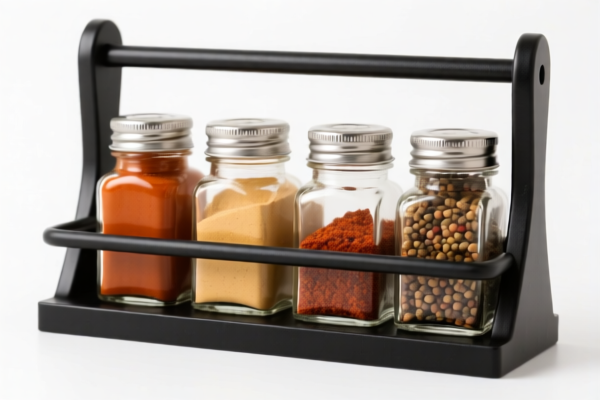
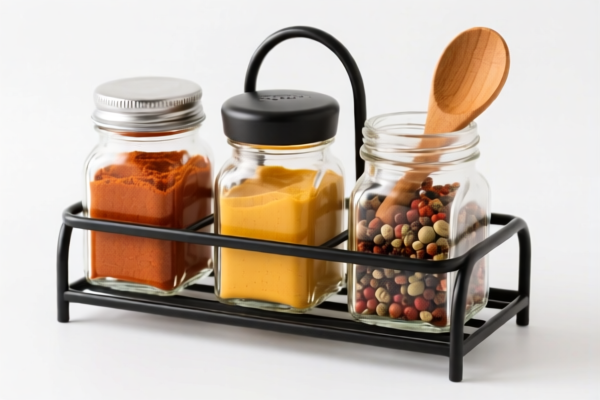

AI Analysis
🧪 Pipette Rack: HS Code Classification & US Customs Clearance Guide (2026)
🌐 HS Code Reference & Clearance Strategy | 2026 Latest Tariff Analysis | Professional Customs Compliance
📌 I. Product Definition: What is a "Pipette Rack"?
A Pipette Rack is a laboratory accessory designed to hold, organize, and store micropipettes (pipettes) when not in use. It prevents cross-contamination, protects the instrument tips from damage, and maintains lab bench hygiene.
In international trade, the classification of this simple item is highly sensitive to material composition. Customs authorities strictly differentiate between Plastic and Metal (Steel/Iron) variants, leading to drastically different tax implications.
⚠️ Critical Distinction: - Plastic Pipette Rack: Low tariff burden, general consumer/labware category. - Metal (Steel/Iron) Pipette Rack: High tariff burden, subject to Section 301 & Section 232 tariffs.
📦 II. HS Code Classification Breakdown (2026 Latest Tariff Schedule)
Based on standard material inference for laboratory consumables, here are the precise HS Code mappings and their logical justifications.
| HS Code | Product Description | Material Inference | Key Logic / Summary |
|---|---|---|---|
| 3926.90.99.89 | Other Articles of Plastics | Plastic | Fits "Other articles of plastics." Lab racks are commonly plastic. No material/shape conflict. Lowest Tax Option. |
| 3926.90.99.10 | Other Articles of Plastics (Labware) | Plastic | Fits "Other plastic articles... under laboratory ware." Common lab material. Lowest Tax Option. |
| 7326.90.86.88 | Other Articles of Iron or Steel | Metal (Steel/Iron) | Fits "Other articles of iron/steel." Racks are often metal in industrial labs. Categorized under unlisted specific metal goods. High Tax Option. |
| 7326.90.35.00 | Carrying/Hand-Held Containers (Metal) | Metal (Steel/Iron) | Fits "Metal containers" logic (holding pipettes). Extension of carrying/hand-held containers. Highest Tax Option. |
🔍 Key Takeaway: - If your product is Plastic: Target HS Codes
3926.90.99.89or3926.90.99.10. - If your product is Metal: You face significant additional duties under Sections 301 and 232. Target7326.90.86.88or7326.90.35.00.
💰 III. 2026 US Customs Duty Rate Detailed Analysis (China Origin)
✅ Applicable Country: United States (US) ✅ Country of Origin: China (CN) ✅ Effective Date: Current active rates including Section 301 & 232 measures
🎯 1. Plastic Pipette Racks (HS: 3926.90.99.89 / .10)
| Item | Detail |
|---|---|
| Base Tariff | 5.3% (Ad Valorem) |
| Section 301 Tariff | +7.5% (Additional duty on Chinese goods) |
| Section 232 Tariff | ❌ Not Applicable (Steel/Aluminum/Copper surcharge does not apply to plastics) |
| Total Duty Rate | 12.8% |
| Calculation | CIF Value × 12.8% |
| De Minimis Exemption | ❌ No (Section 301 goods are generally excluded from de minimis if value exceeds threshold or specifically regulated, but primarily this rate applies to formal entries). |
| Legal Basis Path | USITC:3926.90.99.89 → EO:13936 (Section 301) |
📌 Explanation: - Plastic labware is relatively safe. The total effective tariff is 12.8%. - Section 232 (Steel/Aluminum tariffs) does not apply to plastics, avoiding the massive 25-50% surcharge.
🎯 2. Metal Pipette Racks – General Category (HS: 7326.90.86.88)
| Item | Detail |
|---|---|
| Base Tariff | 2.9% (Ad Valorem) |
| Section 301 Tariff | +25.0% (Additional duty on Chinese goods) |
| Section 232 Tariff | +50% (Steel/Aluminum/Copper surcharge) |
| Total Duty Rate | 77.9% |
| Calculation | CIF Value × 77.9% |
| De Minimis Exemption | ❌ No |
| Legal Basis Path | USITC:7326.90.86.88 → EO:13936 → IEEPA:9903.01.25 (Steel/Aluminum) |
📌 Explanation: - High Risk! Metal racks attract Section 232 (Steel/Aluminum) tariffs + Section 301 tariffs. - Base is low (2.9%), but the 25% + 50% add-ons make this cost-prohibitive for many importers.
🎯 3. Metal Pipette Racks – Container Category (HS: 7326.90.35.00)
| Item | Detail |
|---|---|
| Base Tariff | 7.8% (Ad Valorem) |
| Section 301 Tariff | +25.0% (Additional duty on Chinese goods) |
| Section 232 Tariff | +50% (Steel/Aluminum/Copper surcharge) |
| Total Duty Rate | 82.8% |
| Calculation | CIF Value × 82.8% |
| De Minimis Exemption | ❌ No |
| Legal Basis Path | USITC:7326.90.35.00 → EO:13936 → IEEPA:9903.01.25 (Steel/Aluminum) |
📌 Explanation: - If classified as a "container" (holding pipettes), the base rate is higher (7.8%), leading to an even higher total duty of 82.8%. - This is the worst-case scenario for metal racks.
🛠️ IV. Customs Clearance Practical Advice (Avoiding Pitfalls)
✅ 1. Preparation Checklist (Essential Documents)
| Document | Required? | Notes |
|---|---|---|
| Product Specifications | ✔️ | Must clearly state Material Composition (e.g., "100% Polypropylene" vs. "Stainless Steel 304"). |
| Product Photos | ✔️ | Clear images showing the rack and any labeling. |
| Commercial Invoice | ✔️ | Description must match HS Code logic (e.g., "Plastic Pipette Holder" vs. "Steel Lab Rack"). |
| Material Certificates | ✔️ | Crucial if customs questions the material. Proves it is plastic (avoiding 82.8% tax). |
| Packing List | ✔️ | Standard requirement. |
✅ 2. Declaration Tips (Golden Rules)
🔥 "Material is King! Name Must Match!"
| Scenario | Correct Declaration | Wrong Action | Consequence |
|---|---|---|---|
| Plastic Rack | Use 3926.90.99.89 or .10. Description: "Plastic Pipette Rack." | Declare as "Metal Rack" or vague "Lab Accessory." | If customs tests it and finds plastic, you save 65%+. If you misdeclare metal, you risk fraud. |
| Metal Rack | Use 7326.90.86.88. Description: "Steel Pipette Rack." | Declare as Plastic to avoid tax. | Customs Audit Failure. Seizure, fines, and back-tariffs (77.9% vs 12.8%). |
| Mixed Materials | Declare based on essential character. | Split parts incorrectly. | Complex duty calculation. |
✅ 3. Special Handling for Metal vs. Plastic
| Material | Duty Strategy | Recommendation |
|---|---|---|
| Plastic (PP/PS) | 12.8% Total | ✅ Highly Recommended. Low risk, low cost. |
| Stainless Steel | 77.9% - 82.8% Total | ⚠️ High Cost. Consider: 1. Sourcing from non-China countries (Vietnam, Mexico) to avoid Section 301/232. 2. Re-evaluating price margins. |
📌 Critical Insight: - If you are importing from China, Plastic Pipette Racks are significantly more cost-effective. - For Metal Racks, check if your supplier has a Country of Origin (COO) other than China (e.g., Vietnam, Thailand). Non-China origin may exempt you from Section 301 (25%) and potentially Section 232 (50%) depending on current trade agreements and rules of origin.
🌍 V. Global Market Comparison (2026)
| Country/Region | Recommended HS Code | Estimated Duty (China Origin) | Key Certification | Note |
|---|---|---|---|---|
| 🇺🇸 USA | 3926.90.99.89 (Plastic) |
12.8% | N/A (General) | Metal racks face ~78-83% duty. |
| 🇺🇸 USA | 7326.90.86.88 (Metal) |
77.9% | N/A | Avoid if possible. |
| 🇪🇺 EU | 3926.90.97 (Plastic) |
~4-6% | CE, RoHS | No Section 301/232 equivalents. |
| 🇨🇳 China | 3926.90.97 (Plastic) |
~5-10% | CCC (if applicable) | Domestic market logic applies. |
📌 Conclusion: - The US market is the only major destination with punitive tariffs on Chinese labware based on material (Steel/Aluminum). - Plastic is the strategic choice for US imports from China.
📌 VI. Common Errors & Pitfalls (Lessons Learned)
❌ Error 1: Declaring a Stainless Steel Rack as Plastic to save tax. 👉 Result: Customs lab tests the product. Finds steel. Seizure + Fine + Back Taxes (77.9%).
❌ Error 2: Using vague description "Lab Accessory" without material specification. 👉 Result: Customs classifies based on suspicion or highest duty rate. High risk of 82.8%.
❌ Error 3: Assuming all "Lab Racks" are the same. 👉 Result: Missing the Section 232 Steel/Aluminum surcharge for metal goods.
✅ Correct Practice:
"Pipette Rack, Plastic (Polypropylene), White, Model XYZ" → Use
3926.90.99.89(12.8%). "Pipette Rack, Stainless Steel 304, Model ABC" → Use7326.90.86.88(77.9%) OR source from Vietnam.
🎯 VII. Conclusion: Smart Sourcing for Labware
🎯 Remember This Key Strategy:
🔹 "Plastic = 12.8%, Steel = 78%. Material Determines Margin." 🔹 "Check Origin: China Metal = Expensive, Vietnam Metal = Cheaper." 🔹 "Always Specify Material in Invoice!"
📌 Pro Tip: If you must import Metal Pipette Racks, consider: 1. Sourcing from Non-China: Vietnam, Thailand, or Mexico to avoid Section 301 (25%). 2. Pre-Ruling: Apply for an Advance Ruling from US Customs to confirm the HS Code and duty rate before shipment.
📣 Immediate Action:
📞 Verify Material: Confirm if your rack is Plastic or Metal. 📄 Update Invoice: Ensure material is explicitly stated. 🚀 Optimize Supply Chain: Switch to plastic or non-China metal if US tariffs are too high.
✨ Precision in Classification Saves Fortune! 💼 Don't let an 80% tariff eat your profit. Classify Correctly.
Customer Reviews
About HS Code Classification
The Harmonized System (HS) is an internationally standardized nomenclature developed by the World Customs Organization (WCO) to classify traded products. Over 200 countries use the HS system as the basis for customs tariffs, trade statistics, and import/export regulations.
Each HS code follows a hierarchical structure:
- Chapter (2 digits) — Broad category of goods (e.g., Chapter 84: Machinery and Mechanical Appliances)
- Heading (4 digits) — More specific grouping within the chapter
- Subheading (6 digits) — Internationally standardized breakdown, used by all WCO member countries
- National subdivisions (8-10 digits) — Country-specific extensions for further classification, such as US HTSUS 10-digit codes
Correct HS code classification is essential for smooth customs clearance, accurate duty payment, and compliance with trade regulations. Misclassification can lead to customs delays, overpayment of duties, or penalties.
When importing from CN to US, the applicable tariff rates may include:
- Most-Favored-Nation (MFN) rate — The standard duty rate applied to WTO members
- General rate — Applied to countries without trade agreements
- Trade remedy duties — Additional tariffs such as Section 301 (anti-dumping), Section 232 (national security), or countervailing duties
The information provided on this page is for reference purposes only. For official classification, please consult with your local customs authority or a licensed customs broker.