Piston Ignition Engine
CN → US| HS Code | Tariff Rate | Origin | Destination | Doc |
|---|---|---|---|---|
| 8408100005 | 37.5% | CN | US | Official Doc |
| 8408201040 | 35.0% | CN | US | Official Doc |
| 8407329040 | 35.0% | CN | US | Official Doc |
| 8407329080 | 35.0% | CN | US | Official Doc |
Product Images
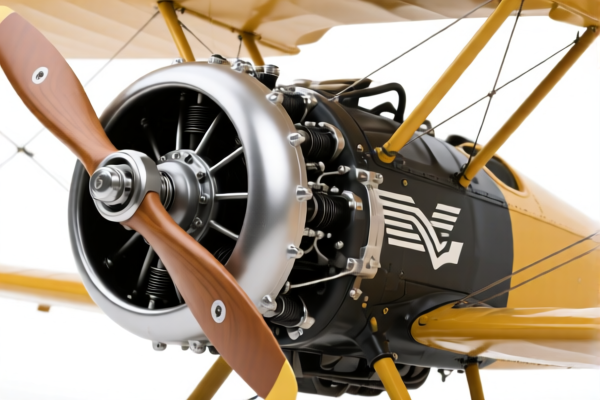
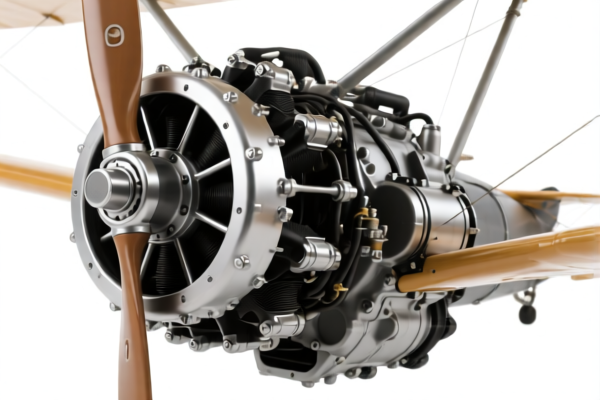

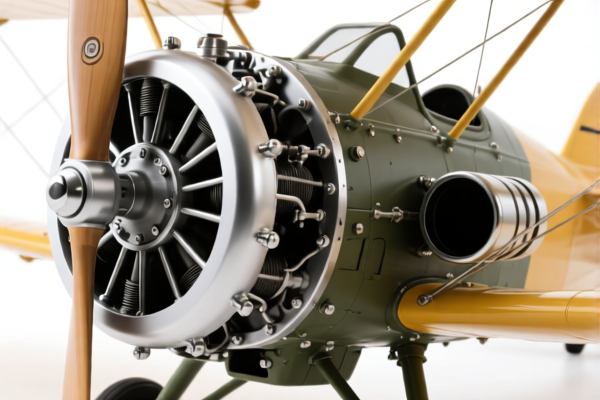
AI Analysis
🔥 Piston Ignition Engines: The Power of Internal Combustion
🌐 HS Code Reference & Customs Clearance Guide | 2026 Latest Tariff Analysis | Professional Clearance Strategy
📌 I. Product Definition & Classification: What Exactly Is a "Piston Ignition Engine"?
Piston ignition engines are the heartbeat of modern mechanical propulsion, converting fuel energy into rotational motion. In international trade, they are strictly divided by their ignition method:
- Compression-Ignition Engines (Diesel/Semi-Diesel): These engines compress air to a high degree, causing the injected fuel to ignite spontaneously. They are known for high torque, fuel efficiency, and durability. Commonly used in marine vessels, trucks, and heavy machinery.
- Spark-Ignition Engines (Gasoline/Petrol): These engines use a spark plug to ignite a pre-mixed fuel-air combination. They are typically lighter and rev higher, commonly found in cars, motorcycles, and small agricultural equipment.
⚠️ Critical Distinction Point:
- Marine Diesel Engines (specifically for ship propulsion) follow a different classification path than Vehicle Engines (for cars/trucks).
- Agricultural Tractors have specific power thresholds that dictate their HS Code.
- Motorcycle Engines are classified by cylinder capacity (cc) and power output (kW).
📦 II. HS Code Classification Details (2026 Latest Tariff Authority Comparison)
Based on the provided data, here are the specific classifications for different types of piston ignition engines:
| HS Code | Product Description | Application Scenario | Key Technical Limit |
|---|---|---|---|
8408.10.00.05 |
Compression-Ignition Engine (Diesel): Marine propulsion engines | Ship engines, marine vessels | Power ≤ 111.9 kW |
8408.20.10.40 |
Compression-Ignition Engine (Diesel): Vehicle engines (Ch. 87) for Agricultural Tractors | Farm tractors suitable for agricultural use | Power ≤ 37.3 kW |
8407.32.90.40 |
Spark-Ignition Engine (Gasoline): Vehicle engines (Ch. 87) | Motorcycles, scooters, small engines | Cylinder: 50cc–250cc Power ≤ 18.65 kW |
8407.32.90.80 |
Spark-Ignition Engine (Gasoline): Vehicle engines (Ch. 87) | Motorcycles, scooters, small engines | Cylinder: 50cc–250cc Power > 18.65 kW |
🔍 Key Reminder:
- Marine Diesel Engines (under 111.9 kW) are classified under 8408.10, distinct from vehicle diesel engines.
- Agricultural Diesel Engines (for tractors) are classified under 8408.20, but only if specifically designed for agricultural use and ≤ 37.3 kW.
- Gasoline Engines for vehicles (motorcycles) are split by power output if the cylinder capacity is between 50cc and 250cc.
💰 III. 2026 Latest Tariff Rate Breakdown (Detailed Tax Clauses)
✅ Applicable Country: United States (US)
✅ Origin: China (CN) (Assumed based on "Additional Tax" context)
✅ Effective Time: Current Trade Rules (2026)
🎯 1. 8408.10.00.05 – Marine Diesel Engines (≤ 111.9 kW)
| Item | Content |
|---|---|
| Base Tariff | 0.0% (ad valorem) |
| Additional Tariff | 0.0% |
| Total Tax Rate | 0.0% |
| Tax Calculation | Duty-Free |
| De Minimis Exemption | ❌ Not Applicable (But rate is already 0%) |
| Legal Basis | HTSUS 8408.10.00.05 |
📌 Explanation:
- This specific marine engine category benefits from a 0% duty rate with no additional tariffs.
- This is a low-cost clearance item compared to vehicle components.
- Ensure the engine is explicitly for marine propulsion to qualify for this code.
🎯 2. 8408.20.10.40 – Diesel Engines for Agricultural Tractors (≤ 37.3 kW)
| Item | Content |
|---|---|
| Base Tariff | 0.0% |
| Additional Tariff | +25.0% (Section 301 Tariff) |
| Total Tax Rate | 25.0% |
| Tax Calculation | CIF Value × 25% |
| De Minimis Exemption | ❌ Not Eligible (deny_de_minimis) |
| Legal Basis Path | USITC:8408.20.10.40 → FOOTNOTE:301.8408.20.10.40 |
📌 Note:
- Although the base rate is 0%, the 25% Section 301 additional tariff applies due to origin (China).
- Total Cost Increase: 25%.
- Must prove the engine is "suitable for agricultural use" and "installed in tractors."
🎯 3. 8407.32.90.40 – Spark-Ignition Engines (Motorcycles, 50-250cc, ≤ 18.65 kW)
| Item | Content |
|---|---|
| Base Tariff | 0.0% |
| Additional Tariff | +25.0% (Section 301 Tariff) |
| Total Tax Rate | 25.0% |
| Tax Calculation | CIF Value × 25% |
| De Minimis Exemption | ❌ Not Eligible (deny_de_minimis) |
| Legal Basis Path | USITC:8407.32.90.40 → FOOTNOTE:301.8407.32.90.40 |
📌 Note:
- 25% tariff applies.
- Applies to motorcycles/scooters with engine capacity 50cc–250cc and power ≤ 18.65 kW.
🎯 4. 8407.32.90.80 – Spark-Ignition Engines (Motorcycles, 50-250cc, > 18.65 kW)
| Item | Content |
|---|---|
| Base Tariff | 0.0% |
| Additional Tariff | +25.0% (Section 301 Tariff) |
| Total Tax Rate | 25.0% |
| Tax Calculation | CIF Value × 25% |
| De Minimis Exemption | ❌ Not Eligible (deny_de_minimis) |
| Legal Basis Path | USITC:8407.32.90.80 → FOOTNOTE:301.8407.32.90.80 |
📌 Note:
- 25% tariff applies.
- Applies to motorcycles/scooters with engine capacity 50cc–250cc but power > 18.65 kW.
- No difference in tax rate between sub-18.65kW and over-18.65kW engines in this category.
🛠️ IV. Customs Clearance Practical Advice (Avoid Pitfalls)
✅ 1. Required Documentation Checklist
| Document | Mandatory | Description |
|---|---|---|
| ✅ Engine Specifications | ✔️ | Must include kW, cc, fuel type, and intended use (Marine/Ag/Vehicle) |
| ✅ Product Photos | ✔️ | Clear shots of nameplate, serial number, and fuel type |
| ✅ Commercial Invoice | ✔️ | Must specify "Internal Combustion Piston Engine" and precise HS Code |
| ✅ Packing List | ✔️ | Detail parts included (e.g., filters, mounts) to avoid "parts" classification |
| ✅ Country of Origin | ✔️ | Critical for determining Section 301 tariffs |
✅ 2. Declaration Tips (Key Mantras)
🔥 "Marine 0%, Ag & Moto 25%, Power Limits Matter!"
| Scenario | Correct Declaration | Wrong Practice |
|---|---|---|
| Marine Diesel Engine (≤ 111.9 kW) | HS: 8408.10.00.05 Duty: 0% |
Misdeclare as vehicle engine → 25% duty |
| Tractor Diesel Engine (≤ 37.3 kW) | HS: 8408.20.10.40 Duty: 25% |
Misdeclare as general industrial engine → Risk of audit |
| Motorcycle Engine (50-250cc) | HS: 8407.32.90.40/80 Duty: 25% |
Misdeclare as "machine part" → Complex clearance |
| Large Marine Engine (> 111.9 kW) | Not in provided data | Assuming 0% rate → Underpayment penalty |
✅ 3. Special Cases Handling
| Situation | Handling Advice |
|---|---|
| OEM Engine for Specific Vehicle | Provide proof of fitment (e.g., tractor manual) to justify 8408.20.10.40 |
| Engine with Aftermarket Parts | Declare as "Engine Set" if integral, or split if separable. Keep total value accurate. |
| Marine vs. Industrial Diesel | Crucial: Marine engines (propulsion) go to 8408.10. Industrial stationary engines go to 8408.90 (not in data, but likely different tax). |
| High-Power Motorcycle Engine | If >250cc or >18.65kW, check other subheadings in 8407.32 or 8407.34. |
🌍 V. Global Market Clearance Comparison (2026 Latest)
| Country/Region | Recommended HS Code | Tariff Rate | Certification Requirements | Notes |
|---|---|---|---|---|
| 🇺🇸 USA | See Data Above | 0%–25% | EPA, CARB (if applicable) | China origin = 25% for Ag/Moto |
| 🇨🇳 China | Same HS Codes | 0%–9% | CCC (for some vehicles) | Lower duties for domestic trade |
| 🇪🇺 EU | 8407/8408 Series | 0%–2.7% | CE, Euro 5/6 Emission Standards | Strict emission rules for motorcycles |
| 🇯🇵 Japan | 8407/8408 Series | 0%–3.2% | JIS, Emission Standards | High quality standards |
| 🇮🇳 India | 8407/8408 Series | 7.5%–15% | AIS, Emission Norms | Protective tariffs |
📌 Conclusion:
- USA is the only market with Section 301 Additional Tariffs for Chinese-origin agricultural and motorcycle engines (25%).
- Marine diesel engines remain 0% duty in the USA, making them a cost-effective export category.
- Emission standards (EPA, Euro 5, etc.) are critical for clearance in all major markets.
📌 VI. Common Mistakes & Pitfalls (Blood & Tears Lessons)
❌ Mistake 1: Declaring a Marine Engine as a Vehicle Engine
👉 Consequence: Paying 25% unnecessary tariff instead of 0%.
✅ Fix: Clearly state "Marine Propulsion Engine" on invoice.
❌ Mistake 2: Declaring an Agricultural Tractor Engine as a General Diesel Engine
👉 Consequence: Misclassification, delays, and potential 25% tariff if not properly justified.
✅ Fix: Provide documentation proving "agricultural use."
❌ Mistake 3: Ignoring Power Limits (kW) for Motorcycles
👉 Consequence: If power is >18.65 kW, it must be declared under .80, not .40. While tax is same, incorrect HS code leads to audits.
✅ Fix: Accurately measure and declare kW and cc.
❌ Mistake 4: Using "Engine Part" for a Complete Engine
👉 Consequence: Higher duties or rejection.
✅ Fix: Declare as "Complete Internal Combustion Piston Engine."
🎯 VII. Conclusion: Precision Saves Money!
🎯 Remember Mantras:
🔹 "Marine Diesel 0%, Ag & Moto 25%."
🔹 "Check kW Limits: 111.9 for Marine, 37.3 for Ag, 18.65 for Moto."
🔹 "HS Code Accuracy = Tariff Savings."
📌 Pro Tip:
If your engines are originating from Vietnam, Mexico, or Thailand, you may avoid the 25% Section 301 tariff.
Recommendation: Apply for an Advance Ruling from US Customs (CBP) if unsure about classification, especially for marine vs. industrial distinctions.
📣 Immediate Action:
📞 Contact a licensed customs broker + Provide Technical Specs + Verify Origin
🚀 Ensure smooth clearance, avoid unexpected costs, and maximize profit margins!
✨ Professional Clearance Starts with Accurate Classification!
💼 Every Percent of Duty Matters!
Customer Reviews
About HS Code Classification
The Harmonized System (HS) is an internationally standardized nomenclature developed by the World Customs Organization (WCO) to classify traded products. Over 200 countries use the HS system as the basis for customs tariffs, trade statistics, and import/export regulations.
Each HS code follows a hierarchical structure:
- Chapter (2 digits) — Broad category of goods (e.g., Chapter 84: Machinery and Mechanical Appliances)
- Heading (4 digits) — More specific grouping within the chapter
- Subheading (6 digits) — Internationally standardized breakdown, used by all WCO member countries
- National subdivisions (8-10 digits) — Country-specific extensions for further classification, such as US HTSUS 10-digit codes
Correct HS code classification is essential for smooth customs clearance, accurate duty payment, and compliance with trade regulations. Misclassification can lead to customs delays, overpayment of duties, or penalties.
When importing from CN to US, the applicable tariff rates may include:
- Most-Favored-Nation (MFN) rate — The standard duty rate applied to WTO members
- General rate — Applied to countries without trade agreements
- Trade remedy duties — Additional tariffs such as Section 301 (anti-dumping), Section 232 (national security), or countervailing duties
The information provided on this page is for reference purposes only. For official classification, please consult with your local customs authority or a licensed customs broker.