Piston Internal Combustion Engine
CN → US| HS Code | Tariff Rate | Origin | Destination | Doc |
|---|---|---|---|---|
| 8408100005 | 37.5% | CN | US | Official Doc |
| 8408201040 | 35.0% | CN | US | Official Doc |
| 8409919990 | 37.5% | CN | US | Official Doc |
| 8483101050 | 37.5% | CN | US | Official Doc |
| 8483101030 | 37.5% | CN | US | Official Doc |
Product Images
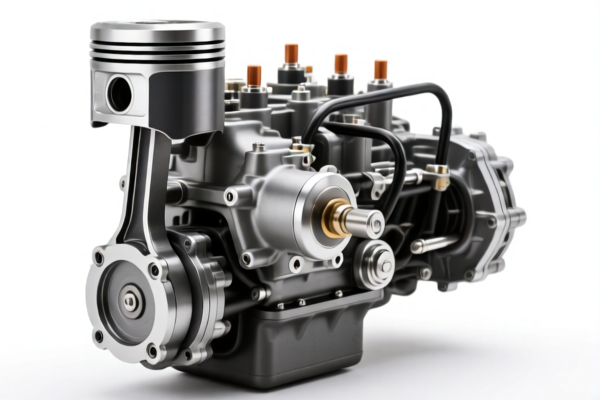
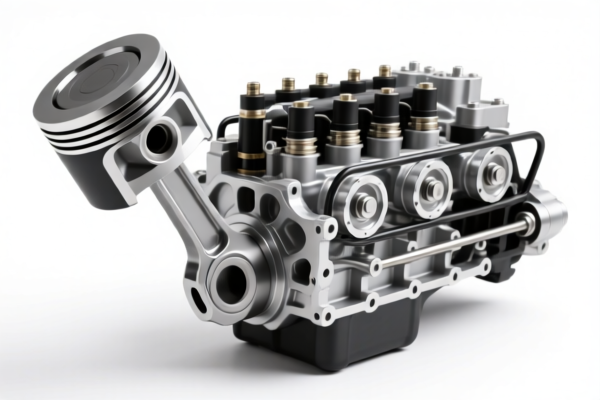
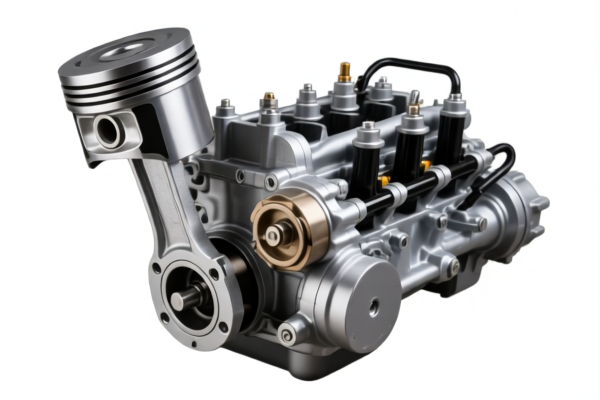
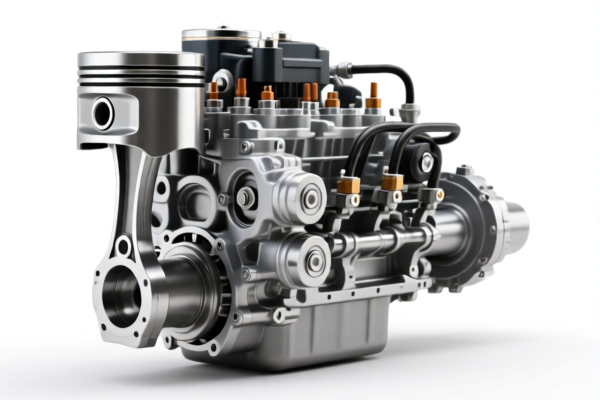
AI Analysis
🔥 Piston Internal Combustion Engine (内燃活塞发动机)
🌐 HS Code Reference & Customs Clearance Guide | 2026 Latest Tariff Analysis | Professional Clearance Strategy
📌 I. Product Definition & Classification: What Exactly Is a "Piston Internal Combustion Engine"?
A Piston Internal Combustion Engine is a prime mover that generates mechanical power through the combustion of fuel within cylinders containing moving pistons. In international trade, classification depends heavily on the ignition type (Spark Ignition vs. Compression Ignition) and whether the item is the engine itself or parts/accessories.
⚠️ Critical Distinction:
- Complete Engine: The entire assembly including the block, pistons, crankshaft, etc. → Classified under Chapter 84.08.
- Spark Ignition (Gasoline/Oil Gas) Parts: Components specifically for engines that use spark plugs (e.g., distributor caps, spark plugs). → Classified under Chapter 84.09 or 84.83.
- Compression Ignition (Diesel) Parts: Components for engines that ignite fuel by compression. → Classified under Chapter 84.09.
📦 II. HS Code Classification Details (Based on Provided Data)
| HS Code | Product Description | Application/Logic | Total Tax Rate |
|---|---|---|---|
8408.10.00.05 |
Internal Combustion Piston Engine (General) | Matched Purpose: The product name explicitly falls under the "Internal Combustion Piston Engine" category, matching the core purpose description. | 37.5% |
8408.20.10.40 |
Compression-Ignition Internal Combustion Piston Engine | Form & Purpose Match: "Internal Combustion Piston Engine" highly aligns with "Compression-Ignition Internal Combustion Piston Engine" in form and basic function. Since power/application isn't specified, it is deemed "possibly compliant" under the "no obvious conflict" principle. | 35.0% |
8409.91.99.90 |
Parts for Spark-Ignition Internal Combustion Engines | Purpose Match: "Parts for Spark-Ignition Piston Internal Combustion Engine" fully matches the code’s requirement "Specially designed for spark-ignition internal combustion piston engines." As parts with no material conflict, it fits the "Other Parts" logic. | 37.5% |
8483.10.10.50 |
Parts for Spark-Ignition Engines (Transmission/Axles) | Purpose Match: "Spark-Ignition Piston Internal Combustion Engine" matches the code’s purpose. As a "Part," it fits the residual attribute of "Transmission Shafts and Other Transmission Components" with no material conflict. | 37.5% |
8483.10.10.30 |
Parts for Spark-Ignition Engines (General Parts) | Purpose Match: Similar to above. "Spark-Ignition Piston Internal Combustion Engine" matches the code’s purpose. As a "Part," it fits the residual category logic with no material conflict. | 37.5% |
🔍 Key Insight:
- Complete Engines (e.g.,8408.xx) generally attract higher scrutiny on ignition type and power.
- Parts (e.g.,8409,8483) are classified based on compatibility (which engine they fit) and function (transmission vs. engine-specific).
- All listed HS Codes carry significant additional tariffs due to trade policies (likely US-China trade friction context).
💰 III. 2026 Latest Tariff Rate Breakdown (Including Additional Taxes)
✅ Applicable Country: United States (US)
✅ Origin: China (CN)
✅ Effective Date: Post-2025 (Based on provided data)
🎯 1. 8408.10.00.05 & 8409.91.99.90 & 8483.10.10.50 & 8483.10.10.30
(Standard High-Tariff Category)
| Item | Content |
|---|---|
| Base Tariff | 2.5% (ad valorem) |
| Section 301 Tariff | +25.0% (USITC Footnote for China-origin goods) |
| Section 122 Tariff | +10.0% (Specific duty for certain goods) |
| Total Tax Rate | 37.5% |
| Tax Calculation | CIF Value × 37.5% |
| De Minimis Eligibility | ❌ Not Eligible (Due to high tariff rates and trade restrictions) |
| Legal Basis Path | Base Duty → Section 301 (9903.01.24/25) → Section 122 |
📌 Explanation:
- The 25% Section 301 tariff is the dominant cost driver, applied to most Chinese-origin industrial machinery and parts.
- The 10% Section 122 tariff further increases the burden.
- Even the 2.5% base duty applies, making the total 37.5% a significant landing cost.
🎯 2. 8408.20.10.40
(Compression Ignition / Diesel Variant)
| Item | Content |
|---|---|
| Base Tariff | 0.0% |
| Section 301 Tariff | +25.0% |
| Section 122 Tariff | +10.0% |
| Total Tax Rate | 35.0% |
| Tax Calculation | CIF Value × 35.0% |
| De Minimis Eligibility | ❌ Not Eligible |
| Legal Basis Path | Base Duty (0%) → Section 301 → Section 122 |
📌 Note:
- While the base tariff is 0%, the additional taxes remain the same.
- This results in a 2.5% lower total cost compared to the gasoline/spark-ignition parts or general engine codes.
- Strategy Tip: If your product is a Diesel Engine or parts for Diesel engines, ensure the HS Code8408.20.10.40is correctly applied to save 2.5% on the CIF value.
🛠️ IV. Customs Clearance Practical Advice (Pitfall Avoidance)
✅ 1. Documentation Checklist (Non-Negotiable)
| Document | Required | Description |
|---|---|---|
| ✅ Product Specification Sheet | ✔️ | Must clearly state: Ignition Type (Spark vs. Compression), Cylinder Count, Displacement/Power (HP/kW), and Fuel Type. |
| ✅ Engineering Diagram / Parts List | ✔️ | For parts (8409, 8483), show exactly which engine model the part fits. |
| ✅ Product Photos (with Nameplate) | ✔️ | Clear image of the manufacturer label, model number, and serial number. |
| ✅ Commercial Invoice | ✔️ | Description must match the HS Code rationale (e.g., "Part for Spark Ignition Engine, Model XYZ"). |
| ✅ Country of Origin Certificate | ✔️ | Essential for determining tariff applicability (China origin triggers 35-37.5%). |
| ✅ Packing List | ✔️ | Distinguish between complete engines and loose parts. |
✅ 2. Declaration Strategy (Key Mantras)
🔥 “Ignition Type First, Power Second, Parts Fit Third!”
| Scenario | Correct Declaration | Wrong Practice |
|---|---|---|
| Gasoline Engine (Complete) | 8408.10.00.05 |
Misdeclare as Diesel (8408.20...) → Risk of Misclassification Penalty |
| Diesel Engine (Complete) | 8408.20.10.40 |
Misdeclare as General (8408.10...) → Higher Tax (37.5% vs 35.0%) |
| Spark Ignition Parts | 8409.91.99.90 or 8483.10.10.xx |
Declare as "Engine Parts" without specifying ignition type → Customs Ruling Delay |
| Mixed Shipment (Engine + Parts) | Split Line Items | Combine in one line → Customs may assign highest duty or reject |
✅ 3. Special Handling
| Scenario | Advice |
|---|---|
| OEM Parts | Provide Authorization Letter from the engine manufacturer to prove compatibility. |
| Remanufactured Parts | Declare as "Remanufactured" and provide repair records; some codes may have different duties or restrictions. |
| High-Value Engines | Consider Advance Ruling from US CBP to confirm the HS Code and tariff liability before shipment. |
| Origin Tracing | Ensure no third-country transshipment obscures the China origin, which could trigger anti-circumvention investigations. |
🌍 V. Global Market Comparison (2026 Context)
| Country/Region | Recommended HS Code | Tariff (China Origin) | Certification | Notes |
|---|---|---|---|---|
| 🇺🇸 USA | 8408.10.00.05 / 8408.20.10.40 |
35% - 37.5% | EPA Tier 4 (Emissions), CARB (if CA) | Highest Barrier: Section 301 + 122 duties apply. |
| 🇨🇳 China | 8408.10.00 / 8408.20.10 |
~5% - 13% | CCC (if applicable) | Low base duty, no Section 301. |
| 🇪🇺 EU | 8408.xx.xx |
~2.5% | CE, Stage V Emissions | No Section 301, but strict emissions standards. |
| 🇲🇽 Mexico | 8408.xx.xx |
0% - 5% | NOM Certification | Potential USMCA benefits if rules of origin met. |
📌 Conclusion:
- The US market is the most expensive for Chinese-origin piston engines and parts due to Section 301 and Section 122 tariffs.
- Diesel engines/parts (8408.20) offer a 2.5% savings compared to gasoline/general codes.
- Compliance with EPA/CARB is as critical as tariff management; non-compliance leads to seizure, not just extra duty.
📌 VI. Common Errors & Pitfalls (Lessons Learned)
❌ Error 1: Declaring a Diesel Engine as 8408.10.00.05 (Gasoline/General)
👉 Consequence: 37.5% Tax instead of 35.0%.
👉 Fix: Always verify Fuel Type and Ignition Method.
❌ Error 2: Declaring Spark Ignition Parts as generic "Engine Parts" without specifying Chapter 84.09 vs 84.83
👉 Consequence: Customs may classify under the most punitive code or request detailed explanation, causing delays.
👉 Fix: Specify "Part for Spark Ignition Engine" clearly in the description.
❌ Error 3: Ignoring EPA/CARB Emissions Compliance for US Imports
👉 Consequence: Goods seized at US border, regardless of tariff status.
👉 Fix: Obtain EPA Certificate of Conformity before shipping.
✅ Correct Declaration Example:
"Piston Internal Combustion Engine, Spark Ignition, Gasoline, 50 HP, Model XYZ, EPA Compliant, Made in China"
🎯 VII. Conclusion: Precision Classification, Cost Control, and Compliance
🎯 Remember the Mantra:
🔹 "Ignition Type Dictates HS Code, Diesel Saves 2.5%, Spark Triggers 37.5%, No EPA = Seizure!"
🔹 "Section 301 is Inescapable for China, Plan Your Pricing for 35-37.5% Duty!"
📌 Pro Tip:
If your piston engine is assembled in Vietnam, Mexico, or Thailand (and meets Rules of Origin), you may avoid Section 301 tariffs, reducing the total duty to ~10-15% (Base + Local Duties).
Recommendation: Apply for an Advance Ruling from US CBP to confirm your HS Code and tariff liability before shipping.
📣 Immediate Action:
📞 Consult a Licensed Customs Broker + Provide Technical Specs + Apply for EPA Certification
🚀 Ensure Smooth Clearance, Avoid Seizures, and Protect Your Margin!
✨ Professional Customs Clearance Starts with Accurate Classification!
💼 Every Percentage Point of Duty Counts in International Trade!
Customer Reviews
About HS Code Classification
The Harmonized System (HS) is an internationally standardized nomenclature developed by the World Customs Organization (WCO) to classify traded products. Over 200 countries use the HS system as the basis for customs tariffs, trade statistics, and import/export regulations.
Each HS code follows a hierarchical structure:
- Chapter (2 digits) — Broad category of goods (e.g., Chapter 84: Machinery and Mechanical Appliances)
- Heading (4 digits) — More specific grouping within the chapter
- Subheading (6 digits) — Internationally standardized breakdown, used by all WCO member countries
- National subdivisions (8-10 digits) — Country-specific extensions for further classification, such as US HTSUS 10-digit codes
Correct HS code classification is essential for smooth customs clearance, accurate duty payment, and compliance with trade regulations. Misclassification can lead to customs delays, overpayment of duties, or penalties.
When importing from CN to US, the applicable tariff rates may include:
- Most-Favored-Nation (MFN) rate — The standard duty rate applied to WTO members
- General rate — Applied to countries without trade agreements
- Trade remedy duties — Additional tariffs such as Section 301 (anti-dumping), Section 232 (national security), or countervailing duties
The information provided on this page is for reference purposes only. For official classification, please consult with your local customs authority or a licensed customs broker.