Placemat
CN → US| HS Code | Tariff Rate | Origin | Destination | Doc |
|---|---|---|---|---|
| 6307909891 | 24.5% | CN | US | Official Doc |
| 9404909670 | 17.3% | CN | US | Official Doc |
| 6307909885 | 24.5% | CN | US | Official Doc |
| 3926305000 | 22.8% | CN | US | Official Doc |
| 3926909989 | 22.8% | CN | US | Official Doc |
Product Images
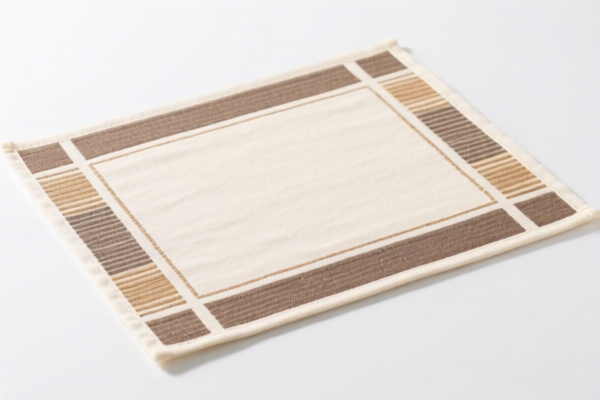
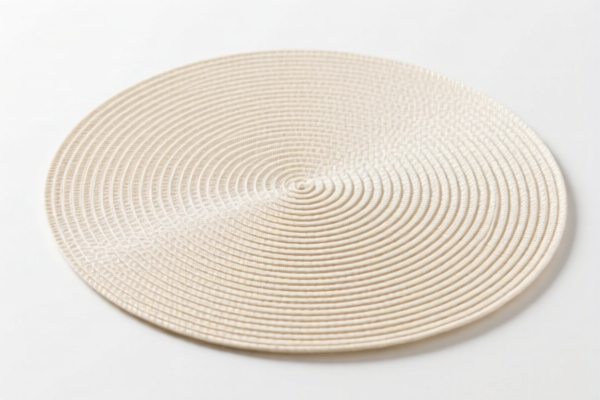
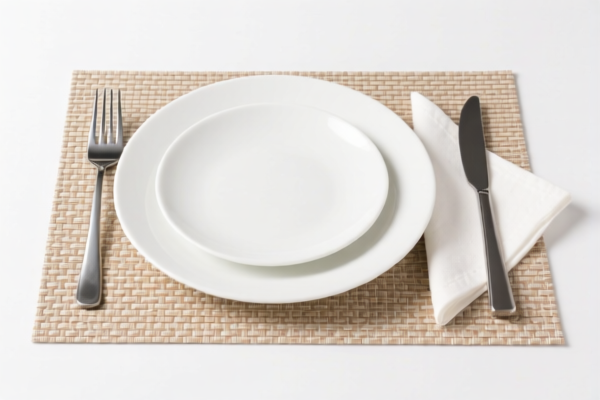

AI Analysis
Here is the comprehensive Wiki-style guide for Placemats, based strictly on the provided <DATA> and <TAX> content, structured with a vibrant, eye-catching design and professional clearance insights.
🍽️ Placemats & Dining Accessories (Tableware & Upholstery)
🌐 HS Code Master Guide | 2026 Tax Decoding | Smart Clearance Strategy
🚀 Quick Overview: Whether you are importing dining chair cushions, generic seat pads, or plastic furniture accessories, the HS Code determines if you pay 17.3% or 24.5%. Get the details right, or face double taxation!
📌 I. Product Definition: What Exactly is a "Placemat"?
In the context of international trade and the provided data, "Placemats" and related dining items are often classified under three distinct categories based on Material and Function. Confusion here leads to costly errors.
The Three Faces of Dining Textiles & Accessories: 1. Functional Upholstery (The Cushion): Items like Dining Chair Cushions or Backrest Pads used for comfort on chairs. * Key Trait: Designed to attach to furniture for comfort. 2. General Seat Pads (The Mat): Generic Seat Cushions or mats that may not have complex fastening. * Key Trait: Purely form/function as a pad/mattress-like item. 3. Plastic Accessories (The Hardware): Plastic fasteners, connectors, or structural parts for furniture. * Key Trait: Made of synthetic polymers, not fabric.
⚠️ Critical Warning: - Textile vs. Plastic: A "Placemat" made of plastic is taxed differently (approx. 22.8%) than a fabric one (24.5% or 17.3%). - Furniture Part vs. Finished Product: Is it a "finished chair part" (HS 6307) or a "generic seat pad" (HS 9404)? The tax rate jumps by 7.2% depending on this distinction!
📦 II. HS Code Classification Breakdown (2026 Data)
Based on the provided data, here is the precise mapping for Placemats and related dining items.
| HS Code | Product Description (Based on Data) | Material / Form | Total Tax Rate | Key Tax Components |
|---|---|---|---|---|
| 6307.90.98.91 | Dining Chair Cushions / Backrest Pads (Treated as "Made-up Articles") |
Textile (Cotton/Man-made fiber) | 24.5% | Base: 7.0% + Add-on: 7.5% + Sec 122: 10% |
| 9404.90.96.70 | Generic Seat Pads / Mats (Treated as "Mattresses & Seating") |
Other Materials (Inferred) | 17.3% | Base: 7.3% + Add-on: 0.0% + Sec 122: 10% |
| 6307.90.98.85 | Chair Backrests / Upholstery Parts (Treated as "Furniture Accessories") |
Cotton or Synthetic Fiber | 24.5% | Base: 7.0% + Add-on: 7.5% + Sec 122: 10% |
| 3926.30.50.00 | Plastic Furniture Connectors (Plastic accessories for furniture) |
Plastic (Inferred) | 22.8% | Base: 5.3% + Add-on: 7.5% + Sec 122: 10% |
| 3926.90.99.89 | Plastic/Textile Plugs & Aux. Parts (Other plastic or textile制品) |
Plastic or Textile Extension | 22.8% | Base: 5.3% + Add-on: 7.5% + Sec 122: 10% |
🔍 Deep Dive Analysis: - The "24.5% Trap": Items like Dining Chair Cushions (6307.90.98.91) and Backrest Pads (6307.90.98.85) both fall under "Made-up Articles." They attract the highest combined tariff due to the 7.5% Add-on Tariff and 10% Section 122 Tariff. - The "17.3% Opportunity": If your item is classified strictly as a Seat Pad (9404.90.96.70) rather than a cushion accessory, you avoid the 7.5% Add-on, saving you 7.2% in total costs. - Plastic Logic: If your "placemat" has plastic inserts or is entirely plastic (like a vinyl placemat with a plastic backing), check 3926 codes. They avoid the 7.5% textile add-on but still carry the 10% Sec 122 tariff.
💰 III. 2026 Tax Rate Deep Dive (Detailed Breakdown)
✅ Applicable Market: US (United States) ✅ Origin: China (CN) ✅ Effective Date: Based on 2026 projection (Data reflects current high tariff environment)
🎯 Scenario A: Textile Dining Cushions (HS 6307.90.98.91)
Best for: Upholstered dining chairs, decorative backrests.
| Tax Component | Rate | Explanation |
|---|---|---|
| Base Duty (MFN) | 7.0% | Standard Most Favored Nation tariff for "Other Made-up Articles". |
| Section 301 Add-on | 7.5% | "Added Tariff" imposed on Chinese textiles to restrict competitive pressure. |
| Section 122 Tariff | 10.0% | Specific "122 Clause" Tariff (Likely retaliatory or specific trade remedy) applied to textiles. |
| TOTAL RATE | 24.5% | High Risk Zone – Must verify material composition carefully. |
📌 Formula:
CIF Value × 24.5%
🎯 Scenario B: Generic Seat Pads (HS 9404.90.96.70)
Best for: Generic floor mats, seat cushions, foam pads.
| Tax Component | Rate | Explanation |
|---|---|---|
| Base Duty (MFN) | 7.3% | Slightly higher base rate for furniture accessories (9404). |
| Section 301 Add-on | 0.0% | CRITICAL SAVINGS! No additional 301 textile tax applied here. |
| Section 122 Tariff | 10.0% | The 122 clause still applies to the "Other" category. |
| TOTAL RATE | 17.3% | Sweet Spot – Lowest total tax for cushion-like items. |
📌 Formula:
CIF Value × 17.3%
🎯 Scenario C: Plastic Furniture Parts (HS 3926.30.50.00)
Best for: Plastic chair legs, connectors, or vinyl-backed mats.
| Tax Component | Rate | Explanation |
|---|---|---|
| Base Duty (MFN) | 5.3% | Lower base duty for plastics (3926). |
| Section 301 Add-on | 7.5% | Standard 301 tariff applies to most Chinese plastics. |
| Section 122 Tariff | 10.0% | Mandatory for this category. |
| TOTAL RATE | 22.8% | Moderate Risk – Better than textile, but still high. |
🛠️ IV. Customs Clearance Action Plan (Smart Strategy)
✅ 1. Documentation Checklist (Must-Have)
To ensure the lowest possible tax rate (avoiding misclassification penalties):
| Document | Why It Matters |
|---|---|
| Detailed Material Specification | CRITICAL! Prove if it's Cotton, Man-made Fiber, or Plastic. A mislabeled "Placemat" could be reclassified as a more expensive category. |
| Product Photos (Side & Front) | Must clearly show if it is a Cushion (6307) or a Pad (9404). The shape dictates the code! |
| Bill of Materials (BOM) | Show if there are plastic inserts. If yes, it might move to HS 3926 (22.8%). |
| Commercial Invoice | Must explicitly state: "Dining Chair Cushions" OR "Seat Pads" OR "Plastic Connectors" to match the HS Code. |
| Packaging List | Ensure Cushions and Placemats are not mixed in a way that confuses the classification (e.g., don't mix 6307 and 3926 in one box without clear separation). |
✅ 2. Smart Declaration Tips (The "Golden Rules")
🔥 Rule 1: Don't Say "Placemat" Blindly! * ❌ Bad: "Placemat (Mixed Materials)" → Risk: Customs will guess the worst (24.5%). * ✅ Good: "Dining Chair Backrest Cushion (Textile)" → Use 6307.90.98.91. * ✅ Good: "Generic Seat Pad (Foam/Other)" → Use 9404.90.96.70 (Save 7.2%!).
🔥 Rule 2: Separate Textile from Plastic If your product has a plastic base and a fabric top, declare them separately if possible, or ensure the main use determines the code. If the plastic part is the primary structural element, aim for 3926 (22.8%).
🔥 Rule 3: The "122 Clause" is Non-Negotiable All categories listed above carry a 10% Section 122 Tariff. Do not try to evade this by changing the country of origin (unless you are using a qualified Free Trade Agreement country).
✅ 3. Common Pitfalls to Avoid
| Mistake | Consequence | Correct Fix |
|---|---|---|
| Mixing HS Codes | Customs holds cargo for inspection; delays + storage fees. | Split Shipments: Send Textiles (6307) and Plastics (3926) in separate boxes. |
| Calling everything "Placemat" | Misclassification risk of +7.2% tax. | Use Specific Names: "Chair Cushion" vs. "Seat Pad" vs. "Plastic Connector". |
| Ignoring Section 122 | Underpaying tax → Seizure & Penalties. | Budget 10% extra for the 122 Clause on ALL these codes. |
| Wrong Material Claim | Claiming "Cotton" when it is "Synthetic" (or vice versa). | Third-Party Lab Test: Submit a fiber composition report. |
🌍 V. Global Market Comparison (2026)
| Region | Recommendation | Key Risk |
|---|---|---|
| 🇺🇸 USA | Use 6307 or 9404 | High Section 122 (10%) + 301 Add-on. Plan for 17-24% tax. |
| 🇪🇺 EU | Check specific textile rules | EU has lower base tariffs but strict REACH/RoHS compliance for plastics. |
| 🇨🇳 China | N/A (Export) | Ensure Export Declaration matches the Import HS Code exactly. |
| 🇨🇦 Canada | Monitor CFTA | Similar structure to US but different Section 122 equivalents. |
📌 Conclusion: - Textile Cushions (6307) = 24.5% (High Cost). - Generic Pads (9404) = 17.3% (Best Value). - Plastic Parts (3926) = 22.8% (Mid-Range).
📌 VI. Final Advice: Save Money, Clear Faster!
🎯 The "Cost-Saving" Formula:
Total Duty = (Base Rate) + (301 Add-on) + (122 Clause)
- Avoid the 301 Add-on (7.5%): If your product can be classified as 9404.90.96.70 (Generic Pad) instead of 6307 (Textile Cushion), you save 7.5% instantly.
- Always Budget for 122 (10%): This is mandatory for all these codes.
🚀 Next Steps for Your Shipment:
- Identify Material: Is it fabric, foam, or plastic?
- Select Code: Match to the table above.
- Prepare Docs: Get a Fiber Composition Report.
- Declare Smartly: Use the exact product name from the HS Code summary (e.g., "Dining Chair Cushion" not just "Placemat").
✨ Pro Tip:
"If it's a cushion, call it a cushion! If it's a pad, call it a pad! The 7.5% difference is the difference between profit and loss!"
📞 Contact your freight forwarder today to apply for an Advance Ruling on your specific "Placemat" design to lock in the 17.3% rate if applicable!
✨ Professional Customs Clearance | Precision Tariff Strategy | 2026 Edition
Customer Reviews
About HS Code Classification
The Harmonized System (HS) is an internationally standardized nomenclature developed by the World Customs Organization (WCO) to classify traded products. Over 200 countries use the HS system as the basis for customs tariffs, trade statistics, and import/export regulations.
Each HS code follows a hierarchical structure:
- Chapter (2 digits) — Broad category of goods (e.g., Chapter 84: Machinery and Mechanical Appliances)
- Heading (4 digits) — More specific grouping within the chapter
- Subheading (6 digits) — Internationally standardized breakdown, used by all WCO member countries
- National subdivisions (8-10 digits) — Country-specific extensions for further classification, such as US HTSUS 10-digit codes
Correct HS code classification is essential for smooth customs clearance, accurate duty payment, and compliance with trade regulations. Misclassification can lead to customs delays, overpayment of duties, or penalties.
When importing from CN to US, the applicable tariff rates may include:
- Most-Favored-Nation (MFN) rate — The standard duty rate applied to WTO members
- General rate — Applied to countries without trade agreements
- Trade remedy duties — Additional tariffs such as Section 301 (anti-dumping), Section 232 (national security), or countervailing duties
The information provided on this page is for reference purposes only. For official classification, please consult with your local customs authority or a licensed customs broker.