Plain Fabric for Home Textiles
CN → US| HS Code | Tariff Rate | Origin | Destination | Doc |
|---|---|---|---|---|
| 5309213055 | 41.9% | CN | US | Official Doc |
| 5309293055 | 35.0% | CN | US | Official Doc |
| 5210316020 | 47.2% | CN | US | Official Doc |
| 5208114020 | 44.0% | CN | US | Official Doc |
| 5208112020 | 42.0% | CN | US | Official Doc |
Product Images
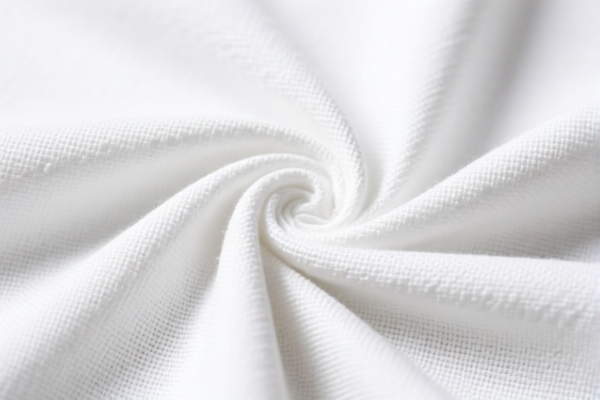
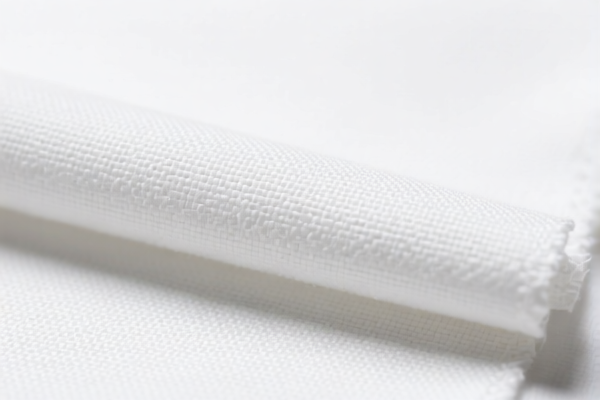
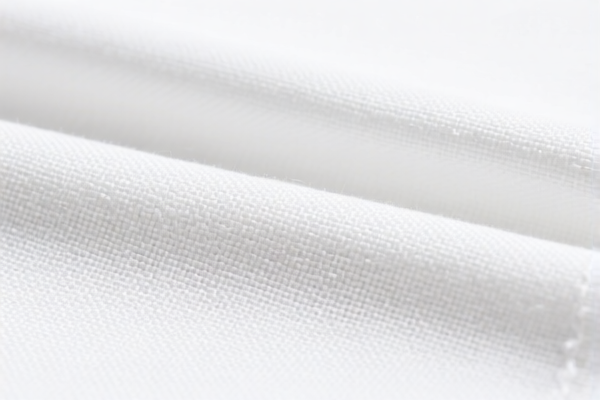
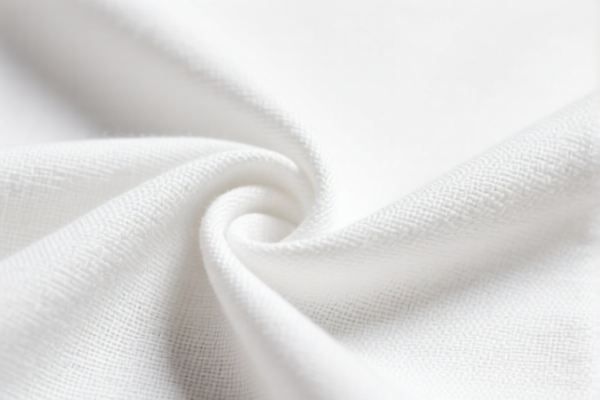
AI Analysis
🧵 Plain Fabric for Home Textiles (Calico/Print Cloth)
🌐 HS Code Reference & Customs Clearance Guide | 2026 Latest Tariff Analysis | Professional Clearance Strategy
Plain Fabric for Home Textiles is a fundamental category in global textile trade, often used for bedding, curtains, upholstery, and light apparel. However, in international customs, "Plain Fabric" is not a single HS Code. It is strictly defined by fiber composition (Cotton, Linen, Synthetic) and weave structure.
Misclassification is the #1 cause of customs delays and unexpected tax bills. Below is the precise breakdown based on the provided tariff data for Chinese-origin goods imported into the US.
📦 I. HS Code Classification Matrix (2026 Latest Tariff)
The provided data highlights five specific HS Codes for plain fabrics, all subject to significant additional tariffs due to US-China trade policies.
| HS Code | Summary Description | Composition/Characteristics |
|---|---|---|
| 5309.21.30.55 | Plain-weave cloth | Matches characteristics of muslin or fine cloth. Often implies linen or linen-blend structures. |
| 5309.29.30.55 | Plain-weave cloth | Contains cotton & man-made fibers. Classified under Linen fabric category. |
| 5210.31.60.20 | Plain-weave cloth | Direct correspondence to plain weave morphology and fine cloth variety. Likely Cotton/Man-made blend. |
| 5208.11.40.20 | Plain-weave cloth | Cotton woven fabric. Plain weave structure. |
| 5208.11.20.20 | Plain-weave cloth | Cotton woven fabric. Plain weave structure. (Finer count/thinner than 40) |
⚠️ Critical Note:
All these codes fall under Chapter 52 (Cotton) or Chapter 53 (Other Vegetable Textile Fibers) of the HTSUS. The key differentiator is the raw material. You must know the exact fiber percentage to choose the correct code.
💰 II. 2026 Tariff Rate Breakdown (Detailed Tax Structure)
✅ Applicable Country: United States (US)
✅ Country of Origin: China (CN)
✅ Effective Date: Current rates apply (including Section 301 and IEEPA provisions)
All items in the provided data are subject to a three-layer tax structure: 1. Base Duty (Standard MFN rate) 2. Section 301 Additional Duty (25%) 3. IEEPA Section 122 Clause Duty (10%)
🎯 1. HS Code 5309.21.30.55
- Description: Plain-weave cloth, matching muslin or fine cloth characteristics.
- Tax Breakdown:
- Base Duty: 6.9%
- Section 301 Duty: 25.0%
- IEEPA Duty: 10.0%
- Total Tax Rate: 41.9%
- Legal Path:
USITC:5309.21.30.55→FOOTNOTE:301→IEEPA:122
🎯 2. HS Code 5309.29.30.55
- Description: Plain-weave cloth, containing cotton and man-made fibers, classified under Linen category.
- Tax Breakdown:
- Base Duty: 0.0% (Exempt base rate for certain linen-like blends)
- Section 301 Duty: 25.0%
- IEEPA Duty: 10.0%
- Total Tax Rate: 35.0%
- 💡 Optimization Tip: This code has the lowest total tax due to the 0% base rate. Verify if your fabric meets the "Linen category" definition.
🎯 3. HS Code 5210.31.60.20
- Description: Plain-weave cloth, direct match to plain morphology and fine cloth variety.
- Tax Breakdown:
- Base Duty: 12.2%
- Section 301 Duty: 25.0%
- IEEPA Duty: 10.0%
- Total Tax Rate: 47.2%
- ⚠️ Warning: Highest base duty in the dataset. Only use if the fabric strictly matches this specific sub-heading.
🎯 4. HS Code 5208.11.40.20
- Description: Cotton woven fabric, plain weave structure.
- Tax Breakdown:
- Base Duty: 9.0%
- Section 301 Duty: 25.0%
- IEEPA Duty: 10.0%
- Total Tax Rate: 44.0%
🎯 5. HS Code 5208.11.20.20
- Description: Cotton woven fabric, plain weave structure.
- Tax Breakdown:
- Base Duty: 7.0%
- Section 301 Duty: 25.0%
- IEEPA Duty: 10.0%
- Total Tax Rate: 42.0%
📌 Summary of Tax Burden:
- Base Duties: Range from 0% to 12.2%
- Additional Duties: Fixed 35% (25% Section 301 + 10% IEEPA)
- Total Effective Tax: 35.0% – 47.2%
- De Minimis Exemption: ❌ NOT AVAILABLE. These goods are explicitly excluded from the $800 de minimis rule due to Section 301 and IEEPA classifications.
🛠️ III. Customs Clearance Practical Advice
✅ 1. Essential Documentation Checklist
| Document | Requirement | Reason |
|---|---|---|
| Commercial Invoice | Must specify "Plain Weave Fabric" and exact fiber content (e.g., 100% Cotton, 50/50 Cotton/Poly) | Determines HS Code accuracy |
| Packing List | Detailed weight, dimensions, and roll length | Verifies CIF value for tax calculation |
| Fiber Analysis Report | Third-party lab test results confirming composition | Critical for distinguishing between Ch. 52 (Cotton) and Ch. 53 (Other) |
| Mill Certificate | Proof of origin and manufacturing process | Supports "Country of Origin" claim |
| Product Photos | Clear images of the fabric weave and label | Helps customs officers verify "Plain Weave" structure |
✅ 2. Classification Strategy (The "Fiber First" Rule)
-
Step 1: Identify Fiber Content
- If 100% Cotton: Likely 5208 or 5210.
- If Cotton + Man-made: Check weight and weave. Could be 5208, 5210, or 5309 (if classified under linen category).
- If Linen/Flax: 5309.
-
Step 2: Identify Weave Structure
- All items listed are Plain Weave. Confirm with fabric swatch.
-
Step 3: Select Code Based on Cost
- If the fabric qualifies for 5309.29.30.55 (Cotton/Man-made in Linen category), the 35.0% rate is significantly cheaper than the 47.2% or 44.0% alternatives. Always consult a customs broker to verify eligibility for the 0% base rate code.
✅ 3. Common Pitfalls to Avoid
❌ Pitfall 1: Labeling as "Textile" or "Cloth" without specifying "Plain Weave"
👉 Result: Customs may reclassify to a higher duty category or delay shipment for inspection.
❌ Pitfall 2: Ignoring the "Man-made Fiber" component in blends
👉 Result: Misclassification of HS Code (e.g., using a Cotton-only code for a Cotton/Poly blend). This can lead to penalties and back taxes.
❌ Pitfall 3: Assuming De Minimis ($800) applies
👉 Result: Small shipments of fabric from China will still be taxed at 35-47% because of Section 301/IEEPA exclusions. Do not ship small parcels claiming de minimis.
❌ Pitfall 4: Confusing "Plain Fabric" with "Printed Fabric"
👉 Result: Printed fabrics often fall under different sub-headings (e.g., 5209, 5211) with different base rates. Ensure the invoice states "Unprinted" or "Raw" if using the codes above.
🌍 IV. Global Market Comparison (2026)
| Market | Recommended HS Code Focus | Estimated Total Duty (China Origin) | Notes |
|---|---|---|---|
| 🇺🇸 USA | 5208, 5210, 5309 series | 35.0% – 47.2% | Includes Section 301 (25%) + IEEPA (10%) |
| 🇨🇳 China | Same HS Codes | ~5% – 12% | Import duty only; no US-style additional tariffs |
| 🇪🇺 EU | 5208, 5309 series | ~4% – 12% | No Section 301 equivalent; standard MFN rates apply |
| 🇬🇧 UK | Same as EU | ~4% – 12% | Post-Brexit tariffs similar to EU MFN rates |
📌 Key Insight:
The US market is the most expensive for Chinese plain fabrics due to punitive tariffs. Consider supply chain diversification if targeting the US market, or optimize classification to use the 35.0% total rate code whenever possible.
📌 V. Final Recommendations
- Pre-Clearance Ruling: For large volume shipments, apply for a Binding Tariff Information (BTI) or US Customs Ruling to lock in the HS Code and avoid audits.
- Documentation Precision: Ensure the invoice explicitly states "Plain Weave, Unprinted" and lists fiber percentages (e.g., "60% Cotton, 40% Polyester").
- Cost Calculation: Always budget for the minimum 35% additional duty on top of the base duty. Do not rely on base duty alone for pricing.
- Broker Consultation: Since
5309.29.30.55offers the lowest total tax (35.0%), work with your customs broker to verify if your cotton-blend fabric can legally be classified under this "Linen category" heading to save significant costs.
🎯 Pro Tip:
"Fiber First, Weave Second, Tariff Third!"
Knowing your exact fiber composition is the key to unlocking the lowest possible tax rate among these codes.
📣 Immediate Action:
📄 Review your fabric specs → 🧪 Confirm fiber content → 🤝 Engage customs broker for classification verification → 🚀 Ship with confidence!
✨ Professional clearance starts with accurate classification!
💼 Save money by choosing the right HS Code!
Customer Reviews
About HS Code Classification
The Harmonized System (HS) is an internationally standardized nomenclature developed by the World Customs Organization (WCO) to classify traded products. Over 200 countries use the HS system as the basis for customs tariffs, trade statistics, and import/export regulations.
Each HS code follows a hierarchical structure:
- Chapter (2 digits) — Broad category of goods (e.g., Chapter 84: Machinery and Mechanical Appliances)
- Heading (4 digits) — More specific grouping within the chapter
- Subheading (6 digits) — Internationally standardized breakdown, used by all WCO member countries
- National subdivisions (8-10 digits) — Country-specific extensions for further classification, such as US HTSUS 10-digit codes
Correct HS code classification is essential for smooth customs clearance, accurate duty payment, and compliance with trade regulations. Misclassification can lead to customs delays, overpayment of duties, or penalties.
When importing from CN to US, the applicable tariff rates may include:
- Most-Favored-Nation (MFN) rate — The standard duty rate applied to WTO members
- General rate — Applied to countries without trade agreements
- Trade remedy duties — Additional tariffs such as Section 301 (anti-dumping), Section 232 (national security), or countervailing duties
The information provided on this page is for reference purposes only. For official classification, please consult with your local customs authority or a licensed customs broker.