Planed Douglas Fir
CN → US| HS Code | Tariff Rate | Origin | Destination | Doc |
|---|---|---|---|---|
| 4407190057 | 35.0% | CN | US | Official Doc |
| 4407190055 | 35.0% | CN | US | Official Doc |
Product Images
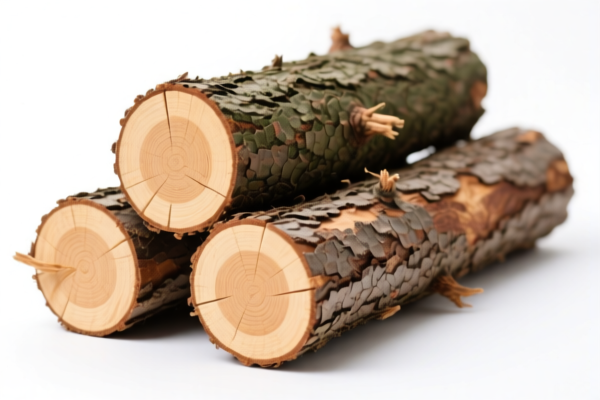
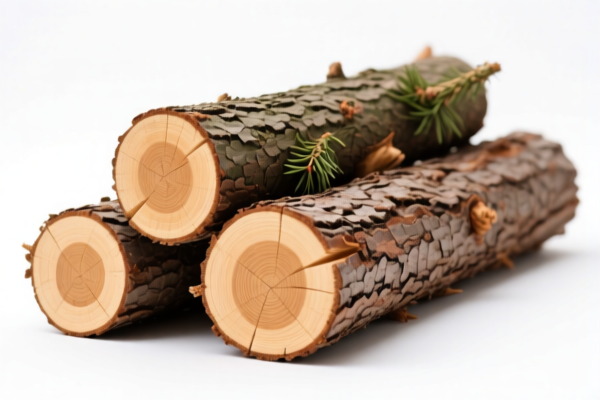
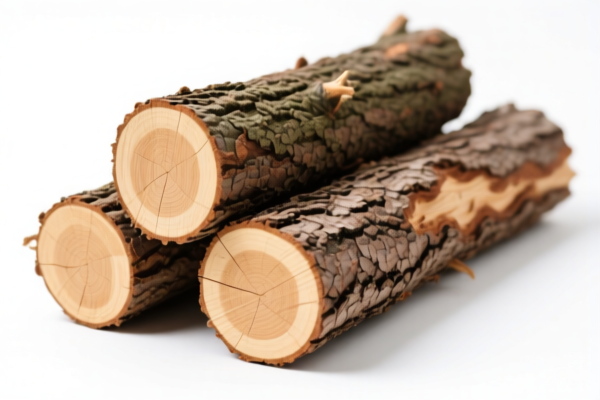
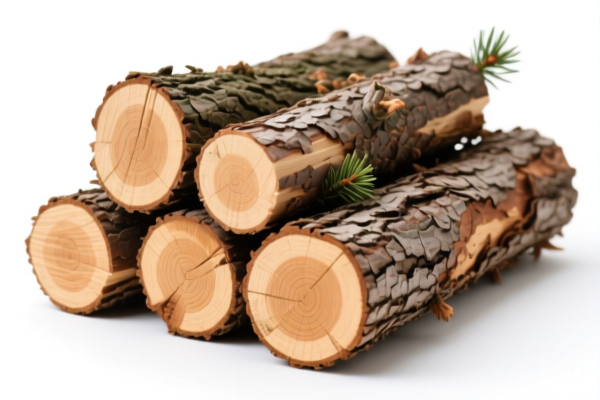
AI Analysis
🌲 Planed Douglas Fir (Pseudotsuga menziesii) – Sawn Wood
🌐 HS Code Reference & Customs Clearance Guide | 2026 Latest Tariff Analysis | Professional Clearance Strategy
📌 I. Product Definition & Classification: What Exactly is "Planed Douglas Fir"?
Douglas Fir is a premium coniferous wood widely used in construction, furniture, and woodworking. In international trade, it is classified under Chapter 44 (Wood and articles of wood). The specific classification depends heavily on: 1. Processing Level: Is it rough-sawn, planed, sanded, or end-jointed? 2. Thickness: Must exceed 6 mm. 3. Treatments: Is it treated, dyed, or impregnated? 4. Dimensions: Specific size ranges for rough lumber.
⚠️ Key Distinction:
- "Planed" (Smoothed) wood generally falls under "Other" sub-categories in HS 4407.19, unless it meets specific rough-dimension criteria for Douglas Fir.
- Thickness > 6mm is a mandatory threshold for Chapter 44. If ≤ 6mm, it may be classified as plywood or veneer.
- Treatment Status: "Not treated" is a critical descriptor for accurate duty calculation.
📦 II. HS Code Classification Details (2026 Latest Tariff Alignment)
Based on the provided data, there are two relevant HS Codes for Douglas Fir wood exceeding 6mm in thickness. The choice depends on whether the wood is planed/sanded or rough-sawn with specific dimensions.
| HS Code | Product Description | Processing State | Key Conditions |
|---|---|---|---|
4407.19.00.57 |
Planed/Sanded/End-jointed Douglas Fir | Planed, Sanded, or End-jointed | Thickness > 6mm; Not Treated; Coniferous; Other; Not elsewhere specified. |
4407.19.00.55 |
Rough Douglas Fir Lumber | Rough | Thickness > 6mm; Not Treated; Coniferous; Rough; Min dimension 5.1 cm but < 12.7 cm. |
🔍 Critical Note:
- If your wood is smoothed (planed) but does not meet the "rough" dimensional criteria of4407.19.00.55, it defaults to4407.19.00.57.
- If your wood is rough-sawn AND has a minimum dimension between 5.1 cm and 12.7 cm, it qualifies for4407.19.00.55.
- Both codes assume the wood is NOT treated (no preservatives, dyes, or impregnation).
💰 III. 2026 Latest Tariff Rate Details (Including Additional Duties)
✅ Applicable Country: United States (US)
✅ Origin: China (CN) (Assumed based on tax structure)
✅ Effective Date: Current as per 2026 tariff schedules
✅ Tax Structure: Base Rate + Section 301 Additional Duty
🎯 1. 4407.19.00.57 —— Planed, Sanded, or End-Jointed Douglas Fir (Not Treated)
| Item | Content |
|---|---|
| Base Tariff Rate | 0.0% (ad valorem) |
| Additional Tariff (Section 301) | +25.0% |
| Total Tariff Rate | 25.0% |
| Tax Calculation | CIF Value × 25% |
| De Minimis Exemption | ❌ Not Applicable (Wood products generally excluded from de minimis for China-origin goods under Section 301) |
| Legal Reference | HTSUS 4407.19.00.57 + USITC Footnote for Section 301 |
📌 Explanation:
- While the base MFN rate for many wood products is 0%, the Section 301 retaliation tariff imposes an additional 25% on Chinese-origin Douglas Fir.
- Total Duty = 25%. This is a significant cost factor that must be included in landed cost calculations.
🎯 2. 4407.19.00.55 —— Rough Douglas Fir (Min dim 5.1–12.7 cm, Not Treated)
| Item | Content |
|---|---|
| Base Tariff Rate | 0.0% (ad valorem) |
| Additional Tariff (Section 301) | +25.0% |
| Total Tariff Rate | 25.0% |
| Tax Calculation | CIF Value × 25% |
| De Minimis Exemption | ❌ Not Applicable |
| Legal Reference | HTSUS 4407.19.00.55 + USITC Footnote for Section 301 |
📌 Note:
- Despite being "rough" and dimension-specific, the tariff burden is identical to planed wood.
- Do not assume rough wood has lower duties; the 25% Section 301 tax applies uniformly to both sub-headings in the provided data.
🛠️ IV. Customs Clearance Practical Advice (Avoid Pitfalls)
✅ 1. Required Documentation Checklist
| Document | Required? | Notes |
|---|---|---|
| ✅ Commercial Invoice | ✔️ | Must clearly state: "Douglas Fir (Pseudotsuga menziesii)", "Coniferous", "Not Treated", and "Thickness > 6mm". |
| ✅ Packing List | ✔️ | Detail dimensions (min/max) to justify 4407.19.00.55 vs 4407.19.00.57. |
| ✅ Bill of Lading/Air Waybill | ✔️ | Standard transport docs. |
| ✅ Certificate of Origin | ✔️ | Confirm Chinese origin to assess Section 301 applicability. |
| ✅ ISPM 15 Phytosanitary Certificate | ✔️ | Critical for wood! Must certify heat treatment/fumigation against pests. |
| ✅ Product Specification Sheet | ✔️ | Confirm "Not Treated" (no chemical impregnation). |
✅ 2. Classification Strategy (Key Mnemonic)
🔥 "Rough & Small (5.1-12.7cm) → .55 | Planed/Other → .57 | Both 25% Tax!"
| Scenario | Correct HS Code | Duty Rate |
|---|---|---|
| Wood is smoothed/planed | 4407.19.00.57 |
25% |
| Wood is rough AND min dim 5.1–12.7 cm | 4407.19.00.55 |
25% |
| Wood is treated (e.g., pressure-treated) | ❌ Not in Data | Likely different HTS, possibly higher base duty |
| Thickness ≤ 6 mm | ❌ Not in Data | Likely Chapter 44 (Veneer) or Chapter 48 |
✅ 3. Special Considerations
| Issue | Recommendation |
|---|---|
| Phytosanitary Compliance | Wood MUST comply with ISPM 15. Lack of stamp/certificate = Seizure or Return. |
| Thickness Verification | If thickness is ambiguous, customs may inspect. Ensure invoices specify "exceeding 6 mm". |
| "Not Treated" Clarification | If any chemical treatment was applied, do not use these codes. Misdeclaration leads to penalties. |
| Section 301 Impact | The 25% tax is non-negotiable for Chinese-origin goods. Factor this into pricing. |
🌍 V. Global Market Comparison (2026)
| Market | HS Code | Base Duty | Additional Duty | Total | Notes |
|---|---|---|---|---|---|
| 🇺🇸 USA | 4407.19.00.55/57 |
0% | +25% | 25% | Section 301 applies to China-origin. |
| 🇨🇳 China | 4407.19 | ~5-10% | 0% | ~5-10% | Import duty for foreign wood. |
| 🇪🇺 EU | 4407.19 | ~0-2.7% | 0% | ~0-2.7% | Generally low, but check EBA/GSP status. |
| 🇬🇧 UK | 4407.19 | ~0-2.7% | 0% | ~0-2.7% | Post-Brexit tariff schedule. |
| 🇨🇦 Canada | 4407.19 | 0% (MFN) | 0% | 0% | CUSMA preferential if eligible. |
📌 Conclusion:
- The USA imposes the highest burden (25%) on Chinese Douglas Fir due to trade policies.
- For export to the US, cost absorption or price adjustment is necessary.
- Consider supply chain diversification (e.g., sourcing from Canada or EU) if tariffs become prohibitive.
📌 VI. Common Errors & Pitfalls
❌ Error 1: Classifying treated wood under these codes
👉 Result: Misclassification → Penalties + Back Taxes. Treated wood has different HS codes.
❌ Error 2: Ignoring ISPM 15 requirements
👉 Result: Cargo held at port for fumigation or returned. Wood is high-risk for pests.
❌ Error 3: Assuming rough wood has lower duties
👉 Result: No savings. Both 55 and 57 have 25% total duty in the provided data.
❌ Error 4: Failing to specify "Not Treated" on invoice
👉 Result: Customs may request additional docs or apply higher default duties.
✅ Best Practice:
"Declare precisely: 'Douglas Fir, Coniferous, Sawn, Planed/Rough, Thickness > 6mm, Not Treated, ISPM 15 Certified.'"
🎯 VII. Conclusion: Professional Clearance, Cost Optimization
🎯 Key Takeaways:
1. Two Codes, Same Tax: Both 4407.19.00.55 and 4407.19.00.57 carry a 25% total duty for Chinese-origin goods.
2. Dimension Matters for Classification: Use .55 for rough wood with min dim 5.1–12.7 cm; use .57 for planed/other.
3. Phytosanitary is Non-Negotiable: ISPM 15 compliance is essential for clearance.
4. Cost Planning: Budget for 25% duty on top of CIF value for US imports from China.
📌 Pro Tip:
If you are exporting from China to the US, consider applying for a Section 301 Exclusion if available (though rare for wood products). Alternatively, explore transshipment or local sourcing to mitigate tariffs.
📣 Immediate Action:
📞 Consult a licensed customs broker to verify ISPM 15 compliance and confirm HTS classification before shipment.
📄 Ensure your invoice explicitly states "Not Treated" and "Pseudotsuga menziesii" to avoid delays.
✨ Precise Classification Saves Money & Time!
💼 Every percentage point counts in cross-border trade!
Customer Reviews
About HS Code Classification
The Harmonized System (HS) is an internationally standardized nomenclature developed by the World Customs Organization (WCO) to classify traded products. Over 200 countries use the HS system as the basis for customs tariffs, trade statistics, and import/export regulations.
Each HS code follows a hierarchical structure:
- Chapter (2 digits) — Broad category of goods (e.g., Chapter 84: Machinery and Mechanical Appliances)
- Heading (4 digits) — More specific grouping within the chapter
- Subheading (6 digits) — Internationally standardized breakdown, used by all WCO member countries
- National subdivisions (8-10 digits) — Country-specific extensions for further classification, such as US HTSUS 10-digit codes
Correct HS code classification is essential for smooth customs clearance, accurate duty payment, and compliance with trade regulations. Misclassification can lead to customs delays, overpayment of duties, or penalties.
When importing from CN to US, the applicable tariff rates may include:
- Most-Favored-Nation (MFN) rate — The standard duty rate applied to WTO members
- General rate — Applied to countries without trade agreements
- Trade remedy duties — Additional tariffs such as Section 301 (anti-dumping), Section 232 (national security), or countervailing duties
The information provided on this page is for reference purposes only. For official classification, please consult with your local customs authority or a licensed customs broker.