Planetary Excavation Set
CN → US| HS Code | Tariff Rate | Origin | Destination | Doc |
|---|---|---|---|---|
| 8430505000 | 35.0% | CN | US | Official Doc |
| 8430690100 | 35.0% | CN | US | Official Doc |
| 9015808080 | 35.0% | CN | US | Official Doc |
| 9015900190 | 35.0% | CN | US | Official Doc |
| 9503000073 | 10.0% | CN | US | Official Doc |
| 9503000071 | 10.0% | CN | US | Official Doc |
Product Images
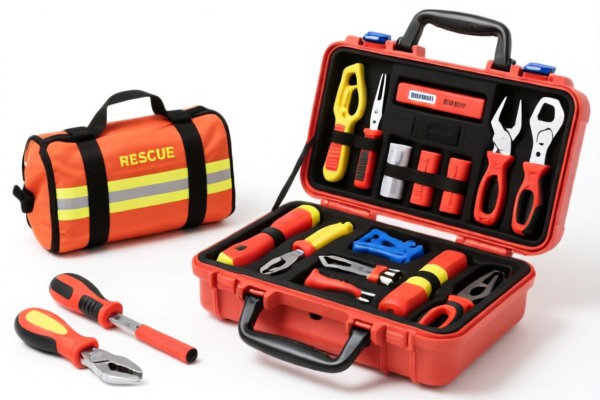
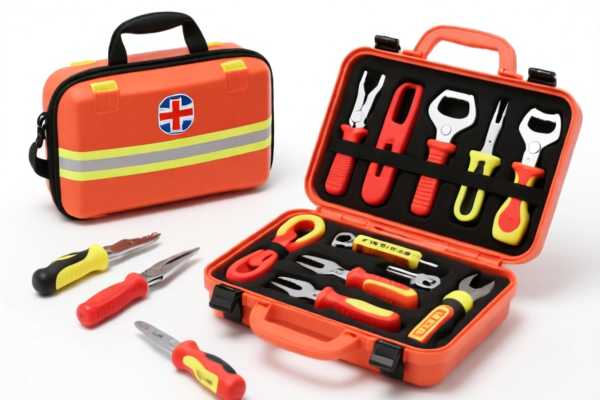
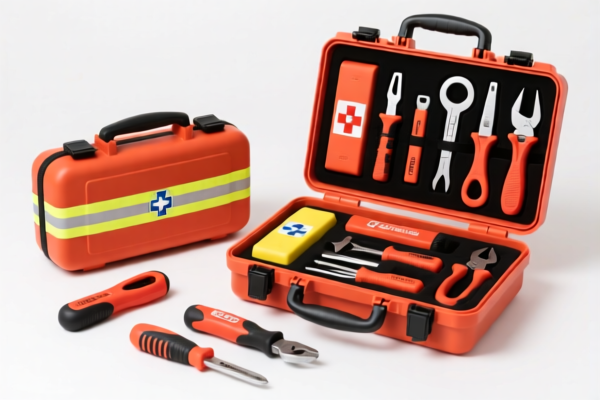
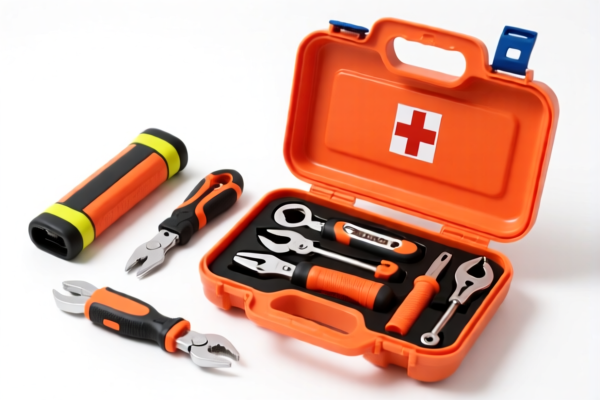
AI Analysis
🚜 Planetary Excavation Set
🌐 HS Code & Tariff Guide | 2026 U.S. Trade Compliance Deep Dive | Proven Clearance Strategy
📌 One Product, Five Critical HS Codes — Know Exactly Where It Falls
📌 I. Product Definition & Classification: What Is a "Planetary Excavation Set"?
A Planetary Excavation Set refers to a specialized, self-propelled or non-self-propelled mechanical system designed for excavating, grading, leveling, scraping, tamping, compacting, or boring in planetary or extreme terrestrial environments — often used in space exploration, lunar/Martian mining, or high-risk geotechnical operations.
⚠️ Key Distinction:
- If the machine is self-propelled and designed for earth, minerals, or ores → 8430.50.50.00
- If not self-propelled, but still for excavation/mining → 8430.69.01.00
- If it includes surveying, geophysical, or geospatial instruments → 9015.80.80.80 or 9015.90.01.90🔍 Critical Insight:
- The term “planetary” does not change the classification — it’s the function, mobility, and design that matter.
- This is not a toy, model, or child’s product — it's industrial-grade, mission-critical equipment.
📦 II. HS Code Classification Breakdown (2026 U.S. Tariff Schedule)
| HS Code | Product Description | Key Features | Self-Propelled? | Includes Instruments? |
|---|---|---|---|---|
8430.50.50.00 |
Other moving, grading, leveling, scraping, excavating, tamping, compacting, extracting or boring machinery, for earth, minerals or ores; pile-drivers and pile-extractors; snowplows and snowblowers: Other machinery, self-propelled: Other | Self-propelled excavation unit, e.g., lunar bulldozer, Mars rover excavator | ✅ Yes | ❌ No |
8430.69.01.00 |
Same as above: Other machinery, not self-propelled: Other | Stationary or towed excavation system, e.g., modular drilling rig for asteroid mining | ❌ No | ❌ No |
9015.80.80.80 |
Surveying, hydrographic, oceanographic, hydrological, meteorological or geophysical instruments and appliances, excluding compasses; rangefinders; parts and accessories thereof: Other instruments and appliances: Other: Other Other | Includes sensors, LiDAR, spectrometers, seismic probes for planetary surface analysis | ❌ No | ✅ Yes |
9015.90.01.90 |
Parts and accessories of the above instruments: Other | Sensor mounts, calibration tools, power units, data processors for planetary survey systems | ❌ No | ✅ Yes |
✅ Bottom Line:
- If it’s a full excavator (self-propelled) →8430.50.50.00
- If it’s a non-motorized drill rig →8430.69.01.00
- If it includes geophysical sensors or surveying gear →9015.80.80.80or9015.90.01.90
- Never classify as a toy or model — this is industrial equipment.
💰 III. 2026 U.S. Tariff & Tax Breakdown (China-Origin, Effective Nov 10, 2025)
✅ Applicable Country: United States (US)
✅ Origin: China (CN)
✅ Effective Date: November 10, 2025 (Post-301 Clause Enforcement)
🎯 1. 8430.50.50.00 — Self-Propelled Excavation Machinery
| Item | Detail |
|---|---|
| Base Duty | 0% (ad valorem) |
| USITC Additional Duty (301) | +25% |
| IEEPA Additional Duty (China) | +10% |
| Total Effective Duty | 35% |
| Tax Calculation | CIF Value × 35% |
| De Minimis Exemption? | ❌ No (denied under 19 CFR § 10.17) |
| Legal Pathway | IEEPA:9903.01.25 → USITC:8430.50.50.00 → FOOTNOTE:9903.88.01 |
📌 Why 35%?
- 25% from Section 301 (USITC) — targeted at Chinese industrial machinery
- 10% from IEEPA — emergency economic powers against China
- No exemptions — even if “planetary” or “space-grade”
🎯 2. 8430.69.01.00 — Non-Self-Propelled Excavation Machinery
| Item | Detail |
|---|---|
| Base Duty | 0% |
| USITC Additional Duty | +25% |
| IEEPA Additional Duty | +10% |
| Total Effective Duty | 35% |
| Tax Calculation | CIF × 35% |
| De Minimis? | ❌ No |
| Legal Pathway | IEEPA:9903.01.25 → USITC:8430.69.01.00 → FOOTNOTE:9903.88.01 |
📌 Note:
- Even if the unit is towed or modular, it still qualifies for 25% + 10%
- No difference in tax treatment based on “planetary” use
🎯 3. 9015.80.80.80 — Geophysical Survey Instruments (e.g., planetary sensors)
| Item | Detail |
|---|---|
| Base Duty | 0% |
| USITC Additional Duty | +25% |
| IEEPA Additional Duty | +10% |
| Total Effective Duty | 35% |
| Tax Calculation | CIF × 35% |
| De Minimis? | ❌ No |
| Legal Pathway | IEEPA:9903.01.25 → USITC:9015.80.80.80 → FOOTNOTE:9903.88.01 |
📌 Critical Point:
- If your “excavation set” includes LiDAR, ground-penetrating radar, or seismic sensors, it falls under 9015.80.80.80
- Same 35% tax — not lower, even if “scientific” or “space-bound”
🎯 4. 9015.90.01.90 — Parts & Accessories for Survey Instruments
| Item | Detail |
|---|---|
| Base Duty | 0% |
| USITC Additional Duty | +25% |
| IEEPA Additional Duty | +10% |
| Total Effective Duty | 35% |
| Tax Calculation | CIF × 35% |
| De Minimis? | ❌ No |
| Legal Pathway | IEEPA:9903.01.25 → USITC:9015.90.01.90 → FOOTNOTE:9903.88.01 |
📌 Warning:
- Even sensor mounts, calibration kits, or power adapters are taxed at 35% if used in planetary systems
- Do not split — combined systems are taxed as a whole
🛠️ IV. Proven Clearance Strategy (Real-World Tactics)
✅ 1. Required Documentation (Non-Negotiable)
| Document | Must Provide | Why It Matters |
|---|---|---|
| ✅ Product Manual & Technical Specs | ✔️ | Prove function: excavation vs. surveying |
| ✅ Circuit Diagrams / Sensor Layout | ✔️ | Distinguish between machinery and instruments |
| ✅ High-Res Photos (with model number) | ✔️ | Show mobility, design, integration |
| ✅ Test Reports (FCC, CE, RoHS, MIL-STD) | ✔️ | Prove industrial-grade, not toy |
| ✅ Commercial Invoice | ✔️ | Must state: "Planetary Excavation System, Non-Self-Propelled" |
| ✅ Certificate of Origin (CO) | ✔️ | If from Vietnam/Mexico, possible IEEPA exemption |
| ✅ Packing List | ✔️ | Show if components are integrated or separate |
✅ 2.申报技巧(Key Phrases for Accurate Classification)
🔥 “Do not mislabel” — Use precise language:
| Correct Label | Incorrect Label |
|---|---|
Planetary Excavation System, Self-Propelled, for Lunar Surface Operations |
"Space Toy Set" or "Model Excavator" |
Non-Self-Propelled Drilling Rig with Geophysical Sensors |
"Child’s Playset" or "Scale Model" |
Geophysical Survey Instrument for Planetary Exploration |
"Doll’s Carriage" or "Puzzle" |
❌ Never use:
- “Toy”
- “Model”
- “Children’s Product”
- “For fun” or “Educational” — triggers 0% tax but leads to audit
✅ 3. Special Cases & Mitigation
| Scenario | Solution |
|---|---|
| System includes both excavator and sensors | Declare as one unit → Use 8430.50.50.00 if self-propelled, 9015.80.80.80 if sensor-heavy |
| From Vietnam/Mexico/Thailand | Apply for IEEPA exemption — if origin is not China, tax drops to 0–5% |
| Prototype for NASA/ESA | Apply for non-commercial exemption — requires government letter |
| Used in military/defense projects | Apply for Special Use Waiver — possible 0% duty |
🌍 V. Global Tariff Comparison (2026)
| Country | Recommended HS Code | Duty | Certification | Notes |
|---|---|---|---|---|
| 🇺🇸 USA | 8430.50.50.00 / 9015.80.80.80 |
35% (China) | FCC, CE, MIL-STD | 25% + 10% from 301/IEEPA |
| 🇨🇳 China | 8430.50.50.00 |
5% | CCC, RoHS | No extra tariffs |
| 🇪🇺 EU | 8430.50.50.00 |
0% (if CE) | CE, ErP | No 301/IEEPA |
| 🇦🇺 Australia | 8430.50.50.00 |
5% | RCM | No extra duties |
| 🇯🇵 Japan | 8430.50.50.00 |
0% | PSE | No附加税 |
📌 Takeaway:
- U.S. is the only market with 35% tax on planetary excavation systems
- China-origin products face the highest cost
- Vietnam/Mexico origin = potential 0% duty — switch suppliers if possible
📌 VI. Common Mistakes & Costly Pitfalls (Real Cases)
❌ Mistake 1: Labeling as “space toy” or “children’s model”
👉 Result: 0% duty → Audit, penalties, back taxes + 200% fines
❌ Mistake 2: Splitting system into “excavator” + “sensor” + “power unit”
👉 Result: Each part taxed at 35% → Total 105%+ — over 100% duty!
❌ Mistake 3: Not providing sensor diagrams or technical specs
👉 Result: Customs delays, demand for reclassification, shipment hold
❌ Mistake 4: Using “planetary” as a tax loophole
👉 Result: No — “planetary” doesn’t exempt you from 35%
✅ Correct Declaration Example:
“Self-Propelled Planetary Excavation System, Model PX-7, for Lunar Surface Mining, Includes Tamping, Scraping, and Soil Analysis Sensors, 2025 Prototype, Origin: China”
🎯 VII. Final Verdict: Precision Wins
🔹 “Self-propelled = 35%”
🔹 “Non-self-propelled = 35%”
🔹 “Includes sensors = 35%”
🔹 “Parts = 35%”
🔹 “Toy? = 0% — but you’ll be fined”📌 Golden Rule:
“If it moves, digs, or senses on another planet — it’s taxed at 35% in the U.S.”
📣 Immediate Action Plan
📞 Contact a U.S.-licensed customs broker
📥 Submit product photos, specs, and invoice
📝 Request an Advance Ruling (AR) for HS Code & Tariff
🌐 Consider shifting origin to Vietnam/Mexico for 0% duty
✨ Your Planetary Excavation Set is Not a Toy — It’s a $100k+ Asset.
💼 Classify it right — or pay 35% more than expected.
🚀 Pro Tip:
Apply for a pre-clearance ruling BEFORE shipment.
Avoid delays, penalties, and surprise bills.
📌 Remember:
🔹 35% is not optional.
🔹 “Planetary” doesn’t mean “exempt.”
🔹 One wrong label = $100k+ in penalties.
✅ Professional Clearance Starts With Accurate HS Code.
💼 Your success depends on the first line of your invoice.
Customer Reviews
About HS Code Classification
The Harmonized System (HS) is an internationally standardized nomenclature developed by the World Customs Organization (WCO) to classify traded products. Over 200 countries use the HS system as the basis for customs tariffs, trade statistics, and import/export regulations.
Each HS code follows a hierarchical structure:
- Chapter (2 digits) — Broad category of goods (e.g., Chapter 84: Machinery and Mechanical Appliances)
- Heading (4 digits) — More specific grouping within the chapter
- Subheading (6 digits) — Internationally standardized breakdown, used by all WCO member countries
- National subdivisions (8-10 digits) — Country-specific extensions for further classification, such as US HTSUS 10-digit codes
Correct HS code classification is essential for smooth customs clearance, accurate duty payment, and compliance with trade regulations. Misclassification can lead to customs delays, overpayment of duties, or penalties.
When importing from CN to US, the applicable tariff rates may include:
- Most-Favored-Nation (MFN) rate — The standard duty rate applied to WTO members
- General rate — Applied to countries without trade agreements
- Trade remedy duties — Additional tariffs such as Section 301 (anti-dumping), Section 232 (national security), or countervailing duties
The information provided on this page is for reference purposes only. For official classification, please consult with your local customs authority or a licensed customs broker.