Planned Hiking Shoes with Metal Toe
CN → USProduct Images
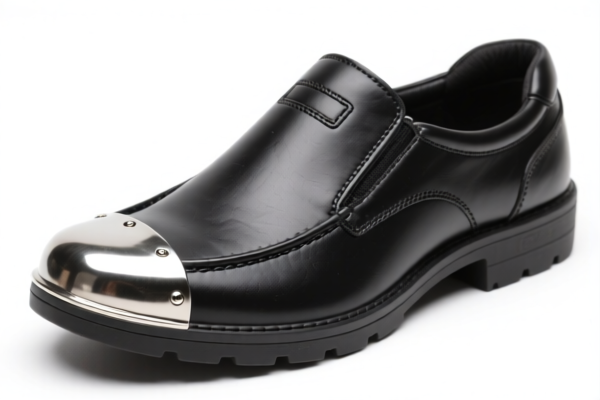
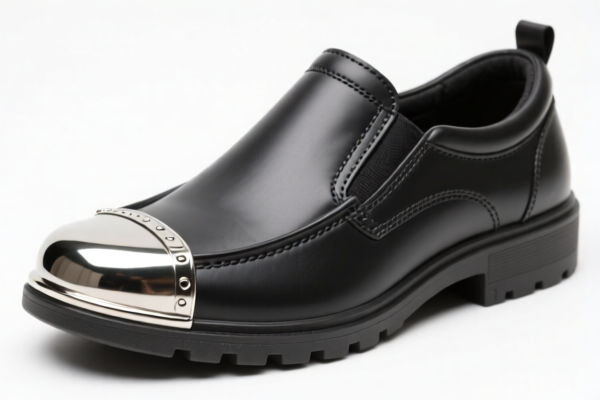
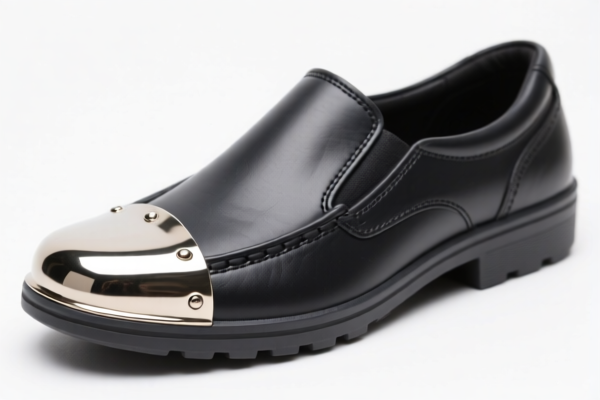
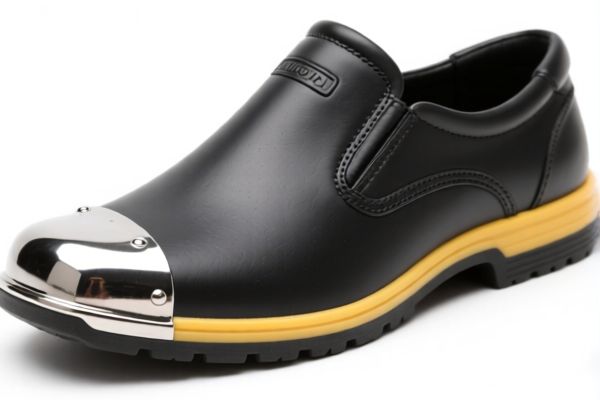
AI Analysis
🥾 Planned Hiking Shoes with Metal Toe (Reinforced Toe Cap)
🌐 HS Code Reference & Clearance Guide | 2026 Latest Tariff Analysis | Professional Clearance Strategy
📌 1. Product Definition & Classification: Do You Really Understand "Reinforced Hiking Shoes"?
Hiking shoes with metal toes (or reinforced toe caps) are specialized protective footwear designed for outdoor activities, construction, or industrial work. In international trade, they are categorized not by the "metal" component alone, but by their primary function and upper material.
Key Distinction: * Sports/Recreation Hiking Shoes: Designed for leisure, lightweight, flexible. → Chapter 64 * Protective/Industrial Footwear: Designed for safety, rigid sole, heavy-duty. → Chapter 64 (Specifically Protective Footwear)
⚠️ Critical Clarification:
Even if the shoe has a "metal toe" (or steel toe cap), it is not classified as "metal goods" (Chapter 73). It is classified as Footwear (Chapter 64). The "metal toe" is considered a reinforcing feature, not the defining material of the entire shoe.
📦 2. HS Code Classification Details (2026 Latest Tariff Authoritative Comparison)
| HS Code | Product Description | Application Scenario | Upper Material | Sole Material | Protective Feature |
|---|---|---|---|---|---|
6403.51.00.00 |
Hiking boots with external soles of rubber/plastics, with uppers of leather | Professional hiking, outdoor work, trekking | Leather | Rubber/Plastic | ✅ Yes (Reinforced Toe) |
6403.99.00.00 |
Other footwear with uppers of other materials (e.g., textile, synthetic) | Casual hiking, lightweight outdoor shoes | Textile/Synthetic | Rubber/Plastic | ❌ No/Optional |
6404.11.00.00 |
Tennis shoes, basketball shoes, track shoes, and other athletic footwear | Sports use, not for heavy-duty protection | Textile/Synthetic | Rubber/Plastic | ❌ No |
6403.91.00.00 |
Sports footwear (other than skating boots or ski boots), with uppers of leather | Golf shoes, training shoes | Leather | Rubber/Plastic | ❌ No |
🔍 Key Reminder:
- "Metal Toe" does not change the chapter. It remains in Chapter 64.
- If the upper is leather, look at6403.51(if for walking/hiking) or6403.91(if for sports).
- If the upper is synthetic/textile, look at6403.99or6404.
- For "Planned Hiking Shoes," if they are designed for outdoor hiking and have leather uppers, the most common code is6403.51.00.00. If synthetic,6403.99.00.00.
💰 3. 2026 Latest Tariff Rate Details (Including Additional Taxes)
✅ Applicable Country: United States (US)
✅ Country of Origin: China (CN)
✅ Effective Date: From November 10, 2025 (including subsequent imports)
🎯 1. 6403.51.00.00 – Hiking Boots with Leather Uppers (Reinforced Toe)
| Item | Content |
|---|---|
| Base Tariff Rate | 10% (ad valorem) |
| USITC Additional Tariff | +0% (No Section 301 Footnote for this specific subheading in some cases, but verify latest list) |
| IEEPA Additional Tariff | +7.5% (For China-origin goods, effective Nov 10, 2025) |
| Total Tariff Rate | 17.5% |
| Tax Calculation | CIF Value × 17.5% |
| De Minimis Eligibility | ❌ No (Deny de minimis) |
| Legal Basis Path | IEEPA:9903.01.24 → USITC:6403.51.00.00 |
📌 Explanation:
- The base rate for leather hiking boots is 10%.
- The IEEPA 7.5% is the new additional tariff for Chinese goods effective Nov 2025.
- Total: 17.5%. This is a moderate-high tariff for footwear.
- Note: Some leather footwear may have different Section 301 footnotes. Check if6403.51is excluded from additional 25% tariffs. As of 2025, many leather goods are not subject to the 25% Section 301 tariff, only the IEEPA 7.5%.
🎯 2. 6403.99.00.00 – Other Hiking Shoes (Synthetic/Textile Uppers)
| Item | Content |
|---|---|
| Base Tariff Rate | 12.5% (ad valorem) |
| USITC Additional Tariff | +0% |
| IEEPA Additional Tariff | +7.5% |
| Total Tariff Rate | 20% |
| Tax Calculation | CIF Value × 20% |
| De Minimis Eligibility | ❌ No (Deny de minimis) |
| Legal Basis Path | IEEPA:9903.01.24 → USITC:6403.99.00.00 |
📌 Note:
- Synthetic/textile hiking shoes have a higher base rate (12.5%).
- Total: 20%. This is higher than leather counterparts due to base rate.
- Common for lightweight, breathable hiking shoes with synthetic uppers.
🛠️ 4. Clearance Practical Advice (Battle-Tested Pitfall Avoidance Guide)
✅ 1. Required Documentation Checklist (None Can Be Missing)
| Document | Required | Description |
|---|---|---|
| ✅ Product Specification Sheet | ✔️ | Include upper material (leather/synthetic), sole type, toe reinforcement type (metal/plastic) |
| ✅ Material Breakdown | ✔️ | % of leather vs. synthetic. Critical for HS Code accuracy |
| ✅ Product Photos (Front/Side/Inside) | ✔️ | Show toe box, laces, sole pattern, brand label |
| ✅ Third-Party Test Report | ✔️ | ASTM F2413 (Impact/Compression Test) if marketed as "Safety Toe" |
| ✅ Commercial Invoice | ✔️ | Clearly state "Hiking Shoes with Reinforced Toe Cap" |
| ✅ Packing List | ✔️ | Pair count, box dimensions |
✅ 2. Declaration Tips (Key Mnemonic)
🔥 "Leather Upper = 6403.51, Synthetic = 6403.99, Metal Toe Doesn't Change Chapter!"
| Scenario | Correct Declaration | Wrong Practice |
|---|---|---|
| Leather upper, rubber sole, reinforced toe | 6403.51.00.00 |
Misdeclare as "Sports Shoe" → 20%+ |
| Synthetic upper, rubber sole, reinforced toe | 6403.99.00.00 |
Misdeclare as "Textile Shoe" → 32% |
| Metal Toe (Steel Toe) | Still 6403.51.00.00 or 6403.99.00.00 |
Misdeclare as "Metal Product" → 25%+ |
| Athletic Hiking (Golf, etc.) | 6403.91.00.00 |
Misdeclare as "Hiking" → Wrong Rate |
✅ 3. Special Case Handling
| Situation | Handling Advice |
|---|---|
| "Safety Toe" Marketing | If marketed as "Safety," ensure ASTM F2413 compliance. HS Code remains same, but customs may ask for test report |
| Mixed Material Upper | If >50% leather, classify as leather (6403.51). If >50% synthetic, classify as synthetic (6403.99) |
| Custom Embroidery | Does not affect HS Code |
| OEM Brand | Provide authorization letter if claiming brand rights |
🌍 5. Global Market Clearance Comparison (2026 Latest)
| Country/Region | Recommended HS Code | Tariff (CN Origin) | Certification Required | Notes |
|---|---|---|---|---|
| 🇺🇸 USA | 6403.51.00.00 |
17.5% | ASTM F2413 (if safety) | No Section 301 on leather hiking |
| 🇨🇳 China | 6403.51.00.00 |
5% | CCC (if safety) | No additional taxes |
| 🇪🇺 EU | 6403.51.00.00 |
8% | CE Marking | No additional taxes |
| 🇦🇺 Australia | 6403.51.00.00 |
5% | RCM | No additional taxes |
| 🇯🇵 Japan | 6403.51.00.00 |
0-10% | PSE | No additional taxes |
📌 Conclusion:
- USA is the only market with significant additional tariffs (IEEPA 7.5%) for Chinese footwear.
- EU and Japan have lower rates, making them more cost-effective for Chinese exports.
- China domestic rate is low (5%), but exports face higher tariffs in US.
📌 6. Common Errors & Pitfall Guide (Blood-Learning Lessons)
❌ Error 1: Declaring "Metal Toe" as "Steel Toe" without test report
👉 Consequence: Customs may hold shipment for safety compliance verification → Delay + Storage Fees
❌ Error 2: Misdeclaring Leather Hiking as "Athletic Shoes"
👉 Consequence: Tariff rate drops from 17.5% to 20%? No, Athletic Shoes (6404) have 20-32%. Overpayment!
❌ Error 3: Not declaring upper material accurately
👉 Consequence: Customs reclassifies → Additional Duty + Penalty
❌ Error 4: Using "Hiking Shoes" without specifying material
👉 Consequence: Customs uses default rate (often higher) → Unnecessary Cost
✅ Correct Practice:
"Leather Hiking Boots with Reinforced Toe Cap, Rubber Sole, Model XYZ, ASTM F2413 Compliant"
🎯 7. Conclusion: Precise Classification Saves Money!
🎯 Remember Mnemonics:
🔹 "Leather Hiking = 17.5%, Synthetic = 20%, Metal Toe Doesn't Change Chapter!"
🔹 "HS Code is Key, Tariff Differs by 2.5%, Declare Correctly, Save Thousands!"
📌 Tips:
If your hiking shoes are originated from Vietnam, Indonesia, or Thailand, you may apply for preferential tariffs under USMCA or ASEAN-China FTA.
Suggest Applying for Advance Ruling to avoid clearance risks.
📣 Immediate Action:
📞 Contact Professional Customs Broker + Provide Product Photos + Apply for HS Code Advance Ruling
🚀 Let your hiking shoes clear smoothly, export efficiently, and maximize profits!
✨ Professional Clearance Starts with Precise Classification!
💼 Every Cent of Your Cost Deserves Exact Calculation!
Customer Reviews
About HS Code Classification
The Harmonized System (HS) is an internationally standardized nomenclature developed by the World Customs Organization (WCO) to classify traded products. Over 200 countries use the HS system as the basis for customs tariffs, trade statistics, and import/export regulations.
Each HS code follows a hierarchical structure:
- Chapter (2 digits) — Broad category of goods (e.g., Chapter 84: Machinery and Mechanical Appliances)
- Heading (4 digits) — More specific grouping within the chapter
- Subheading (6 digits) — Internationally standardized breakdown, used by all WCO member countries
- National subdivisions (8-10 digits) — Country-specific extensions for further classification, such as US HTSUS 10-digit codes
Correct HS code classification is essential for smooth customs clearance, accurate duty payment, and compliance with trade regulations. Misclassification can lead to customs delays, overpayment of duties, or penalties.
When importing from CN to US, the applicable tariff rates may include:
- Most-Favored-Nation (MFN) rate — The standard duty rate applied to WTO members
- General rate — Applied to countries without trade agreements
- Trade remedy duties — Additional tariffs such as Section 301 (anti-dumping), Section 232 (national security), or countervailing duties
The information provided on this page is for reference purposes only. For official classification, please consult with your local customs authority or a licensed customs broker.