Planned Notebook
CN → US| HS Code | Tariff Rate | Origin | Destination | Doc |
|---|---|---|---|---|
| 4817300000 | 35.0% | CN | US | Official Doc |
| 4820102010 | 35.0% | CN | US | Official Doc |
| 4820102060 | 35.0% | CN | US | Official Doc |
| 4817202000 | 35.0% | CN | US | Official Doc |
Product Images

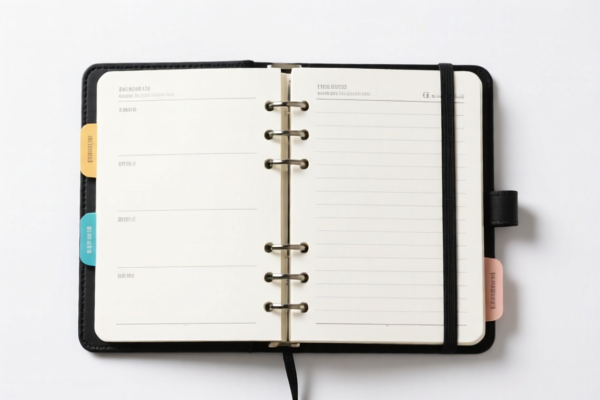
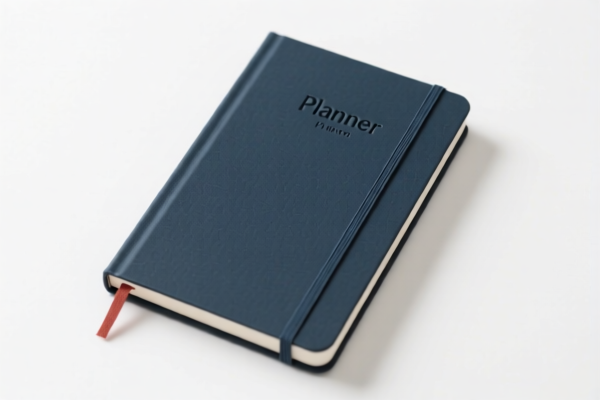
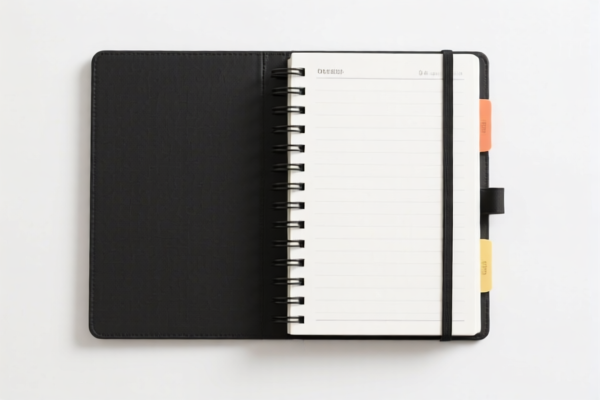
AI Analysis
📓 Planned Notebook (Plan Book / Planner)
🌐 HS Code Reference & Customs Clearance Guide | 2026 Latest Tariff Analysis | Professional Entry Strategy
📌 I. Product Definition & Classification: Do You Truly Understand the "Planned Notebook"?
A "Planned Notebook" (often referred to as a Planner, Daily Organizer, or Appointment Book) is a portable stationery item used for scheduling, recording, and organizing daily tasks. In international trade, its classification hinges on its form (bound vs. loose) and specific utility (general writing vs. specific record-keeping).
It is primarily categorized under Chapter 48 (Paper and Paperboard), specifically within sections dealing with notebooks, diaries, and address books.
⚠️ Key Distinction Point:
- If the item is a bound book (diary/planner style) with pre-printed calendars or structured pages → It falls under 4820.10.
- If the item is considered a pocket-sized writing pad or a specific type of portable folder for writing → It may fall under 4817.30.
- Crucial Note: All identified HS Codes below carry significant additional tariffs due to US-China trade policies.
📦 II. HS Code Classification Details (2026 Latest Tariff Authority Comparison)
Based on the provided data, here are the four most likely HS Codes for "Planned Notebook," along with their specific matching logic and tax implications.
| HS Code | Product Description & Matching Logic | Applicable Scenario | Total Tax Rate |
|---|---|---|---|
4817.30.00.00 |
Portable Writing Folders/Notebooks Logic: Matches "Planned Notebook" as a paper stationery/portable recording item. Fits the "writing portable clip" or related paper stationery attribute. No material conflict. |
General pocket planners, loose-leaf binders, or portable paper folders. | 35.0% |
4820.10.20.10 |
Diaries, Notebooks, and Address Books Logic: "Planned Notebook" falls under the category of "Diaries, Notebooks, and Address Books." It is a bound paper product. |
Standard bound planners, calendar notebooks, address books. | 35.0% |
4820.10.20.60 |
Other Diaries/Notebooks (Miscellaneous) Logic: Similar to above, but for "Other" types not specifically sized or typed. Based on common sense, material is paper. No conflict with "Other" category. |
Generic or unlisted types of paper-bound notebooks/planners. | 35.0% |
4817.20.20.00 |
Stationery Articles of Paper/Cardboard Logic: Infers paper stationery category. Matches material (Paper/Cardboard) and purpose (Writing/Recording). |
Less specific bound notebooks; general paper stationery items. | 35.0% |
🔍 Critical Insight:
- All four codes result in a 35% total tax rate.
- The distinction between4820.10(Diaries/Notebooks) and4817.30(Portable Writing Clips/Folders) is subtle.
- Recommendation: If it is a bound book (stitched or glued spine),4820.10is generally more accurate. If it is a loose-leaf folder or a specific "planning clip" system,4817.30may apply.
💰 III. 2026 Latest Tariff Rate Breakdown (Including Surtaxes & Policy Add-ons)
✅ Applicable Country: United States (US)
✅ Origin: China (CN)
✅ Effective Time: 2025/2026 (Current Trade Policy)
🎯 1. Universal Tax Structure for "Planned Notebook"
Regardless of which of the four HS Codes is selected (4817.30.00.00, 4820.10.20.10, 4820.10.20.60, or 4817.20.20.00), the tariff structure is identical according to the provided data.
| Item | Content |
|---|---|
| Base Tariff | 0.0% (Ad Valorem) |
| Section 301 Surtax | +25.0% (Additional Tariff under Section 301) |
| Section 122 Surtax | +10.0% (Specific tariff clause mentioned as "122条款关税") |
| Total Tax Rate | 35.0% |
| Tax Calculation | CIF Value × 35% |
| De Minimis Exemption | ❌ NOT APPLICABLE (High value-added category or specific origin restrictions may deny de minimis, though standard $800 de minimis might apply if value is low, but for bulk import, full tax applies). |
📌 Explanation:
- "Section 301 +25%": This is the primary additional tariff imposed on many Chinese-origin goods, including stationery and paper products.
- "Section 122 +10%": This refers to specific trade remedy tariffs or administrative clauses (often related to import volume or specific product lists).
- Total 35%: This is a significant cost factor. For low-margin stationery items, this 35% tax can erase profit margins.
🛠️ IV. Customs Clearance Practical Advice (Battle-Tested Pitfall Guide)
✅ 1. Documentation Checklist (Non-Negotiable)
| Document | Required? | Notes |
|---|---|---|
| ✅ Product Spec Sheet | ✔️ | Must specify: Size (A5, A4, etc.), Binding Type (Spiral, Hardcover, Loose-leaf), Page Count. |
| ✅ Product Photos | ✔️ | Show the binding structure. Is it a book (4820) or a folder (4817)? This determines the HS Code. |
| ✅ Commercial Invoice | ✔️ | Description: "Planned Notebook, Paper, Bound, for Office Use." Avoid vague terms like "Stationery." |
| ✅ Packing List | ✔️ | Clear weight and dimensions. |
| ✅ Origin Certificate | ✔️ | Proof of China origin is required for tax calculation. |
✅ 2. Declaration Strategy (Key Tips)
🔥 “Binding Type Defines Code: Bound Book vs. Loose Folder”
| Scenario | Recommended HS Code | Risk if Incorrect |
|---|---|---|
| Bound Planner (Spiral/Stitched) | 4820.10.20.10 or 4820.10.20.60 |
Misclassifying as 4817 might trigger an audit if the structure is clearly a book. |
| Loose-Leaf Planner / Pocket Folder | 4817.30.00.00 |
Misclassifying as 4820 (book) is less common but possible if it’s a simple folder. |
| Generic Paper Stationery | 4817.20.20.00 |
Use as a fallback if specific sub-categories are ambiguous. |
Pro Tip:
- Always declare the binding method. "Bound Diary" vs. "Planner Folder" can lead to different HS codes under Chapter 48, even if the tax rate is currently the same.
- Ensure the description includes "Paper" as the primary material to avoid misclassification under Chapter 39 (Plastics) if it has plastic covers.
✅ 3. Cost Optimization & Risk Mitigation
| Situation | Advice |
|---|---|
| Low Value Shipment (< $800) | Check if De Minimis ($800) exemption applies. If so, 0% tax. However, bulk commercial imports do NOT qualify. |
| High Value B2B Shipment | Expect 35% tax. Factor this into your pricing model. |
| Alternative Sourcing | Consider sourcing from Vietnam, India, or Mexico if available, to potentially avoid Section 301 tariffs (verify current rules of origin). |
| HS Code Pre-Ruling | If unsure between 4817 and 4820, apply for a HS Code Binding Opinion from US CBP to avoid post-import audits. |
🌍 V. Global Market Comparison (2026 Overview)
| Country/Region | Recommended HS Code | Est. Tariff (China Origin) | Notes |
|---|---|---|---|
| 🇺🇸 USA | 4820.10 / 4817.30 |
35% (0% Base + 25% Sec 301 + 10% Sec 122) | High tariff impact. |
| 🇨🇳 China | 4820.10 |
~10-15% | Import duty for foreign planners into China. |
| 🇪🇺 EU | 4820.10 |
~4-6.5% | No Section 301 equivalent. |
| 🇬🇧 UK | 4820.10 |
~5-6.5% | Post-Brexit tariff structure. |
📌 Conclusion:
- The US is the most challenging market for Chinese-origin stationery due to the 35% combined tariff.
- For other markets, the cost impact is significantly lower.
📌 VI. Common Errors & Pitfall Guide (Lessons Learned)
❌ Error 1: Classifying as "Plastic Stationery" (Chapter 39)
👉 Consequence: Incorrect HS Code, potential penalties, and delay. Planners are primarily paper.
❌ Error 2: Ignoring the "Bound" vs. "Unbound" distinction
👉 Consequence: If it’s a bound book, 4817 may be challenged. Stick to 4820 for bound items.
❌ Error 3: Under-declaring Value
👉 Consequence: 35% tax on undervalued goods leads to heavy fines and seizure.
✅ Correct Declaration Example:
"Planned Notebook, A5 Size, 2026 Edition, Spiral Bound, Paper Pages with Plastic Cover, for Office Scheduling."
HS Code:4820.10.20.10(or4820.10.20.60if generic)
Duty: 35%
🎯 VII. Conclusion: Precision in Classification Saves Money
🎯 Remember the Rule:
🔹 "Bound = 4820, Folder = 4817. Both carry 35% in US."
🔹 "Tax is not optional: 0% Base + 25% Sec 301 + 10% Sec 122 = 35%."
🔹 "Declare Material: Paper is Key."
📌 Pro Tip:
If your planned notebook includes electronic components (e.g., smart sync feature), it may NOT qualify under Chapter 48. Check for classification under Chapter 85 (Electrical machinery), which has different tariff implications.
📣 Immediate Action:
📞 Consult a Customs Broker: Verify if your specific "Planned Notebook" design (bound vs. loose) fits
4820or4817.
📊 Calculate Landed Cost: Include the 35% US Duty in your margin analysis.
🚀 Consider Origin Diversification: If possible, source from non-China origins to mitigate tariff risk.
✨ Professional Customs Clearance Starts with Accurate Classification!
💼 Every 1% saved on HS Code strategy is 1% more profit!
Customer Reviews
About HS Code Classification
The Harmonized System (HS) is an internationally standardized nomenclature developed by the World Customs Organization (WCO) to classify traded products. Over 200 countries use the HS system as the basis for customs tariffs, trade statistics, and import/export regulations.
Each HS code follows a hierarchical structure:
- Chapter (2 digits) — Broad category of goods (e.g., Chapter 84: Machinery and Mechanical Appliances)
- Heading (4 digits) — More specific grouping within the chapter
- Subheading (6 digits) — Internationally standardized breakdown, used by all WCO member countries
- National subdivisions (8-10 digits) — Country-specific extensions for further classification, such as US HTSUS 10-digit codes
Correct HS code classification is essential for smooth customs clearance, accurate duty payment, and compliance with trade regulations. Misclassification can lead to customs delays, overpayment of duties, or penalties.
When importing from CN to US, the applicable tariff rates may include:
- Most-Favored-Nation (MFN) rate — The standard duty rate applied to WTO members
- General rate — Applied to countries without trade agreements
- Trade remedy duties — Additional tariffs such as Section 301 (anti-dumping), Section 232 (national security), or countervailing duties
The information provided on this page is for reference purposes only. For official classification, please consult with your local customs authority or a licensed customs broker.