Planner
CN → US| HS Code | Tariff Rate | Origin | Destination | Doc |
|---|---|---|---|---|
| 482020 | 0.0% | CN | US | Official Doc |
| 482090 | 0.0% | CN | US | Official Doc |
| 4820102010 | 35.0% | CN | US | Official Doc |
| 4820102060 | 35.0% | CN | US | Official Doc |
Product Images

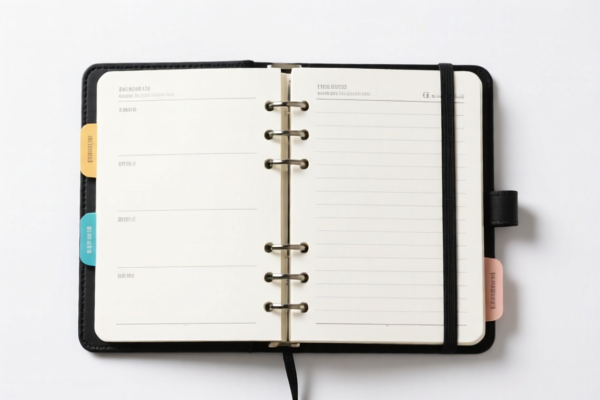
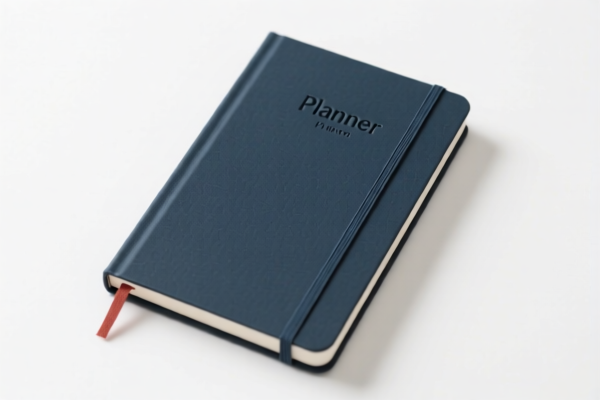
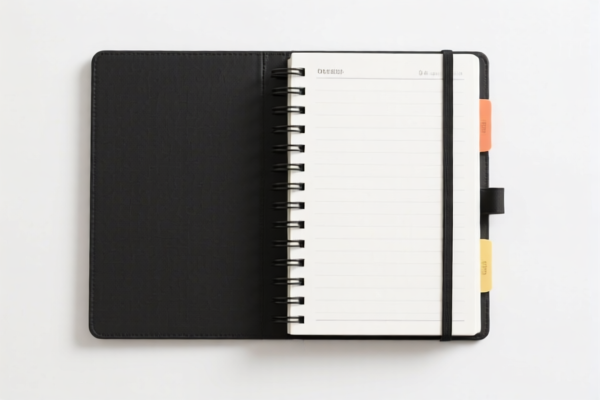
AI Analysis
📓 Planners & Diaries (Stationery Articles)
🌐 HS Code Reference & Clearance Guide | 2026 Latest Tariff Analysis | Professional Customs Strategy
📌 I. Product Definition & Classification: Do You Truly Understand "Planners"?
In international trade, Planners (often categorized alongside diaries, notebooks, and address books) are defined as paper or paperboard articles intended for recording information. They are strictly distinguished by their binding status and specific content.
Key Distinctions:
1. Bound Diaries/Planners (Pre-printed):
- Contain pre-printed dates, calendars, or structured layouts (e.g., daily/weekly slots).
- Typically classified under 4820.10 (Diaries, notebooks, address books, bound).
2. Loose-Leaf/Unbound Planners:
- Not bound, or loose-leaf systems intended for recording info.
- Typically classified under 4820.20 or 4820.90.
⚠️ Critical Differentiator:
- If the item is bound (glued, stitched, or spiral-bound with permanent pages) and contains pre-printed calendar/time structures → 4820.10
- If the item is loose-leaf, unbound, or generic notebooks without pre-printed date-specific layouts → 4820.20 or 4820.90
📦 II. HS Code Classification Details (2026 Latest Tariff Authority)
| HS Code | Product Description | Application Scenario | Binding Status | Tax Status |
|---|---|---|---|---|
4820.10.20.10 |
Diaries, notebooks, and address books, bound; memorandum pads, letter pads and similar articles | Pre-printed diaries, bound planners with date-specific pages, bound address books | ✅ Bound | 🇨🇳 Base: 0% 🇺🇸 Add-on: 25% Total: 25% |
4820.10.20.60 |
Other stationery items of paper or paperboard (Specifically: Diaries, notebooks, address books, bound; memo pads, letter pads) | Bound planners that do not fit the "pre-printed diary" specific sub-heading but are still bound stationery | ✅ Bound | 🇨🇳 Base: 0% 🇺🇸 Add-on: 25% Total: 25% |
4820.20 |
Loose-leaf binders, notebooks, and similar stationery items, not bound | Loose-leaf planners, unbound date books, refillable planners without permanent binding | ❌ Not Bound | ⚠️ Error: Failed to retrieve tax information |
4820.90 |
Other stationery items of paper or paperboard | Generic planners, organizers, or stationery not specified elsewhere | ❌ Other | ⚠️ Error: Failed to retrieve tax information |
🔍 Key Reminder:
- Bound items (even if they are just "planners") generally fall under 4820.10 and incur the 25% add-on tariff if originating from China.
- Unbound/Loose-leaf items fall under 4820.20/90, but tax data is currently unavailable in the source system.
- Do not confuse with "exercise books" (unbound writing pads) which may fall under different headings if not for "recording information" in a planner format.
💰 III. 2026 Latest Tariff Rate Details (China Origin)
✅ Applicable Country: United States (US)
✅ Origin: China (CN)
✅ Effective Time: 2025年11月10日起 (Including subsequent imports)
🎯 1. 4820.10.20.10 & 4820.10.20.60 —— Bound Planners/Diaries
| Item | Content |
|---|---|
| Base Tariff | 0% (ad valorem) |
| Section 301 Add-on Tariff | +25% (Due to USITC Footnote 9903.88.01 / Trade Act Section 301) |
| Total Tariff | 25% |
| Tax Calculation | CIF Value × 25% |
| De Minimis Exemption | ❌ Not Applicable (High risk of audit if under $800) |
| Legal Basis Path | HTSUS:4820.10.20 → USITC:301 List → Total: 25% |
📌 Explanation:
- Both4820.10.20.10and4820.10.20.60are subject to the same 25% additional tariff.
- The "Base Tariff" is 0%, but the 25% Section 301 tariff applies due to the product's origin (China).
- Total Effective Rate: 25%. This is a significant cost that must be factored into pricing.
- No "De Minimis" exemption should be assumed for commercial shipments; even small bundles of bound planners are subject to full duty.
🎯 2. 4820.20 & 4820.90 —— Loose-Leaf/Unbound Planners
| Item | Content |
|---|---|
| Base Tariff | Unknown (Data Missing) |
| Add-on Tariff | Unknown (Data Missing) |
| Total Tariff | Error: Failed to retrieve |
| Recommendation | ⚠️ High Risk: Consult customs broker immediately for current rates. Do not assume 0%. |
📌 Caution:
- The source data indicates "Failed to retrieve tax information" for loose-leaf or unbound planners.
- Do not assume these are duty-free. Historically, some paper goods may have lower rates, but Section 301 tariffs often cover broad categories.
- Action Required: Verify with a licensed customs broker before shipping4820.20or4820.90items.
🛠️ IV. Customs Clearance Practical Advice (Avoid Pitfalls)
✅ 1. Documentation Checklist (Essential)
| Document | Required | Explanation |
|---|---|---|
| ✅ Product Photos | ✔️ | Show binding type (bound vs. loose-leaf) and interior pages (pre-printed dates vs. blank). |
| ✅ Commercial Invoice | ✔️ | Clearly state "Bound Diary/Planner" or "Loose-Leaf Planner". Avoid vague terms like "Paper Item". |
| ✅ Packing List | ✔️ | List quantities per HS Code. Separate bound vs. unbound if mixed. |
| ✅ Certificate of Origin | ✔️ | Essential for determining Section 301 applicability. |
| ✅ Material Spec | ✔️ | Confirm paper content (e.g., "Paper and Paperboard") to support Chapter 48 classification. |
✅ 2. Classification Strategy (Critical Rules)
🔥 "Bound = 25%, Loose = Unknown, Describe Accurately!"
| Scenario | Correct HS Code | Tariff Impact | Common Mistake |
|---|---|---|---|
| Pre-printed, bound planner (e.g., 2026 Agenda) | 4820.10.20.10 |
25% | Misclassifying as "book" (0%) → Penalty |
| Generic bound notebook (no dates) | 4820.10.20.60 |
25% | Misclassifying as "exercise book" (0%) → Audit |
| Loose-leaf refill planner | 4820.20 |
⚠️ Unknown | Assuming 0% → Unexpected Duty |
| Plain memo pad | 4820.10.20.60 |
25% | Misclassifying as "paper stationery" (0%) → Audit |
📌 Key Tip:
- If your planner has pre-printed months/dates, it is almost certainly 4820.10.
- If it is blank pages in a binder, it may be 4820.20 (but verify tax).
- Never use "Book" as the product name if it is a stationery item; use "Planner", "Diary", or "Notebook".
✅ 3. Special Cases
| Scenario | Handling Advice |
|---|---|
| Mixed Shipment (Bound + Loose) | Split the entry. Bound items go to 4820.10 (25%), loose items go to 4820.20 (Unknown). Do not combine. |
| Gift Planners | Even if labeled "Gift," customs focuses on product nature. Bound planners are still subject to 25%. |
| Digital/Planner Apps | These are software/services, not paper goods. They fall under Chapter 99 or 85 (if on device), NOT Chapter 48. |
| Refillable Systems | The cover/binder may be classified differently than the refill pages. Consult a broker for split classification. |
🌍 V. Global Market Comparison (2026)
| Country/Region | Recommended HS Code | Tariff (China Origin) | Certification | Notes |
|---|---|---|---|---|
| 🇺🇸 USA | 4820.10.20.10 |
25% | None required | High tariff due to Section 301 |
| 🇨🇳 China | 4820.10.20.10 |
0% | None | No import duty on most stationery |
| 🇪🇺 EU | 4820.10 |
0%~4% | CE (if printed inks) | No Section 301 equivalent |
| 🇬🇧 UK | 4820.10 |
0%~4% | None | Post-Brexit tariffs may vary |
| 🇦🇺 Australia | 4820.10 |
5% | None | No Section 301 |
📌 Conclusion:
- USA is the only major market with a 25% surcharge on Chinese-bound planners.
- For EU/UK/AU, the tariff is significantly lower (0-5%), making these markets more attractive for bound stationery.
📌 VI. Common Errors & Pitfalls (Lessons Learned)
❌ Error 1: Classifying a bound planner as a "Book" (HS 4901)
👉 Result: Duty drops to 0%, but customs detects pre-printed stationery → 25% back-duties + fines
❌ Error 2: Assuming loose-leaf planners are duty-free
👉 Result: Tax data is missing in source → Potential surprise duty if 301 applies broadly
❌ Error 3: Using vague descriptions like "Paper Organizer"
👉 Result: Customs reclassifies based on physical traits → Delays and potential misclassification
❌ Error 4: Mixing bound and unbound items in one line item
👉 Result: Confusion in duty calculation → Audit risk
✅ Correct Practice:
"Bound Diary, Pre-Printed 2026 Calendar, Paper Cover, Model XYZ"
→ HS Code: 4820.10.20.10 | Tariff: 25%
🎯 VII. Conclusion: Accurate Classification Saves Money!
🎯 Remember:
🔹 "Bound = 25% (USA), Loose = Verify, Describe Precisely!"
🔹 "Pre-printed dates? It's a Diary (4820.10). Blank pages in binder? Maybe 4820.20."
🔹 "25% tariff is real. Do not gamble on misclassification."
📌 Tips:
- If your planners are shipped from Vietnam/Malaysia, check for preferential tariffs under USMCA or ASEAN agreements.
- For loose-leaf/unbound items (4820.20/4820.90), consult a customs broker to confirm the latest tax status, as the source data is incomplete.
📣 Action Required:
📞 Contact a licensed customs broker to verify
4820.20and4820.90tax rates.
🚀 Ensure your product description explicitly states "Bound" or "Loose-Leaf" to avoid customs delays.
✨ Professional clearance starts with precise classification!
💼 Your every dollar of cost is worth calculating!
Customer Reviews
About HS Code Classification
The Harmonized System (HS) is an internationally standardized nomenclature developed by the World Customs Organization (WCO) to classify traded products. Over 200 countries use the HS system as the basis for customs tariffs, trade statistics, and import/export regulations.
Each HS code follows a hierarchical structure:
- Chapter (2 digits) — Broad category of goods (e.g., Chapter 84: Machinery and Mechanical Appliances)
- Heading (4 digits) — More specific grouping within the chapter
- Subheading (6 digits) — Internationally standardized breakdown, used by all WCO member countries
- National subdivisions (8-10 digits) — Country-specific extensions for further classification, such as US HTSUS 10-digit codes
Correct HS code classification is essential for smooth customs clearance, accurate duty payment, and compliance with trade regulations. Misclassification can lead to customs delays, overpayment of duties, or penalties.
When importing from CN to US, the applicable tariff rates may include:
- Most-Favored-Nation (MFN) rate — The standard duty rate applied to WTO members
- General rate — Applied to countries without trade agreements
- Trade remedy duties — Additional tariffs such as Section 301 (anti-dumping), Section 232 (national security), or countervailing duties
The information provided on this page is for reference purposes only. For official classification, please consult with your local customs authority or a licensed customs broker.