Planner Notebook
CN → US| HS Code | Tariff Rate | Origin | Destination | Doc |
|---|---|---|---|---|
| 4817300000 | 35.0% | CN | US | Official Doc |
| 4820102010 | 35.0% | CN | US | Official Doc |
| 4820102060 | 35.0% | CN | US | Official Doc |
| 4817202000 | 35.0% | CN | US | Official Doc |
Product Images
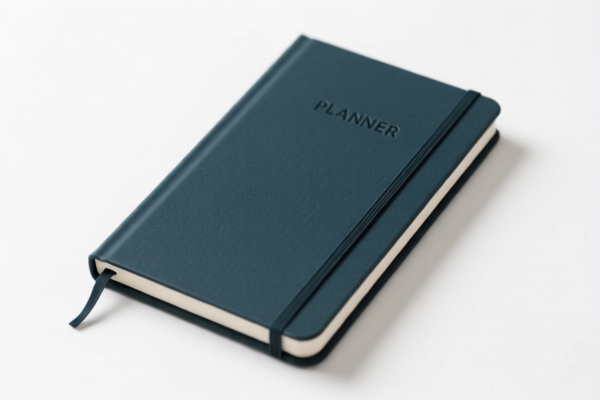
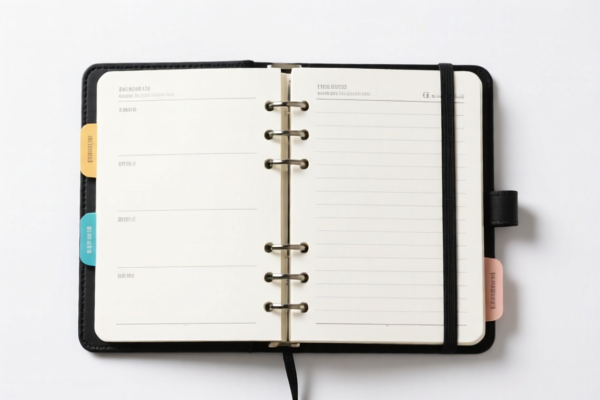
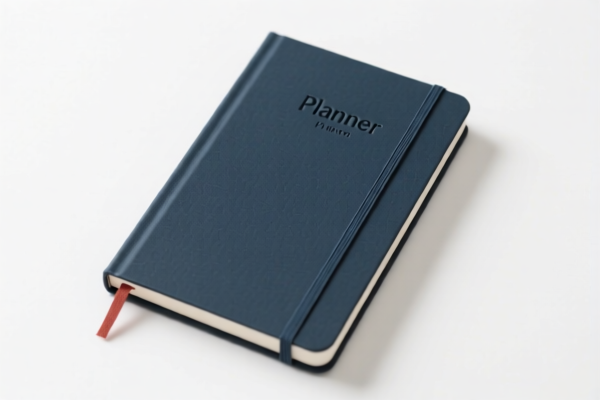
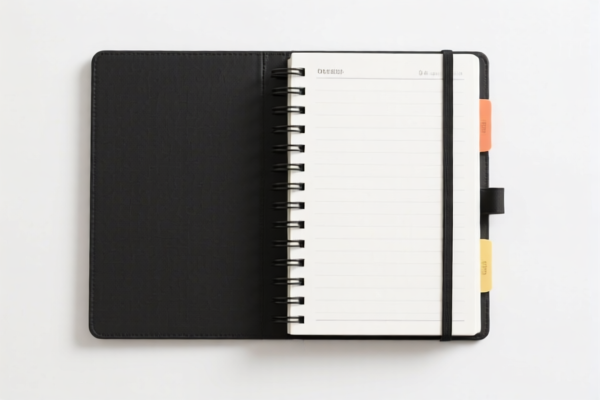
AI Analysis
📓 Planner Notebook (Journal & Organizer)
🌐 HS Code Reference & Customs Clearance Guide | 2026 Latest Tariff Analysis | Professional-Level Clearance Strategy
📌 I. Product Definition & Classification: Do You Really Understand "Planner Notebooks"?
The "Planner Notebook" is a ubiquitous stationery item used for daily scheduling, goal tracking, and professional organization. In international trade, it is primarily categorized under Chapter 48 (Paper and Paperboard), specifically focusing on printed matter, diaries, and notebooks.
Core Distinctions in Classification: * Loose-leaf/Plastic-bound Planners: Often classified under 4817.30 (Writing pads, account books, order books, receipt books, etc.) if they are considered "writing portable clips" or similar paper stationery. * Bound Diary/Notebooks: Classified under 4820.10 (Diaries, note books, address books, combination address books and diaries, pads for drawing or for mechanical duplicator styluses, blotting pads, and similar articles of stationery, whether or not printed, other than printed paper or paperboard of heading 4811; ruled or graph paper and sets of such paper).
⚠️ Key Differentiator:
- If the item is essentially a diary, logbook, or notebook with bound pages for recording thoughts/tasks → 4820.10.
- If the item is structured more like a writing pad or portable clipboard with loose or easily replaceable sheets → 4817.30.
- Note: The specific sub-codes below reflect common US HTS interpretations for Chinese-origin goods.
📦 II. HS Code Classification Details (2026 Latest Tariff Authority Comparison)
| HS Code | Product Description | Application Scenario | Material/Format |
|---|---|---|---|
4817.30.00.00 |
Writing pads and other articles of stationery of paper or paperboard; files, letter trays, etc. | Loose-leaf planners, writing pads, portable clipboards, non-bound organizational sheets. | Paper/Paperboard |
4820.10.20.10 |
Diaries, note books, address books, etc., excluding those of paper or paperboard of heading 4811. | Bound planners, diaries, logbooks. Specific sub-category for certain types of diary/notebook entries. | Bound Paper |
4820.10.20.60 |
Other diaries, note books, address books, etc. (General "Other" category for bound stationery). | Standard bound planner notebooks that do not fit specific size/type exclusions. | Bound Paper |
4817.20.20.00 |
Envelopes, letter cards, plain postcards, and correspondence cards, of paper or paperboard. | Less likely unless the planner is strictly card-based. | Paper/Cardboard |
🔍 Key Reminder:
- Most standard "Planners" fall under 4820.10 because they are essentially diaries/notebooks with structured grids or dates.
- 4817.30 is often used for loose-leaf systems or writing pads that are not fully bound.
- DO NOT misclassify as "Printed Paper" (4811) if it is bound; binding pushes it to 4820.
💰 III. 2026 Latest Tariff Rate Breakdown (Including Surtaxes & Policy Add-ons)
✅ Applicable Country: United States (US)
✅ Origin: China (CN)
✅ Effective Date: Post-November 2025 import rules apply.
🎯 1. 4820.10.20.10 & 4820.10.20.60 —— Diaries, Notebooks, Planners (Bound)
These are the most common codes for bound planner notebooks.
| Item | Content |
|---|---|
| Base Tariff Rate | 0% (ad valorem) |
| Section 301 Surcharge | +25% (Under USITC Footnote 9903.88.01 / Trade Act Section 301) |
| IEEPA Surcharge | +10% (Against China/HK products, effective from Nov 10, 2025) |
| Total Tariff Rate | 35.0% |
| Tax Calculation | CIF Value × 35% |
| De Minimis Eligibility | ❌ No (deny_de_minimis) |
| Legal Basis Path | USITC:4820.10.20.10 → FOOTNOTE:9903.88.01 (301 Clause) → IEEPA:9903.01.24 (122 Clause/IEEPA) |
📌 Explanation:
- 0% Base: Paper products generally have low base duties.
- +25% Section 301: All Chinese-origin goods in this category are subject to the standard 301 tariff list.
- +10% IEEPA: New/adjusted surcharge under the International Emergency Economic Powers Act.
- Total 35%: This is a high effective rate. You must budget for this cost.
🎯 2. 4817.30.00.00 —— Writing Pads / Portable Clipboards
| Item | Content |
|---|---|
| Base Tariff Rate | 0% (ad valorem) |
| Section 301 Surcharge | +25% |
| IEEPA Surcharge | +10% |
| Total Tariff Rate | 35.0% |
| Tax Calculation | CIF Value × 35% |
| De Minimis Eligibility | ❌ No |
| Legal Basis Path | USITC:4817.30.00.00 → FOOTNOTE:9903.88.01 → IEEPA:9903.01.24 |
📌 Note:
- Even if classified as "Writing Pads" rather than "Diaries," the 35% total rate remains the same due to the origin (China) and current trade policies.
🎯 3. 4817.20.20.00 —— Envelopes/Cards (If Applicable)
| Item | Content |
|---|---|
| Base Tariff Rate | 0% |
| Section 301 Surcharge | +25% |
| IEEPA Surcharge | +10% |
| Total Tariff Rate | 35.0% |
| Tax Calculation | CIF Value × 35% |
| De Minimis Eligibility | ❌ No |
🛠️ IV. Customs Clearance Practical Advice (Real-World Pitfall Guide)
✅ 1. Required Documentation Checklist (None can be omitted)
| Document | Must Provide | Description |
|---|---|---|
| ✅ Product Specification Sheet | ✔️ | Dimensions, binding type (spiral, glued, elastic band), page count, paper weight (GSM). |
| ✅ Product Photos (Clear) | ✔️ | Show the cover, interior layout (grid, dots, lined), binding mechanism, and any branding. |
| ✅ Commercial Invoice | ✔️ | Clearly state "Planner Notebook" or "Diary". Avoid vague terms like "Stationery" without detail. |
| ✅ Packing List | ✔️ | Detail units per carton, net/gross weight. |
| ✅ Country of Origin Certificate | ✔️ | Confirms CN origin, triggering the 301/IEEPA taxes. |
✅ 2. Declaration Tips (Critical Mantras)
🔥 "Bound = 4820, Loose = 4817, Both Hit 35%!"
| Scenario | Correct Declaration | Wrong Practice |
|---|---|---|
| Bound Planner (Spiral/Glued) | 4820.10.20.xx (Diary/Notebook) |
Mislabel as "Paper Sheet" → 4811 → Risk of Misclassification Penalty |
| Loose-Leaf Planner | 4817.30.00.00 (Writing Pad/Clip) |
Mislabel as "Diary" → Slight risk, but less critical if structure matches 4817 |
| Planner + Pen Set | Declare separately if possible. If bundled, the main item determines HS. | Bundle everything → May complicate valuation |
| Digital Planner (USB) | Not paper! → 8523.xx (Electronic media) |
Claiming paper HS Code → Fraud/Rejection |
✅ 3. Special Case Handling
| Situation | Handling Advice |
|---|---|
| Planner with Elastic Band | Still 4820.10. The band is an accessory to the binding. Do not split. |
| Covered in Fabric/Leather | If paper is the primary content, still 4820. If it's a "Leather Notebook" with minimal paper, it might shift to 4202. Check material composition. |
| Gift Sets | If sold as a set (e.g., Planner + Pen + Stickers), declare the principal item (Planner) or break down the value. |
| Small Sample Shipments | Remember, 35% tax applies. Do not assume small values mean no tax. De Minimis ($800) is denied for Chinese-origin goods in many categories, or requires careful review. |
🌍 V. Global Market Clearance Comparison (2026 Latest)
| Country/Region | Recommended HS Code | Tariff (China Origin) | Certification Requirements | Remarks |
|---|---|---|---|---|
| 🇺🇸 USA | 4820.10.20.xx |
35% (0% + 25% + 10%) | None specific for paper | High duty. Budget accordingly. |
| 🇨🇳 China | 4820.10.20.xx |
~5-10% (Import Duty) | None | Low duty for import into China. |
| 🇪🇺 EU | 4820.10.00 |
0-6.5% | CE (if ink/toys involved) | No Section 301 equivalent. |
| 🇬🇧 UK | 4820.10.00 |
0-6.5% | UKCA (if applicable) | Post-Brexit rules apply. |
| 🇦🇺 Australia | 4820.10.00 |
5% | None | ChAFTA may offer 0% if certified. |
📌 Conclusion:
- USA is the most expensive market due to the 35% effective rate.
- EU/UK/AU offer significantly lower duty rates but may have stricter environmental standards for paper/inks.
📌 VI. Common Mistakes & Pitfall Guide (Lessons Learned)
❌ Mistake 1: Classifying bound planners as "Printed Paper" (4811).
👉 Consequence: Customs may reject the classification because binding changes the nature. Risk of penalty + back taxes.
❌ Mistake 2: Ignoring the 301 + IEEPA surcharges.
👉 Consequence: Your product lands at US ports, but you didn't budget for 35% duty. Cash flow crisis.
❌ Mistake 3: Vague description: "Stationery Items".
👉 Consequence: Customs officers have discretion to choose the highest duty code. Provide detailed specs!
✅ Correct Declaration Example:
"Paper Planner Notebook, 8.5x11 inch, spiral bound, 200 pages, grid paper, for business scheduling, HS 4820.10.20.10"
🎯 VII. Conclusion: Professional Classification Saves Money!
🎯 Remember the Mantra:
🔹 "Bound is Diary (4820), Loose is Pad (4817), Both Tax 35% (China)!"
🔹 "Don't guess the HS, check the binding, avoid the penalty!"
📌 Pro Tip:
If your supply chain includes Vietnam or Malaysia as the origin of paper or assembly, you may avoid the 25% Section 301 tariff, potentially reducing the rate to 10% (IEEPA only) or 0-10% depending on the specific rule of origin.
Recommendation: Conduct a Rule of Origin analysis for your supply chain to optimize tax liability.
📣 Take Action Now:
📞 Consult a licensed customs broker.
📄 Prepare high-resolution images of your planner’s binding and interior.
🚀 Ensure smooth clearance, accurate duty payment, and happy customers!
✨ Professional Clearance Starts with Precise Classification!
💼 Every cent in duty matters; calculate it accurately!
Customer Reviews
About HS Code Classification
The Harmonized System (HS) is an internationally standardized nomenclature developed by the World Customs Organization (WCO) to classify traded products. Over 200 countries use the HS system as the basis for customs tariffs, trade statistics, and import/export regulations.
Each HS code follows a hierarchical structure:
- Chapter (2 digits) — Broad category of goods (e.g., Chapter 84: Machinery and Mechanical Appliances)
- Heading (4 digits) — More specific grouping within the chapter
- Subheading (6 digits) — Internationally standardized breakdown, used by all WCO member countries
- National subdivisions (8-10 digits) — Country-specific extensions for further classification, such as US HTSUS 10-digit codes
Correct HS code classification is essential for smooth customs clearance, accurate duty payment, and compliance with trade regulations. Misclassification can lead to customs delays, overpayment of duties, or penalties.
When importing from CN to US, the applicable tariff rates may include:
- Most-Favored-Nation (MFN) rate — The standard duty rate applied to WTO members
- General rate — Applied to countries without trade agreements
- Trade remedy duties — Additional tariffs such as Section 301 (anti-dumping), Section 232 (national security), or countervailing duties
The information provided on this page is for reference purposes only. For official classification, please consult with your local customs authority or a licensed customs broker.