Plant Fat Casting Mold Adhesive
CN → US| HS Code | Tariff Rate | Origin | Destination | Doc |
|---|---|---|---|---|
| 3824994190 | 39.6% | CN | US | Official Doc |
| 3506105000 | 37.1% | CN | US | Official Doc |
| 3824994140 | 39.6% | CN | US | Official Doc |
| 3824994140 | 39.6% | CN | US | Official Doc |
| 3824994190 | 39.6% | CN | US | Official Doc |
Product Images

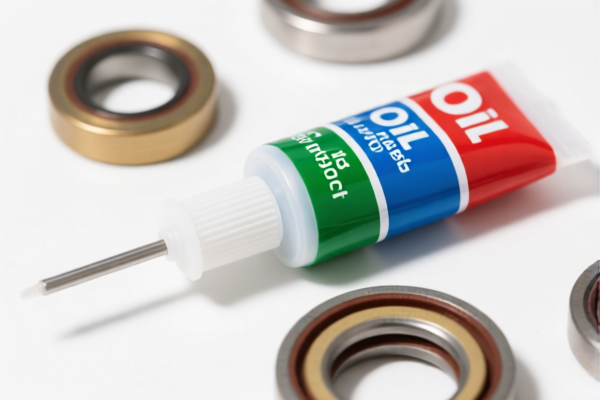
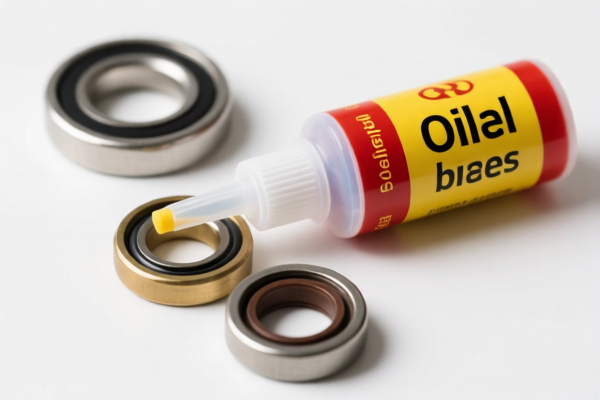
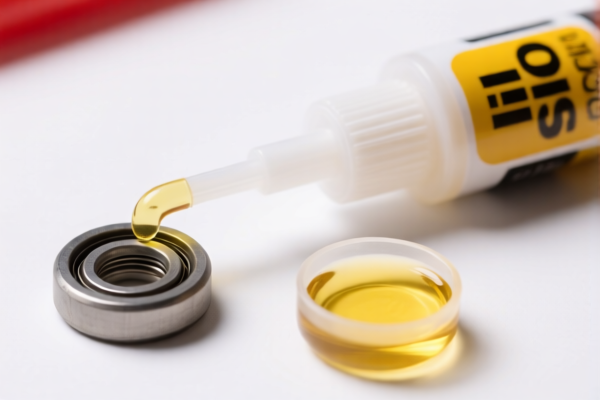
AI Analysis
🏭 Plant Fat Casting Mold Adhesive (植物油脂铸造模具粘合剂)
🌐 HS Code Reference & Customs Clearance Guide | 2026 Latest Tariff Analysis | Professional Clearance Strategy
📌 I. Product Definition & Classification: Do You Understand "Casting Mold Adhesive"?
Plant Fat Casting Mold Adhesive is a specialized industrial material used in the foundry industry. It serves as a binding agent to shape metal molds or cores. In international trade, its classification depends heavily on its chemical composition (animal/plant fats) and its specific function (prefabricated binder for casting molds).
It is primarily categorized under Chapter 38 (Miscellaneous Chemical Products) because it is a prepared chemical binder derived from natural fats, rather than a simple plastic adhesive (Chapter 35) or raw fat (Chapter 15).
⚠️ Key Classification Point:
- If the product is explicitly formulated as a "prefabricated binder for casting molds or cores" and is based on animal or vegetable fats, it falls under 3824.99.41.
- Misclassifying it as a general-purpose glue (Chapter 35) often leads to customs delays or re-classification penalties.
📦 II. HS Code Classification Details (2026 Latest Tariff Authority Reference)
| HS Code | Product Description | Applicability | Match Accuracy |
|---|---|---|---|
3824.99.41.40 |
Prepared binders for casting molds or cores, containing animal/vegetable fats | Oil-based or Animal-fat based casting binders | ✅ High (Direct match for "Prefabricated Binder") |
3824.99.41.90 |
Other prepared binders for casting molds or cores (including animal fat-based) | General animal fat or mixed fat casting binders | ✅ High (Catches "Animal Fat" specific variants) |
3506.10.50.00 |
Prepared glue/Adhesive (General) | General purpose glues, resin-based molds | ⚠️ Medium (Only if not strictly a "casting mold prefabricated binder") |
🔍 Critical Distinction:
- The term "Plant Fat" or "Animal Fat" in the name strongly points to Chapter 38.24, which specifically covers binders for casting molds made from fat substances.
- Code3506is for general adhesives. If the product is explicitly for casting molds and contains fats,3824.99.41is the more precise and legally compliant classification under US customs practice for these specific industrial binders.
💰 III. 2026 Latest Tariff Rate Breakdown (Including Additional Taxes, Policy Surcharges)
✅ Applicable Country: United States (US)
✅ Origin: China (CN)
✅ Effective Date: 2025年11月10日起 (From Nov 10, 2025)
🎯 1. 3824.99.41.40 & 3824.99.41.90 —— Prepared Binders for Casting Molds (Fat-Based)
| Item | Details |
|---|---|
| Base Tariff Rate | 4.6% (Ad Valorem) |
| Section 301 Additional Tariff | +25.0% (USITC Footnote for Chinese Goods) |
| Section 122 Tariff / IEEPA Surcharge | +10.0% (Specific additional duty for certain chemical/industrial goods from China) |
| Total Tariff Rate | 39.6% |
| Tax Calculation | CIF Value × 39.6% |
| De Minimis Exemption? | ❌ NO (Denied. High tariff items are excluded from $800 de minimis exemption) |
| Legal Basis Path | HTSUS:3824.99.41 → USITC:301 (25%) → IEEPA/Sec122 (10%) |
📌 Explanation:
- Base Rate (4.6%): Standard MFN rate for miscellaneous prepared chemicals.
- 301 Tariff (25%): Applies to all Chinese-made goods in this category under the trade war measures.
- 122/IEEPA Surcharge (10%): A specific additional duty applied to certain industrial chemicals and binders.
- Total (39.6%): This is a very high effective tariff rate. Importers must budget accordingly.
🎯 2. 3506.10.50.00 —— Prepared Glue (General)
| Item | Details |
|---|---|
| Base Tariff Rate | 2.1% |
| Section 301 Additional Tariff | +25.0% |
| Section 122 Tariff / IEEPA Surcharge | +10.0% |
| Total Tariff Rate | 37.1% |
| Tax Calculation | CIF Value × 37.1% |
| De Minimis Exemption? | ❌ NO |
| Legal Basis Path | HTSUS:3506.10.50 → USITC:301 (25%) → IEEPA (10%) |
📌 Note:
- If customs accepts this general glue classification, the rate is 37.1%, which is slightly lower than the specific binder code (39.6%).
- However, misclassification risk is high. If the product is clearly a "casting mold binder" with fat content, Customs will likely force reclassification to3824.99.41, resulting in back taxes + penalties.
🛠️ IV. Customs Clearance Practical Advice (Battle-Tested Pitfall Avoidance)
✅ 1. Required Documentation Checklist (No Exceptions)
| Document | Mandatory? | Explanation |
|---|---|---|
| ✅ Product Specification Sheet | ✔️ | Must explicitly state: "Cast Iron/Steel Mold Binder," "Contains Plant/Animal Fat," "Not for General Adhesion." |
| ✅ Material Safety Data Sheet (MSDS) | ✔️ | Proves chemical composition (fat-based) and safety handling. |
| ✅ Product Photos (Label & Container) | ✔️ | Show brand, model, and warning labels. |
| ✅ Commercial Invoice | ✔️ | Description must match HS code: "Prefabricated Binder for Casting Molds, Plant Fat Based." Avoid vague terms like "Glue." |
| ✅ Certificate of Origin (CO) | ✔️ | Required to apply Section 301 and 122 tariffs accurately. |
| ✅ Packing List | ✔️ | Detailed weight and volume. |
✅ 2. Declaration Tips (Key Mnemonics)
🔥 "Be Specific on 'Casting Mold' and 'Fat' to Avoid Re-classification!"
| Scenario | Correct Declaration | Incorrect Practice |
|---|---|---|
| Product is for Metal Casting | Use 3824.99.41 |
Declare as "Industrial Glue" (3506) → High risk of audit |
| Product contains Plant/Animal Fat | Mention "Fat-based Binder" | Say "Chemical Adhesive" → Ambiguous |
| Product is Pre-mixed/Prefabricated | State "Prefabricated Binder" | Say "Raw Fat Mixture" → Could be Chapter 15 |
| OEM/Custom Blend | Provide formulation details | Vague "Proprietary Blend" → Customs may assign worst-case code |
✅ 3. Special Handling for "Plant Fat" Variants
- If the product is Oil-based (e.g., soybean oil, palm oil derivative), ensure the MSDS highlights "Vegetable Fat" to support classification under
3824.99.41.40. - If it is Animal Fat (e.g., tallow, lard derivative), use
3824.99.41.90or.40depending on exact specificity. Both have the same 39.6% rate. - Avoid "Glue": The term "Adhesive" is acceptable, but "Casting Mold Binder" is the technical term that triggers the specific Chapter 38 heading.
🌍 V. Global Market Clearance Comparison (2026 Latest)
| Country/Region | Recommended HS Code | Tariff Rate | Certification | Notes |
|---|---|---|---|---|
| 🇺🇸 USA | 3824.99.41 |
39.6% | MSDS + CO | High tariffs due to 301 + 122. Strict enforcement. |
| 🇨🇳 China | 3824.99.41 |
~6-10% | CCC (if applicable) | No 301 tariffs. Lower cost if imported into China. |
| 🇪🇺 EU | 3824.90 |
0-6.5% | REACH Registration | Check REACH compliance for chemical substances. |
| 🇦🇺 Australia | 3824.99 |
5% | AICIS | Standard import permit may be needed. |
| 🇯🇵 Japan | 3824.99 |
0-6.5% | Fertilizer Law (if organic) | Check chemical inventory requirements. |
📌 Conclusion:
- USA is the most expensive market due to the 39.6% combined tariff.
- For exports to the US, consider supply chain diversification (e.g., manufacturing in non-China countries) to avoid 301/122 tariffs.
- Ensure MSDS and Product Description are perfectly aligned to prevent Customs disputes.
📌 VI. Common Errors & Pitfall Guide (Lessons Learned)
❌ Error 1: Declaring as "General Glue" (3506) to get lower 37.1% rate.
👉 Consequence: Customs audit reveals it's a "Casting Mold Binder" → Forced reclassification to 3824.99.41 + Penalties + Back Taxes.
❌ Error 2: Omitting "Plant Fat" in the description.
👉 Consequence: Customs cannot verify Chapter 38 eligibility → Delays, Storage Fees, and Potential Rejection.
❌ Error 3: Using vague terms like "Industrial Adhesive" without specifying "Casting Mold" use.
👉 Consequence: Dispute over classification → High Legal Costs and Clearance Delays.
❌ Error 4: Ignoring Section 122 / IEEPA 10% surcharge.
👉 Consequence: Underpayment of duties → Seizure of Goods.
✅ Correct Approach:
"Plant Fat Based Prefabricated Binder for Metal Casting Molds, Model XYZ, MSDS Attached, Non-Toxic, Industrial Grade"
🎯 VII. Conclusion: Professional Declaration, Cost Optimization
🎯 Remember the Mantra:
🔹 "Casting Mold + Fat = Chapter 38.24"
🔹 "China Origin = +35% Extra Tariffs"
🔹 "Be Specific or Pay the Price!"
🔹 "39.6% is the Real Cost for USA Imports!"
📌 Pro Tip:
- If you are importing into the USA, consider applying for an Advance Ruling from US Customs (CBP) to confirm the HS code before shipment.
- For Plant Fat based products, ensure REACH/EPA compliance if required.
- Negotiate Incoterms: Since tariffs are high (39.6%), ensure the buyer understands the landed cost impact.
📣 Immediate Action:
📞 Consult a licensed Customs Broker + Provide MSDS + Apply for CBP Advance Ruling
🚀 Clear Goods Smoothly, Avoid Penalties, Maximize Profit Margins!
✨ Professional Clearance Starts with Accurate Classification!
💼 Every Percent of Tariff Matters!
Customer Reviews
About HS Code Classification
The Harmonized System (HS) is an internationally standardized nomenclature developed by the World Customs Organization (WCO) to classify traded products. Over 200 countries use the HS system as the basis for customs tariffs, trade statistics, and import/export regulations.
Each HS code follows a hierarchical structure:
- Chapter (2 digits) — Broad category of goods (e.g., Chapter 84: Machinery and Mechanical Appliances)
- Heading (4 digits) — More specific grouping within the chapter
- Subheading (6 digits) — Internationally standardized breakdown, used by all WCO member countries
- National subdivisions (8-10 digits) — Country-specific extensions for further classification, such as US HTSUS 10-digit codes
Correct HS code classification is essential for smooth customs clearance, accurate duty payment, and compliance with trade regulations. Misclassification can lead to customs delays, overpayment of duties, or penalties.
When importing from CN to US, the applicable tariff rates may include:
- Most-Favored-Nation (MFN) rate — The standard duty rate applied to WTO members
- General rate — Applied to countries without trade agreements
- Trade remedy duties — Additional tariffs such as Section 301 (anti-dumping), Section 232 (national security), or countervailing duties
The information provided on this page is for reference purposes only. For official classification, please consult with your local customs authority or a licensed customs broker.