Plant Fiber Based PVC Textile Composite Sheet
CN → US| HS Code | Tariff Rate | Origin | Destination | Doc |
|---|---|---|---|---|
| 5903102090 | 35.0% | CN | US | Official Doc |
| 3921121910 | 40.3% | CN | US | Official Doc |
| 3921121500 | 41.5% | CN | US | Official Doc |
| 5903103000 | 37.7% | CN | US | Official Doc |
| 3920435000 | 39.2% | CN | US | Official Doc |
Product Images

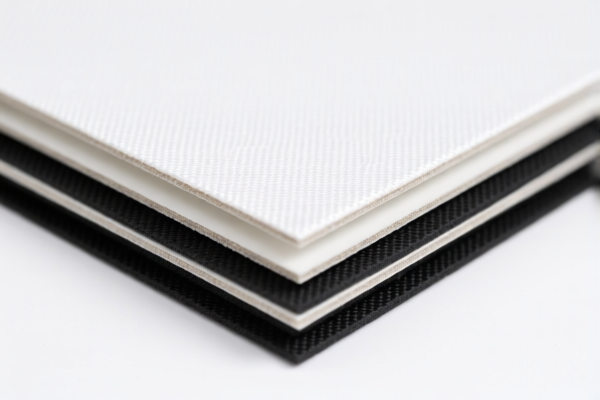
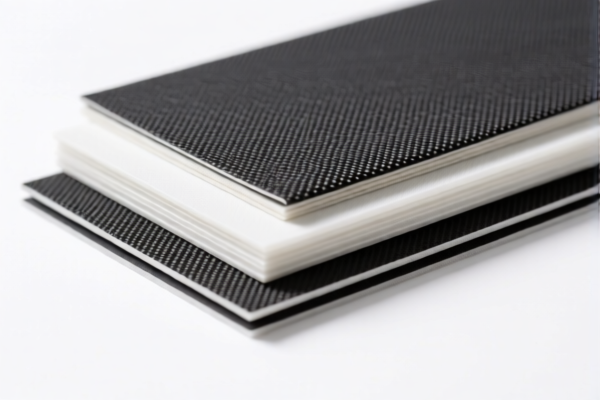
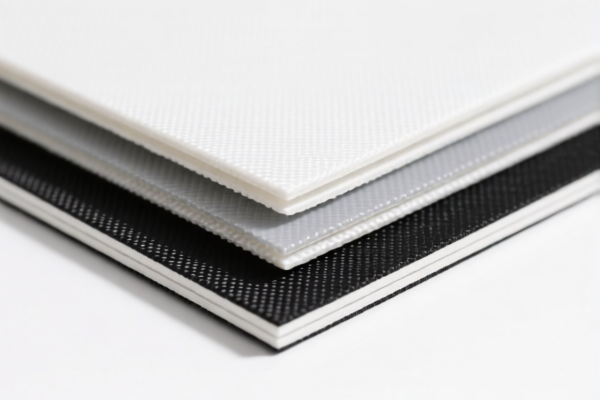
AI Analysis
🌿 Plant Fiber Based PVC Textile Composite Sheet
🌐 HS Code Reference & Customs Clearance Guide | 2026 Latest Tariff Analysis | Professional Clearance Strategy
📌 I. Product Definition & Classification: Do You Really Understand "Plant Fiber Based PVC Composite"?
The Plant Fiber Based PVC Textile Composite Sheet is a specialized industrial material formed by combining Polyvinyl Chloride (PVC) with textile reinforcements made primarily from natural plant fibers (such as jute, hemp, flax, or wood pulp fibers). In international trade, the classification depends heavily on whether the plant fiber is considered the "essential character" of a textile fabric or if the PVC coating transforms it into a plastic article.
It is broadly categorized into two main legal paths: 1. Textile Path (Chapter 59): If the fabric is impregnated, coated, covered, or laminated with plastics, and the textile nature remains dominant. 2. Plastic Path (Chapter 39): If the PVC content or structure causes it to be classified as a plastic sheet, especially if the fiber content is deemed secondary or if it meets specific composite plastic criteria.
⚠️ Key Distinction Point:
- If the product is primarily a textile fabric impregnated/coated with PVC →归入 Chapter 59 (Lower Base Duty).
- If the product is primarily a plastic sheet reinforced with fibers, or meets specific "plant fiber" plastic definitions →归入 Chapter 39 (Higher Base Duty).
📦 II. HS Code Classification Details (2026 Latest Tariff Authority对照)
| HS Code | Product Description | Application Scenario | Tax Rate (Total) |
|---|---|---|---|
5903.10.20.90 |
Textile fabrics impregnated, coated, covered or laminated with PVC, based on textile materials, of other textile materials (Plant Fiber Dominant) | Industrial textiles, eco-friendly composites, base fabrics for upholstery | 35.0% |
3921.12.19.10 |
Other plates, sheets, film, foil and strip, of plastics, containing or reinforced with vegetable fibers | Rigid/semi-rigid composite sheets where plant fiber composition is specific and distinct | 40.3% |
3921.12.15.00 |
Other plates, sheets, film, foil and strip, of plastics, containing or reinforced with artificial textile materials | Composite sheets where fiber/polymer mix is interpreted as "artificial fiber" dominant or mixed logic | 41.5% |
5903.10.30.00 |
Textile fabrics impregnated, coated or covered with PVC, of other textile materials | Flexible PVC-coated textiles where the fabric structure is clearly visible and dominant | 37.7% |
3920.43.50.00 |
Other plates, sheets, film, foil and strip, of polymers of ethylene | PVC composite sheets that do not meet Chapter 39.21 specific reinforcement criteria but fit general plastic sheet logic | 39.2% |
🔍 Key Reminder:
- Chapter 59 (5903) generally offers a 0% Base Duty, but is subject to heavy surcharges.
- Chapter 39 (3921/3920) generally has a Base Duty (4.2% - 6.5%), leading to a higher total tax burden when surcharges are added.
- The choice between 5903 and 3921 depends on the exact fiber composition and whether customs views the product as a "Textile Fabric" or a "Plastic Sheet."
💰 III. 2026 Latest Tariff Rate Breakdown (Including Surcharges & Policy Add-ons)
✅ Applicable Country: United States (US)
✅ Origin: China (CN)
✅ Effective Time: November 10, 2025 onwards (for subsequent imports)
🎯 1. 5903.10.20.90 —— Textile Fabrics Impregnated with PVC (Plant Fiber Based)
| Item | Content |
|---|---|
| Base Duty Rate | 0.0% (Ad Valorem) |
| USITC Section 301 Surcharge | +25.0% (From USITC Footnote related to 301 tariffs) |
| IEEPA Surcharge | +10.0% (Targeting Chinese/HK products, effective Nov 10, 2025) |
| Total Tax Rate | 35.0% |
| Tax Calculation | CIF Value × 35.0% |
| De Minimis Eligibility | ❌ Not Eligible (deny_de_minimis) |
| Legal Authority Path | IEEPA:9903.01.25 → USITC:5903.10.20.90 → FOOTNOTE:301 |
📌 Explanation:
- Although the Base Duty is 0%, the product is not exempt from trade wars.
- The 35% total rate is driven entirely by the 25% Section 301 tariff + 10% IEEPA tariff.
- This is the lowest total tax rate among the options, making5903.10.20.90the most cost-effective classification if the product can be legally argued as a "Textile Fabric."
🎯 2. 5903.10.30.00 —— Other PVC Coated Textile Fabrics
| Item | Content |
|---|---|
| Base Duty Rate | 2.7% |
| USITC Section 301 Surcharge | +25.0% |
| IEEPA Surcharge | +10.0% |
| Total Tax Rate | 37.7% |
| Tax Calculation | CIF Value × 37.7% |
| De Minimis Eligibility | ❌ Not Eligible |
| Legal Authority Path | IEEPA:9903.01.25 → USITC:5903.10.30.00 → FOOTNOTE:301 |
📌 Note:
- Slightly higher due to a small base duty of 2.7%.
- Still classified under Chapter 59, so the surcharge logic is identical.
🎯 3. 3921.12.19.10 —— Plastic Sheets Containing Vegetable Fibers
| Item | Content |
|---|---|
| Base Duty Rate | 5.3% |
| USITC Section 301 Surcharge | +25.0% |
| IEEPA Surcharge | +10.0% |
| Total Tax Rate | 40.3% |
| Tax Calculation | CIF Value × 40.3% |
| De Minimis Eligibility | ❌ Not Eligible |
| Legal Authority Path | IEEPA:9903.01.25 → USITC:3921.12.19.10 → FOOTNOTE:301 |
📌 Warning:
- The Base Duty is 5.3%, pushing the total to 40.3%.
- This classification is used when Customs views the product as a Plastic Sheet reinforced with plant fibers, rather than a textile fabric.
🎯 4. 3921.12.15.00 —— Plastic Sheets with Artificial Fibers
| Item | Content |
|---|---|
| Base Duty Rate | 6.5% |
| USITC Section 301 Surcharge | +25.0% |
| IEEPA Surcharge | +10.0% |
| Total Tax Rate | 41.5% |
| Tax Calculation | CIF Value × 41.5% |
| De Minimis Eligibility | ❌ Not Eligible |
| Legal Authority Path | IEEPA:9903.01.25 → USITC:3921.12.15.00 → FOOTNOTE:301 |
📌 Note:
- The Highest Tax Rate (41.5%).
- Apply only if the fiber is interpreted as "artificial" or if the composite structure firmly places it in Chapter 39.21 with a higher base duty.
🎯 5. 3920.43.50.00 —— Other Polymer Plates/Sheets (Ethylene Polymers)
| Item | Content |
|---|---|
| Base Duty Rate | 4.2% |
| USITC Section 301 Surcharge | +25.0% |
| > IEEPA Surcharge | +10.0% |
| Total Tax Rate | 39.2% |
| Tax Calculation | CIF Value × 39.2% |
| De Minimis Eligibility | ❌ Not Eligible |
| Legal Authority Path | IEEPA:9903.01.25 → USITC:3920.43.50.00 → FOOTNOTE:301 |
📌 Note:
- An intermediate option if the product is classified as a general plastic sheet (PVC/Ethylene based) under Chapter 39.20.
🛠️ IV. Customs Clearance Practical Advice (Battle-Tested Pitfall Guide)
✅ 1. Required Documentation Checklist (None can be omitted)
| Document | Mandatory? | Description |
|---|---|---|
| ✅ Product Specification Sheet | ✔️ | Must detail: % of Plant Fiber, PVC content, weight per sqm, density, and manufacturing process (impregnation vs. lamination). |
| ✅ Structure Diagram | ✔️ | Visual proof of layering. Is the fabric the core? Is PVC a coating or a matrix? |
| ✅ Product Photos (Label & Cross-section) | ✔️ | Show the texture clearly. Is it woven? Non-woven? |
| ✅ Commercial Invoice | ✔️ | Use precise terminology: "PVC-Coated Jute Fabric" or "Vegetable Fiber Reinforced PVC Sheet." Avoid vague terms like "Composite Material." |
| ✅ Packing List | ✔️ | Confirm gross/net weight and package dimensions. |
| ✅ Origin Certificate (CO) | ✔️ | Required for IEEPA determination. If not CN, different rules apply. |
✅ 2. Declaration Strategy (Key Mantras)
🔥 "Textile vs. Plastic: Define the Essential Character!"
| Scenario | Correct Declaration | Consequence of Error |
|---|---|---|
| Fabric-like, flexible, woven plant fiber core with PVC coating | 5903.10.20.90 (35.0%) |
Misclassifying as Plastic (3921) → Extra 5.3%+ tax |
| Rigid sheet, PVC is the main binder, fibers are reinforcement | 3921.12.19.10 (40.3%) |
Misclassifying as Textile (5903) → Risk of Audit/Rejection |
| Mixed logic, hard to distinguish | Apply for Advance Ruling | Guessing wrong → Delays, Penalties, Back Taxes |
📌 Critical Tip:
- Emphasize "Textile Fabric" characteristics if you want5903.10.20.90. Highlight that the PVC is an impregnation/coating, not a structural matrix that dominates.
- If the PVC layer is very thick or the sheet is rigid, Customs may lean toward3921, increasing your tax to 40.3%.
✅ 3. Special Case Handling
| Situation | Handling Advice |
|---|---|
| OEM Custom Sheets | Provide client design specs to prove the "Textile" intent if possible. |
| High PVC Content (>50%) | High risk of Chapter 39 classification. Prepare to justify "Textile Essential Character" with technical data. |
| Small Samples (De Minimis) | ❌ Do Not Use Section 321. With 35-41% tax, de minimis is blocked. Declare formally. |
| Mixed Shipments (Textile + Plastic Parts) | Declare separately. Do not bundle to hide the high-tax items. |
🌍 V. Global Market Comparison (2026 Latest)
| Country/Region | Recommended HS Code | Tariff (China Origin) | Certification Required | Notes |
|---|---|---|---|---|
| 🇺🇸 USA | 5903.10.20.90 |
35.0% | No specific, but proof of origin | Highest total cost due to 301+IEEPA |
| 🇨🇳 China | 5903.10.20.90 |
~10-15% (General) | No extra | Domestic trade lower tax |
| 🇪🇺 EU | 5903.10.20.90 |
0-6% (Varying) | REACH, RoHS | No Section 301 equivalent, but watch REACH |
| 🇬🇧 UK | 5903.10.20.90 |
Similar to EU post-Brexit | UKCA, REUK | Post-Brexit rules apply |
📌 Conclusion:
- The US market is the most expensive due to the combination of Base Duty + 301 Tariff + IEEPA Surcharge.
- EU/UK do not have equivalent "301" or "IEEPA" tariffs on these goods, making them significantly cheaper to export to.
- Strategy: If exporting to the US, optimize the HS Code to 5903.10.20.90 to save ~5% vs. Chapter 39 codes.
📌 VI. Common Mistakes & Pitfall Guide (Lessons from Blood & Tears)
❌ Mistake 1: Calling it "PVC Sheet" on the invoice, but it's actually a textile fabric.
👉 Consequence: Customs may reclassify to Chapter 39 (Higher Base Duty) or demand proof, causing delays.
👉 Fix: Use "PVC-Coated Textile Fabric" in both declaration and commercial invoice.
❌ Mistake 2: Ignoring the IEEPA 10% Surcharge.
👉 Consequence: Under-declaration of tax. 10% of CIF is a huge blind spot.
👉 Fix: Always add 10% IEEPA to any China-origin good entering the US since Nov 2025.
❌ Mistake 3: Trying to use De Minimis (Section 321) for batches.
👉 Consequence: Seizure or Return. High-value composite sheets are often flagged as "evading tariffs" via de minimis.
👉 Fix: Declare formally with full duty payment.
❌ Mistake 4: Confusing "Vegetable Fiber" with "Artificial Fiber".
👉 Consequence: Misclassification under 3921.12.15.00 (41.5%) instead of 3921.12.19.10 (40.3%) or 5903 (35.0%).
👉 Fix: Provide lab tests proving the fiber is natural (Plant/Jute/Hemp), not synthetic.
✅ Correct Declaration Example:
"PVC-IMPREGNATED JUTE FABRIC, WEAVE STRUCTURE, FOR INDUSTRIAL USE, MODEL XYZ, ORIGIN: CHINA"
🎯 VII. Conclusion: Precision in Classification Saves Money!
🎯 Remember the Mantras:
🔹 "Textile Base? Go Chapter 59. Plant Fiber? Check Chapter 39."
🔹 "35% vs 41%: A 6% Difference on a $100k Shipment is $6,000!"
🔹 "IEEPA 10% is Non-Negotiable for China Origins. Factor it in!"
📌 Pro Tip:
If your plant fiber source is Vietnam, Thailand, or Malaysia, you might qualify for IEEPA Exemptions or lower Section 301 rates.
Recommendation: Apply for an Advance Ruling with US Customs (CBP) before shipping large volumes. This locks in your HS Code and tax rate, preventing unexpected audits.
📣 Immediate Action:
📞 Contact a licensed Customs Broker
📄 Provide Fiber Composition Reports
🚀 Clear Your Goods Smoothly, Avoid Penalties, Maximize Profit!
✨ Professional Clearance Starts with Accurate Classification!
💼 Every cent of tax saved is pure profit!
Customer Reviews
About HS Code Classification
The Harmonized System (HS) is an internationally standardized nomenclature developed by the World Customs Organization (WCO) to classify traded products. Over 200 countries use the HS system as the basis for customs tariffs, trade statistics, and import/export regulations.
Each HS code follows a hierarchical structure:
- Chapter (2 digits) — Broad category of goods (e.g., Chapter 84: Machinery and Mechanical Appliances)
- Heading (4 digits) — More specific grouping within the chapter
- Subheading (6 digits) — Internationally standardized breakdown, used by all WCO member countries
- National subdivisions (8-10 digits) — Country-specific extensions for further classification, such as US HTSUS 10-digit codes
Correct HS code classification is essential for smooth customs clearance, accurate duty payment, and compliance with trade regulations. Misclassification can lead to customs delays, overpayment of duties, or penalties.
When importing from CN to US, the applicable tariff rates may include:
- Most-Favored-Nation (MFN) rate — The standard duty rate applied to WTO members
- General rate — Applied to countries without trade agreements
- Trade remedy duties — Additional tariffs such as Section 301 (anti-dumping), Section 232 (national security), or countervailing duties
The information provided on this page is for reference purposes only. For official classification, please consult with your local customs authority or a licensed customs broker.