Plant Fiber Composite Board
CN → US| HS Code | Tariff Rate | Origin | Destination | Doc |
|---|---|---|---|---|
| 4823902000 | 35.0% | CN | US | Official Doc |
| 4823908000 | 35.0% | CN | US | Official Doc |
| 4411940040 | 35.0% | CN | US | Official Doc |
| 4411940010 | 35.0% | CN | US | Official Doc |
| 3926305000 | 22.8% | CN | US | Official Doc |
Product Images
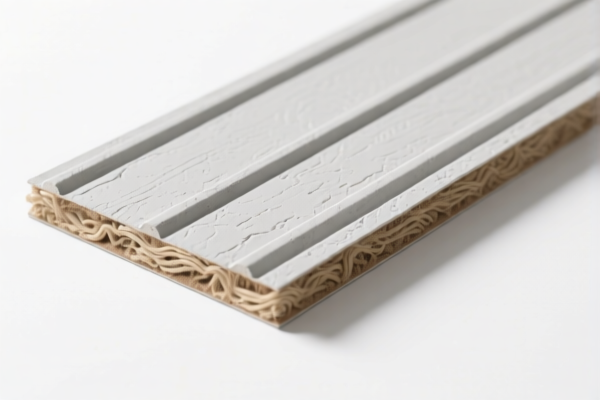
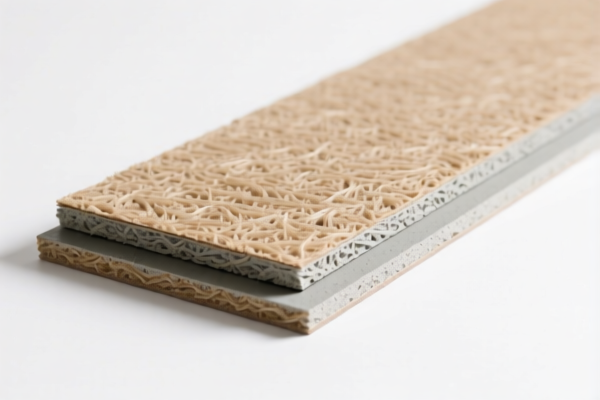
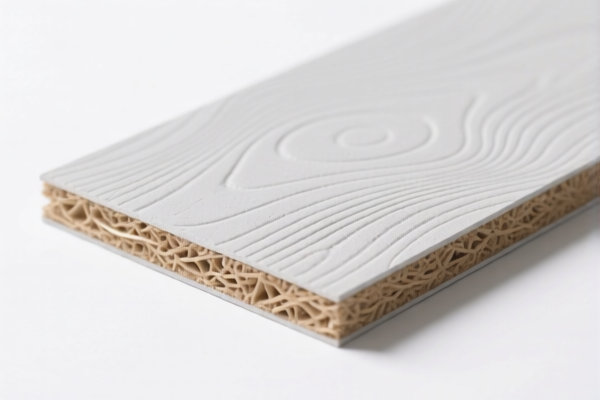

AI Analysis
🌿 Plant Fiber Composite Board (植物纤维增强板)
🌐 HS Code Reference & Customs Clearance Guide | 2026 Latest Tariff Analysis | Professional Clearance Strategy
📌 I. Product Definition & Classification: What Exactly Is a "Plant Fiber Composite Board"?
In international trade, "Plant Fiber Composite Board" is a broad term that can refer to several different types of materials depending on the binding agent and the dominant material component. The critical distinction lies in whether the board is primarily made of: 1. Cellulose/Paper-based materials (processed wood pulp, recycled paper, etc.) → Falls under Chapter 48. 2. Wood-based fibers (MDF, HDF, etc.) → Falls under Chapter 44. 3. Plastic-bonded composites (e.g., PVC combined with plant fibers) → Falls under Chapter 39.
⚠️ Key Distinction Point:
- If the board is bound with resins/glues typical of paper products and retains cellulose properties → 4823.90.20.00 / 4823.90.80.00
- If the board is a standard fiberboard (like MDF) made from wood/plant fibers → 4411.94.00.10 / 4411.94.00.40
- If the board is primarily Plastic (PVC) with plant fiber reinforcement → 3926.30.50.00
📦 II. HS Code Classification Details (2026 Latest Tariff Authority Comparison)
| HS Code | Product Description | Applicable Scenario | Material Attribute |
|---|---|---|---|
4823.90.20.00 |
Boards of plant fibers, cellulose/paper-based, enhanced/structured | Boards made from pulp/cellulose fibers, distinct from standard paper | 📄 Cellulose/Paper Fiber |
4823.90.80.00 |
Other boards of paper, paperboard, cellulose wadding or webs of cellulose fibers | Boards where fiber aligns with paper/cellulose web attributes | 📄 Cellulose Fiber Web |
4411.94.00.40 |
Other fiberboard of wood or other ligneous materials, density > 0.5 g/cm³ | Standard wood-based fiberboards (MDF/HDF type), includes plant fibers | 🌲 Wood/Lignocellulosic Fiber |
4411.94.00.10 |
Other fiberboard of wood or other ligneous materials, density ≤ 0.5 g/cm³ | Lightweight fiberboards, plant fibers correspond to wood/wood fiber | 🌲 Wood/Lignocellulosic Fiber |
3926.30.50.00 |
Other articles of plastics, including PVC plant fiber composite boards | Boards where PVC is the primary binder/material, reinforced with plant fiber | ♻️ Plastic (PVC) Composite |
🔍 Important Reminder:
- If the product is primarily wood-based fiberboard (like MDF), it MUST be classified under 4411, not 4823. - If the product is a plastic composite (PVC + fiber), it falls under 3926. Misclassifying plastic composites as paper products (4823) leads to severe penalties. - "Plant Fiber" alone is not sufficient; you must identify the binder and matrix material.
💰 III. 2026 Latest Tariff Rate Breakdown (Including Surtaxes & Policy Add-ons)
✅ Applicable Country: United States (US)
✅ Origin: China (CN)
✅ Effective Date: 2025-11-10 onwards (including subsequent imports)
🎯 1. 4823.90.20.00 & 4823.90.80.00 —— Cellulose/Paper Fiber Boards
| Item | Details |
|---|---|
| Base Tariff | 0.0% |
| Section 301 Surcharge | +25.0% |
| Section 122 Tariff | +10.0% |
| Total Tariff | 35.0% |
| Tax Calculation | CIF Value × 35% |
| De Minimis Exemption | ❌ Not Eligible |
| Legal Basis Path | USITC:4823.90.20.00 → SECTION301 → SECTION122 |
📌 Explanation:
- 0% Base: Standard MFN rate for many paper/board products. - 25% Surcharge: Applies under US Trade Act Section 301 against Chinese goods. - 10% Surcharge: Specific additional tariff (Section 122) on certain wood/plant fiber products. - Total 35%: High cost, must be factored into landed cost calculations.
🎯 2. 4411.94.00.10 & 4411.94.00.40 —— Wood/Plant Fiber Fiberboards (MDF/HDF Type)
| Item | Details |
|---|---|
| Base Tariff | 0.0% |
| Section 301 Surcharge | +25.0% |
| Section 122 Tariff | +10.0% |
| Total Tariff | 35.0% |
| Tax Calculation | CIF Value × 35% |
| De Minimis Exemption | ❌ Not Eligible |
| Legal Basis Path | USITC:4411.94.00.10/40 → SECTION301 → SECTION122 |
📌 Explanation:
- Same tariff structure as paper-based boards. - Note: If the board is genuine MDF (Medium Density Fiberboard), ensure it doesn't fall under specific subheadings with different rates (e.g., 4411.94.00.15 might have different nuances, but 4411.94.00.10/40 are confirmed here at 35%). - "Plant Fiber" in Wood Boards: If the fiber is essentially wood pulp, it stays in Chapter 44.
🎯 3. 3926.30.50.00 —— PVC Plant Fiber Composite Boards
| Item | Details |
|---|---|
| Base Tariff | 5.3% |
| Section 301 Surcharge | +7.5% |
| Section 122 Tariff | +10.0% |
| Total Tariff | 22.8% |
| Tax Calculation | CIF Value × 22.8% |
| De Minimis Exemption | ❌ Not Eligible |
| Legal Basis Path | USITC:3926.30.50.00 → SECTION301 → SECTION122 |
📌 Explanation:
- Lower Total Tariff (22.8%): This is the most cost-effective classification if the product is indeed a Plastic (PVC) composite. - Crucial Condition: The board must be primarily plastic. If customs determines it is paper/wood-based, they will reclassify it to 4823/4411, resulting in a 12.2% tax increase (35% vs 22.8%) and potential penalties. - "Composite" Nature: Clearly document the PVC content percentage and binding agent.
🛠️ IV. Customs Clearance Practical Advice (Combat Pitfall Guide)
✅ 1. Preparation Checklist (Mandatory)
| Document | Required | Explanation |
|---|---|---|
| ✅ Product Specification Sheet | ✔️ | Must detail: Material composition (% of plant fiber, % of binder/resin), Density, Dimensions. |
| ✅ Material Safety Data Sheet (MSDS) | ✔️ | Critical for identifying the binder (Resin vs. Plastic vs. No binder). |
| ✅ Product Photos (Including Cross-section) | ✔️ | Visual proof of layer structure (Paper layers vs. Wood fibers vs. Plastic matrix). |
| ✅ Third-Party Test Report | ✔️ | ASTM/DIN tests for density, flexural strength, and material composition analysis. |
| ✅ Commercial Invoice | ✔️ | Must clearly state: "PVC Composite Board with Plant Fiber Reinforcement" OR "Wood Fiberboard (MDF)". Avoid vague "Plant Fiber Board". |
| ✅ Packing List | ✔️ | Consistent with invoice. |
✅ 2. Declaration Tips (Key Mantra)
🔥 "Material Defines Code, Binder Defines Chapter, Name Must Be Precise!"
| Scenario | Correct Declaration | Common Mistake | Consequence |
|---|---|---|---|
| Paper/Pulp based board | 4823.90.20.00 - "Cellulose Fiber Board" |
Calling it "Wood Board" | Risk of reclassification to 4411 (still 35%, but documentation mismatch) |
| Wood Fiberboard (MDF) | 4411.94.00.10 - "Wood Fiberboard" |
Calling it "Paper Board" | Risk of reclassification to 4823 |
| PVC + Plant Fiber Board | 3926.30.50.00 - "Plastic Composite Board" |
Calling it "Wood Board" | High Risk: If not plastic enough, reclassified to 4823/4411 (+12.2% tax) |
| Mixed/Unclear Material | Provide detailed composition breakdown | Vague description "Composite Board" | Delay, Inspection, Potential Penalty |
✅ 3. Special Situations Handling
| Situation | Handling Advice |
|---|---|
| Is it MDF or Paper Board? | If density is >0.5g/cm³ and bound with synthetic resin → 4411. If bound with starch/glue and paper-like → 4823. |
| Is it a Plastic Composite? | If PVC/Plastic >50% by weight and acts as the matrix → 3926. This offers the lowest tariff (22.8%). Ensure your test report supports this. |
| Customs Inquiry on "Plant Fiber" | Provide a material breakdown: e.g., "40% Jute Fiber, 60% PVC Resin". Do not just say "Plant Fiber". |
| Avoiding De Minimis | Since all these codes are not eligible for de minimis exemption (Section 321), ensure all duties are paid at entry. |
🌍 V. Global Market Clearance Comparison (2026 Latest)
| Country/Region | Recommended HS Code | Tariff (China Origin) | Certification Requirements | Remarks |
|---|---|---|---|---|
| 🇺🇸 USA | 3926.30.50.00 (if PVC) 4823/4411 (if Cellulose/Wood) |
22.8% (Plastic) 35.0% (Cellulose/Wood) |
None specific for boards, but material proof required | Highest complexity due to Section 122 + 301 |
| 🇨🇳 China | 4411 or 4823 |
5% - 8% (Base) | CCC (if applicable), FSC (Forest Stewardship Council) recommended | Lower tariffs, but FSC may be required by buyers |
| 🇪🇺 EU | 4411 or 3926 |
0% - 6.5% (Base) | REACH, CE (if applicable), FSC/EUTR compliance | No Section 301/122. Focus on wood legality (EUTR) |
| 🇬🇧 UK | 4411 or 3926 |
0% - 6.5% (Base) | UKCA, FSC | Post-Brexit rules apply, similar to EU |
📌 Conclusion:
- USA is the most critical market due to the 12.2% tariff differential between Plastic (22.8%) and Cellulose/Wood (35%). - Optimization Strategy: If your product can be technically classified as a PVC Composite, it saves significant duties. However, it must be substantiated by material tests.
📌 VI. Common Errors & Pitfalls (Blood & Tears Lessons)
❌ Error 1: Declaring a PVC Composite Board as "Wood Fiberboard" (4411).
👉 Consequence: You pay 35% instead of 22.8%. Loss: 12.2% of CIF value.
❌ Error 2: Declaring a Paper-based Board as "Plastic Composite" (3926).
👉 Consequence: Customs reclassifies to 4823/4411. You face penalties, back taxes, and possible seizure for misdeclaration.
❌ Error 3: Vague Description "Plant Fiber Board" on Invoice.
👉 Consequence: Customs officer will use their best judgment, likely assigning the highest duty rate or triggering an inspection.
❌ Error 4: Ignoring Section 122.
👉 Consequence: Failing to account for the extra 10% on wood/plant fiber products leads to unexpected cost overruns.
✅ Correct Approach:
"PVC Co-Extruded Board with Natural Jute Fiber Reinforcement, PVC Content 60%, Jute Content 40%, Density 1.2g/cm³, Model XYZ."
🎯 VII. Conclusion: Professional Classification, Cost Optimization!
🎯 Remember the Mantra:
🔹 "Plastic is Cheaper (22.8%), Wood/Paper is Expensive (35%)."
🔹 "Prove your Binder! Resin/Plastic wins, Paper/Wood loses."
🔹 "HS Code Determines Profit, Misclassification Costs 12.2%!"
📌 Pro Tip:
If your product is borderline between Paper and Plastic, conduct a pre-classification ruling with US Customs (CBP) using detailed material test reports. This protects you from future audits.
📣 Immediate Action:
📞 Contact your freight forwarder + Provide Material Composition Report + Request CBP Pre-Ruling
🚀 Let your Plant Fiber Boards pass smoothly, save costs, and boost margins!
✨ Professional Clearance Starts with Accurate Classification!
💼 Every percentage point of duty is pure profit if managed correctly!
Customer Reviews
About HS Code Classification
The Harmonized System (HS) is an internationally standardized nomenclature developed by the World Customs Organization (WCO) to classify traded products. Over 200 countries use the HS system as the basis for customs tariffs, trade statistics, and import/export regulations.
Each HS code follows a hierarchical structure:
- Chapter (2 digits) — Broad category of goods (e.g., Chapter 84: Machinery and Mechanical Appliances)
- Heading (4 digits) — More specific grouping within the chapter
- Subheading (6 digits) — Internationally standardized breakdown, used by all WCO member countries
- National subdivisions (8-10 digits) — Country-specific extensions for further classification, such as US HTSUS 10-digit codes
Correct HS code classification is essential for smooth customs clearance, accurate duty payment, and compliance with trade regulations. Misclassification can lead to customs delays, overpayment of duties, or penalties.
When importing from CN to US, the applicable tariff rates may include:
- Most-Favored-Nation (MFN) rate — The standard duty rate applied to WTO members
- General rate — Applied to countries without trade agreements
- Trade remedy duties — Additional tariffs such as Section 301 (anti-dumping), Section 232 (national security), or countervailing duties
The information provided on this page is for reference purposes only. For official classification, please consult with your local customs authority or a licensed customs broker.