Plant Fiber Polyurethane Composite Wear Resistant Plate
CN → US| HS Code | Tariff Rate | Origin | Destination | Doc |
|---|---|---|---|---|
| 3921131950 | 40.3% | CN | US | Official Doc |
| 5911102000 | 38.8% | CN | US | Official Doc |
| 3921135000 | 39.2% | CN | US | Official Doc |
| 5911900080 | 38.8% | CN | US | Official Doc |
| 3926905900 | 37.4% | CN | US | Official Doc |
Product Images
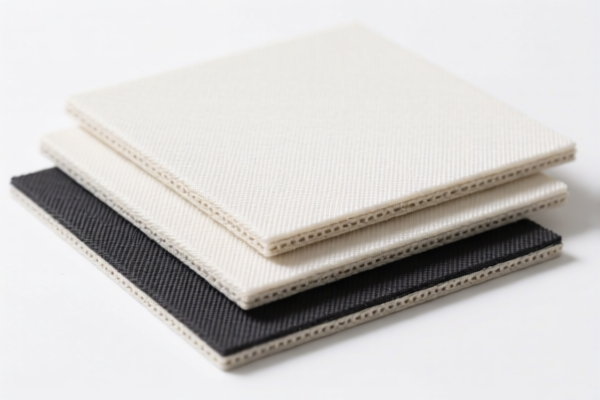
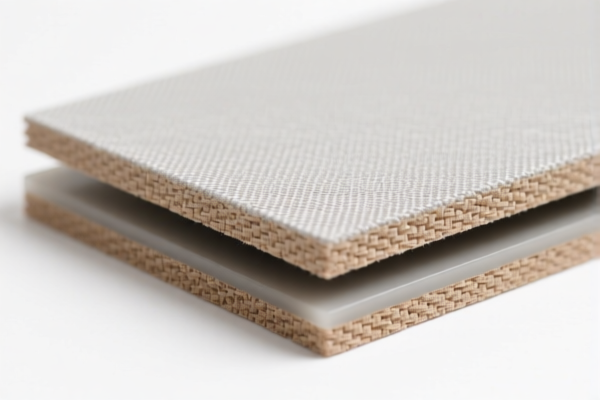
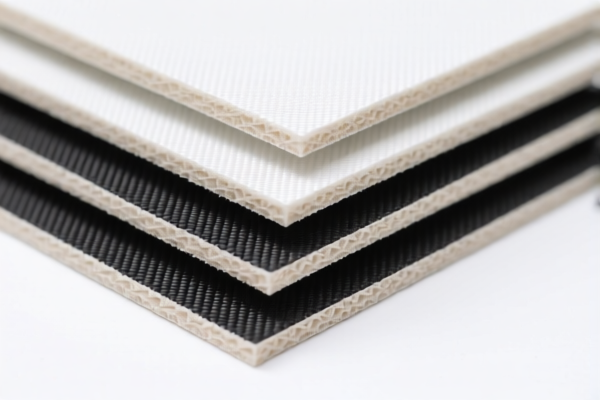

AI Analysis
🌿 Plant Fiber Polyurethane Composite Wear Resistant Plate
🌐 HS Code Reference & Customs Clearance Guide | 2026 Latest Tariff Analysis | Professional-Level Strategy for Polyurethane-Textile Composites
📌 I. Product Definition & Classification: What Exactly is This "Plate"?
Plant Fiber Polyurethane Composite Wear Resistant Plate is a high-performance industrial material combining natural plant fibers (such as hemp, jute, or flax) with polyurethane (PU) resin. It is engineered for extreme abrasion resistance, light weight, and corrosion resistance. It is widely used in mining chutes, sand hopper linings, coal handling systems, and heavy-duty conveyor belts.
In international trade, this product is not classified as a simple "wood board" or "pure plastic plate." It is a composite material where the polymer matrix (Polyurethane) binds with textile/non-woven substrates (Plant Fibers/Textiles). The classification hinges on whether the PU acts as a coating, a foam structure, or a solid laminated board, and whether the textile component provides the structural integrity.
⚠️ Key Classification Distinction:
- If it is a solid, dense board where PU is the main binder with textile reinforcement → Likely Chapter 39 (Plastics) or Chapter 59 (Textile Impregnated Coated).
- If it is a flexible sheet/curtain used for lining → Likely Chapter 59.
- If it is a foam structure for cushioning/abrasion → Likely Chapter 39 (Foamed).
- Crucial Note: Despite the "Plant Fiber" name, if the polyurethane content dominates the function (wear resistance, waterproofing), it is often classified under Plastics (Chapter 39) or Textile Articles (Chapter 59) rather than Chapter 44 (Wood/Plant Fibers).
📦 II. HS Code Classification Details (2026 Latest Tariff Authority Match)
Based on the specific product description provided in your data, here are the exact matches for "Plant Fiber Polyurethane Composite Wear Resistant Plate":
| HS Code | Product Description (Chinese Summary) | Application Scenario | Key Differentiator |
|---|---|---|---|
3921.13.19.50 |
Polyurethane material, board-shaped article combined with textile materials | High-wear industrial lining, heavy-duty flooring | Solid Board + Textile Bond |
5911.10.20.00 |
Textile fabric coated with polyurethane, for wear-resistant technical use | Flexible liners, conveyor belt covers, abrasion-resistant curtains | Textile Base + PU Coating |
3921.13.50.00 |
Board-shaped article of polyurethane foam or other categories | Cushioned wear plates, impact-absorbing liners | Foam Structure / Non-Foam Board |
5911.90.00.80 |
Technical textile products, polyurethane material, other categories | General technical textiles with PU backing | Other Technical Textiles |
3926.90.59.00 |
Plastic articles containing textile fibers, board structure, for wear resistance | Miscellaneous plastic composites with textile reinforcement | Mixed Plastic/Textile Composite |
🔍 Critical Analysis:
-3921.13.19.50is the most likely fit for a rigid plate where PU and textile are fused into a solid board.
-5911.10.20.00is the fit if the product is more like a flexible textile sheet coated with PU for technical wear protection.
-3926.90.59.00is a catch-all for plastic articles containing textiles, often used when the specific PU board classification doesn't perfectly fit but textile inclusion is clear.
💰 III. 2026 Latest Tariff Rate Breakdown (Including Additional Taxes, Policy Surcharges)
✅ Applicable Country: United States (US)
✅ Country of Origin: China (CN)
✅ Effective Date: From November 10, 2025 (including subsequent imports)
🎯 1. 3921.13.19.50 – Polyurethane Board, Textile Composite
| Item | Detail |
|---|---|
| Base Duty Rate | 5.3% (Ad Valorem) |
| Section 301 Surcharge | +25.0% (USITC Footnote 9903.88.01) |
| Section 122 Surcharge | +10.0% (Specific to certain PU/Textile composites) |
| Total Duty Rate | 40.3% |
| Tax Calculation | CIF Value × 40.3% |
| De Minimis Exemption | ❌ Not Eligible (deny_de_minimis) |
| Legal Basis Path | USITC:3921.13.19.50 → SECTION_301:25% → SECTION_122:10% |
📌 Explanation:
- This is a high-tariff item. The base rate is moderate (5.3%), but the 35% in additional duties makes it extremely expensive to import into the US. - Section 122 is a specific provision that may apply to certain polymer/textile composites, adding an extra 10%.
🎯 2. 5911.10.20.00 – PU-Coated Textile for Wear Resistance
| Item | Detail |
|---|---|
| Base Duty Rate | 3.8% (Ad Valorem) |
| Section 301 Surcharge | +25.0% |
| Section 122 Surcharge | +10.0% |
| Total Duty Rate | 38.8% |
| Tax Calculation | CIF Value × 38.8% |
| De Minimis Exemption | ❌ Not Eligible |
| Legal Basis Path | USITC:5911.10.20.00 → SECTION_301:25% → SECTION_122:10% |
📌 Note:
- Slightly lower base rate (3.8%) than the hard board (5.3%), but still subject to the same massive surcharges. - This code is often used if the product is flexible rather than rigid.
🎯 3. 3921.13.50.00 – PU Foam/Board Article
| Item | Detail |
|---|---|
| Base Duty Rate | 4.2% (Ad Valorem) |
| Section 301 Surcharge | +25.0% |
| Section 122 Surcharge | +10.0% |
| Total Duty Rate | 39.2% |
| Tax Calculation | CIF Value × 39.2% |
| De Minimis Exemption | ❌ Not Eligible |
📌 Explanation:
- If the plate has a foamed structure or is a different type of PU board, this code applies. - Tax burden is nearly identical to the other codes.
🎯 4. 5911.90.00.80 – Other Technical Textile, PU
| Item | Detail |
|---|---|
| Base Duty Rate | 3.8% (Ad Valorem) |
| Section 301 Surcharge | +25.0% |
| Section 122 Surcharge | +10.0% |
| Total Duty Rate | 38.8% |
| Tax Calculation | CIF Value × 38.8% |
🎯 5. 3926.90.59.00 – Plastic Article with Textile Fibers
| Item | Detail |
|---|---|
| Base Duty Rate | 2.4% (Ad Valorem) |
| Section 301 Surcharge | +25.0% |
| Section 122 Surcharge | +10.0% |
| Total Duty Rate | 37.4% |
| Tax Calculation | CIF Value × 37.4% |
📌 Note:
- This has the lowest base rate (2.4%), resulting in the lowest total duty (37.4%). - However, it is a "catch-all" code (90.59- Other). Customs may challenge this if the product clearly fits3921(Plastic plates/sheets). Only use if the product is not strictly a "plate/sheet" or if3921is deemed inapplicable due to specific composition rules.
🛠️ IV. Customs Clearance Practical Advice (Real-World Pitfall Guide)
✅ 1. Documentation Checklist (Essential)
| Document | Required? | Purpose |
|---|---|---|
| ✅ Product Specification Sheet | ✔️ | Must specify: % of Plant Fiber, % of Polyurethane, Density, Thickness, Hardness (Shore A/D). |
| ✅ Composition Breakdown | ✔️ | Critical for distinguishing between Chapter 39 (Plastic) and Chapter 59 (Textile). |
| ✅ Photographs (Product + Cross-section) | ✔️ | To prove it is a "plate" or "liner" and not a raw material. |
| ✅ Commercial Invoice | ✔️ | Must describe item as "Polyurethane-Plant Fiber Composite Wear Plate" – Do not just say "Plastic Board". |
| ✅ Packing List | ✔️ | Weight and dimensions. |
| ✅ Certificate of Origin (CO) | ✔️ | To confirm China origin (triggers surcharges). |
| ✅ Third-Party Test Report | ✔️ | Abrasion resistance test, material composition analysis. |
✅ 2. Declaration Strategy (Key Mantras)
🔥 “Don’t call it ‘Wood’ or ‘Plastic’ alone. Call it ‘Composite’. Clarify ‘Board’ vs ‘Sheet’.”
| Scenario | Correct Declaration | Wrong Practice |
|---|---|---|
| Rigid Wear Plate | 3921.13.19.50 – "PU Textile Composite Board" |
Call it "Wood Board" → High risk of rejection/misclassification. |
| Flexible Liner/Curtain | 5911.10.20.00 – "PU Coated Textile for Wear" |
Call it "Plastic Sheet" → May be redirected to 3921 with higher base tax. |
| Foam Insert | 3921.13.50.00 – "PU Foam Board" |
Call it "Rubber" → Wrong chapter entirely. |
| Unclear Composite | 3926.90.59.00 – "Plastic Article with Textile" |
Use if unsure, but risk of Customs audit is higher. |
✅ 3. Special Handling Tips
| Situation | Recommendation |
|---|---|
| Plant Fiber vs. Synthetic Fiber | Ensure the "Plant Fiber" aspect is documented. If it’s actually synthetic (polyester) disguised as plant fiber, it’s still PU/Textile, but composition matters for some preferential treatments (though none apply here due to US-China tariffs). |
| Section 122 Applicability | Verify if Section 122 applies. Some PU/textile composites are specifically targeted. If 5911 or 3921 codes are flagged for Section 122, the 10% is mandatory. |
| Hybrid Structures | If the product has a rigid core (wood/plastic) with a PU-textile wear layer, it may still be classified under Chapter 39 or 44 depending on the core. Pure plant fiber+PU stays in 39/59. |
| Pre-Ruling Request | Given the high tariffs (37-40%), apply for a US CBP Advance Ruling before shipping. It costs little but saves thousands in potential misclassification penalties. |
🌍 V. Global Market Comparison (2026 Latest)
| Country/Region | Recommended HS Code | Total Tariff (China Origin) | Certification | Notes |
|---|---|---|---|---|
| 🇺🇸 United States | 3921.13.19.50 / 5911.10.20.00 |
37.4% – 40.3% | None Specific | High Surcharge: Section 301 (25%) + Section 122 (10%). |
| 🇨🇳 China | 3921.13.19.50 / 5911.10.20.00 |
5.3% – 3.8% (Import) | None | Low base duty, no US surcharges. |
| 🇪🇺 European Union | 3921.13 / 5911.10 |
6.5% – 7.5% | REACH Compliance | No Section 301/122. Standard MFN rates apply. |
| 🇬🇧 United Kingdom | 3921.13 / 5911.10 |
6.5% – 7.5% | UKCA (if applicable) | Post-Brexit tariffs mirror EU MFN generally. |
| 🇦🇺 Australia | 3921.13 / 5911.10 |
5.0% | None | Standard MFN rates. |
| 🇯🇵 Japan | 3921.13 / 5911.10 |
6.0% – 8.0% | JIS | MFN rates apply. |
📌 Conclusion:
- The US is the only major market with punitive surcharges. The effective tariff is nearly 4x the base rate. - EU, UK, Australia, Japan are much more competitive with standard 6-8% duties. - Consider supply chain diversification if targeting the US market heavily.
📌 VI. Common Mistakes & Pitfalls (Blood-Tears Lesson)
❌ Mistake 1: Classifying as 4418 (Wood/Plywood) because of "Plant Fiber"
👉 Consequence: Customs will reclassify to Chapter 39/59, leading to retroactive duty assessment + penalties. Plant fibers bonded with resin are not wood products.
❌ Mistake 2: Ignoring Section 122 in the declaration
👉 Consequence: Underpayment of 10%. Customs will audit, demand back payment, and possibly seize goods.
❌ Mistake 3: Claiming De Minimis (Section 321) for shipments under $800
👉 Consequence: Denied. These HS codes are explicitly listed as deny_de_minimis for Chinese origin. All shipments, regardless of value, are subject to full duty.
❌ Mistake 4: Vague Description: "Plastic Plate"
👉 Consequence: Customs cannot determine if Section 301 or 122 applies. Delay in clearance. Use precise terms: "Polyurethane-Plant Fiber Composite Wear Plate."
✅ Correct Approach:
"Polyurethane Composite Wear Resistant Plate, Made of Plant Fiber Reinforced Polyurethane, For Mining Chute Lining, Model XYZ, Not Wood, Not Rubber."
🎯 VII. Conclusion: Professional Declaration, Save Costs, Ensure Compliance!
🎯 Remember the Mantra:
🔹 “Plant Fiber + PU = Chapter 39/59, Not Wood!
🔹 “US Import = 37-40% Total Duty, No De Minimis!
🔹 “Section 122 is Real, Plan for the 10%!
🔹 “Get an Advance Ruling, Avoid the Audit Pain!”**
📌 Pro Tip:
If your product is shipped from Vietnam, Malaysia, or Thailand (with substantial transformation), you may be eligible to bypass the US Section 301/122 surcharges. However, transshipment is risky. Legitimate Country of Origin rules must be met. Consult a trade attorney for supply chain structuring.
📣 Immediate Action:
📞 Contact a licensed Customs Broker + Provide Material Composition Data + Request Advance Ruling from US CBP
🚀 Clear your Polyurethane Composite Plates smoothly, control your 40% tax burden, and maximize your profit margin!
✨ Professional Customs Clearance Starts with Precise Classification!
💼 Every percentage point of duty is money in your pocket!
Customer Reviews
About HS Code Classification
The Harmonized System (HS) is an internationally standardized nomenclature developed by the World Customs Organization (WCO) to classify traded products. Over 200 countries use the HS system as the basis for customs tariffs, trade statistics, and import/export regulations.
Each HS code follows a hierarchical structure:
- Chapter (2 digits) — Broad category of goods (e.g., Chapter 84: Machinery and Mechanical Appliances)
- Heading (4 digits) — More specific grouping within the chapter
- Subheading (6 digits) — Internationally standardized breakdown, used by all WCO member countries
- National subdivisions (8-10 digits) — Country-specific extensions for further classification, such as US HTSUS 10-digit codes
Correct HS code classification is essential for smooth customs clearance, accurate duty payment, and compliance with trade regulations. Misclassification can lead to customs delays, overpayment of duties, or penalties.
When importing from CN to US, the applicable tariff rates may include:
- Most-Favored-Nation (MFN) rate — The standard duty rate applied to WTO members
- General rate — Applied to countries without trade agreements
- Trade remedy duties — Additional tariffs such as Section 301 (anti-dumping), Section 232 (national security), or countervailing duties
The information provided on this page is for reference purposes only. For official classification, please consult with your local customs authority or a licensed customs broker.