Plant Fiber Upper Textile Sole Shoes
CN → US| HS Code | Tariff Rate | Origin | Destination | Doc |
|---|---|---|---|---|
| 6405203080 | 17.5% | CN | US | Official Doc |
| 6405203060 | 17.5% | CN | US | Official Doc |
| 6404193660 | 17.5% | CN | US | Official Doc |
Product Images
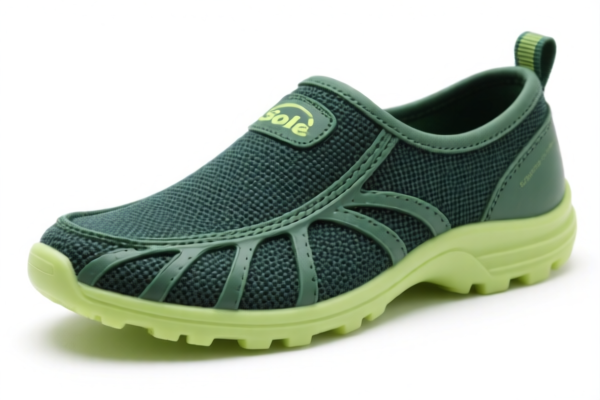
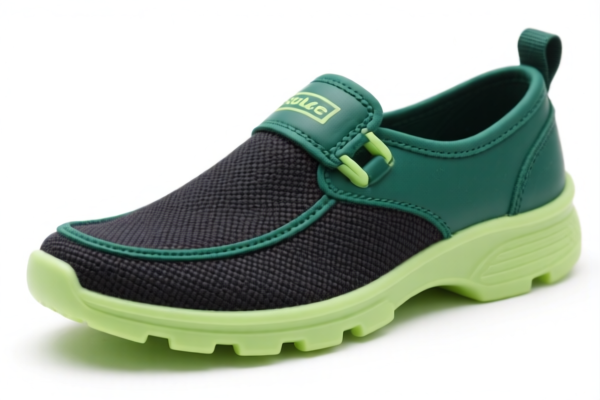
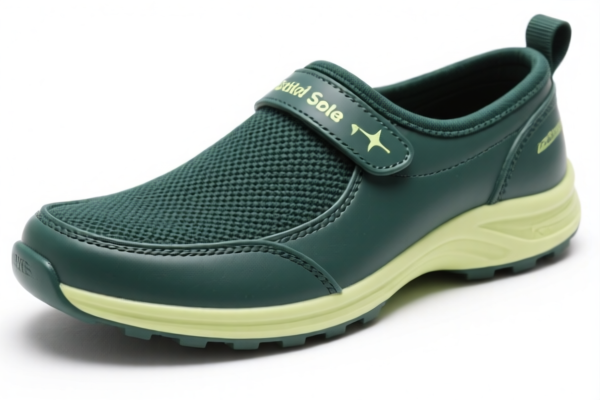
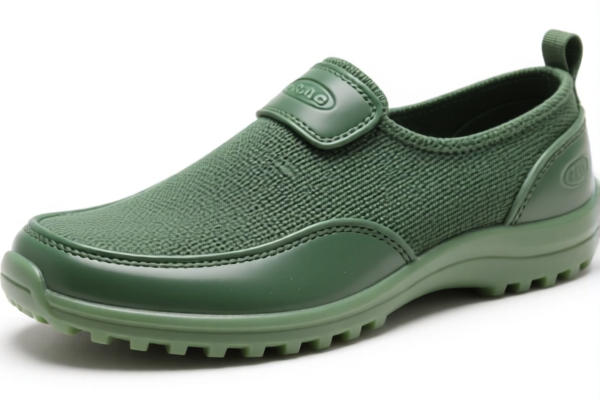
AI Analysis
👟 Plant Fiber Upper Textile Sole Shoes (Vegetable Fiber Footwear)
🌐 HS Code Reference & Customs Clearance Guide | 2026 Latest Tariff Analysis | Professional Entry Strategy
📌 I. Product Definition & Classification: Do You Really Understand "Vegetable Fiber Footwear"?
Plant fiber upper textile sole shoes are a specific category of footwear characterized by the use of vegetable-based fibers (such as straw, raffia, sisal, or coir) for the upper part and textile or fabric construction for the sole structure. In international trade, these are distinct from leather or rubber-soled shoes. They fall primarily under Chapter 64 (Footwear, Stockings and Other Articles), specifically focusing on the material composition of the upper and the outsole.
Key Distinction Points: * Upper Material: Must be primarily composed of plant fibers (vegetable fibers). If the upper is synthetic or leather, it belongs to a different subheading. * Sole Structure: The description "Textile Sole" implies the outsole is not rubber, plastic, or leather, but rather a textile-based construction, often glued or stitched.
⚠️ Critical Classification Logic:
- If the upper is plant fiber and the sole is textile → Look at 6405.20 or 6404.19 depending on specific textile/rubber mix.
- If the upper is other textile (non-plant fiber) → Look at 6404.19.
- Note: The provided data suggests multiple potential codes depending on the precise mix of "vegetable fiber" vs. "textile" and the exact sole material classification.
📦 II. HS Code Classification Details (2026 Latest Tariff Authority Comparison)
Based on the provided data <DATA>, here are the three potential HS Codes for "Plant Fiber Upper Textile Sole Shoes":
| HS Code | Product Description (Summary) | Material Composition | Key Classification Feature |
|---|---|---|---|
6405.20.30.80 |
Vegetable fiber upper, textile sole, classified under "Other Categories" | Plant fiber upper + Textile sole | General plant fiber footwear not specifically detailed elsewhere |
6405.20.30.60 |
Vegetable fiber upper, textile sole, conforms to code requirements | Plant fiber upper + Textile sole | Specific plant fiber material construction compliance |
6404.19.36.60 |
Vegetable fiber upper, textile sole, upper made of textile materials, outsole rubber/plastic | Textile upper (incl. plant fiber) + Rubber/Plastic outsole | Upper is textile; outsole is rubber/plastic (Note: Discrepancy in "Textile Sole" description vs. Rubber/Plastic outsole in summary) |
🔍 Important Clarification:
- Codes 6405.20.30.80 and 6405.20.30.60 are closely related, both addressing plant fiber uppers. The difference lies in the specific sub-category or detailed description of the textile sole construction.
- Code 6404.19.36.60 appears to classify shoes where the upper is textile (including plant fibers) but the outsole is rubber or plastic. This is a critical distinction. If the sole is truly "textile" (fabric-based), this code may be incorrect. If the sole is rubber/plastic with a plant fiber upper, this code applies.
- All three codes in the provided data carry the same tax rate of 17.5%.
💰 III. 2026 Latest Tariff Rate Details (Detailed Breakdown)
✅ Applicable Market: Likely US (Implied by "Section 301" and "122 Clause" reference in data)
✅ Origin: China (CN) - Assumed based on "122 Clause" and typical trade context
✅ Total Tax Rate: 17.5% (Ad Valorem)
🎯 1. Codes 6405.20.30.80 & 6405.20.30.60 – Vegetable Fiber Footwear
| Item | Content |
|---|---|
| Base Tariff | 7.5% (General/Standard) |
| Section 301 Tariff | 0.0% (Not listed as additional in tax_detail, but see below) |
| "122 Clause" Tariff | 10.0% (Specific additional duty) |
| Total Effective Rate | 17.5% (7.5% + 10.0%) |
| Tax Calculation | CIF Value × 17.5% |
| De Minimis Exemption | ❌ Likely Not Applicable (Footwear is often excluded from 800 threshold for China-origin goods with Section 301/IEEPA tariffs) |
📌 Explanation:
- The 7.5% is the standard Most Favored Nation (MFN) or base tariff for footwear of this type.
- The 10% is attributed to the "122 Clause" (likely referring to a specific Section 301 list or trade remedy measure).
- Note: The tax detail says "Section 301 Tariff: 0.0%", which is unusual. However, the "122 Clause" of 10% effectively acts as an additional duty. Total remains 17.5%.
- Do not assume 0% total tariff! The 10% "122 Clause" is a significant cost driver.
🎯 2. Code 6404.19.36.60 – Textile Upper, Rubber/Plastic Sole Footwear
| Item | Content |
|---|---|
| Base Tariff | 7.5% |
| Section 301 Tariff | 0.0% |
| "122 Clause" Tariff | 10.0% |
| Total Effective Rate | 17.5% |
| Tax Calculation | CIF Value × 17.5% |
| De Minimis Exemption | ❌ Likely Not Applicable |
📌 Explanation:
- Same tax structure as above. The classification difference is purely based on the sole material (Textile vs. Rubber/Plastic) and upper definition.
- Risk: Misclassifying a rubber-soled shoe as a textile-soled one (or vice versa) can lead to customs audits and penalties.
🛠️ IV. Customs Clearance Practical Advice (Avoiding Pitfalls)
✅ 1. Documentation Checklist (Non-Negotiable)
| Document | Required? | Purpose |
|---|---|---|
| ✅ Commercial Invoice | ✔️ | Must clearly state "Plant Fiber Upper" and "Textile Sole" (or Rubber/Plastic Sole). |
| ✅ Product Specification Sheet | ✔️ | Detailed breakdown of upper material (e.g., "60% Raffia, 40% Cotton") and sole material. |
| ✅ Material Composition Certificate | ✔️ | Third-party lab report confirming "Vegetable Fiber" content (not synthetic). |
| ✅ Photos (Upper & Sole) | ✔️ | Clear images showing the texture and construction of the upper and sole. |
| ✅ Packing List | ✔️ | Item count, weight, dimensions. |
| ✅ Origin Certificate | ✔️ | To prove country of origin (China). |
✅ 2. Declaration Tips (Key Mnemonics)
🔥 "Fiber Truth, Sole Proof, Code Choice, Tax Avoid!"
| Scenario | Correct Declaration | Risk if Wrong |
|---|---|---|
| Upper is Plant Fiber, Sole is Textile | 6405.20.30.80 or 6405.20.30.60 |
Misclassification → Audit/Back Taxes |
| Upper is Plant Fiber, Sole is Rubber | 6404.19.36.60 |
Wrong tax rate application |
| Upper is Synthetic, Sole is Textile | Different Code (e.g., 6404.11) | High Penalty for false material declaration |
| Mixed Materials | Provide detailed % breakdown | Avoids "Principal Character" disputes |
📌 Critical Warning:
- "Plant Fiber" vs. "Textile": Do not simply declare as "Textile Shoes." Customs officers may question the "Plant Fiber" claim. Provide lab tests.
- "Sole Material": Is it really textile? If it has a rubber coating or layer, it may fall under 6404.19. Be precise.
- "122 Clause": Ensure you account for the 10% additional duty in your cost calculation. It is not optional.
✅ 3. Special Considerations
| Issue | Handling Advice |
|---|---|
| Mixed Origins | If parts are sourced from different countries, determine the country of origin based on substantial transformation. |
| Samples | Samples are still subject to the same HS code and tax rates. Declare accurately. |
| Returns/Repairs | Keep records to claim duty refunds if applicable. |
🌍 V. Global Market Comparison (2026)
| Country/Region | Recommended HS Code | Base Tariff | Additional Duties (China) | Total Estimated Rate | Remarks |
|---|---|---|---|---|---|
| 🇺🇸 USA | 6405.20.30.80 / 6404.19.36.60 |
7.5% | 10% ("122 Clause") | 17.5% | High scrutiny on material claims |
| 🇨🇳 China | 6405.20 / 6404.19 |
10-20% | None | 10-20% | Import duty applies |
| 🇪🇺 EU | 6405.20 / 6404.19 |
8-12% | Carbon Border Tax (Future) | ~10-15% | Eco-labeling may be required |
| 🇬🇧 UK | 6405.20 / 6404.19 |
10-12% | None | ~10-12% | Post-Brexit rules apply |
📌 Conclusion:
- USA is the most complex market due to the "122 Clause" 10% additional duty.
- Material declaration is critical. Misdeclaring plant fiber as synthetic or vice versa can lead to fines.
- Cost Planning: Factor in 17.5% total duty for US imports from China.
📌 VI. Common Errors & Pitfalls (Lessons Learned)
❌ Error 1: Declaring "Plant Fiber" without proof
👉 Consequence: Customs demands lab test → Delay of 2-4 weeks + Demurrage costs.
❌ Error 2: Confusing "Textile Sole" with "Rubber Sole"
👉 Consequence: Incorrect HS code → 17.5% vs. potentially different rate + Penalty for misdeclaration.
❌ Error 3: Ignoring the "122 Clause" 10% duty
👉 Consequence: Underestimated landed cost → Profit margin erosion.
❌ Error 4: Using generic descriptions like "Shoes"
👉 Consequence: Customs assignment to highest duty rate or request for additional info.
✅ Correct Practice:
"Footwear, Plant Fiber Upper (Raffia), Textile Sole, Unlined, Model XYZ, 60% Plant Fiber, 40% Cotton, Country of Origin: China"
🎯 VII. Conclusion: Precision in Classification Saves Money!
🎯 Remember the Key Points:
🔹 "Plant Fiber is Special" – Not all uppers are equal. Prove it.
🔹 "Sole Material Matters" – Textile vs. Rubber changes the code.
🔹 "122 Clause is Real" – 10% extra duty is mandatory for US imports from China.
🔹 "17.5% is the Floor" – Base 7.5% + 10% additional = 17.5%.
📌 Pro Tip:
If your shoes are not made in China (e.g., Vietnam, India, Indonesia), the "122 Clause" may not apply, potentially reducing the total tax to 7.5% (or lower with FTAs).
Action: Verify the Country of Origin. If non-China, apply for FTO (Free Trade Origin) certification to reduce duties.
📣 Immediate Action:
📞 Engage a Customs Broker + Provide Material Test Reports + Apply for HS Code Advance Ruling (if unsure).
🚀 Ensure Smooth Customs Clearance, Minimize Duties, Maximize Profit!
✨ Professional Customs Clearance Starts with Accurate Classification!
💼 Every Dollar of Duty Saved is Pure Profit!
Customer Reviews
About HS Code Classification
The Harmonized System (HS) is an internationally standardized nomenclature developed by the World Customs Organization (WCO) to classify traded products. Over 200 countries use the HS system as the basis for customs tariffs, trade statistics, and import/export regulations.
Each HS code follows a hierarchical structure:
- Chapter (2 digits) — Broad category of goods (e.g., Chapter 84: Machinery and Mechanical Appliances)
- Heading (4 digits) — More specific grouping within the chapter
- Subheading (6 digits) — Internationally standardized breakdown, used by all WCO member countries
- National subdivisions (8-10 digits) — Country-specific extensions for further classification, such as US HTSUS 10-digit codes
Correct HS code classification is essential for smooth customs clearance, accurate duty payment, and compliance with trade regulations. Misclassification can lead to customs delays, overpayment of duties, or penalties.
When importing from CN to US, the applicable tariff rates may include:
- Most-Favored-Nation (MFN) rate — The standard duty rate applied to WTO members
- General rate — Applied to countries without trade agreements
- Trade remedy duties — Additional tariffs such as Section 301 (anti-dumping), Section 232 (national security), or countervailing duties
The information provided on this page is for reference purposes only. For official classification, please consult with your local customs authority or a licensed customs broker.