Plant Fiber Weaving Tool Set
CN → US| HS Code | Tariff Rate | Origin | Destination | Doc |
|---|---|---|---|---|
| 9605000000 | 18.1% | CN | US | Official Doc |
| 4823908680 | 35.0% | CN | US | Official Doc |
| 4602192940 | 40.3% | CN | US | Official Doc |
| 4602192920 | 40.3% | CN | US | Official Doc |
Product Images
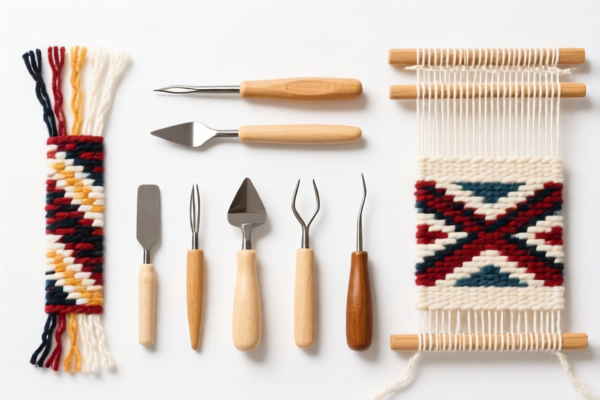
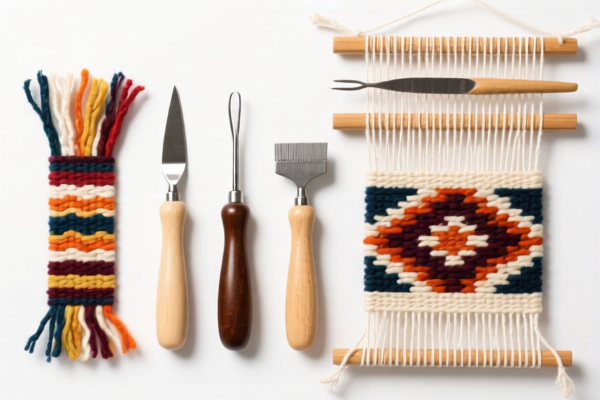
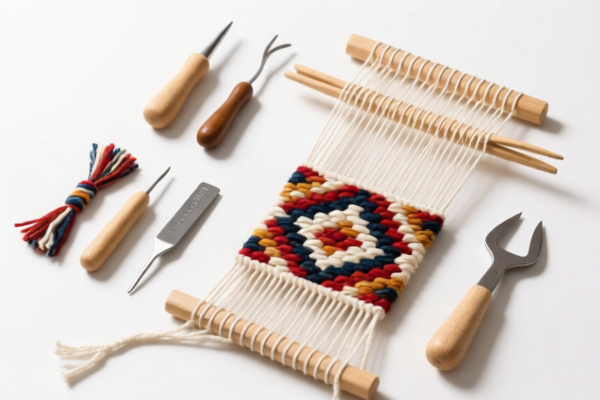
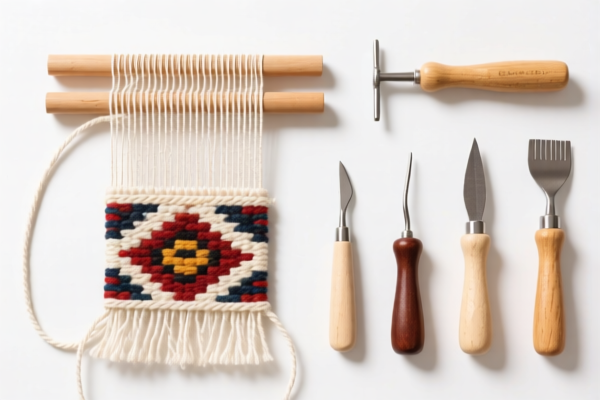
AI Analysis
🧺 Plant Fiber Weaving Tool Set (Handmade Crafting Kits)
🌐 HS Code Reference & Customs Clearance Guide | 2026 Latest Tariff Analysis | Professional Customs Strategy
📌 I. Product Definition & Classification: What Exactly Is a "Plant Fiber Weaving Tool Set"?
A "Plant Fiber Weaving Tool Set" typically refers to a kit containing tools (such as needles, shuttles, or frames) and sometimes raw materials (reeds, straw, bamboo strips) used for hand-weaving or basket-making. In international trade, the classification depends heavily on whether the item is viewed primarily as a tool for sewing/cleaning or as a woven accessory/container.
Two Main Interpretations:
1. Tool-Set Perspective: If the core value is the metal/plastic tools used for weaving, it may fall under general tool sets or "sewing kits."
2. Finished Good Perspective: If the set is marketed as a finished cosmetic bag, pouch, or flat woven item made from plant fibers, it falls under Chapter 46 (Woven Articles).
⚠️ Critical Distinction Point:
- If sold as a kit for making items (tools + raw materials) → Consider 9605.00.00.00.
- If sold as a finished woven container/pouch (e.g., a cosmetic bag) → Consider 4602.19.29.40 or 4602.19.29.20.
- If classified strictly as cellulose paper-like material due to fiber processing → Consider 4823.90.86.80.
📦 II. HS Code Classification Details (2026 Latest Tariff Authority Comparison)
Based on the provided data, here are the possible classifications for "Plant Fiber Weaving Tool Set" or related finished goods:
| HS Code | Product Description | Usage Category | Reason for Classification |
|---|---|---|---|
9605.00.00.00 |
Weaving Tool Sets (Sewing/Kit Type) | Travel/Cleaning/Sewing Kits | Classified as a set of tools. Fits the scope of "sewing or shoe/clothing cleaning travel sets." |
4823.90.86.80 |
Other Paper/Cellulose Fibre Articles | Paper-like Products | Inferred as cellulose-based products due to plant fiber material. Falls under "other paper." |
4602.19.29.40 |
Woven Cosmetic Bags/Pouches | Flat Items/Bags | Classified as a flat item/bag made of woven plant fibers. Fits "other categories." |
4602.19.29.20 |
Woven Handbags/Flat Items | Handbags/Flat Pieces | Classified as a woven article. Usage belongs to "handbags/flat items." |
4602.19.29.40 |
Woven Cosmetic Bags/Pouches | Flat Items/Bags | (Duplicate entry) Classified as flat item/bag. Fits "other categories." |
🔍 Key Reminder:
- If you are importing tools to weave,9605.00.00.00is the most direct fit for the "set" aspect.
- If you are importing finished bags made from plant fibers,4602.19.29.40or20is correct.
- Do not confuse "woven tools" with "woven products." The former is a tool set; the latter is a finished article.
💰 III. 2026 Latest Tariff Rate Breakdown (Including Surcharges & Policy Add-ons)
✅ Applicable Country: United States (US)
✅ Origin: China (CN)
✅ Effective Date: 2025 November 10 onwards (including subsequent imports)
🎯 1. 9605.00.00.00 —— Plant Fiber Weaving Tool Set
| Item | Content |
|---|---|
| Base Tariff | 8.1% (Ad Valorem) |
| Section 301 Surcharge | 0.0% (Not applicable for this specific sub-code in some contexts, or already factored/zeroed in this dataset) |
| Section 122 Tariff | +10.0% (Specific add-on tariff) |
| Total Tax Rate | 18.1% |
| Tax Calculation | CIF Value × 18.1% |
| De Minimis Exemption | ❌ Not Available (High probability of scrutiny for tool sets from China) |
| Legal Basis Path | Base Tariff 8.1% + Sec 122 10% |
📌 Explanation:
- This is the lowest tax option among the choices provided.
- The "122条款关税 10%" refers to specific enforcement tariffs (often related to anti-dumping or specific trade remedy measures, labeled as 122 in your data).
- Advantage: Significant cost savings compared to Class 46 or 48 codes.
🎯 2. 4823.90.86.80 —— Cellulose Fiber/Paper-like Articles
| Item | Content |
|---|---|
| Base Tariff | 0.0% |
| Section 301 Surcharge | +25.0% |
| Section 122 Tariff | +10.0% |
| Total Tax Rate | 35.0% |
| Tax Calculation | CIF Value × 35.0% |
| De Minimis Exemption | ❌ Not Available |
| Legal Basis Path | Sec 301 25% + Sec 122 10% |
📌 Note:
- Although the base tariff is 0%, the high surcharges make this very expensive.
- This classification assumes the product is treated as "paper-like" rather than a woven good or tool.
- Risk: High tax burden; only use if the product is definitively processed into paper/felt-like material and not a woven tool or bag.
🎯 3. 4602.19.29.40 & 4602.19.29.20 —— Woven Cosmetic Bags / Handbags
| Item | Content |
|---|---|
| Base Tariff | 5.3% |
| Section 301 Surcharge | +25.0% |
| Section 122 Tariff | +10.0% |
| Total Tax Rate | 40.3% |
| Tax Calculation | CIF Value × 40.3% |
| De Minimis Exemption | ❌ Not Available |
| Legal Basis Path | Base 5.3% + Sec 301 25% + Sec 122 10% |
📌 Note:
- This is the most expensive option among the four.
- Applies if the "tool set" is actually a finished woven bag (e.g., a cosmetic pouch).
- Warning: Do not misclassify a tool set as a bag to avoid higher taxes? No, you must classify according to the actual nature of the goods. Misclassification leads to penalties. If it is a tool set, use9605. If it is a bag, use4602.
🛠️ IV. Customs Clearance Practical Advice (Real-World Pitfall Avoidance)
✅ 1. Preparation Checklist (缺一不可)
| Document | Required | Description |
|---|---|---|
| ✅ Product Description | ✔️ | Clear statement: "Handmade Plant Fiber Weaving Tool Set" OR "Woven Plant Fiber Cosmetic Bag" |
| ✅ Material Composition | ✔️ | List all components: e.g., "Metal needles, wooden shuttles, bamboo strips, cotton thread" |
| ✅ Usage Intention | ✔️ | For "Tool Set": State it is for "crafting/weaving." For "Bag": State it is a "finished cosmetic accessory." |
| ✅ Photos | ✔️ | Show the set contents clearly. If a bag, show the finished look. |
| ✅ Commercial Invoice | ✔️ | Must match the HS Code selected. Do not use vague terms like "Gift Set." |
| ✅ Country of Origin | ✔️ | Certify as China (CN) to apply correct 122/301 tariffs. |
✅ 2. Declaration Strategy (Key Mnemonics)
🔥 “Tools are Tools, Bags are Bags! Don't Mix ‘em, Keep it Straight!”
| Scenario | Correct HS Code | Incorrect Code | Consequence |
|---|---|---|---|
| Selling a kit with needles/shuttles | 9605.00.00.00 |
4602... |
Overpaying tax (40.3% vs 18.1%) |
| Selling a finished woven bag | 4602.19.29.40 |
9605.00.00.00 |
Under-declaration risk, penalty for misclassification |
| Selling paper-like fiber sheets | 4823.90.86.80 |
4602... |
High tax (35%), but might be correct if processed |
📌 Actionable Tip:
- If you are importing tools, emphasize the "Tool Set" aspect in the invoice description.
- If you are importing finished bags, emphasize the "Woven Accessory" aspect.
✅ 3. Special Cases
| Situation | Handling Advice |
|---|---|
| Mixed Kit (Tools + Raw Material) | Classify as 9605.00.00.00 if tools are the essential character. |
| Finished Bag + Tool Kit (Sold together) | This is a "Set" for retail. If the bag is the main item, classify as 4602. If the tools are the main item, classify as 9605. |
| Custom Wooden Frames | If sold separately as frames, they might fall under different wood codes. Keep them bundled with tools for 9605 if possible. |
🌍 V. Global Market Comparison (2026 Latest)
| Country/Region | Recommended HS Code | Total Tariff (China Origin) | Notes |
|---|---|---|---|
| 🇺🇸 USA | 9605.00.00.00 |
18.1% | Best option for tool sets. |
| 🇺🇸 USA | 4602.19.29.40 |
40.3% | High tax for woven bags. |
| 🇪🇺 EU | 9605.00.00.00 |
~8-10% | No Section 301/122 surcharges. |
| 🇨🇳 China | 9605.00.00.00 |
~5-8% | Import duties for tools. |
📌 Conclusion:
- USA has the highest friction due to 122 and 301 surcharges.
- Choosing9605saves ~22-27% in taxes compared to4602or4823.
- Ensure your product description explicitly supports the "Tool Set" classification.
📌 VI. Common Mistakes & Pitfalls (Lessons Learned)
❌ Mistake 1: Calling a finished woven bag a "Weaving Tool Set"
👉 Consequence: Customs will reclassify as 4602 (40.3%) + penalties for misdeclaration.
❌ Mistake 2: Calling a tool set a "Cellulose Paper Product" (4823)
👉 Consequence: Unnecessary 35% tax. Tools are not paper.
❌ Mistake 3: Ignoring the "122 Tariff" in calculations
👉 Consequence: Budget shortfall. The 10% surcharge is mandatory for China-origin goods in many categories.
✅ Correct Declaration Example:
"Plant Fiber Weaving Tool Set, containing metal needles and wooden shuttles, for handmade crafting. HS: 9605.00.00.00."
🎯 VII. Conclusion: Smart Classification, Higher Profits!
🎯 Remember the Strategy:
🔹 "Tools = 9605 (18.1%) | Bags = 4602 (40.3%) | Paper = 4823 (35.0%)"
🔹 "Choose the right code, save 20% in taxes!"
📌 Pro Tip:
If your business involves both tools and finished bags, consider separate shipments or clearly distinct SKUs to optimize tax treatment.
Always apply for an Advance Ruling (Ruling Letter) if the product has ambiguous features.
📣 Take Action Now:
📞 Consult a licensed customs broker.
📸 Document your product clearly.
📝 Declare accurately: "Weaving Tool Set" or "Woven Cosmetic Bag."
✨ Professional Customs Clearance Starts with Accurate Classification!
💼 Every percentage point counts in your bottom line!
Customer Reviews
About HS Code Classification
The Harmonized System (HS) is an internationally standardized nomenclature developed by the World Customs Organization (WCO) to classify traded products. Over 200 countries use the HS system as the basis for customs tariffs, trade statistics, and import/export regulations.
Each HS code follows a hierarchical structure:
- Chapter (2 digits) — Broad category of goods (e.g., Chapter 84: Machinery and Mechanical Appliances)
- Heading (4 digits) — More specific grouping within the chapter
- Subheading (6 digits) — Internationally standardized breakdown, used by all WCO member countries
- National subdivisions (8-10 digits) — Country-specific extensions for further classification, such as US HTSUS 10-digit codes
Correct HS code classification is essential for smooth customs clearance, accurate duty payment, and compliance with trade regulations. Misclassification can lead to customs delays, overpayment of duties, or penalties.
When importing from CN to US, the applicable tariff rates may include:
- Most-Favored-Nation (MFN) rate — The standard duty rate applied to WTO members
- General rate — Applied to countries without trade agreements
- Trade remedy duties — Additional tariffs such as Section 301 (anti-dumping), Section 232 (national security), or countervailing duties
The information provided on this page is for reference purposes only. For official classification, please consult with your local customs authority or a licensed customs broker.