Plant Fiber Woven Carpet (Bathroom)
CN → US| HS Code | Tariff Rate | Origin | Destination | Doc |
|---|---|---|---|---|
| 570200 | 0.0% | CN | US | Official Doc |
| 570300 | 0.0% | CN | US | Official Doc |
Product Images
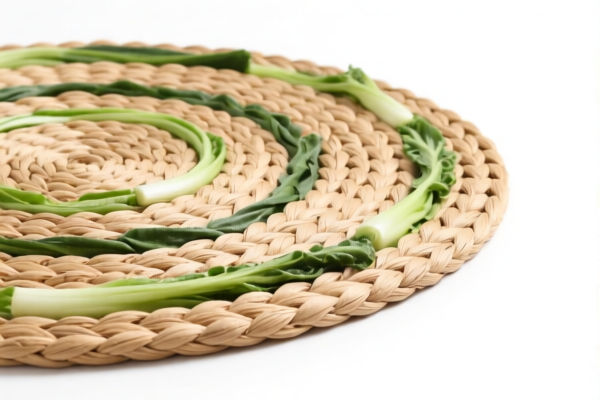
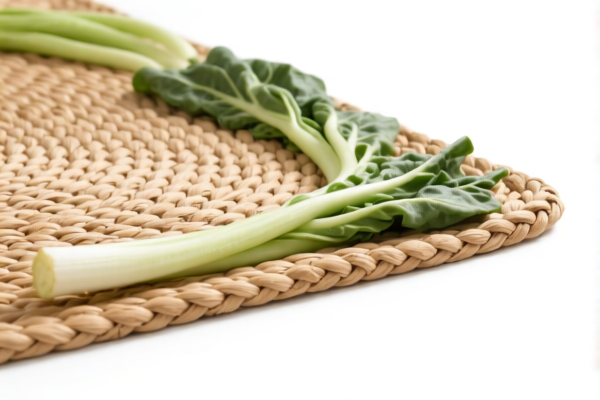
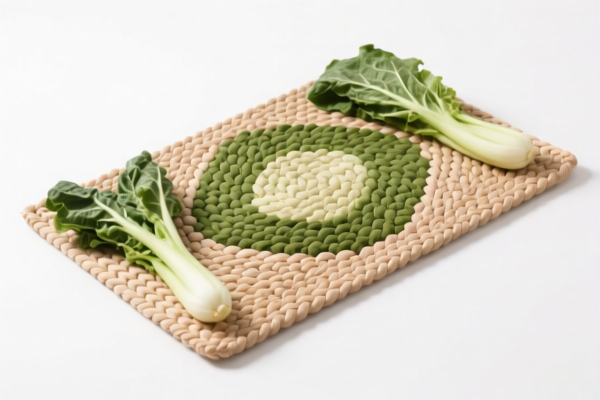
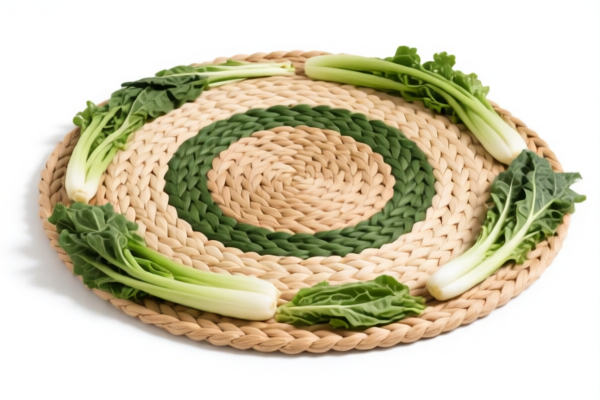
AI Analysis
🛁 Plant Fiber Woven Carpets for Wet Areas (Bathrooms)
🌐 HS Code Reference & Customs Clearance Guide | 2026 Latest Tariff Analysis | Professional Level Strategy
📌 I. Product Definition and Classification: Do You Really Understand "Woven Plant Fiber Carpets"?
Plant fiber woven carpets are natural floor coverings made from materials such as straw, reed, sisal, jute, or bamboo. When specifically intended for use in bathrooms or similar wet areas, they must possess moisture resistance and durability features. In international trade, these products are distinguished by their manufacturing method (Woven vs. Tufted) and material composition (Plant Fibers).
Woven Carpets (5702.00): Made by interlacing warp and weft threads on a loom. This includes mats and runners made of straw, reed, or similar plant materials. Tufted/Needle-Punched Carpets (5703.00): Made by inserting yarns into a backing fabric. Note: While your input specifies "Woven," the tax data provided includes 5703.00, implying a potential need to distinguish between traditional weaving and other construction methods if the product description is ambiguous.
⚠️ Key Distinction Point:
- If the carpet is strictly woven (interlaced threads) and made of plant fibers (straw, reed, etc.) → 5702.00
- If the carpet is not woven (e.g., tufted, needle-punched) but made of plant fibers, suitable for bathrooms → 5703.00
- Critical Factor: The term "Woven" in the prompt points primarily to 5702, but the presence of 5703 in the data suggests a need to verify if the product might be misclassified as "woven" when it is actually "tufted" or "needle-punched."
📦 II. HS Code Classification Details (2026 Latest Tariff Authority对照)
| HS Code | Product Description | Application Scenario | Manufacturing Method | Moisture Resistance |
|---|---|---|---|---|
5702.00 |
Woven carpets and other floor coverings, made of plant fibers (straw, reed, etc.), for bathroom/wet areas | Bathroom mats, entryway rugs made of natural fibers | ✅ Woven (Interlaced) | ✅ Yes (Specific design for wet areas) |
5703.00 |
Woven carpets and other floor coverings, not made by tufting or needle punching, of plant fibers, suitable for bathrooms | Alternative classification for non-tufted plant fiber carpets | ❌ Not Tufted/Needle-Punched | ✅ Yes (Moisture-resistant design) |
🔍 Key Reminder:
- 5702.00 is the primary classification for woven plant fiber carpets (straw, reed, jute, etc.).
- 5703.00 covers plant fiber carpets that are not made by tufting or needle punching. In many tariff schedules, "Woven" falls under 5702, while "Not Woven but not Tufted" might fall under 5703 or other chapters. However, based on the provided data, both codes are relevant for plant fiber bathroom carpets.
- Ambiguity Check: If the product is labeled "Woven" but is actually made by a different process (e.g., braided or knitted), customs may reclassify it. Ensure the manufacturing process matches the HS Code description.
💰 III. 2026 Latest Tariff Rate Details (Including Surcharges and Policy Add-ons)
✅ Applicable Country: United States (US)
✅ Origin: China (CN)
✅ Effective Time: From November 10, 2025 (Including subsequent imports)
🎯 1. 5702.00 —— Woven Carpets of Plant Fibers (Straw, Reed, etc.)
| Item | Content |
|---|---|
| Base Tariff Rate | Failed to retrieve tax information |
| USITC Additional Tariff | Failed to retrieve tax information |
| IEEPA Additional Tariff | Failed to retrieve tax information |
| Total Tax Rate | Error |
| Tax Calculation | Error |
| De Minimis Exemption Available? | ❌ No (Check specific country rules; generally, textiles are subject to scrutiny) |
| Legal Basis Path | USITC:5702.00 |
📌 Explanation:
- Tax Information Error: The provided data indicates "Failed to retrieve tax information" and "Error" for total tax.
- Implication: You MUST verify the current tariff rate with a licensed customs broker or use the USITC Tariff Database. Do not rely on "Error" for customs declarations.
- General Trend: Plant fiber carpets often attract higher tariffs than synthetic carpets due to textile restrictions. Assume a standard MFN rate (e.g., 5-10%) plus potential Section 301 tariffs if from China, but confirm with official sources.
🎯 2. 5703.00 —— Plant Fiber Carpets (Not Tufted/Needle-Punched)
| Item | Content |
|---|---|
| Base Tariff Rate | Failed to retrieve tax information |
| USITC Additional Tariff | Failed to retrieve tax information |
| IEEPA Additional Tariff | Failed to retrieve tax information |
| Total Tax Rate | Error |
| Tax Calculation | Error |
| De Minimis Exemption Available? | ❌ No |
| Legal Basis Path | USITC:5703.00 |
📌 Note:
- Similar to 5702, tax information is unavailable in the provided data.
- Classification Risk: If the product is mistakenly declared as 5703 when it is woven (5702), or vice versa, it may lead to audits, penalties, or detention.
- Recommendation: Provide clear manufacturing details (e.g., "100% Jute, Hand-Woven, Water-Resistant Coating") to ensure correct classification.
🛠️ IV. Customs Clearance Practical Advice (Battle-Tested Pitfall Avoidance Guide)
✅ 1. Required Documentation Checklist (None Missing)
| Document | Required | Explanation |
|---|---|---|
| ✅ Product Specification Sheet | ✔️ | Must include: Material (e.g., 100% Sisal, Reed, Straw), Dimensions, Weight, Weaving Method |
| ✅ Manufacturing Process Description | ✔️ | Explicitly state "Woven" or "Not Tufted/Needle-Punched" to support HS Code 5702 or 5703 |
| ✅ Product Photos | ✔️ | Clear images of the back and front, showing weave pattern and any waterproof coating |
| ✅ Moisture Resistance Certification | ✔️ | If claiming "Bathroom Use," provide proof of water resistance (e.g., treatment, material properties) |
| ✅ Commercial Invoice | ✔️ | Clearly describe as "Woven Plant Fiber Carpet for Bathroom Use," not just "Rug" |
| ✅ Packing List | ✔️ | Detail packaging to prevent damage during transit (critical for natural fibers) |
✅ 2. Declaration Tips (Key Mnemonic)
🔥 “Weave Defined, Material Declared, Bathroom Claimed, Tax Verified!”
| Scenario | Correct Declaration | Incorrect Practice |
|---|---|---|
| Hand-Woven Jute Rug | 5702.00 + "Woven, Plant Fiber" |
Declare as "Carpet" (too vague) → Audit Risk |
| Tufted Synthetic Bath Mat | Likely 5703.00 or Chapter 59/60 |
Declare as "Woven Plant Fiber" → Fraud Risk |
| Bamboo Fiber Woven Mat | 5702.00 |
Declare as "Plastic Mat" → Misclassification |
| Water-Resistant Straw Mat | 5702.00 + Proof of Treatment |
Declare as "Indoor Rug" → Incorrect Use Case |
✅ 3. Special Cases Handling
| Scenario | Handling Advice |
|---|---|
| OEM Custom Carpets | Provide design specs and material composition; avoid generic terms like "Mat" |
| Mixed Material Carpets | If >50% plant fibers, classify under Chapter 57; if mixed with synthetic, determine primary material |
| Waterproof Coating | If coating makes it "Impregnated with Rubber/Plastic," it may fall under Chapter 59, not 57! Check if the coating changes the essential character |
| Import from China | Verify Section 301 Tariffs for HTS 5702/5703; many textiles face 25% additional tariffs |
🌍 V. Global Market Comparison for Plant Fiber Carpets (2026 Latest)
| Country/Region | Recommended HS Code | Tariff (Est.)* | Certification Requirements | Notes |
|---|---|---|---|---|
| 🇺🇸 USA | 5702.00 |
Error (Check USITC) | None specific, but ensure labeling compliance | High scrutiny on "Made in USA" claims |
| 🇨🇳 China | 5702.00 |
5-10% | CCC (if applicable) | Low export tariffs, focus on quality |
| 🇪🇺 EU | 5702.00 |
0-5% | CE (if applicable), REACH | Eco-labeling preferred for natural fibers |
| 🇬🇧 UK | 5702.00 |
0-5% | UKCA | Post-Brexit rules apply |
| 🇯🇵 Japan | 5702.00 |
3-8% | FSL (if applicable) | Strict quality standards for natural fibers |
📌 Conclusion:
- Tariff Data is Incomplete: The provided data shows "Error" for tax rates. Always consult the latest USITC or local customs database.
- Risk of Misclassification: The biggest risk is declaring a non-woven product as "Woven" (5702) when it should be 5703, or vice versa.
- Moisture Resistance Claim: Ensure you can substantiate "Bathroom Use" with product specs to avoid customs disputes.
📌 VI. Common Errors & Pitfall Avoidance Guide (Lessons Learned)
❌ Error 1: Declaring a Tufted carpet as Woven (5702.00)
👉 Consequence: Customs may reclassify to 5703.00 or higher duty rate → Penalties + Delays
❌ Error 2: Ignoring Coating/Impregnation
👉 Consequence: If heavily coated with rubber/plastic, it may fall under Chapter 59 (Impregnated Textiles), changing the HS Code entirely → Tax Discrepancy
❌ Error 3: Vague Description "Carpet"
👉 Consequence: Customs lacks clarity on material/method → Inspection Request + Storage Fees
❌ Error 4: Assuming "Bathroom Use" implies a special tariff
👉 Consequence: No special tariff exists; classification is based on material and construction, not end-use → No Benefit
✅ Correct Practice:
"Woven Straw Mat, 100% Natural Straw, Hand-Loomed, Water-Resistant Finish, 30x45cm, Model XYZ, For Bathroom Use"
🎯 VII. Conclusion: Professional Declaration, Save Time, Reduce Costs!
🎯 Remember the Mnemonic:
🔹 "Weave Method Matters, Material is Key, Bathroom Use Needs Proof, Tax Data Must Be Verified!"
🔹 "HS Code Determines Duty, Error in Data Means Delay, Correct Declaration Means Smooth Clearance!"
📌 Tips:
- Since the provided tax data shows "Error", DO NOT use these values for financial planning.
- Contact a licensed customs broker to verify the current tariff rate for HTS 5702.00 and 5703.00 for your specific origin.
- If importing from China, assume potential 25% Section 301 tariffs unless exempted.
- For EU/UK, check for carbon border adjustments or eco-labeling requirements for natural fibers.
📣 Immediate Action:
📞 Verify HS Code with Customs Broker + Check Current Tariff Rate + Prepare Manufacturing Proof
🚀 Ensure Smooth Customs Clearance for Your Plant Fiber Carpets!
✨ Professional Clearance Starts with Accurate Classification!
💼 Every Penny Saved is a Penny Earned!
Customer Reviews
About HS Code Classification
The Harmonized System (HS) is an internationally standardized nomenclature developed by the World Customs Organization (WCO) to classify traded products. Over 200 countries use the HS system as the basis for customs tariffs, trade statistics, and import/export regulations.
Each HS code follows a hierarchical structure:
- Chapter (2 digits) — Broad category of goods (e.g., Chapter 84: Machinery and Mechanical Appliances)
- Heading (4 digits) — More specific grouping within the chapter
- Subheading (6 digits) — Internationally standardized breakdown, used by all WCO member countries
- National subdivisions (8-10 digits) — Country-specific extensions for further classification, such as US HTSUS 10-digit codes
Correct HS code classification is essential for smooth customs clearance, accurate duty payment, and compliance with trade regulations. Misclassification can lead to customs delays, overpayment of duties, or penalties.
When importing from CN to US, the applicable tariff rates may include:
- Most-Favored-Nation (MFN) rate — The standard duty rate applied to WTO members
- General rate — Applied to countries without trade agreements
- Trade remedy duties — Additional tariffs such as Section 301 (anti-dumping), Section 232 (national security), or countervailing duties
The information provided on this page is for reference purposes only. For official classification, please consult with your local customs authority or a licensed customs broker.