Plant Fiber Woven Crossbody Bag
CN → USProduct Images

AI Analysis
🌿 Plant Fiber Woven Crossbody Bag (Natural Fiber Handbags)
🌐 HS Code Reference & Customs Clearance Guide | 2026 Tariff Deep Dive | Professional Clearance Strategy
📌 Section 1: Product Definition & Classification – Do You Really Know "Plant Fiber Bags"?
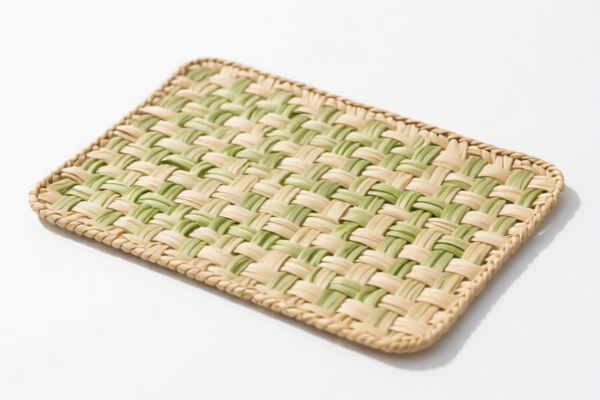
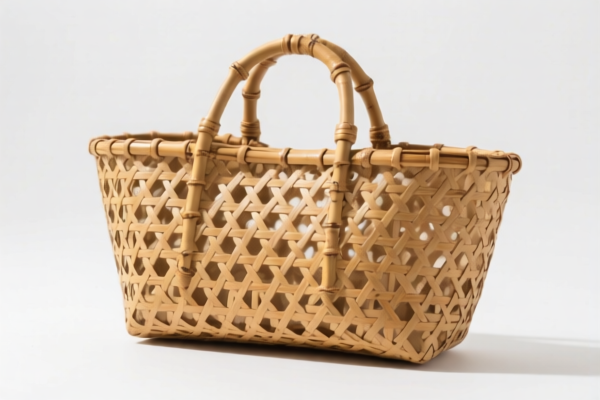
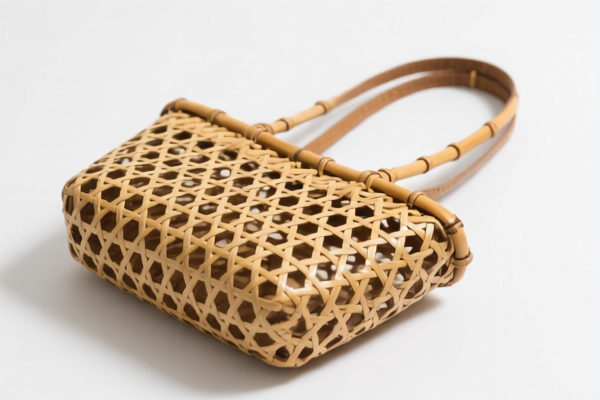
Plant fiber woven crossbody bags are eco-friendly, sustainable fashion accessories made from natural materials like rattan, bamboo, seagrass, straw, abaca, or jute. These bags are widely used in beach wear, casual outings, and sustainable fashion markets.
In international trade, they fall under two main categories:
Woven Handbags (Basketry-type): Bags made entirely from woven plant fibers, without metal hardware or synthetic linings.
Fiber-Blend Bags: Bags combining plant fibers with leather, fabric, or synthetic components.
⚠️ Critical Differentiator:
- If made exclusively of woven plant fibers → Likely 4602.00.00.00 or 4202.92.00.00
- If includes leather trim, synthetic lining, or metal hardware → May fall under 4202.92.00.00 or 4205.00.00.00
📦 Section 2: HS Code Breakdown (2026 Official Tariff Schedule)
| HS Code | Product Description | Application Scenario | Fiber Content |
|---|---|---|---|
4602.00.00.00 |
Basketwork, Wickerwork, Basketry & Similar Materials Made from Vegetable Fibers | Purely woven rattan/bamboo/straw bags | ✅ 100% Natural |
4202.92.00.00 |
Handbags with outer surface of leather, of sheeting of leather or of composition leather | Bags with leather trim or synthetic lining | ⚠️ Mixed |
4205.00.00.00 |
Other articles of leather or composition leather | Bags with significant leather components | ❌ Not pure fiber |
6301.40.00.00 |
Other textiles | Bags made of synthetic blends or fabric | ❌ Not natural fiber |
4202.32.00.00 |
Wallets, purses, etc., of leather | Small leather accessories, not full bags | ❌ Incorrect category |
🔍 Key Reminder:
- Purely woven plant fiber bags should be classified under 4602.00.00.00, not 4202.92.00.00
- If the bag contains more than 10% leather or synthetic material, it may be reclassified to 4202.92.00.00
- Bags with metal buckles, zippers, or chains still qualify as 4602.00.00.00 if fiber is the main material
💰 Section 3: 2026 Latest Tariff Rate Breakdown (Including Surcharges & Policy Add-ons)
✅ Target Market: United States (US)
✅ Country of Origin: China (CN)
✅ Effective Date: November 10, 2025 (including future imports)
🎯 1. 4602.00.00.00 – Woven Plant Fiber Handbags (Basketry)
| Item | Details |
|---|---|
| Base Tariff | 5% (ad valorem) |
| USITC Surcharge | +25% (via USITC Footnote 9903.88.01) |
| IEEPA Surcharge | +10% (China/HK products under IEEPA, from Nov 10, 2025) |
| Total Tariff Rate | 40% |
| Duty Calculation | CIF Value × 40% |
| De Minimis Exemption | ❌ Not Eligible |
| Legal Reference Path | IEEPA:9903.01.25 → IEEPA:9903.01.24 → USITC:4602.00.00.00 → FOOTNOTE:9903.88.01 |
📌 Explanation:
- The 25% USITC surcharge is imposed under Section 301 of the U.S. Trade Act;
- The 10% IEEPA surcharge targets Chinese-origin goods;
- Combined total of 40%, making it one of the highest duty rates for fashion accessories;
- Must be factored into pricing and supply chain strategy!
🎯 2. 4202.92.00.00 – Handbags with Leather Outer Surface (Mixed Material)
| Item | Details |
|---|---|
| Base Tariff | 8.9% |
| USITC Surcharge | +25% |
| IEEPA Surcharge | +10% |
| Total Tariff Rate | 43.9% |
| Duty Calculation | CIF Value × 43.9% |
| De Minimis Exemption | ❌ Not Eligible |
| Legal Reference Path | IEEPA:9903.01.25 → IEEPA:9903.01.24 → USITC:4202.92.00.00 → FOOTNOTE:9903.88.01 |
📌 Note:
- Even with minimal leather trim, classification may shift to 4202.92.00.00
- Duty increases slightly to 43.9%, but more complex due to mixed material rules
🛠️ Section 4: Customs Clearance Practical Advice (Real-World Pitfall Avoidance)
✅ 1. Required Documentation Checklist (Non-Negotiable)
| Document | Must Provide | Purpose |
|---|---|---|
| ✅ Product Specification Sheet | ✔️ | Material composition, dimensions, weight |
| ✅ Material Composition Statement | ✔️ | % of plant fiber vs. leather/synthetic |
| ✅ Photos of Bag (Front/Back/Interior) | ✔️ | Show hardware, lining, tags |
| ✅ Third-Party Test Reports | ✔️ | FSC, GRS, REACH, CPSIA (if applicable) |
| ✅ Commercial Invoice | ✔️ | Accurate description: “Handbag, woven plant fiber, 100% rattan” |
| ✅ Certificate of Origin | ✔️ | For non-China origins, may qualify for lower rates |
| ✅ Packing List | ✔️ | Clarify contents, avoid partial declarations |
✅ 2. Declaration Tips (Golden Rules)
🔥 Golden Rule:
“Pure fiber = 4602.00.00.00 | Mixed leather = 4202.92.00.00 | Hardware doesn’t matter!”
| Situation | Correct Declaration | Mistake to Avoid |
|---|---|---|
| 100% woven plant fiber bag | 4602.00.00.00 |
Misdeclare as 4202.92.00.00 → 43.9% |
| Bag with leather trim | 4202.92.00.00 |
Use 4602.00.00.00 → Audit risk |
| Bag with metal buckle | 4602.00.00.00 |
Still qualifies as fiber bag |
| Synthetic blend bag | 6301.40.00.00 |
Not eligible for 4602 |
✅ 3. Special Cases Handling
| Scenario | Recommendation |
|---|---|
| OEM Custom Bags | Provide design specs to confirm material % |
| Bags with Fabric Lining | Still 4602.00.00.00 if lining ≤10% |
| Bags for Eco-Fashion Brands | Include sustainability certifications (GRS, FSC) |
| Bags for Military/Industrial Use | May qualify for duty-free under special programs |
🌍 Section 5: Global Market Comparison (2026 Latest Data)
| Country/Region | Recommended HS Code | Tariff | Certification Required | Notes |
|---|---|---|---|---|
| 🇺🇸 USA | 4602.00.00.00 |
40% (China-made) | FSC + GRS + CPSIA | 40% duty is very high |
| 🇨🇳 China | 4602.00.00.00 |
5% | CCC + RoHS | No surcharges |
| 🇪🇺 EU | 4602.00.00.00 |
0% (if CE) | CE + EPR | Eco-friendly benefit |
| 🇦🇺 Australia | 4602.00.00.00 |
10% | RCM | No surcharges |
| 🇯🇵 Japan | 4602.00.00.00 |
0% | PSE | No surcharges |
📌 Conclusion:
- USA is the most expensive market due to surcharges;
- Consider shifting production to Vietnam, Mexico, or EU for tariff advantages.
📌 Section 6: Common Mistakes & Pitfall Avoidance
❌ Mistake 1: Declaring mixed bags as pure fiber
👉 Consequence: 43.9% vs. 40% + potential audit
❌ Mistake 2: Ignoring material composition in specs
👉 Consequence: Misclassification + penalty
❌ Mistake 3: Omitting FSC/GRS certificates
👉 Consequence: Rejection or delay
❌ Mistake 4: Using vague terms like “eco bag” or “natural bag”
👉 Consequence: Confusion + higher risk
✅ Correct Practice:
“Handbag, 100% Woven Rattan, 100% Plant Fiber, No Leather Trim, Model R-202, FSC & GRS Certified”
🎯 Section 7: Final Takeaway – Smart Classification, Lower Costs
🎯 Remember:
🔹 “Pure fiber = 4602, Mixed = 4202, Hardware is OK, Documentation is King!”
🔹 “One HS Code shift, 4% tariff jump, misdeclaration can cost thousands!”
📌 Pro Tip:
If your bags are made in Vietnam, Mexico, Thailand, or Malaysia, you may qualify for IEEPA exemption, reducing tariff to 0%~10%.
Apply for Advance Ruling before shipment to avoid surprises!
📣 Take Action Now:
📞 Contact a professional customs broker + Submit product specs + Request HS Code Ruling
🚀 Let your plant fiber bags clear customs smoothly, scale globally, and maximize profit!
✨ Professional customs clearance starts with accurate classification!
💼 Every dollar saved counts in your profit margin!
Customer Reviews
About HS Code Classification
The Harmonized System (HS) is an internationally standardized nomenclature developed by the World Customs Organization (WCO) to classify traded products. Over 200 countries use the HS system as the basis for customs tariffs, trade statistics, and import/export regulations.
Each HS code follows a hierarchical structure:
- Chapter (2 digits) — Broad category of goods (e.g., Chapter 84: Machinery and Mechanical Appliances)
- Heading (4 digits) — More specific grouping within the chapter
- Subheading (6 digits) — Internationally standardized breakdown, used by all WCO member countries
- National subdivisions (8-10 digits) — Country-specific extensions for further classification, such as US HTSUS 10-digit codes
Correct HS code classification is essential for smooth customs clearance, accurate duty payment, and compliance with trade regulations. Misclassification can lead to customs delays, overpayment of duties, or penalties.
When importing from CN to US, the applicable tariff rates may include:
- Most-Favored-Nation (MFN) rate — The standard duty rate applied to WTO members
- General rate — Applied to countries without trade agreements
- Trade remedy duties — Additional tariffs such as Section 301 (anti-dumping), Section 232 (national security), or countervailing duties
The information provided on this page is for reference purposes only. For official classification, please consult with your local customs authority or a licensed customs broker.