Plant Fiber Woven Document Bag
CN → US| HS Code | Tariff Rate | Origin | Destination | Doc |
|---|---|---|---|---|
| 4823908000 | 35.0% | CN | US | Official Doc |
| 4823902000 | 35.0% | CN | US | Official Doc |
| 4202124000 | 41.3% | CN | US | Official Doc |
| 4202921500 | 41.3% | CN | US | Official Doc |
| 4602192920 | 40.3% | CN | US | Official Doc |
Product Images
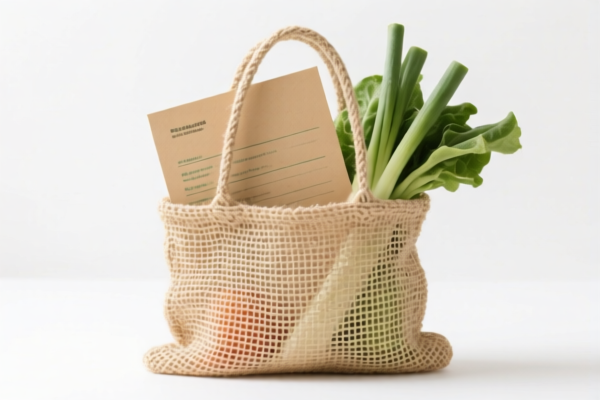
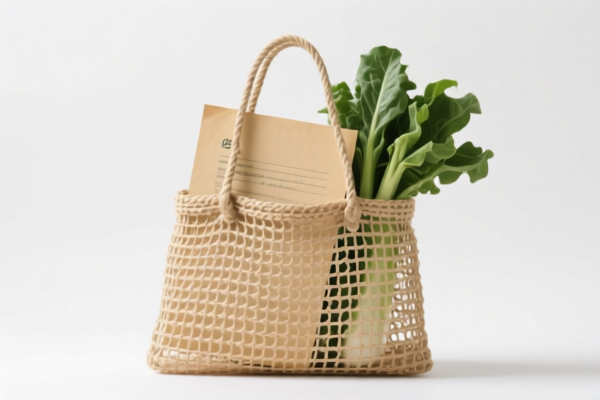
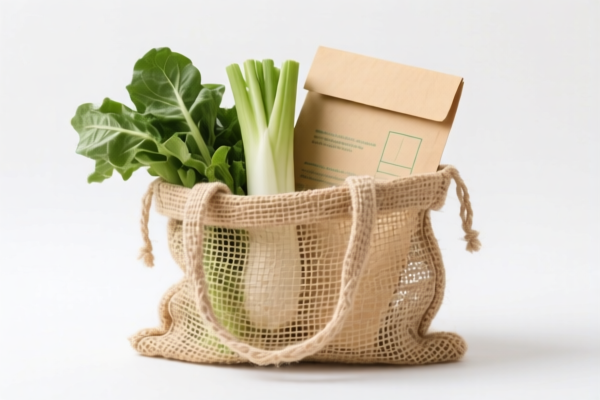
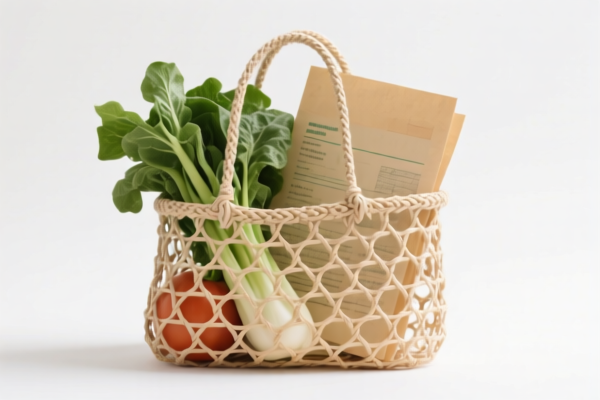
AI Analysis
🌿 Plant Fiber Woven Document Bag (植物纤维编织文件袋)
🌐 HS Code Reference & Customs Clearance Guide | 2026 Latest Tariff Analysis | Professional Clearance Strategy
📌 I. Product Definition & Classification: What Exactly Is a "Plant Fiber Woven Document Bag"?
The Plant Fiber Woven Document Bag is a specialized storage accessory designed for organizing papers, files, and documents. In international trade, its classification depends heavily on two factors: 1. Material Composition: Is it purely cellulose/paper-based, or does it contain woven vegetable fibers treated like textiles? 2. Structure/Form: Is it a rigid/folded paper product, or a flexible woven bag?
⚠️ Key Classification Distinction: * If the bag is made primarily of paper pulp, cellulose fibers, or paper-based mats (even if woven/textured), it falls under Chapter 48 (Paper/Paperboard). * If the bag is made of woven vegetable fibers (e.g., bamboo, rattan, straw) that retain their fibrous structure and are classified as "woven materials," it may fall under Chapter 42 (Articles of Leather; Travel Goods) or Chapter 46 (Woven Materials).
📦 II. HS Code Classification Details (2026 Latest Tariff Authority对照)
| HS Code | Product Description | Application Scenario | Material Conflict Check |
|---|---|---|---|
4823.90.80.00 |
Other articles of paper, cellulose wadding, or webs of cellulose fibers (Woven Paper Bags) | Bags made from paper mats, cellulose fibers, or woven paper-like materials. | ✅ No Conflict: Fits "Paper/Cellulose Fiber Net Products". |
4823.90.20.00 |
Other articles of paper, cellulose wadding, or webs of cellulose fibers (Specific Sub-item) | Similar to above; specifically for plant fiber-based paper/ceulllulose products. | ✅ No Conflict: Material is clearly paper/cellulose. |
4202.12.40.00 |
Articles of luggage, handbags, etc., with outer surface of plastics or of textile materials (Vegetable Fibers inferred) | If the material is treated as a textile-like vegetable fiber (e.g., bamboo weave), not pure paper. | ⚠️ Inferred: Assumes "Vegetable Fiber" behaves like textile material. |
4202.92.15.00 |
Other travel, sports, and similar bags; other articles (Plant Fiber Bags) | Broader category for bags made of plant fibers, used for document storage. | ✅ No Conflict: Fits "Travel/General Bag" category. |
4602.19.29.20 |
Articles of wickerwork, osier, or other plaiting materials (Plant Fiber Woven Items) | True woven plant fibers (bamboo, rattan, etc.) forming a container structure. | ✅ No Conflict: Fits "Woven Plant Fiber" category. |
🔍 Critical Reminder: * If the product looks like paper but feels woven, it is likely Chapter 48. * If it looks like basketry (rigid, woven stalks), it is Chapter 46. * If it is a flexible bag made of non-textile plant fibers, it often falls under Chapter 42 (as other textile-like materials).
💰 III. 2026 Latest Tariff Rate Breakdown (Including Surtaxes & Policy Add-ons)
✅ Applicable Country: United States (US)
✅ Origin: China (CN)
✅ Effective Date: From November 10, 2025 (including subsequent imports)
🎯 1. 4823.90.80.00 & 4823.90.20.00 —— Paper/Cellulose Based Bags
| Item | Detail |
|---|---|
| Base Tariff | 0.0% (ad valorem) |
| USITC Surtax (Section 301) | +25.0% (Added tariff on Chinese goods) |
| IEEPA Surtax (Section 122/EO) | +10.0% (Additional tariff on Chinese products) |
| Total Tariff Rate | 35.0% |
| Tax Calculation | CIF Value × 35% |
| De Minimis Exemption? | ❌ No (deny_de_minimis) |
| Legal Basis Path | IEEPA:9903.01.25 → USITC:4823.90.80.00 → FOOTNOTE:9903.88.01 |
📌 Explanation: * Although the base tariff is 0%, the 35% total rate is driven by the 25% Section 301 duty and 10% IEEPA duty. * These are non-negotiable surcharges for Chinese-origin goods. * Warning: This is a high-cost scenario. Pre-calculation is essential.
🎯 2. 4202.12.40.00 —— Vegetable Fiber Bag (Textile-like Classification)
| Item | Detail |
|---|---|
| Base Tariff | 6.3% (ad valorem) |
| USITC Surtax (Section 301) | +25.0% |
| IEEPA Surtax (Section 122/EO) | +10.0% |
| Total Tariff Rate | 41.3% |
| Tax Calculation | CIF Value × 41.3% |
| De Minimis Exemption? | ❌ No (deny_de_minimis) |
| Legal Basis Path | IEEPA:9901.25 → USITC:4202.12.40.00 → FOOTNOTE:9903.88.01 |
📌 Note: * The base rate (6.3%) is higher than paper goods, leading to a higher total rate (41.3%). * Misclassification as a "textile-like" bag increases cost significantly compared to "paper" classification.
🎯 3. 4202.92.15.00 —— Other Plant Fiber Bags
| Item | Detail |
|---|---|
| Base Tariff | 6.3% (ad valorem) |
| USITC Surtax (Section 301) | +25.0% |
| IEEPA Surtax (Section 122/EO) | +10.0% |
| Total Tariff Rate | 41.3% |
| Tax Calculation | CIF Value × 41.3% |
| De Minimis Exemption? | ❌ No (deny_de_minimis) |
| Legal Basis Path | IEEPA:9901.25 → USITC:4202.92.15.00 → FOOTNOTE:9903.88.01 |
📌 Note: * Same base rate as above. If the bag is categorized as a general "bag" rather than a "paper product," expect 41.3%.
🎯 4. 4602.19.29.20 —— Woven Plant Fiber Articles (e.g., Bamboo/Rattan Bags)
| Item | Detail |
|---|---|
| Base Tariff | 5.3% (ad valorem) |
| USITC Surtax (Section 301) | +25.0% |
| IEEPA Surtax (Section 122/EO) | +10.0% |
| Total Tariff Rate | 40.3% |
| Tax Calculation | CIF Value × 40.3% |
| De Minimis Exemption? | ❌ No (deny_de_minimis) |
| Legal Basis Path | IEEPA:9901.25 → USITC:4602.19.29.20 → FOOTNOTE:9903.88.01 |
📌 Note: * Woven articles (Chapter 46) have a slightly lower base rate (5.3%) than textile-like bags (6.3%), resulting in a 40.3% total rate. * This is the lowest possible rate among the options provided, but still very high.
🛠️ IV. Customs Clearance Practical Advice (Real-World Pitfall Guide)
✅ 1. Preparation Checklist (Must-Have Documents)
| Document | Required | Description |
|---|---|---|
| ✅ Product Specification Sheet | ✔️ | Must detail material type (e.g., "Bamboo," "Paper Pulp," "Rattan"). |
| ✅ Material Composition Report | ✔️ | Lab test results proving % of cellulose vs. vegetable fiber. |
| ✅ Product Photos (Clear) | ✔️ | Show texture, weave pattern, and any labels. |
| ✅ Commercial Invoice | ✔️ | Clearly state: "Plant Fiber Woven Document Bag" + HS Code. |
| ✅ Packing List | ✔️ | Weight and dimensions. |
| ✅ Origin Certificate (CO) | ✔️ | Confirm Chinese origin to apply correct surtaxes. |
✅ 2. Classification Strategy (Key Mantra)
🔥 "Paper First, Fiber Second; Textile Last. Avoid Misclassification!"
| Scenario | Correct HS Code | Incorrect Classification Risk |
|---|---|---|
| Paper-like weave (soft, flat, cellulose-based) | 4823.90.xxxx |
35% Total |
| If misclassified as textile: 41.3% (Loss of $6.3%) | ||
| Woven bamboo/rattan (rigid, natural stalks) | 4602.19.29.20 |
40.3% Total |
| If misclassified as textile: 41.3% (Loss of $1.0%) | ||
| Generic "vegetable fiber" bag (ambiguous) | 4202.92.15.00 |
41.3% Total |
| High risk of audit if not clearly "woven." |
📌 Pro Tip: * If the product is flexible and made of paper pulp, insist on Chapter 48 (35% rate). It is the cheapest option. * If the product is rigid and woven, it must be Chapter 46 (40.3% rate). * Never classify as "Plastic" or "Textile" unless explicitly verified, as rates are higher (41.3%).
✅ 3. Special Cases Handling
| Case | Handling Advice |
|---|---|
| Mixed Materials | If bag has plastic lining or metal handles, do not split. Declare as the main component (usually Chapter 48/42/46). |
| Custom Design | Provide design sketches to prove "woven" nature vs. "paper" nature. |
| Pre-Ruling | Strongly Recommended: Apply for an Advance Ruling from CBP to confirm HS Code before shipment. |
| De Minimis | ❌ No Exemption: All these codes are subject to full duty (Section 301 + IEEPA). Do not use 800.3(a) (de minimis) to avoid shipment. |
🌍 V. Global Market Comparison (2026 Latest)
| Country/Region | Recommended HS Code | Total Tariff (China Origin) | Remarks |
|---|---|---|---|
| 🇺🇸 USA | 4823.90.80.00 (Best) |
35.0% | Highest duty burden. Must use Section 301 + IEEPA. |
| 🇨🇳 China | 4823.90.80.00 |
5.0% (Import Duty) | No surtaxes. Low cost for domestic sale. |
| 🇪🇺 EU | 4823.90.80.00 |
6.5% | No Section 301 or IEEPA. Much more competitive. |
| 🇬🇧 UK | 4823.90.80.00 |
5.0% - 6.5% | Post-Brexit tariffs apply. No US-style surtaxes. |
| 🇯🇵 Japan | 4823.90.80.00 |
5.0% - 8.0% | Moderate duty. No additional US-style penalties. |
📌 Conclusion: * The US market is significantly more expensive for Chinese-made plant fiber bags due to 35-41% effective duties. * EU, UK, and Japan remain competitive markets with ~5-6.5% duties. * Consider supply chain diversification (e.g., sourcing from Vietnam/Thailand) if targeting the US, as these origins may be exempt from Section 301/IEEPA.
📌 VI. Common Errors & Pitfalls (Lessons Learned)
❌ Error 1: Classifying a paper-based bag as a "Textile Bag" (Chapter 42). 👉 Result: Rate jumps from 35% to 41.3%. Unnecessary $6.3% loss.
❌ Error 2: Declaring as "Plastic Bag". 👉 Result: Incorrect HS Code, potential smuggling/fraud penalties, and 75%+ duty.
❌ Error 3: Ignoring IEEPA 10% Surcharge. 👉 Result: Underpayment of duty, seizure of goods, and fines.
❌ Error 4: Assuming De Minimis applies. 👉 Result: Shipment delayed or seized at border because de minimis is denied for these HS Codes.
✅ Correct Declaration Example:
"Document Bag, Woven, Made of Plant Cellulose Fibers (Paper-based), Model XYZ, HS 4823.90.80.00, Country of Origin: China"
🎯 VII. Conclusion: Professional Classification, Cost Optimization!
🎯 Remember the Mantra:
🔹 "Paper is Cheapest (35%), Fiber is Middle (40.3%), Textile is Most Expensive (41.3%)."
🔹 "35% vs 41.3% = 6.3% Savings. Don't leave money on the table!"
🔹 "No De Minimis! Pay all duties upfront!"
📌 Tip: If your product is shipped from Vietnam, Mexico, or Thailand, you may be eligible for IEEPA/Section 301 exemptions, reducing the rate to 0-6.3%. Recommendation: Apply for an Advance Ruling before shipment to confirm the HS Code and avoid clearance delays.
📣 Immediate Action:
📞 Contact your customs broker + Provide product samples + Request HS Code Advance Ruling
🚀 Ensure Smooth Customs Clearance, Maximize Profit Margins, and Expand Globally!
✨ Professional Clearance Starts with Precise Classification!
💼 Every Percent of Duty Counts in 2026!
Customer Reviews
About HS Code Classification
The Harmonized System (HS) is an internationally standardized nomenclature developed by the World Customs Organization (WCO) to classify traded products. Over 200 countries use the HS system as the basis for customs tariffs, trade statistics, and import/export regulations.
Each HS code follows a hierarchical structure:
- Chapter (2 digits) — Broad category of goods (e.g., Chapter 84: Machinery and Mechanical Appliances)
- Heading (4 digits) — More specific grouping within the chapter
- Subheading (6 digits) — Internationally standardized breakdown, used by all WCO member countries
- National subdivisions (8-10 digits) — Country-specific extensions for further classification, such as US HTSUS 10-digit codes
Correct HS code classification is essential for smooth customs clearance, accurate duty payment, and compliance with trade regulations. Misclassification can lead to customs delays, overpayment of duties, or penalties.
When importing from CN to US, the applicable tariff rates may include:
- Most-Favored-Nation (MFN) rate — The standard duty rate applied to WTO members
- General rate — Applied to countries without trade agreements
- Trade remedy duties — Additional tariffs such as Section 301 (anti-dumping), Section 232 (national security), or countervailing duties
The information provided on this page is for reference purposes only. For official classification, please consult with your local customs authority or a licensed customs broker.