Plant Fiber Woven Fishing Basket
CN → US| HS Code | Tariff Rate | Origin | Destination | Doc |
|---|---|---|---|---|
| 4602110500 | 40.0% | CN | US | Official Doc |
| 4602120500 | 40.0% | CN | US | Official Doc |
Product Images
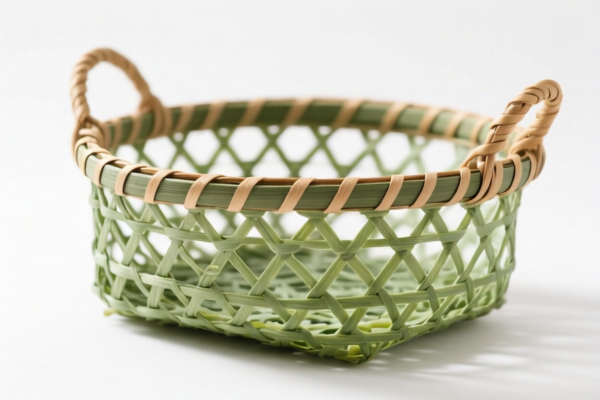
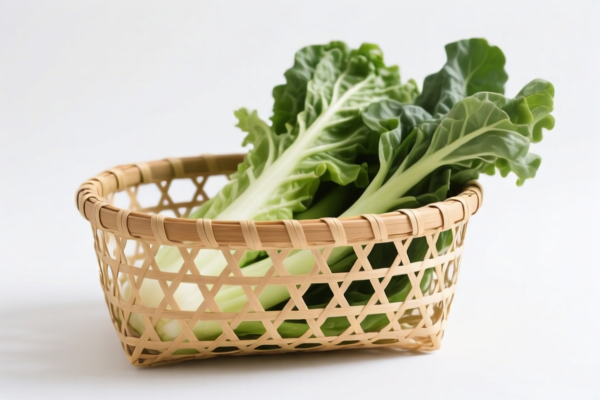
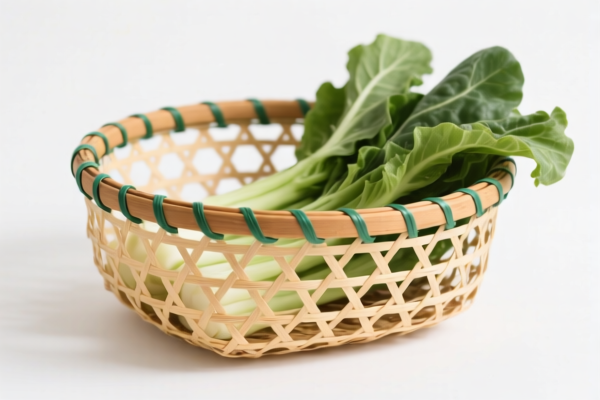
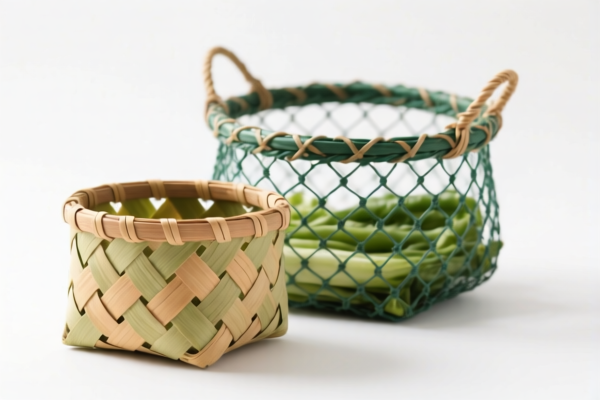
AI Analysis
🎣 Plant Fiber Woven Fishing Basket
🌐 HS Code Reference & Clearance Guide | 2026 Latest Tariff Analysis | Professional Strategy for Bamboo & Rattan Baskets
📌 I. Product Definition & Classification: Do You Truly Understand "Fishing Baskets"?
A Plant Fiber Woven Fishing Basket is a specialized fishing aid used to catch and trap fish, crabs, or other aquatic life. In international trade, these products are classified under Chapter 46 (Articles of straw, of vegetable plaiting materials). The critical distinction lies in the raw material used:
Bamboo Baskets: Made primarily from split bamboo strips. Often associated with higher durability and specific regional craftsmanship (e.g., Asian exports). Rattan Baskets: Made from rattan stems. Known for flexibility and strength, commonly used in tropical regions.
⚠️ Key Distinction Point:
- If made from bamboo → Classify under 4602.11.05.00
- If made from rattan → Classify under 4602.12.05.00
- Note: Both fall under "Fishing baskets or creels" specifically.
📦 II. HS Code Classification Details (2026 Latest Tariff Authority Match)
Based on your input data, here are the two specific HS Codes and their corresponding tax structures. No other codes apply to this specific product description.
| HS Code | Product Description | Material | Specific Use |
|---|---|---|---|
4602.11.05.00 |
Basketwork; articles of loofah: Of vegetable materials: Of bamboo: Fishing baskets or creels | 🎋 Bamboo | Trapping fish/crabs |
4602.12.05.00 |
Basketwork; articles of loofah: Of vegetable materials: Of rattan: Fishing baskets or creels | 🌴 Rattan | Trapping fish/crabs |
🔍 Critical Reminder:
- Do NOT confuse these with general "baskets" (e.g., for carrying laundry or picnic items), which may have different sub-headings.
- The keyword "Fishing baskets or creels" is mandatory for this specific 4-digit/8-digit sub-category.
- Both codes share the exact same tax rate structure in the provided data.
💰 III. 2026 Latest Tariff Rate Breakdown (Detailed Tax Clauses)
✅ Applicable Market: United States (US)
✅ Origin: China (CN) (Implied by the 25% surtax, typical of US-China trade context)
✅ Effective Time: Current regulations apply
🎯 1. 4602.11.05.00 —— Bamboo Fishing Baskets
| Item | Content |
|---|---|
| Base Tariff Rate | 5.0% (Ad Valorem) |
| Surtax (Section 301) | +25.0% (Additional duty on Chinese goods) |
| Total Tax Rate | 30.0% |
| Tax Calculation | CIF Value × 30% |
| De Minimis Exemption? | ❌ NO (Not eligible for de minimis relief due to Section 301 surtax) |
| Legal Basis Path | HTSUS:4602.11.05 → Section 301 Footnote → Total 30% |
📌 Explanation:
- The 5% base rate is the standard Most Favored Nation (MFN) rate for bamboo basketwork.
- The 25% surtax is added under the USTR’s Section 301 investigation list, targeting Chinese-origin basketwork.
- Combined 30% is a significant cost factor. Importers must calculate this into their landed cost.
🎯 2. 4602.12.05.00 —— Rattan Fishing Baskets
| Item | Content |
|---|---|
| Base Tariff Rate | 5.0% (Ad Valorem) |
| Surtax (Section 301) | +25.0% (Additional duty on Chinese goods) |
| Total Tax Rate | 30.0% |
| Tax Calculation | CIF Value × 30% |
| De Minimis Exemption? | ❌ NO (Not eligible for de minimis relief due to Section 301 surtax) |
| Legal Basis Path | HTSUS:4602.12.05 → Section 301 Footnote → Total 30% |
📌 Note:
- Rattan is treated identically to bamboo for this specific sub-category.
- Even if the rattan is sourced from Southeast Asia but processed/assembled in China, it may still be deemed of Chinese origin for tariff purposes, attracting the 25% surtax.
🛠️ IV. Clearance Operational Advice (Practical Pitfall Avoidance)
✅ 1. Required Documentation Checklist (Mandatory)
| Document | Required | Explanation |
|---|---|---|
| ✅ Product Composition Report | ✔️ | Must explicitly state: "100% Bamboo" or "100% Rattan". Blends need detailed % breakdown. |
| ✅ Product Photos | ✔️ | Clear images showing the woven structure and fishing-specific design (e.g., entry tunnels, bait compartments). |
| ✅ Commercial Invoice | ✔️ | Must specify "Fishing Basket" or "Fish Creel". Do not use generic "Basket". |
| ✅ Packing List | ✔️ | Detail dimensions, weight, and quantity. |
| ✅ Country of Origin Certificate | ✔️ | Crucial for determining surtax applicability. |
| ✅ Material Source Proof | ✔️ | If rattan is imported from Vietnam but assembled in China, customs may still apply surtax. Provide manufacturing flow charts. |
✅ 2. Declaration Tips (Key Mantras)
🔥 "Material Specific, Use Clear, Surtax Applies!"
| Situation | Correct Declaration | Wrong Practice |
|---|---|---|
| Bamboo Material | 4602.11.05.00 |
General "Bamboo Basket" → Risk of misclassification |
| Rattan Material | 4602.12.05.00 |
General "Woven Basket" → Risk of higher base duty |
| Mixed Materials | ❌ Avoid! | Do not mix bamboo and rattan in one shipment without clear separation. Mixed fibers may lead to dispute. |
| Non-Fishing Use | ❌ Different HS | If it’s for decoration or storage, it’s NOT 4602.11.05/00. It might be 4602.11.90 or similar, with different rates. |
✅ 3. Special Case Handling
| Scenario | Handling Advice |
|---|---|
| Small Sample Shipments | Even under $800, Section 301 surtaxes often do not apply to de minimis imports if they meet specific criteria, BUT many brokers recommend paying the duty to avoid audits. Check current CBP enforcement trends. |
| Composite Materials | If the basket has plastic handles or metal hooks, the primary characteristic (woven plant fiber) usually dictates the HS code, but ensure the non-fiber parts don’t exceed critical thresholds. |
| Re-export from Asia | If sourcing from Thailand/Indonesia, ensure the Certificate of Origin is valid. If processed in China, surtax applies. |
🌍 V. Global Market Comparison (2026 Context)
| Country/Region | Recommended HS Code | Tariff Rate | Notes |
|---|---|---|---|
| 🇺🇸 USA | 4602.11.05.00 / 4602.12.05.00 |
30% (5% Base + 25% Surtax) | High cost for Chinese origin. |
| 🇨🇳 China | 4602.11.05.00 / 4602.12.05.00 |
Low/0% (Import Duty) | No Section 301 surtax applies to imports. |
| 🇪🇺 EU | 4602.11 / 4602.12 |
Varies (often 0-5%) | No major surtaxes, but strict EUDR (Deforestation Regulation) may apply. |
| 🇦🇺 Australia | 4602.11 / 4602.12 |
5% | Standard MFN rate. |
| 🇯🇵 Japan | 4602.11 / 4602.12 |
Varies (often 0-5%) | Check Free Trade Agreement benefits. |
📌 Conclusion:
- USA is the most expensive market due to the 25% Section 301 surtax.
- EU markets are becoming stricter on sustainability documentation (EUDR) for plant-based materials. Ensure bamboo/rattan is legally sourced.
📌 VI. Common Mistakes & Pitfalls (Lessons Learned)
❌ Mistake 1: Declaring as "General Woven Basket"
👉 Consequence: May be assigned a higher base duty or flagged for missing "fishing use" details, leading to delays.
❌ Mistake 2: Ignoring Material Composition
👉 Consequence: Mixing bamboo and rattan in one HS code can cause customs rejection. Separate shipments or clearly declare blend ratios if allowed.
❌ Mistake 3: Assuming De Minimis Exemption for Surtax
👉 Consequence: For shipments under $800, Section 301 surtaxes may still apply if not properly excluded. Always verify current CBP guidance.
❌ Mistake 4: Vague Description "Woven Basket"
👉 Consequence: Customs may classify as "Other" (e.g., 4602.90), which could have different duties or require more documentation.
✅ Correct Approach:
"Bamboo Woven Fish Creel, Handmade, Model X, Origin: China, HS: 4602.11.05.00"
"Rattan Woven Crab Trap, Model Y, Origin: Vietnam, HS: 4602.12.05.00"
🎯 VII. Conclusion: Precise Classification, Cost Efficiency!
🎯 Key Takeaway:
🔹 "Bamboo is .11, Rattan is .12, Both are 30% in US."
🔹 "Fishing Use is Key – Don't Declare as Storage Baskets."
🔹 "Surtax is Non-Negotiable for CN Origin."
📌 Pro Tip:
If you are exporting to the USA, consider:
1. Pre-Ruling: Apply for an Advance Ruling from CBP to confirm the HS code.
2. Supply Chain Review: If sourcing from China, evaluate if the 25% surtax can be mitigated by sourcing rattan/bamboo from non-China origins (e.g., Vietnam, Thailand) with minimal processing in China.
3. EUDR Compliance: For EU markets, ensure your bamboo/rattan supply chain is deforestation-free and digitally tracked.
📣 Immediate Action:
📞 Contact a licensed customs broker + Provide material specs + Apply for HS Pre-Ruling
🚀 Ensure your fishing baskets pass customs smoothly, avoid costly delays, and maximize profit margins!
✨ Professional clearance starts with accurate classification!
💼 Every percentage point of duty matters!
Customer Reviews
About HS Code Classification
The Harmonized System (HS) is an internationally standardized nomenclature developed by the World Customs Organization (WCO) to classify traded products. Over 200 countries use the HS system as the basis for customs tariffs, trade statistics, and import/export regulations.
Each HS code follows a hierarchical structure:
- Chapter (2 digits) — Broad category of goods (e.g., Chapter 84: Machinery and Mechanical Appliances)
- Heading (4 digits) — More specific grouping within the chapter
- Subheading (6 digits) — Internationally standardized breakdown, used by all WCO member countries
- National subdivisions (8-10 digits) — Country-specific extensions for further classification, such as US HTSUS 10-digit codes
Correct HS code classification is essential for smooth customs clearance, accurate duty payment, and compliance with trade regulations. Misclassification can lead to customs delays, overpayment of duties, or penalties.
When importing from CN to US, the applicable tariff rates may include:
- Most-Favored-Nation (MFN) rate — The standard duty rate applied to WTO members
- General rate — Applied to countries without trade agreements
- Trade remedy duties — Additional tariffs such as Section 301 (anti-dumping), Section 232 (national security), or countervailing duties
The information provided on this page is for reference purposes only. For official classification, please consult with your local customs authority or a licensed customs broker.