Plant Fiber Woven Kitchen Rug
CN → US| HS Code | Tariff Rate | Origin | Destination | Doc |
|---|---|---|---|---|
| 4601299000 | 43.0% | CN | US | Official Doc |
| 4601298000 | 35.0% | CN | US | Official Doc |
| 6307909891 | 24.5% | CN | US | Official Doc |
| 6307908940 | 17.0% | CN | US | Official Doc |
| 4601218000 | 35.0% | CN | US | Official Doc |
Product Images
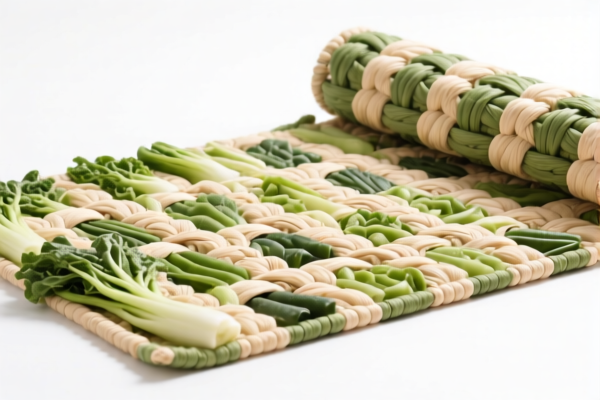
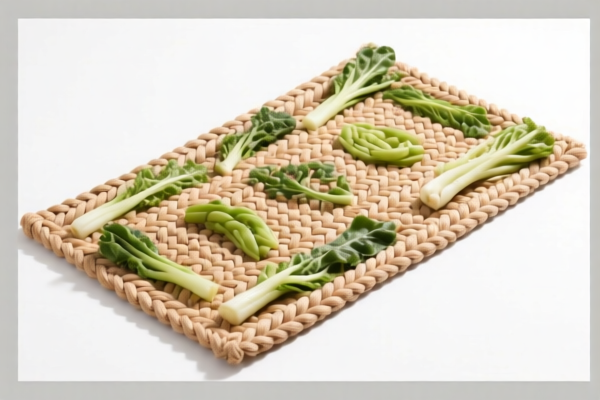
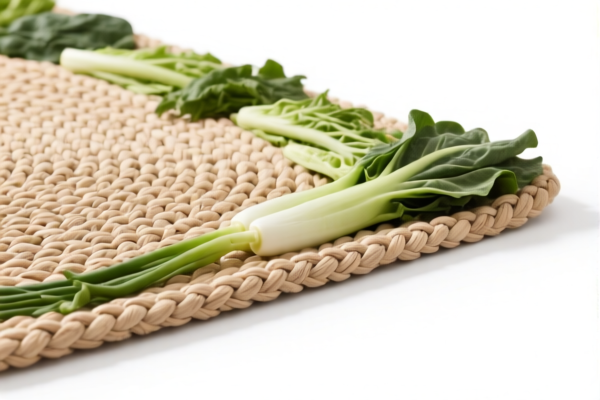
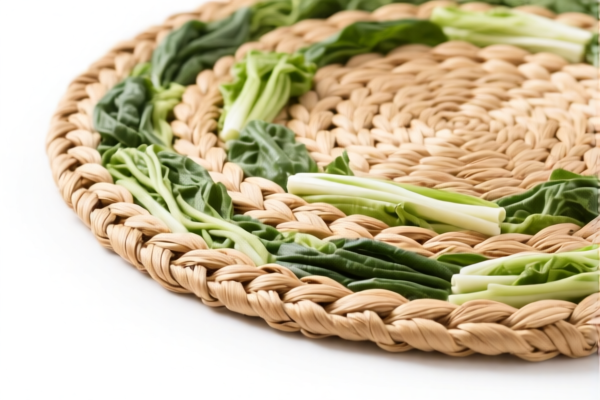
AI Analysis
🏡 Plant Fiber Woven Kitchen Rug (Floor Mat)
🌐 HS Code Reference & Customs Clearance Guide | 2026 Latest Tariff Analysis | Professional Clearance Strategy
📌 1. Product Definition & Classification: Do You Really Understand "Woven Floor Mats"?
Plant fiber woven rugs, commonly used as kitchen mats or door mats, are classified based on their material composition, manufacturing process (weaving vs. finished goods), and specific use. In international trade, the distinction between "woven mats" (Chapter 46) and "finished textile/floor coverings" (Chapter 63) is critical for duty optimization.
Woven Mats (Chapter 46):
- Made primarily from vegetable plaiting materials (e.g., jute, sisal, rattan).
- Classified as "Mats and matting of plaiting materials."
- Typically subject to higher additional tariffs due to stricter scrutiny on "woven" classifications from specific origins.
Finished Goods (Chapter 63):
- Classified as "Other made-up articles."
- May include rugs with backing, binding, or more complex finishing that moves them out of the "pure woven mat" category.
- Often benefit from lower base duties and potentially fewer add-on tariffs depending on the specific subheading.
⚠️ Key Distinction Point:
- If the product is strictly "woven plant fibers" with minimal finishing →归入 Chapter 46 (4601.21/4601.29).
- If it is a "made-up article" (e.g., with rubber backing, cut-to-shape, or specific floor-covering designation) →归入 Chapter 63 (6307.90).
📦 2. HS Code Classification Details (2026 Latest Tariff Authority Comparison)
Based on the provided data, here are the exact HS Codes and their corresponding tax structures for Plant Fiber Woven Floor Mats/Kitchen Rugs:
| HS Code | Product Description | Application Scenario | Material/Process |
|---|---|---|---|
4601.29.90.00 |
Woven mats of plant weaving materials, other | General plant fiber woven rugs (kitchen/door) | Pure woven plant fiber |
4601.29.80.00 |
Woven mats of plant weaving materials, other | General plant fiber woven rugs (kitchen/door) | Pure woven plant fiber |
6307.90.98.91 |
Other made-up articles | Finished floor mats, possibly with backing | Plant fiber, made-up article |
6307.90.89.40 |
Other made-up articles | Finished floor mats, possibly with backing | Plant fiber, made-up article |
4601.21.80.00 |
Woven mats of vegetable plaiting materials | Specifically for Door Mats | Plant fiber, woven |
🔍 Important Reminder:
- Chapter 46 Codes (4601...) are strictly for woven mats. If customs determines the product is a "finished floor covering" rather than a "woven mat," it may be reclassified to Chapter 63, changing the tax rate significantly. - Chapter 63 Codes (6307...) are for made-up articles. These often have lower base duties but are subject to different "122 Clause" and additional tariff rules. - Use Case Matters: Specific mention of "Door Mat" (4601.21.80.00) vs. general "Floor Mat" (4601.29...) can influence classification.
💰 3. 2026 Latest Tariff Rate Details (Including Additional Taxes)
✅ Applicable Country: United States (US)
✅ Origin: China (CN)
✅ Effective Date: Rates include Section 301 & Section 122 additional tariffs.
🎯 1. 4601.29.90.00 – Woven Mats of Plant Weaving Materials (Other)
| Item | Content |
|---|---|
| Base Duty Rate | 8.0% (ad valorem) |
| Section 301 Additional Duty | +25.0% |
| Section 122 Additional Duty | +10.0% |
| Total Tax Rate | 43.0% |
| Tax Calculation | CIF Value × 43% |
| De Minimis Exemption | ❌ Not Eligible (High tariff rate disqualifies from de minimis) |
| Legal Basis | HTSUS 4601.29.90.00 + Section 301 + Section 122 |
📌 Explanation:
- This is the highest tax rate among the options. - The base duty is 8%, plus 25% (Section 301) and 10% (Section 122). - Total burden: 43%. This makes it the most expensive option for clearance.
🎯 2. 4601.29.80.00 – Woven Mats of Plant Weaving Materials (Other)
| Item | Content |
|---|---|
| Base Duty Rate | 0.0% (ad valorem) |
| Section 301 Additional Duty | +25.0% |
| Section 122 Additional Duty | +10.0% |
| Total Tax Rate | 35.0% |
| Tax Calculation | CIF Value × 35% |
| De Minimis Exemption | ❌ Not Eligible |
| Legal Basis | HTSUS 4601.29.80.00 + Section 301 + Section 122 |
📌 Explanation:
- This code offers a 0% base duty, which is better than 4601.29.90.00. - However, it still incurs the full 25% (Section 301) and 10% (Section 122) add-ons. - Total burden: 35%. Still high, but 8% savings compared to .90.
🎯 3. 6307.90.98.91 – Other Made-Up Articles (Finished Floor Mats)
| Item | Content |
|---|---|
| Base Duty Rate | 7.0% (ad valorem) |
| Section 301 Additional Duty | +7.5% |
| Section 122 Additional Duty | +10.0% |
| Total Tax Rate | 24.5% |
| Tax Calculation | CIF Value × 24.5% |
| De Minimis Exemption | ❌ Not Eligible |
| Legal Basis | HTSUS 6307.90.98.91 + Section 301 + Section 122 |
📌 Explanation:
- Significant Savings: By classifying as a "made-up article" (Chapter 63), the Section 301 add-on drops to only 7.5% (instead of 25%). - Total burden: 24.5%. This is much lower than Chapter 46 options. - Strategy: If your product can be argued as a "finished article" (e.g., has backing, binding, or specific floor-covering features), this is the preferred classification.
🎯 4. 6307.90.89.40 – Other Made-Up Articles (Finished Floor Mats)
| Item | Content |
|---|---|
| Base Duty Rate | 7.0% (ad valorem) |
| Section 301 Additional Duty | 0.0% |
| Section 122 Additional Duty | +10.0% |
| Total Tax Rate | 17.0% |
| Tax Calculation | CIF Value × 17.0% |
| De Minimis Exemption | ❌ Not Eligible |
| Legal Basis | HTSUS 6307.90.89.40 + Section 122 |
📌 Explanation:
- Best Option for Cost Savings:
- Base Duty: 7%
- Section 301: 0% (This is the key difference!)
- Section 122: 10%
- Total burden: 17.0%.
- This is the lowest tax rate in the dataset.
- Strategy: If your product qualifies for this subheading (likely a specific type of made-up floor covering), it saves 26% compared to the highest rate.
🎯 5. 4601.21.80.00 – Woven Mats of Vegetable Plaiting Materials (Door Mats)
| Item | Content |
|---|---|
| Base Duty Rate | 0.0% (ad valorem) |
| Section 301 Additional Duty | +25.0% |
| Section 122 Additional Duty | +10.0% |
| Total Tax Rate | 35.0% |
| Tax Calculation | CIF Value × 35.0% |
| De Minimis Exemption | ❌ Not Eligible |
| Legal Basis | HTSUS 4601.21.80.00 + Section 301 + Section 122 |
📌 Explanation:
- Specifically for Door Mats. - Same tax structure as4601.29.80.00(35% total). - Use Case: Only use this if the product is explicitly marketed and used as a "Door Mat" and qualifies for the "vegetable plaiting materials" subheading.
🛠️ 4. Customs Clearance Practical Advice (Real-World Pitfall Avoidance)
✅ 1. Document Checklist (Mandatory)
| Document | Required | Explanation |
|---|---|---|
| ✅ Product Specification Sheet | ✔️ | Details: Material (plant fiber type), dimensions, thickness, backing (if any). |
| ✅ Product Photos | ✔️ | Clear images showing the weave pattern, edges, and any backing (rubber, PVC, etc.). |
| ✅ Commercial Invoice | ✔️ | Must clearly state: "Woven Plant Fiber Floor Mat" or "Made-Up Floor Covering." Avoid vague terms like "Rug." |
| ✅ Packing List | ✔️ | Detailed quantity, weight, and dimensions. |
| ✅ Origin Certificate (CO) | ✔️ | To prove country of origin (China). |
| ✅ Third-Party Test Report | ✔️ | If claiming specific properties (e.g., non-slip, fire-retardant), provide test reports. |
✅ 2. Declaration Strategy (Key Tips)
🔥 "Clarify 'Woven' vs. 'Made-Up', Specify 'Floor Mat' vs. 'Door Mat'!"
| Scenario | Correct Declaration | Incorrect Practice |
|---|---|---|
| Product has rubber backing | Declare as "Made-Up Article" (6307.90.89.40) → 17% Tax | Declare as "Woven Mat" (4601) → 35-43% Tax |
| Product is pure woven, no backing | Declare as "Woven Mat" (4601.29.80.00) → 35% Tax | Declare as "Finished Article" → Risk of misclassification |
| Product is for doors | Declare as "Door Mat" (4601.21.80.00) → 35% Tax | Declare as "Kitchen Mat" → May still apply, but ensure HS code matches use |
| Product is for kitchen floors | Use "Floor Mat" description under 6307.90.89.40 → 17% Tax (if qualifies) | Use "Woven Mat" → Higher tax |
📌 Critical Note:
- The difference between 17% and 43% is significant.
- Chapter 63 (Made-Up Articles) often allows for lower Section 301 duties (7.5% or 0%) compared to Chapter 46 (Woven Mats) which are heavily taxed at 25%.
- Action: If your rug has any backing, binding, or is cut to shape, argue for Chapter 63 classification. Provide photos showing the backing or finished edges to support this.
✅ 3. Special Handling
| Situation | Handling Advice |
|---|---|
| Product with Rubber Backing | Strongly recommend classifying under 6307.90.89.40 (17% tax). The backing makes it a "made-up article," not just a "woven mat." |
| Pure Woven Plant Fiber | If no backing, use 4601.29.80.00 (35% tax). Avoid .90.90 (43%) unless necessary. |
| Door Mat vs. Kitchen Mat | Ensure the commercial invoice matches the HS code use case. Mislabeling "Door Mat" as "Kitchen Mat" may not change the tax but could raise questions. |
| OEM/Custom Orders | Provide design specs to prove the product meets the "woven" or "made-up" criteria. |
🌍 5. Global Market Comparison (2026 Latest)
| Country/Region | Recommended HS Code | Tariff Rate | Certification Required | Notes |
|---|---|---|---|---|
| 🇺🇸 USA | 6307.90.89.40 |
17% | None specific | Lowest rate if classified as made-up article |
| 🇺🇸 USA | 4601.29.90.00 |
43% | None specific | Highest rate for woven mats |
| 🇨🇳 China | 4601.29.90.00 |
5-8% | None | Lower base duties, no Section 301/122 |
| 🇪🇺 EU | 4601.29.90.00 |
0-4% | None | Low base duties, no additional tariffs |
| 🇦🇺 Australia | 4601.29.90.00 |
5% | None | Moderate duties |
📌 Conclusion:
- USA is the most challenging market due to Section 301 and Section 122 tariffs.
- Optimization Strategy: Aim for Chapter 63 (6307.90.89.40) to achieve the 17% effective rate.
- If Chapter 63 is not applicable, use Chapter 46 (4601.29.80.00) for a 35% rate. Avoid 4601.29.90.00 (43%) unless no other option exists.
📌 6. Common Mistakes & Pitfalls (Lessons Learned)
❌ Mistake 1: Declaring a rug with rubber backing as "Woven Mat" (Chapter 46)
👉 Result: Tax jumps from 17% to 35-43%.
👉 Fix: Provide photos of the backing and declare as "Made-Up Article."
❌ Mistake 2: Using vague terms like "Rug" or "Floor Covering" without specifying material
👉 Result: Customs may reclassify to a higher-tariff category or demand extra documentation.
👉 Fix: Specify "Plant Fiber Woven" or "Jute Mat" in the description.
❌ Mistake 3: Ignoring Section 122 Tariffs
👉 Result: Underpaying duties by 10%.
👉 Fix: Always include the 10% Section 122 tariff in cost calculations for China-origin goods.
❌ Mistake 4: Assuming all "Woven Mats" have the same tax rate
👉 Result: Overpaying by 8% (43% vs 35%).
👉 Fix: Check if 4601.29.80.00 (0% base) applies instead of 4601.29.90.00 (8% base).
✅ Correct Declaration Example:
"Plant Fiber Woven Floor Mat, Made-Up Article, with Rubber Backing, Model XYZ, Origin: China"
🎯 7. Conclusion: Professional Declaration Saves Money!
🎯 Remember the Key Rule:
🔹 "Backing = Made-Up (6307) = 17% Tax"
🔹 "No Backing + Woven = 4601 = 35-43% Tax"
🔹 "Always declare Section 122 (10%)!"
📌 Pro Tip:
If your plant fiber rugs have any backing, binding, or finishing, insist on Chapter 63 classification (6307.90.89.40) to save up to 26% in duties. If they are pure woven mats with no backing, aim for 4601.29.80.00 to save 8% compared to the highest rate.
📣 Immediate Action:
📞 Contact your customs broker with product photos.
📄 Request a Pre-Ruling if possible to confirm the 17% classification.
🚀 Save money by declaring correctly!
✨ Professional clearance starts with accurate classification!
💼 Every percentage point counts in international trade!
Customer Reviews
About HS Code Classification
The Harmonized System (HS) is an internationally standardized nomenclature developed by the World Customs Organization (WCO) to classify traded products. Over 200 countries use the HS system as the basis for customs tariffs, trade statistics, and import/export regulations.
Each HS code follows a hierarchical structure:
- Chapter (2 digits) — Broad category of goods (e.g., Chapter 84: Machinery and Mechanical Appliances)
- Heading (4 digits) — More specific grouping within the chapter
- Subheading (6 digits) — Internationally standardized breakdown, used by all WCO member countries
- National subdivisions (8-10 digits) — Country-specific extensions for further classification, such as US HTSUS 10-digit codes
Correct HS code classification is essential for smooth customs clearance, accurate duty payment, and compliance with trade regulations. Misclassification can lead to customs delays, overpayment of duties, or penalties.
When importing from CN to US, the applicable tariff rates may include:
- Most-Favored-Nation (MFN) rate — The standard duty rate applied to WTO members
- General rate — Applied to countries without trade agreements
- Trade remedy duties — Additional tariffs such as Section 301 (anti-dumping), Section 232 (national security), or countervailing duties
The information provided on this page is for reference purposes only. For official classification, please consult with your local customs authority or a licensed customs broker.