Plant Fiber Woven Partition Bag
CN → US| HS Code | Tariff Rate | Origin | Destination | Doc |
|---|---|---|---|---|
| 4602191800 | 39.5% | CN | US | Official Doc |
| 9403893020 | 35.0% | CN | US | Official Doc |
| 9403893010 | 35.0% | CN | US | Official Doc |
| 4421919880 | 38.3% | CN | US | Official Doc |
| 4421999880 | 38.3% | CN | US | Official Doc |
Product Images
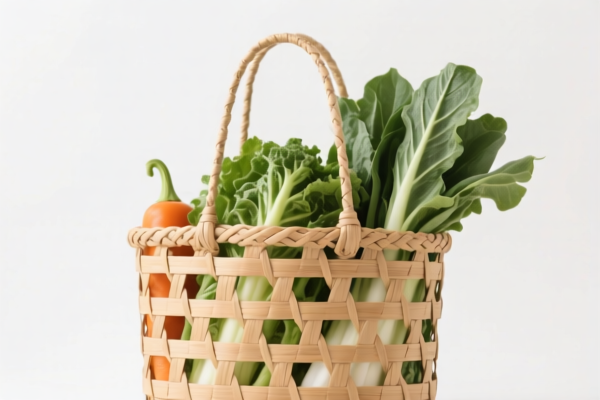
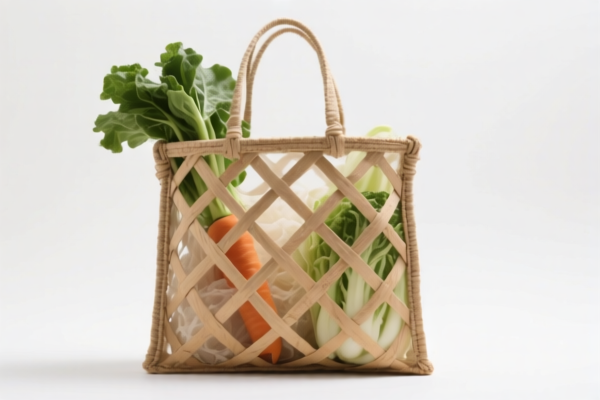
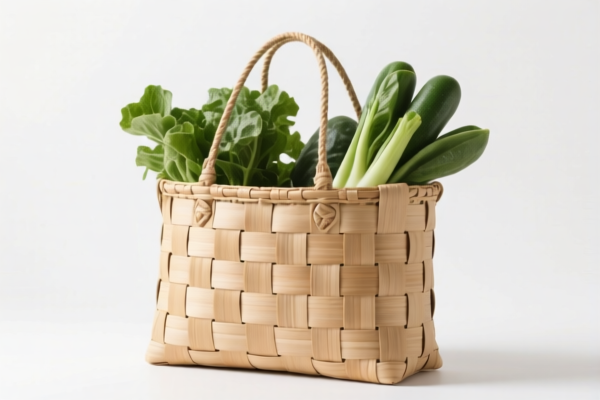
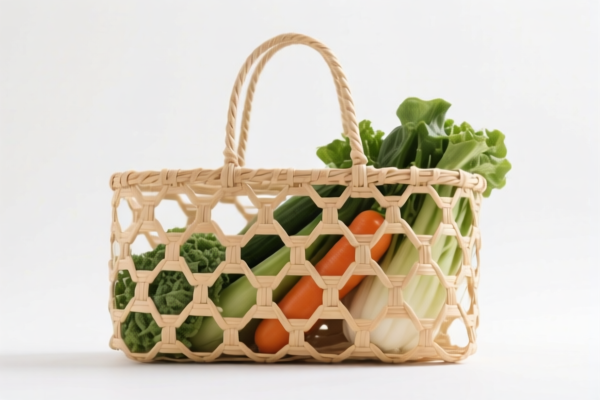
AI Analysis
🧺 Plant Fiber Woven Partition Bag (植物纤维编织隔板/包)
🌐 HS Code Reference & Customs Clearance Guide | 2026 Latest Tariff Analysis | Professional Entry Strategy
📌 I. Product Definition & Classification: What Exactly Is a "Woven Partition Bag"?
A "Plant Fiber Woven Partition Bag" is an ambiguous product description that triggers different customs classifications depending on its primary function and structural integrity. In international trade, this item generally falls into two categories:
- Basket-like Containers: If the item is primarily used for storage, carrying goods, or holds a fixed woven structure resembling a basket or crate, it is classified as a "Basket and other articles of plaiting materials."
- Furniture/Decor Components: If the item is rigid, designed to separate spaces (partitions/room dividers), or serves as a structural component for furniture/home decor (e.g., a rigid woven panel used as a shelf or divider), it is classified under "Bamboo, Rattan, or Other Vegetable Plaiting Materials Products" or "Furniture Parts."
⚠️ Critical Distinction:
- If it’s a soft-sided bag for carrying items (even if it has a rigid bottom) → 4602.19.18.00 (Basket/Container).
- If it’s a rigid panel for decoration, storage, or furniture integration (shelves, dividers) → 9403 (Furniture/Parts) or 4421 (Wood/Bamboo Products).
- Do not assume "Bag" = Textile or Bag. Plant fiber woven goods with a basket-like shape are Plaiting Materials, not textiles.
📦 II. HS Code Classification Matrix (2026 Latest Tariff Concordance)
Based on the provided data, the product is mapped to four specific HS Codes depending on the exact physical form and use case.
| HS Code | Product Description | Application Scenario | Key Feature |
|---|---|---|---|
4602.19.18.00 |
Plant fiber woven products, classified as Baskets and similar containers | Carry-all bags with rigid structure, storage crates, shopping baskets | ✅ Container-like shape |
9403.89.30.20 |
Plant fiber woven partitions, classified as Rattan/Bamboo furniture and parts | Rigid room dividers, shelf units, furniture frames made of woven plant fibers | ✅ Furniture/Structural Component |
9403.89.30.10 |
Plant fiber woven partitions, classified as Rattan/Bamboo furniture components or home decorations | Decorative woven panels, modular dividers, non-structural furniture parts | ✅ Decor/Component |
4421.91.98.80 |
Plant fiber woven partitions, classified as Other articles of bamboo or other vegetable plaiting materials | Bamboo partitions, rigid woven panels not fitting furniture definitions | ✅ Other Wood/Bamboo Article |
4421.99.98.80 |
Plant fiber woven partitions, classified as Other articles of wood | Wooden partitions, rigid woven composites primarily wood-based | ✅ Other Wood Product |
🔍 Key Warning:
- The term "Partition" in the user input suggests a rigid or semi-rigid structure (like a divider), which often pushes classification toward 9403 (Furniture) or 4421 (Other Articles) rather than 4602 (Baskets).
- However, if the product is explicitly a "Bag" (flexible, for carrying), 4602 is the safer, more accurate classification for "woven containers."
- Misclassification Risk: Declaring a rigid partition as a "Basket" (4602) or vice versa can lead to customs delays, as the duty calculation varies slightly (see below).
💰 III. 2026 Tariff Rate Detail (Including Surtaxes & Policy Add-ons)
✅ Applicable Country: United States (US)
✅ Origin: China (CN)
✅ Effective Date: 2025-11-10 onwards (including subsequent imports)
🎯 1. 4602.19.18.00 — Plant Fiber Woven Products (Baskets/Containers)
| Item | Content |
|---|---|
| Base Tariff | 4.5% (Ad Valorem) |
| Section 301 Surcharge | +25.0% |
| Section 122 Tariff | +10.0% |
| Total Tax Rate | 39.5% |
| Tax Calculation | CIF Value × 39.5% |
| De Minimis Exemption | ❌ Not Eligible (deny_de_minimis) |
| Legal Basis Path | USITC:4602.19.18.00 → FOOTNOTE:301 → IEEPA:Section122 |
📌 Explanation:
- The 4.5% is the standard Most-Favored-Nation (MFN) rate for baskets.
- The 25% is the Section 301 tariff on Chinese plaiting materials.
- The 10% is an additional tariff (referred to as "Section 122" in your data, likely referring to a specific trade action or recall-related surcharge in this context).
- Total 39.5% is the landed cost impact before duties.
🎯 2. 9403.89.30.20 — Plant Fiber Woven Partitions (Furniture/Parts)
| Item | Content |
|---|---|
| Base Tariff | 0.0% |
| Section 301 Surcharge | +25.0% |
| Section 122 Tariff | +10.0% |
| Total Tax Rate | 35.0% |
| Tax Calculation | CIF Value × 35.0% |
| De Minimis Exemption | ❌ Not Eligible (deny_de_minimis) |
| Legal Basis Path | USITC:9403.89.30.20 → FOOTNOTE:301 → IEEPA:Section122 |
📌 Note:
- Furniture parts made of rattan/bamboo have a 0% base rate, making the total tax lower (35%) than baskets (39.5%).
- This classification is optimal if the "bag" is actually a rigid partition or furniture component.
🎯 3. 9403.89.30.10 — Plant Fiber Woven Partitions (Decor/Components)
| Item | Content |
|---|---|
| Base Tariff | 0.0% |
| Section 301 Surcharge | +25.0% |
| Section 122 Tariff | +10.0% |
| Total Tax Rate | 35.0% |
| Tax Calculation | CIF Value × 35.0% |
| De Minimis Exemption | ❌ Not Eligible (deny_de_minimis) |
| Legal Basis Path | USITC:9403.89.30.10 → FOOTNOTE:301 → IEEPA:Section122 |
📌 Note:
- Same tax rate as9403.89.30.20.
- Distinguished by specific sub-heading for "components or home decorations." Ensure the product is not a standalone furniture piece but a part or decor.
🎯 4. 4421.91.98.80 — Plant Fiber Woven Partitions (Other Bamboo/Vegetable Articles)
| Item | Content |
|---|---|
| Base Tariff | 3.3% |
| Section 301 Surcharge | +25.0% |
| Section 122 Tariff | +10.0% |
| Total Tax Rate | 38.3% |
| Tax Calculation | CIF Value × 38.3% |
| De Minimis Exemption | ❌ Not Eligible (deny_de_minimis) |
| Legal Basis Path | USITC:4421.91.98.80 → FOOTNOTE:301 → IEEPA:Section122 |
📌 Note:
- Applies to bamboo or specific vegetable plaiting materials not classified as furniture.
- Total tax 38.3% is higher than the 9403 classifications due to the 3.3% base rate.
🎯 5. 4421.99.98.80 — Plant Fiber Woven Partitions (Other Wood Products)
| Item | Content |
|---|---|
| Base Tariff | 3.3% |
| Section 301 Surcharge | +25.0% |
| Section 122 Tariff | +10.0% |
| Total Tax Rate | 38.3% |
| Tax Calculation | CIF Value × 38.3% |
| De Minimis Exemption | ❌ Not Eligible (deny_de_minimis) |
| Legal Basis Path | USITC:4421.99.98.80 → FOOTNOTE:301 → IEEPA:Section122 |
📌 Note:
- Same as4421.91.98.80.
- Use only if the product is primarily wood-based or mixed material not fitting other categories.
🛠️ IV. Customs Clearance Practical Advice (Pitfall Avoidance Guide)
✅ 1. Documentation Checklist (Mandatory)
| Document | Required | Explanation |
|---|---|---|
| ✅ Product Description | ✔️ | Must clearly state: "Plant Fiber Woven Partition" OR "Woven Basket Bag." Avoid vague terms like "Woven Item." |
| ✅ Material Composition | ✔️ | Specify: Bamboo, Rattan, Seagrass, Reed, etc. Critical for distinguishing between 4602 (Plaiting) and 4421 (Wood). |
| ✅ Functional Description | ✔️ | Is it for carrying goods (Basket) or dividing space/decor (Partition/Furniture)? This determines the HS Code branch. |
| ✅ Photos (360°) | ✔️ | Show structure: Rigid walls? Flexible sides? Handles? Base? |
| ✅ Bill of Lading / Invoice | ✔️ | Must match HS Code and description precisely. |
| ✅ Country of Origin | ✔️ | Must be China to apply the specific surtaxes detailed above. |
✅ 2. Declaration Strategy (Key Tips)
🔥 "Shape Defines Code, Function Dictates Tax!"
| Scenario | Correct HS Code | Tax Rate | Why? |
|---|---|---|---|
| Bag with rigid bottom, handles, for shopping/storage | 4602.19.18.00 |
39.5% | It’s a "Basket/Container" under Chapter 46. |
| Rigid Panel/Divider for Home Decor | 9403.89.30.10 |
35.0% | It’s a "Home Decoration/Furniture Component." Lower base rate. |
| Standalone Room Divider (Furniture-like) | 9403.89.30.20 |
35.0% | It’s a "Furniture Part." Lower base rate. |
| Bamboo Panel (Not Furniture/Decoration) | 4421.91.98.80 |
38.3% | It’s an "Other Article of Bamboo." |
| Wooden Woven Panel | 4421.99.98.80 |
38.3% | It’s an "Other Wood Article." |
📌 Critical Advice:
- If your product is a "Partition Bag" (a bag that also acts as a divider), lean towards9403if it’s rigid and decorative, as the 35.0% tax is 4.5% lower than the basket classification.
- Do not use4602if the item is clearly a partition panel without carrying handles or open-top design.
✅ 3. Special Cases & Exceptions
| Situation | Handling Suggestion |
|---|---|
| Mixed Materials (Wood + Fabric) | If >50% by weight/volume is wood, consider 4421. If primarily woven plant fibers, 4602 or 9403. |
| OEM Custom Designs | Provide design drawings to prove it’s a "partition" or "furniture part," not a generic basket. |
| Small Parts (e.g., woven inserts) | If it’s a small insert for a bag, it might be a "part" of a bag (Chapter 42), but if standalone, use 4602 or 9403. |
| Gift Sets | If sold as part of a larger gift, ensure the primary item’s HS Code is declared for the set. |
🌍 V. Global Market Comparison (2026 Update)
| Market | Recommended HS Code | Estimated Tax (China Origin) | Notes |
|---|---|---|---|
| 🇺🇸 USA | 9403.89.30.10 (Optimal) |
35.0% | Best balance of classification and tax. |
| 🇺🇸 USA | 4602.19.18.00 |
39.5% | Safe for baskets, but 4.5% higher tax. |
| 🇨🇳 China | 4602.19.18.00 / 9403.89.30.10 |
~5-10% | No Section 301/122 tariffs. Low import duty. |
| 🇪🇺 EU | 4602.19 / 9403.89 |
~5-10% | Standard MFN rates. No high surcharges. |
| 🇬🇧 UK | 4602.19 / 9403.89 |
~5-10% | Post-Brexit tariffs apply. |
📌 Conclusion:
- For US Imports, classify as9403(Furniture/Decor) if possible to save 4.5% on taxes.
- If the product is unmistakably a basket/bag, use4602to avoid misclassification penalties.
📌 VI. Common Mistakes & Pitfalls (Lessons Learned)
❌ Mistake 1: Calling a rigid partition a "Bag" to fit a generic category.
👉 Result: Customs may reclassify to 4602 (39.5%) or 9403 (35%) based on inspection. If deemed a "Basket" when it’s a "Partition," you overpaid. If deemed a "Partition" when it’s a "Bag," you underpaid and face penalties.
❌ Mistake 2: Ignoring "Section 122" and "301" surcharges.
👉 Result: Budgeting only for base duties leads to short payment and customs holds. Always calculate Total Tax = Base + 301 + 122.
❌ Mistake 3: Using "Woven Bag" for a rigid bamboo panel.
👉 Result: Chapter 46 (Plaiting) vs. Chapter 44 (Wood). If it’s wood-based, 4421 applies (38.3%). Misclassification leads to additional duty assessment.
✅ Correct Approach:
"Bamboo Woven Room Divider Panel, Decorative, Rigid Structure, Model XYZ" →
9403.89.30.10(35.0%)
"Seagrass Woven Shopping Basket with Handles" →4602.19.18.00(39.5%)
🎯 VII. Conclusion: Professional Declaration, Cost Optimization!
🎯 Remember This Rule:
🔹 "If it holds things, it’s a Basket (4602, 39.5%). If it divides space or decorates, it’s Furniture/Part (9403, 35%). If it’s wood/bamboo article, it’s 4421 (38.3%)."
🔹 "Spend $50 on a pre-ruling, save $450 in taxes on a $10,000 shipment!"
📌 Pro Tip:
If your "Partition Bag" is flexible and used for storage, stick to 4602.19.18.00.
If it is rigid and used for decoration/organization, use 9403.89.30.10 to achieve the lowest tax rate (35.0%).
📣 Immediate Action:
📞 Provide product photos and dimensions to your customs broker.
🚀 Apply for an Advance Ruling if the product’s nature is ambiguous.
💡 Accurate HS Code = Lower Taxes + Faster Clearance!
✨ Customs Clarity Starts with Precise Classification!
💼 Every Percent Counts in the Age of Tariffs!
Customer Reviews
About HS Code Classification
The Harmonized System (HS) is an internationally standardized nomenclature developed by the World Customs Organization (WCO) to classify traded products. Over 200 countries use the HS system as the basis for customs tariffs, trade statistics, and import/export regulations.
Each HS code follows a hierarchical structure:
- Chapter (2 digits) — Broad category of goods (e.g., Chapter 84: Machinery and Mechanical Appliances)
- Heading (4 digits) — More specific grouping within the chapter
- Subheading (6 digits) — Internationally standardized breakdown, used by all WCO member countries
- National subdivisions (8-10 digits) — Country-specific extensions for further classification, such as US HTSUS 10-digit codes
Correct HS code classification is essential for smooth customs clearance, accurate duty payment, and compliance with trade regulations. Misclassification can lead to customs delays, overpayment of duties, or penalties.
When importing from CN to US, the applicable tariff rates may include:
- Most-Favored-Nation (MFN) rate — The standard duty rate applied to WTO members
- General rate — Applied to countries without trade agreements
- Trade remedy duties — Additional tariffs such as Section 301 (anti-dumping), Section 232 (national security), or countervailing duties
The information provided on this page is for reference purposes only. For official classification, please consult with your local customs authority or a licensed customs broker.