Plant Fiber Woven Pet Basket
CN → US| HS Code | Tariff Rate | Origin | Destination | Doc |
|---|---|---|---|---|
| 4602110700 | 35.0% | CN | US | Official Doc |
| 4602191700 | 35.0% | CN | US | Official Doc |
Product Images
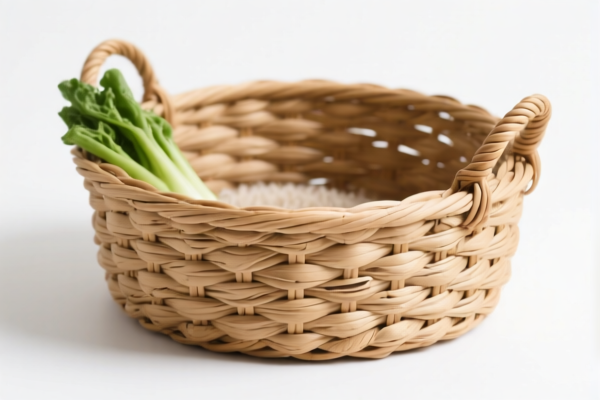
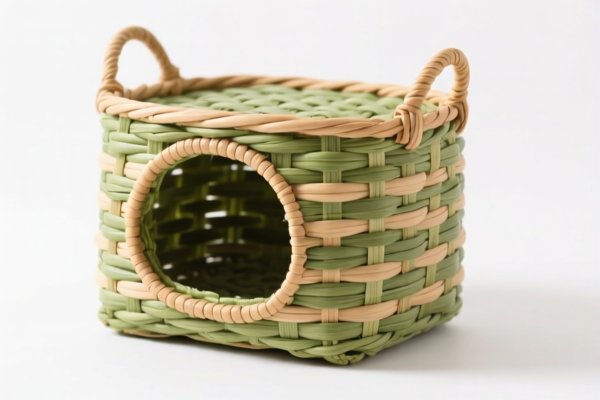
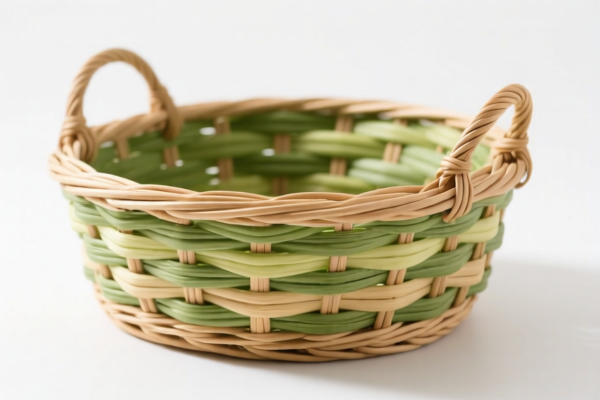
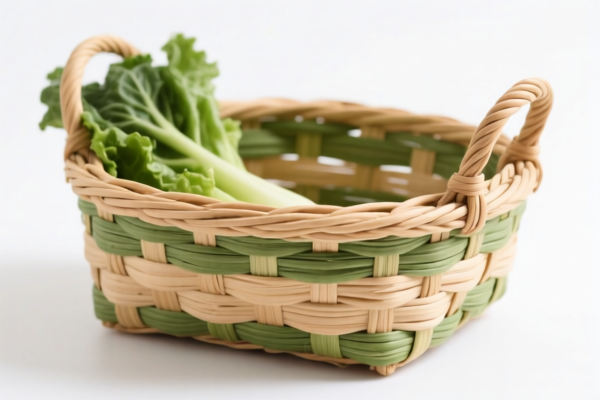
AI Analysis
🧺 Plant Fiber Woven Pet Basket (Wicker/Bamboo)
🌐 HS Code Reference & Customs Clearance Guide | 2026 Latest Tariff Analysis | Professional Clearance Strategy
📌 I. Product Definition and Classification: What Exactly is a "Pet Basket"?
Plant fiber woven pet baskets are functional articles made from natural materials such as bamboo, rattan, or other vegetable plaiting materials. In international trade, they are not classified as furniture or textile items, but rather as wickerwork/basketwork.
The critical distinction lies in the material and the structure: * Bamboo/Wicker Structures: If the basket is made directly to shape from plaiting materials (e.g., woven bamboo strips), it falls under Chapter 46. * Textile/Leather Linings: Even if lined with fabric or leather, as long the outer structure is woven plant fiber, it remains in Chapter 46. * Non-Vegetable Materials: If made of plastic wicker or metal, they would fall under different chapters (e.g., 39 or 73), but the input specifies "Plant Fiber", restricting us to Chapter 46.
⚠️ Key Distinction:
- If the item is a woven basket made to shape (like a typical pet crate/basket) → Heading 4602
- If it is merely plaiting material (e.g., unprocessed bamboo mats) → Heading 4601
- Most finished pet baskets are "made up" directly from plaiting materials, thus 4602.
📦 II. HS Code Classification Details (2026 Latest Tariff Authority Match)
Based on the provided <DATA>, we have two specific HS codes for "Plant Fiber Woven Pet Baskets" originating from China (implied by the 25% additional tariff). Both entries fall under 4602 (Wickerwork; articles made directly to shape from plaiting materials).
| HS Code | Product Description | Material Specifics | Application for Pet Baskets |
|---|---|---|---|
4602.11.07.00 |
Basketwork, wickerwork... Of vegetable materials: Of bamboo: Other baskets and bags, whether or not lined: Wickerwork | Bamboo | Ideal for baskets made primarily from bamboo strips. This is the most common classification for sturdy, natural bamboo pet crates. |
4602.19.17.00 |
Basketwork, wickerwork... Of vegetable materials: Other: Other baskets and bags, whether or not lined: Other: Wickerwork | Other Plant Fibers (Rattan, Willow, Cane, etc.) | Applies if the basket is made from non-bamboo plant fibers (e.g., rattan, wicker, seagrass). |
🔍 Critical Note:
- Both codes are for Wickerwork (woven/plaited structures).
- If the basket is solid (not woven) but made of processed wood/bamboo, it might fall under 4421 (Other articles of wood), but "Woven/Pet Basket" strongly implies 4602.
- The provided data only includes 4602 codes with a 25% Additional Tariff. Do not assume lower rates for other chapters without independent verification.
💰 III. 2026 Latest Tariff Rate Breakdown (Including Surcharges)
✅ Applicable Country: United States (US)
✅ Origin: China (CN)
✅ Effective Time: As per 2026 trade policies (Section 301 & IEEPA implications)
🎯 1. 4602.11.07.00 — Bamboo Wicker Pet Basket
| Item | Detail |
|---|---|
| Base Tariff Rate | 0.0% (General rate for many wicker products) |
| Additional Tariff (Section 301) | +25.0% |
| Total Tariff Rate | 25.0% |
| Tax Calculation | CIF Value × 25% |
| De Minimis Exemption | ❌ Not Applicable (Section 301 tariffs typically apply even to low-value shipments if declared under these codes) |
| Legal Basis | USITC Harmonized Tariff Schedule (HTS) 2026; Section 301 List 4A/B |
📌 Explanation:
- Although the base duty for wicker baskets is often 0%, the 25% additional tariff applies due to trade tensions.
- This is a fixed percentage ad valorem tax.
- No IEEPA 10% surcharge is listed in the provided<DATA>, so we stick to the 25% total as per the source.
🎯 2. 4602.19.17.00 — Non-Bamboo Plant Fiber Wicker Pet Basket (e.g., Rattan)
| Item | Detail |
|---|---|
| Base Tariff Rate | 0.0% |
| Additional Tariff (Section 301) | +25.0% |
| Total Tariff Rate | 25.0% |
| Tax Calculation | CIF Value × 25% |
| De Minimis Exemption | ❌ Not Applicable |
| Legal Basis | USITC HTS 2026; Section 301 List 4A/B |
📌 Explanation:
- Same tax structure as bamboo versions.
- Rattan, willow, and seagrass baskets incur the same 25% hit.
- Cost Impact: On a $1,000 shipment, you pay $250 in duties alone.
🛠️ IV. Customs Clearance Practical Advice (Avoiding Pitfalls)
✅ 1. Required Documentation Checklist
| Document | Required? | Purpose |
|---|---|---|
| ✅ Product Description | ✔️ | Must clearly state: "Woven Bamboo/Rattan Pet Basket, Liner: Yes/No" |
| ✅ Material Declaration | ✔️ | Specify if >50% by weight is bamboo or other vegetable fiber. |
| ✅ Commercial Invoice | ✔️ | Must match HS Code 4602.11.07.00 or 4602.19.17.00 exactly. |
| ✅ Packing List | ✔️ | Include gross/net weight to verify CIF value accuracy. |
| ✅ Photos of Product | ✔️ | Show woven texture to prove it is "wickerwork" (4602) and not solid wood (4421). |
| ✅ Origin Certificate | ✔️ | To prove China origin (which triggers the 25% tariff). If transshipped, provide full chain of custody. |
✅ 2. Declaration Tips (Key Phrases)
🔥 "Woven Structure, Vegetable Fiber, Lined/Unlined"
| Scenario | Correct Declaration | Risk |
|---|---|---|
| Bamboo Basket | "Woven Bamboo Pet Basket, Unlined, HS 4602.11.07.00" |
Low if accurate |
| Rattan Basket | "Woven Rattan Pet Basket, Fabric Lined, HS 4602.19.17.00" |
Low if accurate |
| Misclassified as Furniture | "Pet Crate, Wooden" → HS 4421 |
❌ HIGH RISK: Wrong chapter, potential penalty + back taxes |
| Misclassified as Textile | "Woven Bag, Cotton" → HS 6305 |
❌ HIGH RISK: Incorrect material composition |
✅ 3. Special Cases & Mitigation
| Situation | Strategy |
|---|---|
| Mixed Materials (e.g., Bamboo frame + Plastic mesh) | If plastic is >50% by weight or essential character, it may shift to Chapter 39. However, for a "woven basket," bamboo structure usually dominates. Consult a broker to avoid reclassification. |
| Lined Baskets | The presence of a fabric/leather liner does not change the HS Code to 6305/4202 if the outer structure is woven plant fiber. Keep this in mind to justify 4602. |
| Kit Assembly | If shipping disassembled baskets, ensure the description states "Parts of Wicker Baskets, HS 4602..." to avoid being classified as a "Set" with complex rules. |
🌍 V. Global Market Comparison (2026)
| Country/Region | Recommended HS Code | Tariff Rate (China Origin) | Notes |
|---|---|---|---|
| 🇺🇸 USA | 4602.11.07.00 / 4602.19.17.00 |
25.0% | High tariff due to Section 301. |
| 🇪🇺 EU | 4602.11 / 4602.19 |
0% - 2.5% | Generally low duty for wicker. No Section 301. |
| 🇨🇦 Canada | 4602.11 / 4602.19 |
0% | CUSMA benefits may apply if qualifying. |
| 🇬🇧 UK | 4602.11 / 4602.19 |
0% - 2.5% | Post-Brexit tariff schedule similar to EU. |
| 🇨🇳 China | 4602.11 / 4602.19 |
5% - 10% | Import duty into China for finished baskets. |
📌 Conclusion:
- The USA is the only major market in this analysis with a 25% additional tariff.
- If your market is primarily North America, the 25% duty significantly impacts pricing strategy.
- Consider transshipment or supplier diversification (e.g., Vietnam, Thailand) if eligible for lower rates, but ensure Origin Rules are strictly met to avoid fraud allegations.
📌 VI. Common Errors & Pitfalls (Lessons Learned)
❌ Error 1: Classifying as "Furniture" (HS 9403)
👉 Consequence: Wrong HS Code. While pet beds can be furniture, woven baskets are explicitly covered by 4602. Misclassification leads to duty discrepancies and audits.
❌ Error 2: Ignoring the "Lined" Aspect
👉 Consequence: Even if lined, do not switch to textile codes unless the lining is the primary character. For woven baskets, the weave defines the product.
❌ Error 3: Underestimating the 25% Tariff Impact
👉 Consequence: Budgeting errors. A 0% base rate creates a false sense of low cost. The 25% is real and payable.
❌ Error 4: Confusing Bamboo with Wood
👉 Consequence: Bamboo is a grass (Chapter 46/14), not wood (Chapter 44). Correctly identifying it as "Plant Fiber/Bamboo" ensures you use 4602 and not 4421.
✅ Correct Declaration Example:
"Woven Bamboo Pet Basket, Unlined, HS 4602.11.07.00, Made in China"
🎯 VII. Conclusion: Smart Classification, Cost Control
🎯 Key Takeaway:
🔹 Woven = 4602, not Furniture or Textile.
🔹 Bamboo = 4602.11, Other Plant Fiber = 4602.19.
🔹 USA Import = 25% Total Duty. No base tax, just the surcharge.
📌 Pro Tip:
If you are shipping to the US, always include the HS Code 4602.11.07.00 or 4602.19.17.00 on your commercial invoice. Provide photos of the weave to prove the material is plant-based wickerwork. This ensures smooth clearance and avoids disputes over material classification.
📣 Immediate Action:
📞 Contact your customs broker to verify if your specific "Pet Basket" design (e.g., rigid vs. collapsible) aligns with 4602.
💰 Factor in 25% duty into your landed cost calculation immediately.
📦 Label products clearly as "Woven Bamboo/Rattan Pet Basket" to avoid ambiguity.
✨ Professional Clearance, Starting from Precise Classification!
💼 Your every cent of cost is worth precisely calculated!
Customer Reviews
About HS Code Classification
The Harmonized System (HS) is an internationally standardized nomenclature developed by the World Customs Organization (WCO) to classify traded products. Over 200 countries use the HS system as the basis for customs tariffs, trade statistics, and import/export regulations.
Each HS code follows a hierarchical structure:
- Chapter (2 digits) — Broad category of goods (e.g., Chapter 84: Machinery and Mechanical Appliances)
- Heading (4 digits) — More specific grouping within the chapter
- Subheading (6 digits) — Internationally standardized breakdown, used by all WCO member countries
- National subdivisions (8-10 digits) — Country-specific extensions for further classification, such as US HTSUS 10-digit codes
Correct HS code classification is essential for smooth customs clearance, accurate duty payment, and compliance with trade regulations. Misclassification can lead to customs delays, overpayment of duties, or penalties.
When importing from CN to US, the applicable tariff rates may include:
- Most-Favored-Nation (MFN) rate — The standard duty rate applied to WTO members
- General rate — Applied to countries without trade agreements
- Trade remedy duties — Additional tariffs such as Section 301 (anti-dumping), Section 232 (national security), or countervailing duties
The information provided on this page is for reference purposes only. For official classification, please consult with your local customs authority or a licensed customs broker.