Plant Fiber Woven Waist Bag
CN → US| HS Code | Tariff Rate | Origin | Destination | Doc |
|---|---|---|---|---|
| 4823908000 | 35.0% | CN | US | Official Doc |
| 4823902000 | 35.0% | CN | US | Official Doc |
| 4202124000 | 41.3% | CN | US | Official Doc |
| 4202921500 | 41.3% | CN | US | Official Doc |
| 6305900000 | 23.7% | CN | US | Official Doc |
Product Images
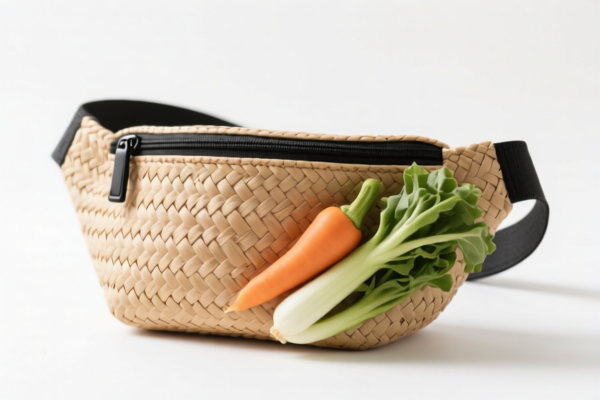
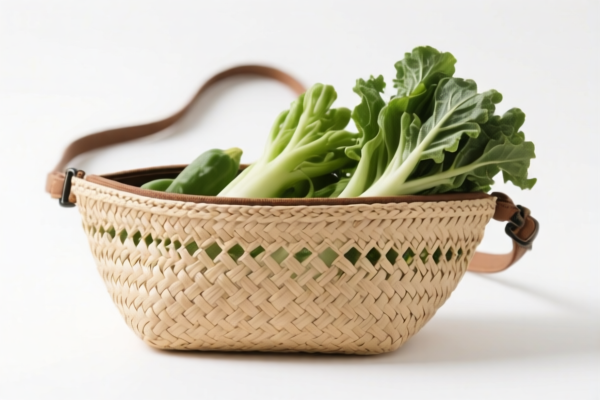
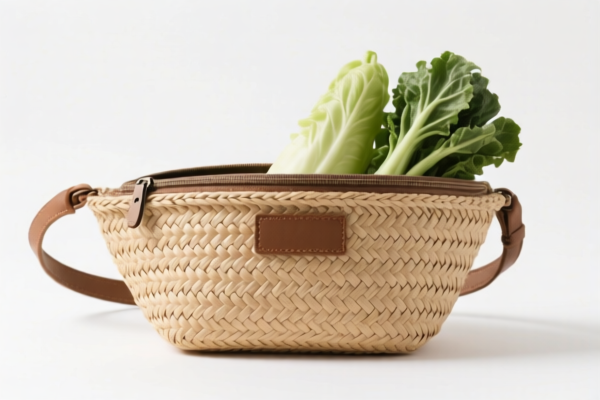
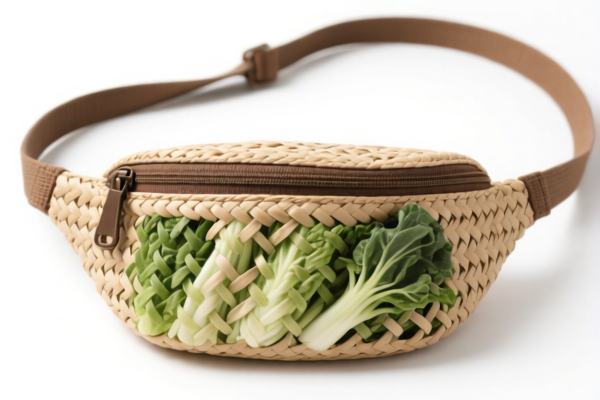
AI Analysis
🎒 Plant Fiber Woven Waist Bag (Botanical Fiber Pouch)
🌐 HS Code Reference & Customs Clearance Guide | 2026 Latest Tariff Analysis | Professional-Level Entry Strategy
📌 I. Product Definition & Classification: Do You Really Understand "Plant Fiber Woven Waist Bag"?
A Plant Fiber Woven Waist Bag is an accessory made from natural plant-based materials (such as rattan, bamboo, straw, or reed) processed into woven strips or mats. In international trade, it occupies a tricky position between Paper Products (Chapter 48) and Articles of Apparel/Accessories (Chapter 42).
The classification hinges on two critical factors: 1. Material Composition: Is it processed paper pulp/fiber (Chapter 48) or textile-like plant fibers? 2. Function/Form: Is it primarily a container/bag (Chapter 42) or a paper-based item (Chapter 48)?
⚠️ Key Distinction Point:
- If the material is strictly paper pulp, cellulose fibers, or treated paper woven into a bag structure → Often falls under Chapter 48 (Paper Articles).
- If the material is natural vegetable fibers (rattan, straw, etc.) woven into a bag for personal use → Often falls under Chapter 42 (Articles of Apparel/Accessories).
- If it is classified as a general textile/non-textile bag not elsewhere specified → May fall under Chapter 63.
📦 II. HS Code Classification Details (2026 Latest Tariff Authority Comparison)
Based on the specific characteristics of the input data, here are the five potential HS Codes with their corresponding tax implications.
| HS Code | Product Description | Application Scenario | Tax Rate (US/CN Origin) |
|---|---|---|---|
4823.90.80.00 |
Plant fiber woven items; processed paper/cellulose fiber nets; other paper articles | Bags made from paper pulp or cellulose fiber mats that mimic weaving | 35.0% |
4823.90.20.00 |
Plant fiber woven file bags; bag-like paper products; no material conflict | Woven file bags made of plant-fiber paper; rigid paper structures | 35.0% |
4202.12.40.00 |
Vegetable fiber containers; "bag" form factor; inferred vegetable fiber category | Waist bags made from vegetable fibers (e.g., rattan, straw) treated as textile-like | 41.3% |
4202.92.15.00 |
Bags of textile materials; plant fiber bags for document storage; travel-like bags | General travel/accessory bags made of plant fibers, not specified elsewhere | 41.3% |
6305.90.00.00 |
Sling bags/waist bags made of other textile materials; other vegetable fiber textiles | Slings/Sling bags made of other textile materials; broader "other textile" category | 23.7% |
🔍 Key Reminder:
- Chapter 48 (Codes ending in .90): Applies if the product is essentially a paper article (cellulose/pulp) even if woven. Lower base duty (0%), but subject to high additional tariffs.
- Chapter 42 (Codes ending in .12/.92): Applies if the product is viewed as a bag/accessory made from vegetable fibers. Higher base duty (6.3%), but still subject to additional tariffs.
- Chapter 63 (Code 6305): Applies if classified as a general textile bag not elsewhere specified. Lowest base duty (6.2%), but lower additional tariff (7.5%).
💰 III. 2026 Latest Tariff Rate Breakdown (Including Additional Taxes & Policy Surcharges)
✅ Applicable Country: United States (US)
✅ Origin: China (CN)
✅ Effective Date: November 10, 2025 onwards (for subsequent imports)
🎯 1. 4823.90.80.00 & 4823.90.20.00 —— Paper Articles (Woven Paper/Cellulose Fiber)
| Item | Content |
|---|---|
| Base Duty Rate | 0% (ad valorem) |
| Section 301 Additional Duty (USITC) | +25% |
| IEEPA Additional Duty (122 Clause) | +10% |
| Total Effective Rate | 35.0% |
| Tax Calculation | CIF Value × 35% |
| De Minimis Exemption Eligible | ❌ No (deny_de_minimis) |
| Legal Basis Path | IEEPA:9903.01.25 → IEEPA:9903.01.24 → USITC:4823.90.x0 → FOOTNOTE:9903.88.01 |
📌 Explanation:
- Although the base duty is 0%, the Section 301 tariff (25%) and IEEPA tariff (10%) apply because these are classified as Chinese-origin goods subject to trade restrictions.
- Total Tax: 35%. This is a high tax burden, but lower than the Chapter 42 options.
🎯 2. 4202.12.40.00 & 4202.92.15.00 —— Bags/Accessories (Vegetable Fiber)
| Item | Content |
|---|---|
| Base Duty Rate | 6.3% |
| Section 301 Additional Duty (USITC) | +25% |
| IEEPA Additional Duty (122 Clause) | +10% |
| Total Effective Rate | 41.3% |
| Tax Calculation | CIF Value × 41.3% |
| De Minimis Exemption Eligible | ❌ No (deny_de_minimis) |
| Legal Basis Path | IEEPA:9903.01.25 → IEEPA:9903.01.24 → USITC:4202.12.40.00 / 4202.92.15.00 |
📌 Explanation:
- These codes carry a 6.3% base duty on top of the 25% Section 301 and 10% IEEPA tariffs.
- Total Tax: 41.3%. This is the highest tax bracket among the options.
- Risk: If customs disputes the "bag" classification and reclassifies to Paper (Chapter 48), you may face penalties for misdeclaration.
🎯 3. 6305.90.00.00 —— Other Textile Materials (Sling Bags)
| Item | Content |
|---|---|
| Base Duty Rate | 6.2% |
| Section 301 Additional Duty (USITC) | +7.5% |
| IEEPA Additional Duty (122 Clause) | +10% |
| Total Effective Rate | 23.7% |
| Tax Calculation | CIF Value × 23.7% |
| De Minimis Exemption Eligible | ❌ No (deny_de_minimis) |
| Legal Basis Path | IEEPA:9903.01.25 → IEEPA:9903.01.24 → USITC:6305.90.00.00 |
📌 Explanation:
- This code has the lowest total tax rate (23.7%).
- Crucial Condition: This classification is only applicable if the product is strictly interpreted as a "bag made of other textile materials" or "sling bag" not elsewhere specified.
- Risk: Customs may reject this if the material is clearly plant-based (vegetable fiber) and not a standard textile, forcing a reclassification to Chapter 42 (41.3%) or Chapter 48 (35%).
🛠️ IV. Customs Clearance Operational Advice (Practical Pitfall Avoidance Guide)
✅ 1. Required Documentation Checklist (All Mandatory)
| Document | Required | Description |
|---|---|---|
| ✅ Product Specifications | ✔️ | Detailed material composition (e.g., "100% Rattan," "Bamboo Fiber Paper," "Reed"). |
| ✅ Material Test Report | ✔️ | Third-party lab report confirming fiber type (Plant vs. Paper Pulp). |
| ✅ Product Photos (Labeled) | ✔️ | Clear images showing weave structure, shape, and closure mechanism. |
| ✅ Commercial Invoice | ✔️ | Must accurately describe the item as "Waist Bag" or "Paper Woven Bag" consistent with HS Code. |
| ✅ Packing List | ✔️ | Include dimensions, weight, and quantity. |
| ✅ Origin Certificate (CO) | ✔️ | Essential for proving China origin to apply correct additional tariffs. |
| ✅ Structure Diagram | ✔️ | Show if the bag has a lining, zipper, or metal hardware (affects classification). |
✅ 2. Declaration Strategy (Key Mantra)
🔥 “Material Defines Chapter, Function Defines Heading, Precision Saves Tax!”
| Scenario | Correct Declaration | Wrong Declaration | Consequence |
|---|---|---|---|
| Made of Woven Rattan/Straw | 4202.12.40.00 or 4202.92.15.00 (Bag) |
6305.90.00.00 (Textile) |
Potential reclassification penalty if deemed non-textile. |
| Made of Woven Paper/Pulp | 4823.90.80.00 or 4823.90.20.00 (Paper) |
4202.92.15.00 (Bag) |
Overpayment of tax (41.3% vs 35%) or audit flag. |
| Sling Bag (General Textile) | 6305.90.00.00 |
4202.12.40.00 |
Underpayment if deemed plant-based bag; audit risk. |
| Any of the Above | Clear Material Description | Vague "Woven Bag" | Delay in customs clearance; high risk of penalty. |
✅ 3. Special Handling Instructions
| Situation | Handling Advice |
|---|---|
| Mixed Materials | If the bag has a fabric lining or metal hardware, declare based on the essential character (usually the plant fiber outer shell). |
| OEM Custom Bags | Provide design drawings to prove the "waist bag" function. Avoid generic terms like "pouch." |
| Pre-Certification | Apply for Pre-Ruling from CBP if the material is ambiguous (e.g., semi-processed plant fiber). |
| De Minimis | ❌ Do NOT use 8003 Exemption. All listed codes are subject to deny_de_minimis. Full duty must be paid. |
🌍 V. Global Market Comparison (2026 Latest)
| Country/Region | Recommended HS Code | Total Tax (China Origin) | Certification Requirements | Notes |
|---|---|---|---|---|
| 🇺🇸 United States | 4823.90.80.00 (Best Rate) |
35.0% | None specific | Lowest total tax if classified as paper. |
| 🇺🇸 United States | 4202.92.15.00 (Alternative) |
41.3% | None specific | Higher tax if classified as bag. |
| 🇪🇺 European Union | 4602.12.00.00 (Basketry) |
~0-2% | CE (if applicable) | Not in original data, but common for plant fiber. |
| 🇨🇳 China | 4202.92.15.00 |
5-10% | N/A | Import duties vary, no US-style additional tariffs. |
| 🇬🇧 United Kingdom | 4202.92.15.00 |
~12-15% | UKCA (if applicable) | Post-Brexit tariffs may apply. |
📌 Conclusion:
- USA is the most tax-intensive market due to Section 301 and IEEPA tariffs.
- Strategy: If the product can be legitimately classified as a paper article (Chapter 48), the tax is 35%, which is 6.3% lower than the bag classification (41.3%).
- Caution: Do not misdeclare a plastic-lined bag as paper. Customs inspections are strict.
📌 VI. Common Mistakes & Pitfall Guide (Lessons Learned)
❌ Mistake 1: Declaring a rattan waist bag as 6305.90.00.00 (Textile)
👉 Consequence: Customs may reject it as "not a textile" and reclassify to 4202.12.40.00, leading to underpayment penalties (23.7% vs 41.3%).
❌ Mistake 2: Declaring a paper pulp bag as 4202.92.15.00 (Bag)
👉 Consequence: Overpaying tax. You pay 41.3% instead of 35.0%. No refund for past declarations without complex audits.
❌ Mistake 3: Using "Woven Bag" without specifying material
👉 Consequence: Customs will guess. If they guess "plastic," tax could be even higher. Delay in clearance.
❌ Mistake 4: Assuming De Minimis ($800) applies
👉 Consequence: FULL SHIPMENT SEIZED or DELAYED. All these HS Codes are subject to additional tariffs and are not eligible for de minimis exemption.
✅ Correct Approach:
"Waist Bag, Woven, 100% Bamboo Fiber, No Lining, Model XYZ, Designed for Personal Accessory Use"
🎯 VII. Conclusion: Precision Classification, Cost Efficiency!
🎯 Remember the Mantra:
🔹 "Paper Class: 35% Tax. Bag Class: 41.3% Tax. Textile Class: 23.7% Risk."
🔹 "Material Truth is Key, Misclassification is Costly, Pre-Ruling is Wise!"
📌 Pro Tip:
If your product is made from rattan, bamboo, or reed, consider if it fits Chapter 46 (Basketry) in other markets (not shown in US data above). In the US, stick to Chapter 42 or 48 as per the data.
Recommendation: For US imports,4823.90.80.00(35%) is the safest low-tax option if the material can be justified as cellulose/plant fiber paper.
📣 Immediate Action:
📞 Contact your customs broker + Provide material test reports + Apply for CBP Advance Ruling
🚀 Ensure your Plant Fiber Woven Waist Bag clears customs smoothly, minimizing tax liabilities and avoiding delays!
✨ Professional Clearance Starts with Accurate Classification!
💼 Every Cent Saved is a Cent Earned!
Customer Reviews
About HS Code Classification
The Harmonized System (HS) is an internationally standardized nomenclature developed by the World Customs Organization (WCO) to classify traded products. Over 200 countries use the HS system as the basis for customs tariffs, trade statistics, and import/export regulations.
Each HS code follows a hierarchical structure:
- Chapter (2 digits) — Broad category of goods (e.g., Chapter 84: Machinery and Mechanical Appliances)
- Heading (4 digits) — More specific grouping within the chapter
- Subheading (6 digits) — Internationally standardized breakdown, used by all WCO member countries
- National subdivisions (8-10 digits) — Country-specific extensions for further classification, such as US HTSUS 10-digit codes
Correct HS code classification is essential for smooth customs clearance, accurate duty payment, and compliance with trade regulations. Misclassification can lead to customs delays, overpayment of duties, or penalties.
When importing from CN to US, the applicable tariff rates may include:
- Most-Favored-Nation (MFN) rate — The standard duty rate applied to WTO members
- General rate — Applied to countries without trade agreements
- Trade remedy duties — Additional tariffs such as Section 301 (anti-dumping), Section 232 (national security), or countervailing duties
The information provided on this page is for reference purposes only. For official classification, please consult with your local customs authority or a licensed customs broker.