Plant Specimen Book
CN → US| HS Code | Tariff Rate | Origin | Destination | Doc |
|---|---|---|---|---|
| 4823904000 | 35.0% | CN | US | Official Doc |
| 9705290000 | 10.0% | CN | US | Official Doc |
| 9705390040 | 17.5% | CN | US | Official Doc |
| 4823908000 | 35.0% | CN | US | Official Doc |
| 4820500000 | 35.0% | CN | US | Official Doc |
| 4820900000 | 35.0% | CN | US | Official Doc |
Product Images
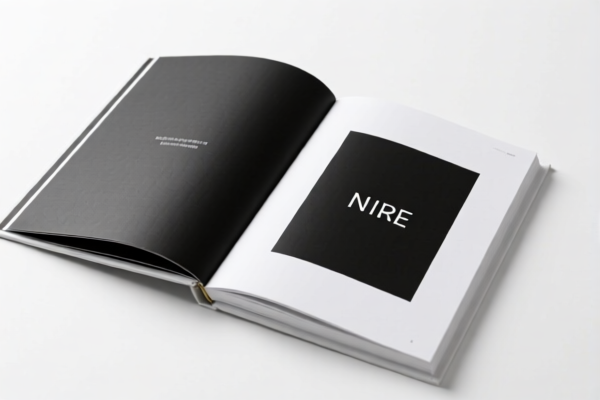

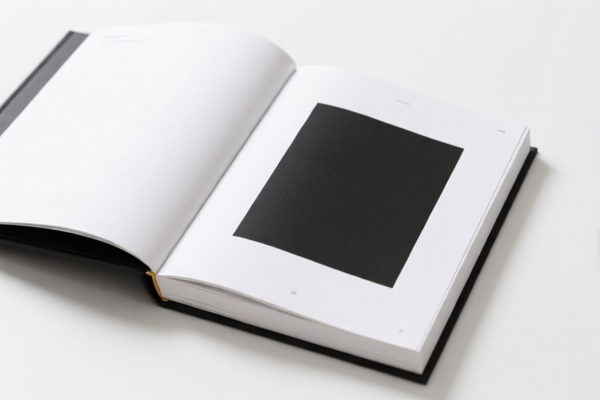

AI Analysis
🌿 Plant Specimen Book (Plant Herbarium Album / Botanical Collection Journal)
🌐 HS Code Reference & Customs Clearance Guide | 2026 Latest Tariff Analysis | Professional Level Entry Strategy
📌 I. Product Definition & Classification: Do You Really Understand "Plant Specimen Books"?
A Plant Specimen Book is a specialized collection carrier used for preserving and displaying botanical samples. It typically consists of an album or journal format where pressed plant specimens are mounted, labeled, and stored.
In international trade, it is categorized based on two main criteria: 1. Nature of the Content: Is it primarily a collector’s item (scientific/cultural value) or a paper product (structural value)? 2. Material Composition: Predominantly paper/cardboard vs. other materials.
⚠️ Key Distinction Point:
- If the product is marketed as a scientific collector’s item containing or intended for botanical specimens → Likely falls under Chapter 97 (Collector’s Items).
- If the product is viewed simply as a paper-based album for general use or generic storage → Falls under Chapter 48 (Paper & Paperboard).
📦 II. HS Code Classification Details (2026 Latest Tariff Authority Comparison)
Based on the provided data, here are the 6 matched HS Codes with their respective tax implications:
| HS Code | Product Description & Logic | Total Tax Rate | Key Reasoning |
|---|---|---|---|
| 9705.29.00.00 | Collector’s Items: Botanical Interest Specimens + Album format for botanical collection. |
10.0% | Matches "botanical interest" and "specimen" category. No material conflict. |
| 9705.39.00.40 | Collector’s Items: Other Materials Plant specimens with unspecified carrier material, falling under residual categories. |
17.5% | Residual category for collectors’ items not specified elsewhere. Assumes material consistency. |
| 4823.90.40.00 | Paper Products: Other Album made of paper/cardboard, used for display/collection. |
35.0% | Inferred material: Paper/Cardboard. Shape: Display/Collection carrier. |
| 4823.90.80.00 | Paper Products: Other (Unspecified) Other shaped/sized paper制品. |
35.0% | Inferred material: Paper/Cardboard. Generic "other" classification. |
| 4820.50.00.00 | Paper Products: Notebooks/Albums Success match: Form (Album), Use (Collection), Material (Paper/Cardboard). |
35.0% | Explicitly matches "albums made of paper/cardboard". |
| 4820.90.00.00 | Paper Products: Other Other paper albums not elsewhere specified. |
35.0% | Matches "album" form factor and inferred paper material. |
🔍 Critical Observation:
- There is a massive tax disparity between Chapter 97 (Collector’s Items, 10%-17.5%) and Chapter 48 (Paper Products, 35%). - The core dispute lies in whether the product is valued as a collector’s item (9705) or a paper good (4820/4823). - Most favorable option:9705.29.00.00at 10.0%.
💰 III. 2026 Latest Tariff Rate Breakdown (Including Surtaxes & Policy Add-ons)
✅ Applicable Country: United States (US)
✅ Country of Origin: China (CN)
✅ Effective Date: November 10, 2025 onwards (for subsequent imports)
🎯 1. 9705.29.00.00 —— Collector’s Items: Botanical Interest 🏆 Best Case Scenario
| Item | Content |
|---|---|
| Base Tariff | 0% (ad valorem) |
| USITC Surcharge | 0% (No 301 Section 301 duty applied to this specific subheading in this data set) |
| IEEPA Surcharge | +10% (Against China/HK products, effective Nov 10, 2025) |
| Total Effective Rate | 10.0% |
| Tax Calculation | CIF Value × 10% |
| De Minimis Eligibility | ❌ Not Eligible (deny_de_minimis) |
| Legal Basis Path | IEEPA:9903.01.24 (10% IEEPA) |
📌 Explanation:
- This is the most tax-efficient classification. - The 10% IEEPA tax is the only surcharge. - No 25% Section 301 tariff applies here, likely because "Collector’s Items" are treated differently under trade remedy laws compared to industrial paper products.
🎯 2. 9705.39.00.40 —— Collector’s Items: Other Materials
| Item | Content |
|---|---|
| Base Tariff | 0% |
| USITC Surcharge | +7.5% |
| IEEPA Surcharge | +10% |
| Total Effective Rate | 17.5% |
| Tax Calculation | CIF Value × 17.5% |
| De Minimis Eligibility | ❌ Not Eligible |
| Legal Basis Path | USITC:9905.39.00.40 (7.5%) + IEEPA:9903.01.24 (10%) |
📌 Explanation:
- If customs authorities do not accept "Botanical Interest" as the primary descriptor, they may fall into this "Other" residual collector’s category. - Still significantly cheaper than paper classifications.
🎯 3. 4820.50.00.00 / 4820.90.00.00 / 4823.90.40.00 / 4823.90.80.00 —— Paper Products (High Tax Risk)
| Item | Content |
|---|---|
| Base Tariff | 0% |
| USITC Surcharge | +25% (Section 301) |
| IEEPA Surcharge | +10% |
| Total Effective Rate | 35.0% |
| Tax Calculation | CIF Value × 35% |
| De Minimis Eligibility | ❌ Not Eligible |
| Legal Basis Path | IEEPA:9903.01.24 (10%) + USITC:9903.88.01 (25%) |
📌 Explanation:
- If classified as a simple "Paper Album," it triggers the full 25% Section 301 tariff + 10% IEEPA. - This is a 3.5x cost increase compared to the collector’s item classification. - Customs may argue that the "specimen" aspect is secondary to the "paper album" structure.
🛠️ IV. Customs Clearance Practical Advice (Battle-Tested Pitfall Avoidance)
✅ 1. Document Preparation Checklist (Non-Negotiable)
| Document | Mandatory? | Notes |
|---|---|---|
| ✅ Product Description | ✔️ | Must explicitly state "Botanical Specimen Collection Album" or "Herbarium Book". Avoid generic terms like "Paper Notebook". |
| ✅ Usage Declaration | ✔️ | Declare as "For collection/display of botanical specimens" to support HS 9705. |
| ✅ Material Composition | ✔️ | Confirm if the album contains actual pressed plants or is empty. If it contains plants, value of specimens must be declared. |
| ✅ Photos | ✔️ | Show the interior layout with plant mounts, labels, and any scientific text. |
| ✅ Commercial Invoice | ✔️ | Value must reflect the collector’s item nature, not just paper cost. |
✅ 2. Declaration Strategy (Key Mantra)
🔥 "Collector’s Status First, Paper Structure Second!"
| Scenario | Recommended HS Code | Risk if Declared Wrong |
|---|---|---|
| Album containing mounted specimens | 9705.29.00.00 |
Misclassified as Paper → 35% tax (25% extra) |
| Empty album for collecting | 9705.29.00.00 (if marketed for collection) |
Misclassified as Paper → 35% tax |
| Generic paper photo album | 4820.50.00.00 |
Misclassified as Collector’s Item → Seizure/Fraud Risk |
| Scientific Botanical Guide Book | Check Chapter 49 (Books) | Not applicable to albums/specimen books |
📌 Critical Tip:
- Emphasize the educational/scientific/collection purpose in all documentation. - Use keywords: "Herbarium", "Botanical Collection", "Specimen Mounting".
✅ 3. Special Circumstances Handling
| Situation | Handling Advice |
|---|---|
| Empty vs. Filled | If filled with specimens, the value of the specimens themselves may be subject to separate rules. Ensure total CIF value is accurate. |
| OEM Custom Albums | Provide design proofs showing botanical themes to support Chapter 97 classification. |
| Packaging | If shipped with loose specimens, declare them separately if they exceed de minimis thresholds or have specific phytosanitary requirements. |
| Phytosanitary Certificate | Required if actual dried plants are included. Ensure compliance with USDA APHIS regulations. |
🌍 V. Global Market Comparison (2026 Latest)
| Country/Region | Recommended HS Code | Tariff Rate (CN Origin) | Notes |
|---|---|---|---|
| 🇺🇸 United States | 9705.29.00.00 |
10% (IEEPA only) | Best outcome. Avoid Chapter 48. |
| 🇨🇳 China (Export) | 9705.29.00.00 |
0% (Export) | Standard export clearance. |
| 🇪🇺 European Union | 9705.99.40 |
0% (Most Favored Nation) | Verify EU classification; often lower duties. |
| 🇬🇧 United Kingdom | 9705.00.00.00 |
0% | Post-Brexit rules may differ slightly. |
📌 Conclusion:
- The US market is the only one with significant surcharges. - Correct classification as a Collector’s Item (Chapter 97) is critical to saving 25% in duties.
📌 VI. Common Mistakes & Pitfalls (Lessons Learned the Hard Way)
❌ Mistake 1: Declaring as "Paper Album" or "Notebook"
👉 Consequence: Customs applies 35% tariff (25% + 10%). Huge cost increase.
❌ Mistake 2: Failing to declare botanical content
👉 Consequence: Potential phytosanitary violation if live/dried plants are detected without permits.
❌ Mistake 3: Using generic descriptions like "Book" or "Stationery"
👉 Consequence: Customs may default to Chapter 48 (Paper) due to lack of evidence for Chapter 97.
❌ Mistake 4: Ignoring IEEPA 10% surcharge
👉 Consequence: Underestimation of landed cost. Even for Chapter 97, the 10% IEEPA applies.
✅ Correct Approach:
"Herbarium Album for Botanical Specimen Collection, Paper-based Carrier, Scientific/Educational Purpose, HS 9705.29.00.00"
🎯 VII. Conclusion: Professional Declaration, Cost Optimization!
🎯 Remember the Mantra:
🔹 "Collector’s Item, Not Paper! Chapter 97 is the Key!"
🔹 "10% vs 35%, Save 25% with Proper Classification!"
📌 Pro Tip:
- For shipments containing actual dried plants, ensure Phytosanitary Certificates are obtained from the country of origin.
- Consider applying for a Pre-Ruling (Advance Ruling) from CBP to lock in the 9705.29.00.00 classification before shipping.
📣 Immediate Action:
📞 Engage a Licensed Customs Broker
📄 Submit Product Photos + Detailed Description
🚀 Ensure Smooth Clearance, Low Duty Cost, and Regulatory Compliance!
✨ Professional Customs Clearance Starts with Precise Classification!
💼 Every Percent Saved is Pure Profit!
Customer Reviews
About HS Code Classification
The Harmonized System (HS) is an internationally standardized nomenclature developed by the World Customs Organization (WCO) to classify traded products. Over 200 countries use the HS system as the basis for customs tariffs, trade statistics, and import/export regulations.
Each HS code follows a hierarchical structure:
- Chapter (2 digits) — Broad category of goods (e.g., Chapter 84: Machinery and Mechanical Appliances)
- Heading (4 digits) — More specific grouping within the chapter
- Subheading (6 digits) — Internationally standardized breakdown, used by all WCO member countries
- National subdivisions (8-10 digits) — Country-specific extensions for further classification, such as US HTSUS 10-digit codes
Correct HS code classification is essential for smooth customs clearance, accurate duty payment, and compliance with trade regulations. Misclassification can lead to customs delays, overpayment of duties, or penalties.
When importing from CN to US, the applicable tariff rates may include:
- Most-Favored-Nation (MFN) rate — The standard duty rate applied to WTO members
- General rate — Applied to countries without trade agreements
- Trade remedy duties — Additional tariffs such as Section 301 (anti-dumping), Section 232 (national security), or countervailing duties
The information provided on this page is for reference purposes only. For official classification, please consult with your local customs authority or a licensed customs broker.