Plant fiber upper shoe with plastic bottom adhesive structure
CN → US| HS Code | Tariff Rate | Origin | Destination | Doc |
|---|---|---|---|---|
| 6404116130 | 17.5% | CN | US | Official Doc |
| 6404197230 | 17.5% | CN | US | Official Doc |
Product Images
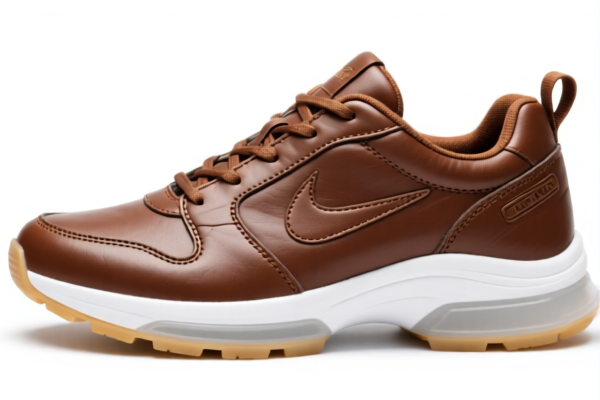
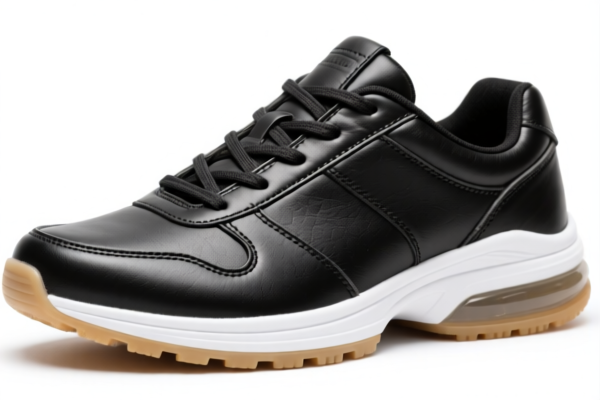
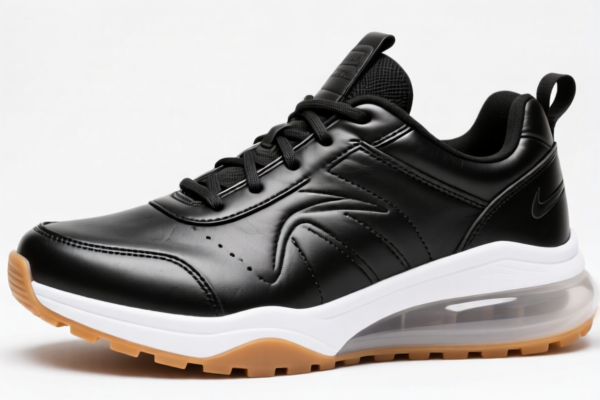
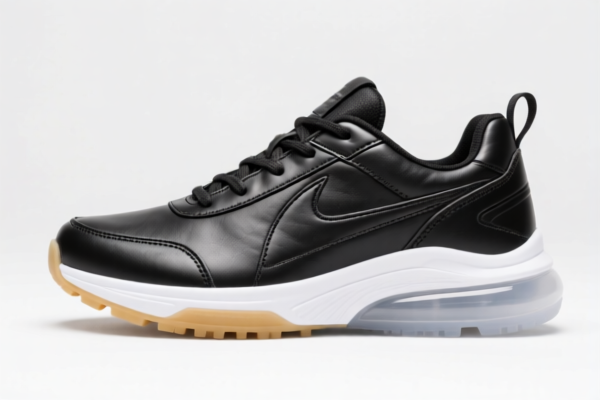
AI Analysis
👟 Plant Fiber Upper Shoes with Plastic Soles (Adhesive Structure)
🌐 HS Code Reference & Customs Clearance Guide | 2026 Latest Tariff Analysis | Professional Entry Strategy
📌 I. Product Definition & Classification: Do You Really Know "Plant Fiber Shoes"?
Plant fiber upper shoes with plastic soles are a specific category of footwear defined by their material composition and structural integrity. In international trade, these items are strictly regulated under Chapter 64 of the Harmonized System (HS). The classification hinges on three critical factors: 1. Upper Material: Must be primarily textile materials (which includes vegetable fibers/plant fibers under specific HS definitions for footwear uppers). 2. Sole Material: Rubber or Plastics. 3. Assembly Method: The sole (and mid-sole if present) must be affixed exclusively with adhesive. 4. Exclusions: Shoes with a foxing/foxing-like band, or soles that overlap the upper other than at the toe/heel, are excluded.
⚠️ Key Distinction Point:
- If the upper is not primarily textile/vegetable fiber → It does NOT fall under 6404.
- If the sole is glued → It falls under specific subcategories (e.g., .61 or .72 in US HTS).
- If the sole overlaps the upper (e.g., canvas sneakers with high foxing) → It is EXCLUDED from these specific codes.
📦 II. HS Code Classification Details (2026 Latest Tariff Authority)
Based on your input: "Plant fiber upper shoe with plastic bottom adhesive structure", the product fits the description of Footwear with outer soles of rubber or plastics, uppers of textile materials, valued over $3 but not over $6.50/pair.
There are two primary US HTS codes depending on the specific adhesive construction details (whether it includes mid-sole specificities or falls under "Other"):
| HS Code | Product Description | Applicability | Adhesive Structure | Value Range |
|---|---|---|---|---|
6404.11.61.30 |
Sports footwear (tennis, basketball, gym, training, etc.); Other; Valued over $3 but not over $6.50/pair; Having soles (or mid-soles) affixed exclusively with adhesive; Except footwear with foxing/overlap. With uppers of vegetable fibers. | Men's Sports/Training Shoes | ✅ Exclusively Adhesive (No stitching/mechanical attachment on sole) | $3.00 - $6.50 |
6404.19.72.30 |
Other footwear with rubber/plastic soles; Other; Valued over $3 but not over $6.50/pair; Other; With uppers of vegetable fibers. | Other Non-Sports/General Footwear | ✅ Exclusively Adhesive (Implied by exclusion criteria) | $3.00 - $6.50 |
🔍 Critical Note for Plant Fibers:
Both codes explicitly mention "With uppers of vegetable fibers". This confirms that "Plant Fiber" qualifies as "Textile Material" for the purpose of Chapter 64, specifically under these subheadings.
- Use6404.11.61.30if the shoes are Sports/Training related (e.g., canvas sneakers, gym shoes).
- Use6404.19.72.30if the shoes are General/Other footwear (e.g., casual plant-fiber sandals or shoes not classified as sports footwear).
💰 III. 2026 Tariff Rate Detail (Including Additional Taxes)
✅ Applicable Country: United States (US)
✅ Origin: China (CN) (Assumed based on common trade context, but rates apply generally to China-origin goods subject to these HS codes)
✅ Effective Time: Current 2026 Tariff Schedule
🎯 1. 6404.11.61.30 – Men's Sports/Training Shoes (Vegetable Fiber Upper, Adhesive Sole, $3-$6.50)
| Item | Content |
|---|---|
| Basic Tariff Rate | 0.0% |
| Section 301 Additional Tariff | 0.0% |
| Total Tax Rate | 0.0% |
| Tax Calculation | CIF Value × 0.0% = $0 |
| De Minimis Eligibility | ❌ N/A (Generally, footwear under de minimis is subject to scrutiny, but this is an entry-level HS code) |
| Legal Basis Path | HTSUS:6404.11.61 → U.S. Note 5 to Chapter 64 |
📌 Explanation:
- The Basic Tariff is 0%.
- The Section 301 Additional Tariff is listed as 0.0% for this specific subcategory. Note: While many footwear items from China face 25% additional tariffs, certain low-value or specific material combinations may be exempt or not listed in the 301 exclusion list. However, you must verify the current 301 list as tariffs change frequently. The data provided indicates 0%.
- Total Effective Rate: 0% makes this a highly cost-effective entry point IF the value stays within the $3–$6.50 range.
🎯 2. 6404.19.72.30 – Other Footwear (Vegetable Fiber Upper, Adhesive Sole, $3-$6.50)
| Item | Content |
|---|---|
| Basic Tariff Rate | 0.0% |
| Section 301 Additional Tariff | 0.0% |
| Total Tax Rate | 0.0% |
| Tax Calculation | CIF Value × 0.0% = $0 |
| De Minimis Eligibility | ❌ N/A |
| Legal Basis Path | HTSUS:6404.19.72 → U.S. Note 5 to Chapter 64 |
📌 Explanation:
- Identical tariff treatment to the sports footwear category in this specific value bracket.
- Total Effective Rate: 0%.
🛠️ IV. Customs Clearance Practical Advice (Real-World Pitfall Guide)
✅ 1. Documentation Checklist (Essential)
| Document | Must Provide | Description |
|---|---|---|
| ✅ Commercial Invoice | ✔️ | Must clearly state: "Footwear with vegetable fiber upper, rubber/plastic sole, adhesive construction, Value: $X.XX/pair". |
| ✅ Product Description | ✔️ | Explicitly mention "Vegetable Fiber" or "Plant Fiber" as the upper material to match the HS code specificity. |
| ✅ Material Composition | ✔️ | Breakdown: Upper (100% Plant Fiber/Jute/Raffia), Sole (Rubber/Plastic), Adhesive. |
| ✅ Proof of Adhesive Construction | ✔️ | Photos showing sole attachment. No visible stitching or mechanical fasteners on the sole. |
| ✅ Value Declaration | ✔️ | Must prove value is >$3.00 and <$6.50 per pair. If <$3, different HS codes apply. If >$6.50, higher tariffs may apply. |
| ✅ Country of Origin | ✔️ | Certificate of Origin (if claiming preference, though not applicable here due to 0% rate). |
✅ 2. Declaration Strategy (Key Mantra)
🔥 "Vegetable Fiber, Adhesive Sole, Value $3-$6.50, Zero Tax!"
| Scenario | Correct Declaration | Incorrect Action |
|---|---|---|
| Upper is Cotton, not Plant Fiber | Do NOT use 6404...30 codes. Use general textile shoe codes. |
Misdeclaring cotton as vegetable fiber → Fraud/Seizure. |
| Sole is Glued + Stitched | Must reclassify. "Exclusively Adhesive" is key. | Claiming adhesive when stitched → Misclassification. |
| Value < $3.00/pair | Use different HS codes (e.g., 6404.11.15). |
Using 6404.11.61 → Value Mismatch. |
| Value > $6.50/pair | Use different HS codes (e.g., 6404.11.45). |
Using 6404.11.61 → Over-declaration. |
✅ 3. Special Considerations
| Situation | Handling Advice |
|---|---|
| "Vegetable Fiber" Definition | Ensure the fiber is recognized as "textile" under HS Chapter 64 Note 2. Jute, Sisal, Raffia, Coir are typical examples. Avoid ambiguous terms like "Natural Fiber" without specification. |
| Adhesive Only | If any part of the sole is stitched, nailed, or riveted, it fails the "exclusively adhesive" test. |
| Foxing Check | Ensure no foxing (canvas band wrapping around the heel/ankle) overlaps the upper. If it does, exclude from these codes. |
| Men's vs. Women's | Code .30 specifies Men's. Women's shoes have different subcodes (e.g., .45 or .46). Misgendering the shoe type can lead to rejection. |
🌍 V. Global Market Comparison (2026)
| Country/Region | Recommended HS Code | Tariff Rate | Remarks |
|---|---|---|---|
| 🇺🇸 USA | 6404.11.61.30 / 6404.19.72.30 |
0.0% | Highly favorable for low-value ($3-$6.50) plant-fiber shoes. |
| 🇨🇳 China | 6404.11.61 / 6404.19.72 |
~5-10% | Import duties into China are higher; focus is on US export. |
| 🇪🇺 EU | 6404.11.30 / 6404.19.90 |
~4-8% | EU does not have the same value-bracket specificity; standard rates apply. |
| 🇬🇧 UK | 6404.11.30 / 6404.19.90 |
~8-12% | Post-Brexit tariffs may vary; check UK HTS. |
📌 Conclusion:
The US market offers a unique 0% tariff opportunity for low-value ($3-$6.50), plant-fiber, adhesive-sole footwear. This is a strategic niche for eco-friendly, lightweight shoes. However, strict adherence to material composition, adhesive-only construction, and value limits is mandatory.
📌 VI. Common Errors & Pitfall Guide (Lessons Learned)
❌ Error 1: Declaring "Plant Fiber" but using cotton/jute blend without specifying.
👉 Consequence: Customs may classify as general textile, leading to higher tariffs or rejection.
Fix: Specify "100% Vegetable Fiber" or "Jute Upper".
❌ Error 2: Ignoring the "Exclusively Adhesive" rule.
👉 Consequence: If there is visible stitching on the sole, the code is invalid.
Fix: Provide clear photos showing no mechanical attachment.
❌ Error 3: Value Misstatement.
👉 Consequence: If the item is valued at $2.90, it does not qualify for these codes.
Fix: Ensure invoice value is strictly between $3.00 and $6.50.
❌ Error 4: Using "Men's" code for Women's shoes.
👉 Consequence: Customs audit, delay, or fine.
Fix: Correctly identify gender-specific HS subcodes.
✅ Correct Declaration Example:
"Men's Sports Shoes, Upper: 100% Jute (Vegetable Fiber), Sole: Rubber (Adhesive-only construction), No Foxing, Value: $4.50/pair, HS: 6404.11.61.30"
🎯 VII. Conclusion: Precision Declaration, Maximum Savings!
🎯 Remember the Mantra:
🔹 "Plant Fiber, Adhesive Sole, $3-$6.50, 0% Tax!"
🔹 "No Foxing, No Stitching, Men's Only, Value Perfect!"
📌 Pro Tip:
If your shoes are women's or children's, the HS codes change. Also, if the value drops below $3, different codes apply. Always double-check the current 301 tariff list for footwear, as exemptions are subject to change. For absolute certainty, apply for an Advance Ruling from US Customs.
📣 Immediate Action:
📞 Confirm material composition with your supplier.
📷 Take clear photos of the sole attachment method.
📄 Ensure Invoice Value is $3.01 - $6.49.
🚀 Clearance Success Starts with Accurate HS Codes!
✨ Professional Customs Clearance, Starting with Exact Classification!
💼 Every Dollar Saved is a Dollar Earned!
Customer Reviews
About HS Code Classification
The Harmonized System (HS) is an internationally standardized nomenclature developed by the World Customs Organization (WCO) to classify traded products. Over 200 countries use the HS system as the basis for customs tariffs, trade statistics, and import/export regulations.
Each HS code follows a hierarchical structure:
- Chapter (2 digits) — Broad category of goods (e.g., Chapter 84: Machinery and Mechanical Appliances)
- Heading (4 digits) — More specific grouping within the chapter
- Subheading (6 digits) — Internationally standardized breakdown, used by all WCO member countries
- National subdivisions (8-10 digits) — Country-specific extensions for further classification, such as US HTSUS 10-digit codes
Correct HS code classification is essential for smooth customs clearance, accurate duty payment, and compliance with trade regulations. Misclassification can lead to customs delays, overpayment of duties, or penalties.
When importing from CN to US, the applicable tariff rates may include:
- Most-Favored-Nation (MFN) rate — The standard duty rate applied to WTO members
- General rate — Applied to countries without trade agreements
- Trade remedy duties — Additional tariffs such as Section 301 (anti-dumping), Section 232 (national security), or countervailing duties
The information provided on this page is for reference purposes only. For official classification, please consult with your local customs authority or a licensed customs broker.