Plastic Advertising Film
CN → US| HS Code | Tariff Rate | Origin | Destination | Doc |
|---|---|---|---|---|
| 3921904090 | 39.2% | CN | US | Official Doc |
| 3920591000 | 41.0% | CN | US | Official Doc |
| 3920992000 | 39.2% | CN | US | Official Doc |
| 3921905050 | 39.8% | CN | US | Official Doc |
| 9001200000 | 35.0% | CN | US | Official Doc |
Product Images
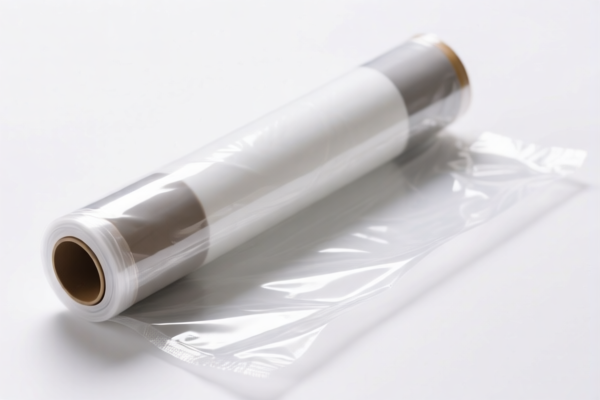
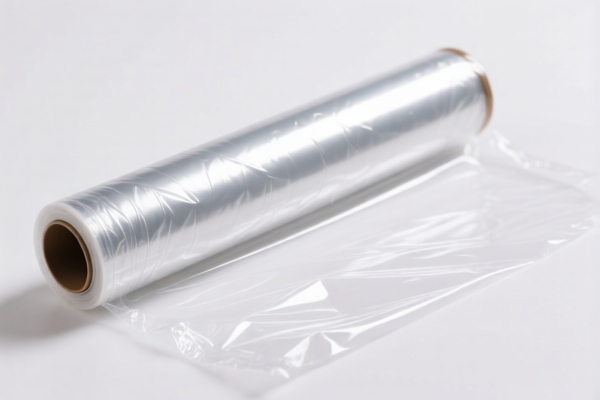
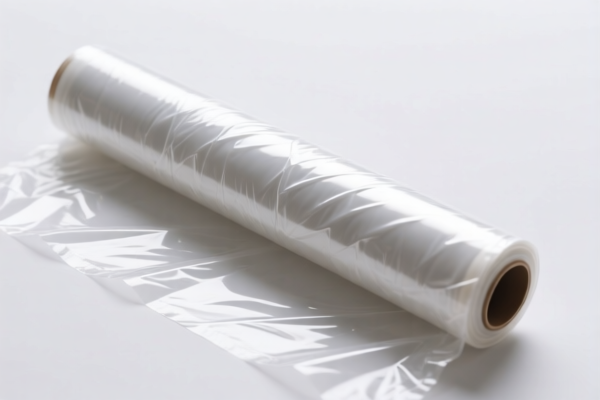
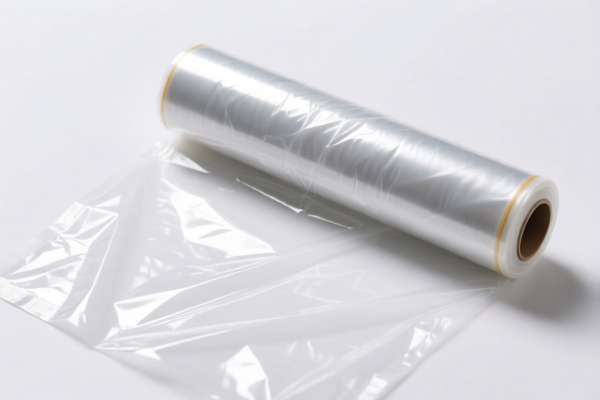
AI Analysis
📢 Plastic Advertising Film
🌐 HS Code Reference & Customs Clearance Guide | 2026 Latest Tariff Analysis | Strategic Clearance Strategy
📌 I. Product Definition & Classification: Do You Really Understand "Plastic Advertising Film"?
Plastic Advertising Film is a versatile material used for signage, posters, vehicle wraps, and display graphics. In international trade, it is not a single unified commodity but is classified based on its physical form, specific function, and polymer composition.
In the provided dataset, five distinct HS Codes are recommended, ranging from general plastic films to specialized optical films. The correct classification depends heavily on whether the film has specific optical properties (like polarization) or if it is a standard plastic sheet/film.
⚠️ Critical Distinction Point:
- If the film is a general-purpose plastic sheet/film → Classified under 3920 or 3921.
- If the film has specific optical functions (e.g., polarization) → Classified under 9001.
- Do not assume all plastic films fall under the same code; misclassification can lead to significant tariff discrepancies.
📦 II. HS Code Classification Details (2026 Latest Tariff Authority Comparison)
| HS Code | Product Description | Applicability Scenario | Key Characteristics |
|---|---|---|---|
3920.59.10.00 |
Other plates, sheets, film, foil, and strip, of plastics, non-cellular, not reinforced, laminated, supported or similarly combined with other materials, of acrylic polymers | Acrylic Plastic Film | Inferred as acrylic polymer; no conflict with other categories. Standard plastic film. |
3920.99.20.00 |
Other plates, sheets, film, foil, and strip, of plastics, non-cellular, not reinforced, laminated, supported or similarly combined with other materials | General Plastic Film | Highly consistent with plastic plates, sheets, films, foils, and strips. Broad category for non-specific plastics. |
3921.90.50.50 |
Other plates, sheets, film, foil, and strip, of plastics, combined with other materials or not | Other Plastic Categories | Reasonably falls under other categories. May apply if composite or specially treated. |
3921.90.40.90 |
Other plates, sheets, film, foil, and strip, of plastics, combined with other materials or not | Plastic Optical Film Match | Specifically matches the classification of plastic optical films. |
9001.20.00.00 |
Plates, sheets and film, of rubber or plastics, polarized (except protective films) | Polarized Optical Film | Thin sheet form; matches the attribute of polarizing function in plastic optical films. |
🔍 Key Reminder:
-9001.20.00.00is the most favorable for tariff purposes (lowest base rate) but only applies if the film has polarizing properties.
-3920.59.10.00is specific to acrylic polymers. If your film is PVC, PET, or PP, this code is incorrect.
-3920.99.20.00is a safe "catch-all" for general plastic films without specific optical functions.
💰 III. 2026 Latest Tariff Rate Details (Including Surcharges & Policy Add-ons)
✅ Applicable Country: United States (US)
✅ Origin: China (CN)
✅ Effective Date: November 10, 2025 (and subsequent imports)
🎯 1. 9001.20.00.00 —— Polarized Plastic Film (Optical Grade)
| Item | Content |
|---|---|
| Base Tariff | 0.0% (ad valorem) |
| USITC Surcharge | +25% (Section 301 Duties) |
| 122 Clause Surcharge | +10% (Specific China-related provision) |
| Total Rate | 35.0% |
| Tax Calculation | CIF Value × 35.0% |
| De Minimis Exemption | ❌ Not Applicable |
| Legal Basis Path | Base: 9001.20.00.00 → Sec301: 25% → 122 Clause: 10% |
📌 Explanation:
- This is the lowest tariff option among all listed codes due to the 0% base rate.
- However, it is strictly limited to films with polarizing functions. Using this for standard advertising film without optical polarization is high-risk and may be considered fraudulent classification.
- Total Tax: 35%.
🎯 2. 3920.59.10.00 —— Acrylic Plastic Film
| Item | Content |
|---|---|
| Base Tariff | 6.0% |
| USITC Surcharge | +25% |
| 122 Clause Surcharge | +10% |
| Total Rate | 41.0% |
| Tax Calculation | CIF Value × 41.0% |
| De Minimis Exemption | ❌ Not Applicable |
| Legal Basis Path | Base: 3920.59.10.00 → Sec301: 25% → 122 Clause: 10% |
📌 Note:
- Applies only if the film is explicitly made of acrylic polymers.
- Higher base rate (6.0%) makes this more expensive than the optical film classification.
🎯 3. 3921.90.40.90 —— Plastic Optical Film (General Category)
| Item | Content |
|---|---|
| Base Tariff | 4.2% |
| USITC Surcharge | +25% |
| 122 Clause Surcharge | +10% |
| Total Rate | 39.2% |
| Tax Calculation | CIF Value × 39.2% |
| De Minimis Exemption | ❌ Not Applicable |
| Legal Basis Path | Base: 3921.90.40.90 → Sec301: 25% → 122 Clause: 10% |
📌 Explanation:
- Matches the description: "Plastic material, film form, fits plastic optical film classification."
- If the film is not strictly polarized (9001) but is still an "optical film" in nature, this is a strong candidate.
- Total Tax: 39.2%.
🎯 4. 3921.90.50.50 —— Other Plastic Categories
| Item | Content |
|---|---|
| Base Tariff | 4.8% |
| USITC Surcharge | +25% |
| 122 Clause Surcharge | +10% |
| Total Rate | 39.8% |
| Tax Calculation | CIF Value × 39.8% |
| De Minimis Exemption | ❌ Not Applicable |
| Legal Basis Path | Base: 3921.90.50.50 → Sec301: 25% → 122 Clause: 10% |
📌 Note:
- Falls under "other categories" reasonably. Use when the film doesn't fit specific acrylic or polarized definitions.
- Total Tax: 39.8%.
🎯 5. 3920.99.20.00 —— General Plastic Film/Sheet
| Item | Content |
|---|---|
| Base Tariff | 4.2% |
| USITC Surcharge | +25% |
| 122 Clause Surcharge | +10% |
| Total Rate | 39.2% |
| Tax Calculation | CIF Value × 39.2% |
| De Minimis Exemption | ❌ Not Applicable |
| Legal Basis Path | Base: 3920.99.20.00 → Sec301: 25% → 122 Clause: 10% |
📌 Explanation:
- Highly consistent with "plastic plates, sheets, films, foils, and strips."
- This is the safest classification for standard, non-optical, non-acrylic plastic advertising films.
- Total Tax: 39.2%.
🛠️ IV. Customs Clearance Practical Advice (Battle-Tested Pitfall Avoidance Guide)
✅ 1. Document Preparation Checklist (All Required)
| Document | Required | Description |
|---|---|---|
| ✅ Product Specification Sheet | ✔️ | Must include material composition (e.g., Acrylic, PET, PVC), thickness, width, and specific optical properties. |
| ✅ Material Safety Data Sheet (MSDS) | ✔️ | For chemical composition verification. |
| ✅ Product Photos (Front, Back, Edge) | ✔️ | Clear images showing surface finish, texture, and any printed/layered structures. |
| ✅ Certificate of Origin (CO) | ✔️ | Essential for proving origin to apply any potential exemptions (though unlikely for China origin here). |
| ✅ Commercial Invoice | ✔️ | Must clearly state the HS Code and describe the product accurately (e.g., "Polarized Optical Film" vs. "Plastic Sheet"). |
| ✅ Packing List | ✔️ | Details of packaging to ensure consistency with invoice. |
✅ 2. Declaration Tips (Key Mantras)
🔥 “Material Dictates Code, Function Defines Rate, Accuracy Saves Cash!”
| Scenario | Correct Declaration | Wrong Practice |
|---|---|---|
| Standard Plastic Film (PVC/PET) | 3920.99.20.00 or 3921.90.50.50 |
Using 9001.20.00.00 → High Risk of Audit/Fine |
| Acrylic Film | 3920.59.10.00 |
Using general code → May miss specific classification benefits |
| Polarized Optical Film | 9001.20.00.00 |
Using general plastic code → Overpaying 4-6% in base tariff |
| Composite/Laminated Film | 3921.90.40.90 or 3921.90.50.50 |
Ignoring composite layers → Misclassification |
✅ 3. Special Case Handling
| Scenario | Handling Advice |
|---|---|
| Is it Polarized? | If YES, use 9001.20.00.00 for the lowest base rate. You must provide technical documentation proving polarization. |
| Is it Acrylic? | If YES, use 3920.59.10.00. Provide material safety data to confirm polymer type. |
| Generic Advertising Film? | Use 3920.99.20.00 as the safest default. It covers most non-specific plastic films. |
| Laminated/Composite? | If the film is combined with other materials (e.g., adhesive layer, backing), consider 3921 series. |
🌍 V. Global Main Market Customs Comparison (2026 Latest)
| Country/Region | Recommended HS Code | Tariff (China Origin) | Certification Required | Notes |
|---|---|---|---|---|
| 🇺🇸 USA | 3920.99.20.00 |
39.2% | None specific | 9001.20.00.00 is 35% but strict on optical function. |
| 🇨🇳 China | 3920.99.20.00 |
5% (Typical) | N/A | No additional surcharges like US. |
| 🇪🇺 EU | 3920.99.20.00 |
0% (Typical) | CE (if applicable) | No Section 301 or 122 Clause equivalents. |
| 🇦🇺 Australia | 3920.99.20.00 |
5% | RCM | No high surcharges. |
| 🇯🇵 Japan | 3920.99.20.00 |
0-5% | PSE (if applicable) | No high surcharges. |
📌 Conclusion:
- The USA imposes significant tariffs on Chinese plastic films due to Section 301 (25%) and 122 Clause (10%).
- Optical films (9001) offer a lower base rate (0%) but are highly scrutinized.
- For general advertising films,3920.99.20.00is the most balanced and defensible code.
📌 VI. Common Errors & Pitfall Avoidance Guide (Lessons Learned)
❌ Error 1: Classifying all plastic films under 9001.20.00.00 to get 0% base rate.
👉 Consequence: Customs rejects declaration, demands proof of polarization. If failed, back-taxes + penalties at higher rates.
❌ Error 2: Using 3920.59.10.00 for non-acrylic films (e.g., PVC).
👉 Consequence: Misclassification penalty. Acrylic has a specific 6% base rate; wrong code leads to audit.
❌ Error 3: Ignoring the "122 Clause" surcharge.
👉 Consequence: Underestimating total cost by 10%. Total tax is not just Base + 25%.
❌ Error 4: Vague product description ("Plastic Film").
👉 Consequence: Customs may assign a higher duty code or detain shipment for clarification.
✅ Correct Approach:
"Plastic Advertising Film, [Material Type], [Dimensions], [Optical Properties: Yes/No], Model XYZ, Made in China"
🎯 VII. Conclusion: Professional Classification, Risk Mitigation, Cost Efficiency!
🎯 Remember the Mantra:
🔹 “Polarized is 35%, Acrylic is 41%, General Plastic is 39.2%. Don’t Gamble with 9001!”
🔹 “Base Rate + 25% + 10% = Total Cost. Plan Accordingly!”
📌 Pro Tip:
If your plastic advertising film is NOT made in China, you may avoid the 25% Section 301 and 10% 122 Clause surcharges entirely, reducing the total tax to just the base rate (0%-6%).
Consider supply chain diversification or origin verification for cost savings.
📣 Immediate Action:
📞 Consult a licensed customs broker + Provide technical datasheet + Apply for Pre-Ruling (if possible)
🚀 Ensure smooth clearance, avoid delays, and optimize your landed cost!
✨ Professional Clearance Starts with Precise Classification!
💼 Every cent of tax matters in global trade!
Customer Reviews
About HS Code Classification
The Harmonized System (HS) is an internationally standardized nomenclature developed by the World Customs Organization (WCO) to classify traded products. Over 200 countries use the HS system as the basis for customs tariffs, trade statistics, and import/export regulations.
Each HS code follows a hierarchical structure:
- Chapter (2 digits) — Broad category of goods (e.g., Chapter 84: Machinery and Mechanical Appliances)
- Heading (4 digits) — More specific grouping within the chapter
- Subheading (6 digits) — Internationally standardized breakdown, used by all WCO member countries
- National subdivisions (8-10 digits) — Country-specific extensions for further classification, such as US HTSUS 10-digit codes
Correct HS code classification is essential for smooth customs clearance, accurate duty payment, and compliance with trade regulations. Misclassification can lead to customs delays, overpayment of duties, or penalties.
When importing from CN to US, the applicable tariff rates may include:
- Most-Favored-Nation (MFN) rate — The standard duty rate applied to WTO members
- General rate — Applied to countries without trade agreements
- Trade remedy duties — Additional tariffs such as Section 301 (anti-dumping), Section 232 (national security), or countervailing duties
The information provided on this page is for reference purposes only. For official classification, please consult with your local customs authority or a licensed customs broker.