Plastic Agricultural Products Packaging Boxes
CN → US| HS Code | Tariff Rate | Origin | Destination | Doc |
|---|---|---|---|---|
| 3923102000 | 35.0% | CN | US | Official Doc |
| 3923109000 | 38.0% | CN | US | Official Doc |
Product Images
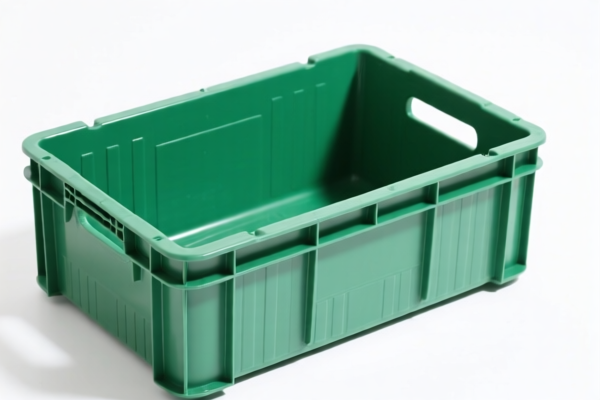
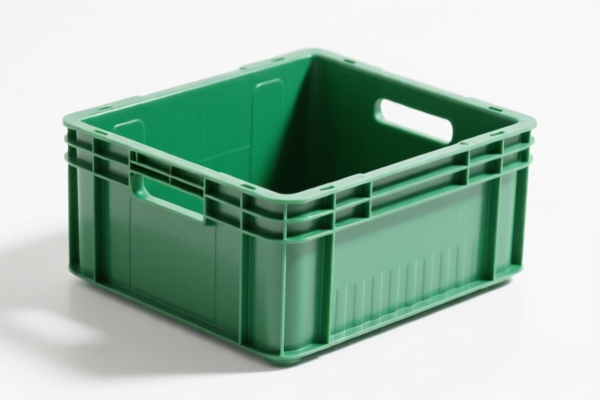
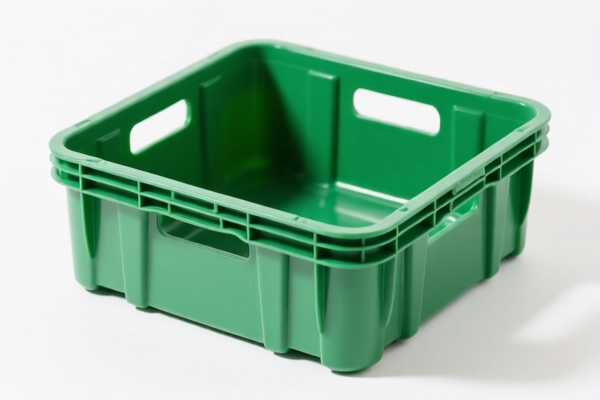
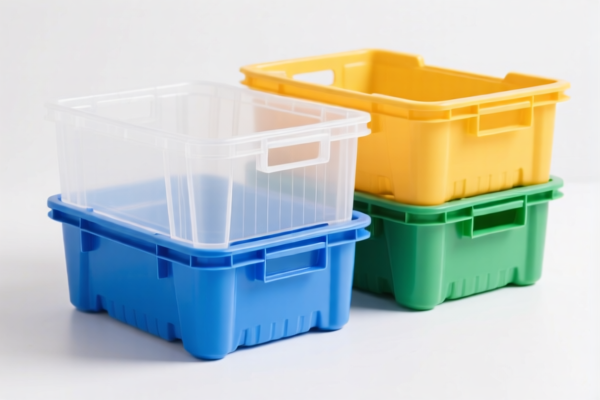
AI Analysis
📦 Plastic Agricultural Products Packaging Boxes
🌐 HS Code Reference & Customs Clearance Guide | 2026 Latest Tariff Analysis | Professional Strategy
📌 I. Product Definition & Classification: What Exactly Are You Packing?
Plastic packaging for agricultural products is not a "one-size-fits-all" category. In international trade, these items are broadly classified under Chapter 39 (Articles of Plastics), specifically heading 39.23 (Articles for the conveyance or packing of goods).
However, the exact subheading depends entirely on what is inside the box and whether it is "specially shaped/fitted" for high-tech goods vs. general use.
⚠️ Key Distinction:
- If the box is a generic container used for fruits, vegetables, grains, or general agri-produce → It falls under "Other".
- If the box is custom-molded specifically to hold semiconductor wafers, masks, or reticles (high-tech, not typical agriculture) → It falls under "Specially shaped...".
Note: Standard agricultural boxes rarely qualify for the "specially shaped for semiconductors" clause unless they are dual-use in a biotech/lab context. For 99% of "Agricultural Products," the "Other" category applies.
📦 II. HS Code Classification Details (2026 Latest Tariff Authority)
Based on the provided dataset, here are the two possible classifications:
| HS Code | Product Description | Applicability | Tax Rate (China to US) |
|---|---|---|---|
3923.10.20.00 |
Specially shaped/fitted for conveyance of semiconductor wafers, masks, or reticles (HS 3923.10/8486.90) | Biotech labs, semiconductor agri-tech research equipment | 25.0% Total |
3923.10.90.00 |
Other boxes, cases, crates, and similar articles | Standard plastic crates for fruits, vegetables, honey, grains, bulk agri-products | 28.0% Total |
🔍 Critical Alert:
- 95%+ of "Plastic Agricultural Packaging" will fall under3923.10.90.00.
- Do not attempt to classify standard farm produce boxes as3923.10.20.00unless you can prove they are exclusively fitted for semiconductor wafers (which is highly unlikely for typical agriculture). Misclassification leads to penalties.
💰 III. 2026 Latest Tariff Rate Breakdown (With Surcharges)
✅ Applicable Country: United States (US)
✅ Country of Origin: China (CN)
✅ Effective Date: November 10, 2025 (and subsequent imports)
🎯 1. 3923.10.90.00 —— Other Plastic Boxes/Crates (Standard Agricultural Packaging)
| Item | Detail |
|---|---|
| Base Tariff | 3.0% (Ad Valorem) |
| Section 301 Surcharge | +25.0% |
| Total Tax Rate | 28.0% |
| Tax Calculation | CIF Value × 28% |
| De Minimis Exemption | ❌ Not Applicable (Deny De Minimis for Section 301 goods) |
| Legal Basis Path | USITC:3923.10.90.00 → FOOTNOTE:9903.88.01 (Section 301 List 4) |
📌 Explanation:
- The 3% base rate is the standard Most Favored Nation (MFN) duty for plastic packing articles.
- The +25% surcharge is imposed under Section 301 of the Trade Act against Chinese goods.
- Total Liability: 28%. This is a significant cost multiplier. For a $10,000 shipment, expect $2,800 in duties alone.
🎯 2. 3923.10.20.00 —— Specially Shaped for Semiconductors (Niche Biotech/Research)
| Item | Detail |
|---|---|
| Base Tariff | 0.0% (Ad Valorem) |
| Section 301 Surcharge | +25.0% |
| Total Tax Rate | 25.0% |
| Tax Calculation | CIF Value × 25% |
| De Minimis Exemption | ❌ Not Applicable |
| Legal Basis Path | USITC:3923.10.20.00 → FOOTNOTE:9903.88.01 |
📌 Explanation:
- While the base tariff is 0%, the 25% surcharge still applies.
- Total Liability: 25%.
- Important: Only use this code if the boxes are exclusively designed for semiconductor wafers/masks. Using this for apple crates is customs fraud.
🛠️ IV. Customs Clearance Practical Advice (Pitfall Avoidance Guide)
✅ 1. Documentation Checklist (Non-Negotiable)
| Document | Mandatory? | Notes |
|---|---|---|
| ✅ Commercial Invoice | ✔️ | Must clearly state: "Plastic Crates for Agricultural Produce" |
| ✅ Packing List | ✔️ | List dimensions, material (e.g., HDPE, PP), and quantity |
| ✅ Product Photos | ✔️ | Show the box structure. Prove it is not specialized for wafers |
| ✅ Material Composition | ✔️ | Specify plastic type (e.g., 100% Polypropylene) |
| ✅ Certificate of Origin | ✔️ | Required to verify CN origin for surcharge calculation |
✅ 2. Declaration Strategy (Key Mantra)
🔥 "Accurate Description, Avoid Ambiguity, Pay the 28%, Sleep Well!"
| Scenario | Correct Declaration | Wrong Declaration | Consequence |
|---|---|---|---|
| Standard Fruit/Veg Crates | 3923.10.90.00 - Plastic Crates for Agricultural Use |
3923.10.20.00 (Misclassified) |
Customs seizure, penalties, back-taxes |
| Generic Plastic Boxes | 3923.10.90.00 |
"Plastic Containers" (Vague) | Duty assessment at highest rate, delays |
| Custom Molded Lab Trays | 3923.10.20.00 (if for semiconductors) |
3923.10.90.00 |
Underpayment of duties, audit risk |
✅ 3. Special Considerations for Agricultural Packaging
- Reusability: If the boxes are returnable/reusable (e.g., Euro-style plastic crates), ensure the invoice states "For Reuse" to help customs understand the nature of the goods.
- Food Safety: While HS codes don't directly dictate food safety, ensure the plastic is FDA-compliant or equivalent if the containers will contact food. This is not a customs tariff issue but a CBP/CFS inspection risk. Non-compliance can lead to refusal of entry.
- No "De Minimis" Loophole: Unlike some other categories, plastic packing materials from China are excluded from the $800 de minimis exemption under Section 301. Every shipment is taxed.
🌍 V. Global Market Comparison (2026)
| Country/Region | Recommended HS Code | Total Tariff (China Origin) | Notes |
|---|---|---|---|
| 🇺🇸 USA | 3923.10.90.00 |
28.0% | High Section 301 surcharge |
| 🇨🇳 China (Import) | 3923.10.90.00 |
3.0% | No surcharge |
| 🇪🇺 EU | 3923.10.90 |
~4.5% | No Section 301 equivalent |
| 🇯🇵 Japan | 3923.10.90 |
~3.5% | No surcharge |
📌 Conclusion:
- The US market is the most expensive due to the 25% Section 301 tariff.
- Consider supply chain diversification (e.g., sourcing from Vietnam, Mexico, or Thailand) if targeting the US, as these may qualify for lower or zero tariffs under USMCA or GSP (if applicable).
📌 VI. Common Errors & Pitfalls (Blood & Tears Lessons)
❌ Error 1: Misclassifying standard plastic crates as 3923.10.20.00 to save 3%
👉 Result: Customs audit, penalties, and forced retroactive payment.
👉 Lesson: Only use 3923.10.20.00 for semiconductor-specific tooling.
❌ Error 2: Ignoring the 25% surcharge in cost calculations
👉 Result: Profit margins erased.
👉 Lesson: Always budget for 28% total landed cost increase for US imports.
❌ Error 3: Vague description "Plastic Boxes" on Invoice
👉 Result: CBP may classify under "Other" with higher scrutiny or assign a wrong code.
👉 Lesson: Be specific: "HDPE Plastic Crates for Agricultural Produce, Non-Returnable."
🎯 VII. Conclusion: Precision in Packaging, Profit in Logistics
🎯 Remember the Mantra:
🔹 "Standard Agri-Crates = 28% Tax."
🔹 "Specialized Wafer Trays = 25% Tax."
🔹 "Ambiguity = Delay & Penalty."
📌 Pro Tip:
If your volume is high, consider Section 321 Exemption only if you are shipping small parcels (< $800) and not using Section 301 exceptions (but note: plastic packaging is often excluded). For bulk shipments, negotiate Incoterms (DDP) with your supplier to include the 28% duty in the price, or source from non-China countries to bypass the surcharge.
📣 Immediate Action:
📞 Verify HS Code with your customs broker using product photos.
📊 Calculate Landed Cost including 28% tariff.
🚀 Optimize Supply Chain if US margins are thin.
✨ Professional Customs Clearance Starts with Accurate Classification!
💼 Your Bottom Line Depends on the Last Two Digits of the HS Code!
Customer Reviews
About HS Code Classification
The Harmonized System (HS) is an internationally standardized nomenclature developed by the World Customs Organization (WCO) to classify traded products. Over 200 countries use the HS system as the basis for customs tariffs, trade statistics, and import/export regulations.
Each HS code follows a hierarchical structure:
- Chapter (2 digits) — Broad category of goods (e.g., Chapter 84: Machinery and Mechanical Appliances)
- Heading (4 digits) — More specific grouping within the chapter
- Subheading (6 digits) — Internationally standardized breakdown, used by all WCO member countries
- National subdivisions (8-10 digits) — Country-specific extensions for further classification, such as US HTSUS 10-digit codes
Correct HS code classification is essential for smooth customs clearance, accurate duty payment, and compliance with trade regulations. Misclassification can lead to customs delays, overpayment of duties, or penalties.
When importing from CN to US, the applicable tariff rates may include:
- Most-Favored-Nation (MFN) rate — The standard duty rate applied to WTO members
- General rate — Applied to countries without trade agreements
- Trade remedy duties — Additional tariffs such as Section 301 (anti-dumping), Section 232 (national security), or countervailing duties
The information provided on this page is for reference purposes only. For official classification, please consult with your local customs authority or a licensed customs broker.