Plastic Anti slip Ladder
CN → US| HS Code | Tariff Rate | Origin | Destination | Doc |
|---|---|---|---|---|
| 3926909930 | 22.8% | CN | US | Official Doc |
| 3926909989 | 22.8% | CN | US | Official Doc |
| 9403708015 | 35.0% | CN | US | Official Doc |
| 9403708031 | 35.0% | CN | US | Official Doc |
| 3926909930 | 22.8% | CN | US | Official Doc |
Product Images
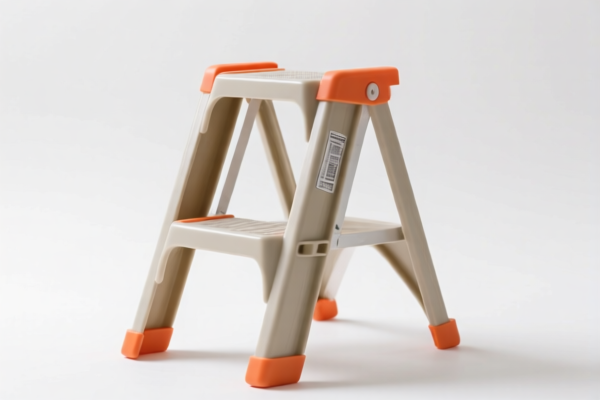
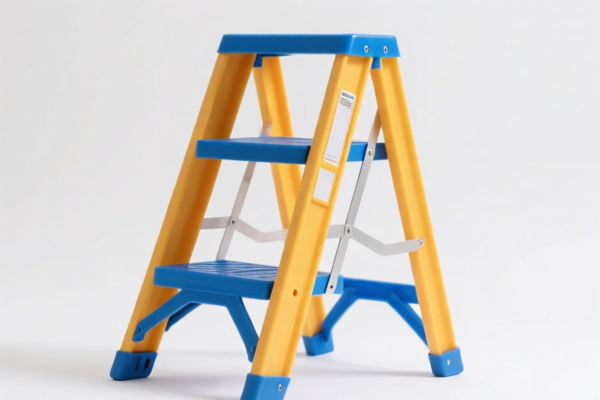
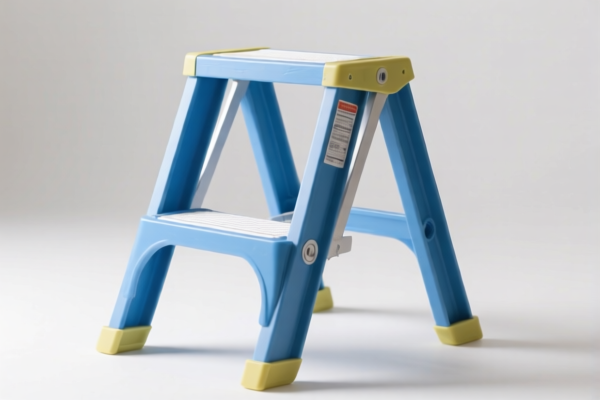
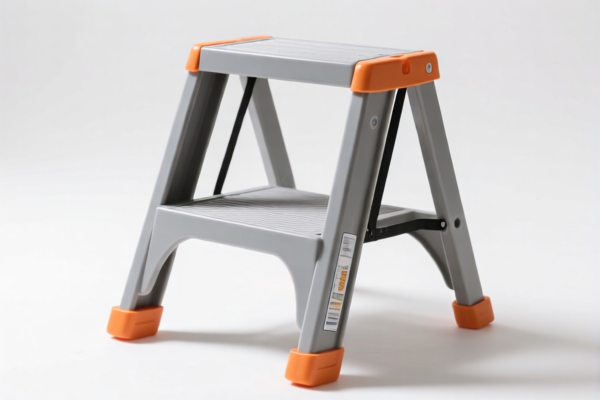
AI Analysis
🪜 Plastic Anti-Slip Ladder (塑料防滑梯)
🌐 HS Code Reference & Customs Clearance Guide | 2026 Latest Tariff Analysis | Professional Clearance Strategy
📌 I. Product Definition & Classification: Is It a "Plastic Part" or "Furniture"?
A Plastic Anti-Slip Ladder is a portable step device made primarily of plastic materials, designed with textured surfaces to prevent slipping. In international trade, its classification depends heavily on its primary function and design intent:
1. As a Plastic Article (Generic): If the ladder is considered a general utility item without specific furniture characteristics, it may be classified under plastic articles. 2. As Household Furniture: If the ladder is designed for domestic use (e.g., reaching high shelves in a kitchen or closet) and fits the description of "furniture," it falls under Chapter 94.
⚠️ Key Distinction:
- If viewed merely as a tool or accessory without furniture-like structure →归入 3926.90 (Other plastic articles)
- If viewed as household furniture (e.g., step stool, home utility ladder) →归入 9403.70 (Furniture of plastic)
📦 II. HS Code Classification Details (2026 Latest Tariff Authority Comparison)
| HS Code | Product Description | Application Scenario | Material/Feature | Total Tax Rate (US/China Origin) |
|---|---|---|---|---|
3926.90.99.30 |
Other plastic articles, specifically identified as ladders | General utility plastic ladders, industrial-grade plastic steps | Plastic, Tool/Utility nature | 22.8% |
3926.90.99.89 |
Other plastic articles, not elsewhere specified | Generic plastic items with no specific end-use definition | Plastic, No material conflict | 22.8% |
9403.70.80.15 |
Plastic furniture, household use | Home step stools, bathroom safety ladders, decorative home ladders | Plastic, Furniture category | 35.0% |
9403.70.80.31 |
Plastic furniture, specifically for ladders | Household ladders recognized as furniture items | Plastic, Household Furniture | 35.0% |
🔍 Key Reminder:
-3926.90codes are generally for industrial or generic utility plastic items.
-9403.70codes are for household furniture made of plastic.
- Choosing the wrong code can lead to significant tax differences (22.8% vs. 35.0%) and potential customs delays due to misclassification.
💰 III. 2026 Latest Tariff Rate Breakdown (Including Additional Taxes)
✅ Applicable Country: United States (US)
✅ Country of Origin: China (CN)
✅ Effective Date: November 10, 2025 (and subsequent imports)
🎯 1. 3926.90.99.30 & 3926.90.99.89 —— Plastic Articles (Utility/General)
| Item | Detail |
|---|---|
| Base Duty Rate | 5.3% (Ad valorem) |
| Section 301 Additional Duty | +7.5% |
| Section 122 Duty | +10% |
| Total Effective Tax Rate | 22.8% |
| Tax Calculation | CIF Value × 22.8% |
| De Minimis Exemption | ❌ Not Eligible (Due to Section 301/122 duties) |
| Legal Basis Path | Section 301: 7.5% → Section 122: 10% → Base: 5.3% |
📌 Explanation:
- Base Rate (5.3%): Standard MFN rate for plastic articles.
- Section 301 (7.5%): Additional duty imposed on specific Chinese products under US Trade Law.
- Section 122 (10%): Additional duty under Section 122 of the Trade Act of 1974 (national security/economic stability measures).
- Total: 22.8%. This is a moderate-to-high duty bracket.
🎯 2. 9403.70.80.15 & 9403.70.80.31 —— Plastic Furniture (Household)
| Item | Detail |
|---|---|
| Base Duty Rate | 0.0% (Ad valorem) |
| Section 301 Additional Duty | +25.0% |
| Section 122 Duty | +10% |
| Total Effective Tax Rate | 35.0% |
| Tax Calculation | CIF Value × 35.0% |
| De Minimis Exemption | ❌ Not Eligible |
| Legal Basis Path | Section 301: 25.0% → Section 122: 10% → Base: 0.0% |
📌 Explanation:
- Base Rate (0.0%): Furniture of plastic often has a low or zero base duty.
- Section 301 (25.0%): Significantly higher additional duty for furniture items under Section 301.
- Section 122 (10%): Same 10% additional duty as above.
- Total: 35.0%. This is a high duty bracket, 12.2% higher than the utility plastic classification.⚠️ Critical Insight:
Classifying a ladder as "Plastic Article" (3926) saves 12.2% in taxes compared to classifying it as "Plastic Furniture" (9403). However, you must ensure the product description and usage align with "utility/general plastic article" to avoid customs rejection.
🛠️ IV. Customs Clearance Practical Advice (Real-World Pitfall Guide)
✅ 1. Required Documentation Checklist
| Document | Mandatory? | Notes |
|---|---|---|
| ✅ Product Specification Sheet | ✔️ | Must specify material (100% plastic), anti-slip features, dimensions, and load capacity. |
| ✅ Usage Description | ✔️ | Clearly state if it's for household use (furniture) or general/industrial utility (plastic article). |
| ✅ Photos | ✔️ | Show the ladder structure, anti-slip texture, and any labels. |
| ✅ Commercial Invoice | ✔️ | Item name should match HS code description precisely (e.g., "Plastic Utility Ladder" vs. "Plastic Household Step Stool"). |
| ✅ Packing List | ✔️ | Include weight, dimensions, and number of units. |
| ✅ Country of Origin Certificate | ✔️ | Required to confirm Chinese origin for Section 301/122 application. |
✅ 2. Declaration Strategy (Key Tips)
🔥 "Function Defines Code, Utility Saves Money!"
| Scenario | Recommended HS Code | Risk |
|---|---|---|
| General/Industrial Plastic Ladder | 3926.90.99.30 |
✅ Lower Tax (22.8%). Best for non-domestic or generic utility ladders. |
| Household Step Stool/Furniture | 9403.70.80.15 / .31 |
❌ Higher Tax (35.0%). Only use if explicitly marketed as home furniture. |
| Unclear Usage | 3926.90.99.89 |
⚠️ Moderate Tax (22.8%). Safer fallback if not clearly furniture. |
📌 Note:
- If the ladder is marketed as a "Step Stool" or "Bathroom Safety Ladder" for home use, customs may insist on9403.70.
- If it's a "Utility Ladder" for garage, workshop, or general household tasks,3926.90is more defensible and cheaper.
✅ 3. Special Cases
| Case | Handling Advice |
|---|---|
| Mixed Packaging (Ladder + Bag) | Declare the ladder as the primary item; bag is accessory. Do not split. |
| OEM/Private Label | Provide design specs to prove it's a utility item if claiming 3926. |
| Anti-Slip Feature | Highlight "anti-slip" in description but do not let it push classification into safety equipment (e.g., PPE) unless certified. |
🌍 V. Global Market Comparison (2026)
| Market | Recommended HS Code | Total Tax (China Origin) | Notes |
|---|---|---|---|
| 🇺🇸 USA | 3926.90.99.30 |
22.8% | Best for utility ladders. Avoid 9403 unless necessary. |
| 🇪🇺 EU | 3926.90.99 |
~6.5% | No Section 301/122. Lower base duty. |
| 🇨🇳 China | 3926.90.99 |
~5.3% | Domestic consumption low tax. |
| 🇬🇧 UK | 3926.90.99 |
~6.5% | Post-Brexit tariff structure similar to EU. |
| 🇨🇦 Canada | 3926.90.99 |
~5.3% | FTA benefits may apply if assembled elsewhere. |
📌 Conclusion:
- The USA has the highest effective tax rate due to Section 301 and 122 duties.
- Classification strategy is critical: Choosing3926over9403saves 12.2% on CIF value.
📌 VI. Common Mistakes & Pitfalls (Lessons Learned)
❌ Mistake 1: Calling it "Furniture" when it's a utility ladder
👉 Result: Customs may classify it under 9403 → 35.0% tax instead of 22.8%.
👉 Fix: Use terms like "Utility Ladder," "Step Platform," or "Plastic Step" in documentation.
❌ Mistake 2: Ignoring Section 122 Duty
👉 Result: Underpayment by 10% → Penalties + Interest.
👉 Fix: Always include Section 122 (10%) in cost calculations for US imports from China.
❌ Mistake 3: Misidentifying Anti-Slip as Safety Equipment
👉 Result: Misclassification under PPE codes → Delays + Re-inspection.
👉 Fix: Clarify that anti-slip is a surface feature, not a certified safety harness or industrial PPE.
✅ Correct Declaration Example:
"Plastic Utility Ladder, Anti-Slip Surface, General Household/Workshop Use, Model XYZ, 100% Polypropylene"
🎯 VII. Conclusion: Professional Classification, Cost Savings!
🎯 Remember the Rule:
🔹 "Utility = 3926 (22.8%) | Furniture = 9403 (35.0%)"
🔹 "Section 301 + 122 = Add 17.5% to 35.0%"
🔹 "Save 12.2% by choosing the right code!"
📌 Pro Tip:
If your ladder is exported to the USA, consider:
1. Product Naming: Use "Utility Ladder" or "Step Platform" instead of "Home Furniture."
2. Marketing: Avoid terms like "Home Decor" or "Living Room Furniture."
3. Pre-Ruling: Apply for an Advance Ruling from US CBP to confirm the HS Code if unsure.
📣 Take Action Now:
📞 Consult a Customs Broker
📄 Prepare Detailed Product Specs
🚀 Optimize HS Code for Maximum Savings
✨ Professional Clearance Starts with Accurate Classification!
💼 Every Percent Counts in Customs Costs!
Customer Reviews
About HS Code Classification
The Harmonized System (HS) is an internationally standardized nomenclature developed by the World Customs Organization (WCO) to classify traded products. Over 200 countries use the HS system as the basis for customs tariffs, trade statistics, and import/export regulations.
Each HS code follows a hierarchical structure:
- Chapter (2 digits) — Broad category of goods (e.g., Chapter 84: Machinery and Mechanical Appliances)
- Heading (4 digits) — More specific grouping within the chapter
- Subheading (6 digits) — Internationally standardized breakdown, used by all WCO member countries
- National subdivisions (8-10 digits) — Country-specific extensions for further classification, such as US HTSUS 10-digit codes
Correct HS code classification is essential for smooth customs clearance, accurate duty payment, and compliance with trade regulations. Misclassification can lead to customs delays, overpayment of duties, or penalties.
When importing from CN to US, the applicable tariff rates may include:
- Most-Favored-Nation (MFN) rate — The standard duty rate applied to WTO members
- General rate — Applied to countries without trade agreements
- Trade remedy duties — Additional tariffs such as Section 301 (anti-dumping), Section 232 (national security), or countervailing duties
The information provided on this page is for reference purposes only. For official classification, please consult with your local customs authority or a licensed customs broker.