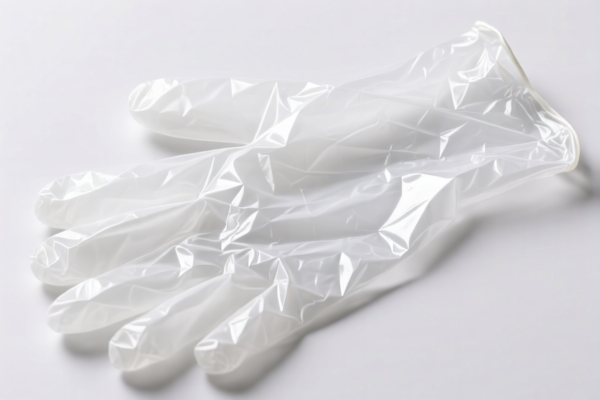
Plastic Anti static Gloves
CN → US| HS Code | Tariff Rate | Origin | Destination | Doc |
|---|---|---|---|---|
| 3919905060 | 40.8% | CN | US | Official Doc |
| 3926909989 | 22.8% | CN | US | Official Doc |
| 3919102055 | 40.8% | CN | US | Official Doc |
| 3926909400 | 35.0% | CN | US | Official Doc |
| 3920992000 | 39.2% | CN | US | Official Doc |
Product Images



AI Analysis
🧤 Plastic Anti-Static Gloves
🌐 HS Code Reference & Customs Clearance Guide | 2026 Updated Tariff Analysis | Professional Import Strategy
📌 One, Product Definition & Classification: Do You Really Know "Anti-Static Gloves"?
Plastic anti-static gloves are specialized protective handwear made from conductive or static-dissipative plastic materials, designed to prevent electrostatic discharge (ESD) in sensitive environments such as semiconductor manufacturing, electronics assembly, cleanrooms, and medical device production.
These gloves are not standard rubber or latex gloves — they are engineered with anti-static properties through additives or conductive coatings (e.g., carbon, silver, or conductive polymers), and are typically non-latex, non-cotton, and non-textile in composition.
⚠️ Key Distinction:
- If the gloves are made entirely of plastic and lack textile backing or fiber reinforcement, they fall under plastic products.
- If they contain textile fibers or are coated with rubber/latex, they may be classified differently (e.g., 6116.10.00).
- Only plastic-based anti-static gloves qualify for the HS codes listed below.
📦 Two, HS Code Classification Details (2026 Updated Tariff Authority)
| HS Code | Product Description | Applicable Use Case | Material Type | Form |
|---|---|---|---|---|
3919.90.50.60 |
Plastic anti-static film, non-cellular, non-reinforced, in sheet or film form | Used in ESD-safe packaging, protective wraps, or as material for glove production | Plastic (non-cellular) | Film/Membrane |
3926.90.99.89 |
Other plastic articles, not elsewhere specified, including anti-static films | General-purpose plastic films used in industrial or lab environments | Plastic | Film/Membrane |
3919.10.20.55 |
Flat plastic film, non-cellular, non-reinforced, used in packaging or protective applications | High-precision anti-static films for electronics or cleanroom use | Plastic | Flat Sheet/Film |
3926.90.94.00 |
Other plastic films, non-cellular, non-reinforced, not specified elsewhere | Generic anti-static plastic films used in industrial or packaging sectors | Plastic | Thin Film |
3920.99.20.00 |
Other plastic articles, not elsewhere specified, including anti-static films | Flexible plastic films with anti-static properties | Plastic | Film/Membrane |
🔍 Important Note:
- These HS codes are for plastic films, not finished gloves.
- Anti-static gloves themselves are not directly listed in this dataset.
- If the gloves are made from these films, the final product (gloves) may be classified under 6116.10.00 (textile gloves) or 3926.90.99.89 (plastic articles) if non-textile.
💰 Three, 2026 Updated Tariff Rate Breakdown (With附加 Taxes & Policy Clauses)
✅ Applicable Country: United States (US)
✅ Origin: China (CN)
✅ Effective Date: November 10, 2025 (including future imports)
🎯 1. 3919.90.50.60 — Plastic Anti-Static Film (Non-Cellular, Non-Reinforced)
| Item | Detail |
|---|---|
| Base Duty Rate | 5.8% (ad valorem) |
| Section 301 Tariff (USITC) | +25.0% |
| Section 122 Tariff (IEEPA) | +10.0% |
| Total Effective Duty | 40.8% |
| Tax Calculation | CIF Value × 40.8% |
| De Minimis Threshold | ❌ Not eligible (denied) |
| Legal Basis Path | IEEPA:9903.01.25 → IEEPA:9903.01.24 → USITC:3919.90.50.60 → FOOTNOTE:9903.88.01 |
📌 Explanation:
- The 25% Section 301 tariff applies due to China’s alleged unfair trade practices under the U.S. Trade Act of 1974.
- The 10% Section 122 (IEEPA) tariff is triggered by the International Emergency Economic Powers Act, targeting goods from China/Hong Kong.
- Total: 40.8% — extremely high for a film material.
🎯 2. 3926.90.99.89 — Other Plastic Articles (Including Anti-Static Films)
| Item | Detail |
|---|---|
| Base Duty Rate | 5.3% |
| Section 301 Tariff (USITC) | +7.5% |
| Section 122 Tariff (IEEPA) | +10.0% |
| Total Effective Duty | 22.8% |
| Tax Calculation | CIF × 22.8% |
| De Minimis Threshold | ❌ Not eligible |
| Legal Basis Path | IEEPA:9901.25 → IEEPA:9903.01.24 → USITC:3926.90.99.89 → FOOTNOTE:9903.88.01 |
📌 Note:
- Lower base rate, but still significant due to 10% IEEPA and 7.5% Section 301.
- This code is often used for non-standard or custom plastic films.
🎯 3. 3919.10.20.55 — Flat Plastic Film (Non-Cellular, Non-Reinforced)
| Item | Detail |
|---|---|
| Base Duty Rate | 5.8% |
| Section 301 Tariff (USITC) | +25.0% |
| Section 122 Tariff (IEEPA) | +10.0% |
| Total Effective Duty | 40.8% |
| Tax Calculation | CIF × 40.8% |
| De Minimis Threshold | ❌ Not eligible |
| Legal Basis Path | IEEPA:9903.01.25 → IEEPA:9903.01.24 → USITC:3919.10.20.55 → FOOTNOTE:9903.88.01 |
📌 Key Point:
- This code applies to flat, non-reinforced plastic films — exactly what anti-static films are.
- Same 40.8% rate as3919.90.50.60.
🎯 4. 3926.90.94.00 — Other Plastic Films (Non-Cellular, Non-Reinforced)
| Item | Detail |
|---|---|
| Base Duty Rate | 0.0% |
| Section 301 Tariff (USITC) | +25.0% |
| Section 122 Tariff (IEEPA) | +10.0% |
| Total Effective Duty | 35.0% |
| Tax Calculation | CIF × 35.0% |
| De Minimis Threshold | ❌ Not eligible |
| Legal Basis Path | IEEPA:9903.01.24 → USITC:3926.90.94.00 → FOOTNOTE:9903.88.01 |
📌 Insight:
- Despite 0% base duty, the 25% + 10% add-ons make this still very high.
- This code is often used for generic or unspecified plastic films.
🎯 5. 3920.99.20.00 — Other Plastic Articles (Non-Cellular, Non-Reinforced)
| Item | Detail |
|---|---|
| Base Duty Rate | 4.2% |
| Section 301 Tariff (USITC) | +25.0% |
| Section 122 Tariff (IEEPA) | +10.0% |
| Total Effective Duty | 39.2% |
| Tax Calculation | CIF × 39.2% |
| De Minimis Threshold | ❌ Not eligible |
| Legal Basis Path | IEEPA:9903.01.25 → IEEPA:9903.01.24 → USITC:3920.99.20.00 → FOOTNOTE:9903.88.01 |
📌 Note:
- This code covers miscellaneous plastic articles, including films used in industrial applications.
- Close to 40% — still very high.
🛠️ Four, Customs Clearance Best Practices (Pro Tips to Avoid Penalties)
✅ 1. Required Documentation (Must-Have)
| Document | Required? | Purpose |
|---|---|---|
| ✅ Product Specification Sheet | ✔️ | Confirm material (plastic only), anti-static properties, thickness, dimensions |
| ✅ Material Safety Data Sheet (MSDS) | ✔️ | Prove non-toxic, non-latex, ESD-safe |
| ✅ Product Photos (with label) | ✔️ | Show material, brand, model, anti-static marking |
| ✅ Third-Party Test Report | ✔️ | ESD resistance test (e.g., ASTM F150-17), conductivity, durability |
| ✅ Commercial Invoice | ✔️ | Clearly state: “Plastic Anti-Static Film, for Use in Glove Manufacturing” |
| ✅ Certificate of Origin (CO) | ✔️ | Required for tariff eligibility; if from Vietnam/Mexico, may qualify for lower rates |
| ✅ Packing List | ✔️ | Show film rolls, weight, packaging type |
✅ 2.申报技巧 (Key Tips)
🔥 "Material First, Use Second, Label Clearly, Avoid Misclassification!"
| Scenario | Correct HS Code | Wrong Code | Risk |
|---|---|---|---|
| Film made from plastic only, anti-static, non-textile | 3919.10.20.55 or 3919.90.50.60 |
6116.10.00 (textile gloves) |
40%+ tax |
| Film used as raw material for gloves | 3919.10.20.55 |
3926.90.99.89 |
Possible misclassification |
| Film with conductive coating | 3926.90.94.00 |
3920.99.20.00 |
Risk of audit |
| Finished gloves made from film | 3926.90.99.89 or 6116.10.00 |
3919.90.50.60 |
Severe penalty |
📌 Golden Rule:
- Do not declare finished gloves as "plastic film" — it’s a misclassification and can trigger penalties.
✅ 3. Special Cases
| Situation | Recommended Action |
|---|---|
| Gloves made from anti-static film | Declare as plastic articles (3926.90.99.89) if non-textile; textile gloves (6116.10.00) if textile-based |
| Gloves with carbon coating | Use 3926.90.99.89 if plastic base; 6116.10.00 if textile |
| Custom anti-static film for glove production | Use 3919.10.20.55 or 3919.90.50.60 |
| Gloves for medical use | May qualify for medical device exemption — provide FDA documentation |
🌍 Five, Global Customs Comparison (2026)
| Country | Recommended HS Code | Tariff | Certification | Notes |
|---|---|---|---|---|
| 🇺🇸 USA | 3919.10.20.55 |
40.8% (China) | None (but test report advised) | High tax — no de minimis |
| 🇨🇳 China | 3919.10.20.55 |
5% | CCC | No additional tariffs |
| 🇪🇺 EU | 3919.10.20.55 |
0% (if CE) | CE, REACH | No附加税 |
| 🇦🇺 Australia | 3919.10.20.55 |
5% | RCM | No附加税 |
| 🇯🇵 Japan | 3919.10.20.55 |
0% | PSE | No附加税 |
📌 Conclusion:
- USA is the only market with 40%+ tariffs on plastic anti-static films.
- China, EU, Australia, Japan have no additional tariffs — ideal for sourcing.
📌 Six, Common Mistakes & Pitfalls (Learn from Others’ Errors)
❌ Mistake 1: Declaring finished anti-static gloves as plastic film
👉 Result: Severe penalty, audit, seizure, back taxes up to 100% of value.
❌ Mistake 2: Using "anti-static film" as the product name without specifying plastic-only
👉 Result: Customs may classify as textile → higher tariff.
❌ Mistake 3: Not providing ESD test report
👉 Result: Delayed clearance, request for re-testing, or rejection.
❌ Mistake 4: Assuming "plastic film" = no tariff
👉 Result: 40.8% tax surprise — huge cost overrun.
✅ Correct Approach:
“Plastic Anti-Static Film, Non-Cellular, Non-Reinforced, 0.1mm Thickness, Conductive Carbon Coating, for Use in ESD-Safe Glove Manufacturing, Test Report: XYZ-2025, FCC/CE Compliant”
🎯 Seven, Final Verdict: Precision Matters, Cost Depends on Classification!
🎯 Remember the Mantra:
🔹 “Material First, Use Second, Label Clearly, Avoid Misclassification!”
🔹 “40.8% tax is real — don’t gamble on HS Code!”
📌 Pro Tip:
If your anti-static film is produced in Vietnam, Mexico, or Thailand, you may qualify for IEEPA exemption → tariff drops to 0%–5%.
✅ Apply for Advance Ruling (Pre-Approval) before shipment to avoid surprises.
📣 Act Now!
📞 Contact a licensed customs broker + provide product photos + test report
🚀 Get your HS Code pre-approved and avoid 40%+ tax traps!
✨ Smart Importing Starts with Accurate Classification!
💼 Your profit margin depends on the right code — choose wisely!
Customer Reviews
About HS Code Classification
The Harmonized System (HS) is an internationally standardized nomenclature developed by the World Customs Organization (WCO) to classify traded products. Over 200 countries use the HS system as the basis for customs tariffs, trade statistics, and import/export regulations.
Each HS code follows a hierarchical structure:
- Chapter (2 digits) — Broad category of goods (e.g., Chapter 84: Machinery and Mechanical Appliances)
- Heading (4 digits) — More specific grouping within the chapter
- Subheading (6 digits) — Internationally standardized breakdown, used by all WCO member countries
- National subdivisions (8-10 digits) — Country-specific extensions for further classification, such as US HTSUS 10-digit codes
Correct HS code classification is essential for smooth customs clearance, accurate duty payment, and compliance with trade regulations. Misclassification can lead to customs delays, overpayment of duties, or penalties.
When importing from CN to US, the applicable tariff rates may include:
- Most-Favored-Nation (MFN) rate — The standard duty rate applied to WTO members
- General rate — Applied to countries without trade agreements
- Trade remedy duties — Additional tariffs such as Section 301 (anti-dumping), Section 232 (national security), or countervailing duties
The information provided on this page is for reference purposes only. For official classification, please consult with your local customs authority or a licensed customs broker.