Plastic Anti static Tablecloth
CN → US| HS Code | Tariff Rate | Origin | Destination | Doc |
|---|---|---|---|---|
| 3920200055 | 39.2% | CN | US | Official Doc |
| 5903102010 | 35.0% | CN | US | Official Doc |
| 3920100000 | 39.2% | CN | US | Official Doc |
| 5903102090 | 35.0% | CN | US | Official Doc |
| 3921190090 | 41.5% | CN | US | Official Doc |
Product Images
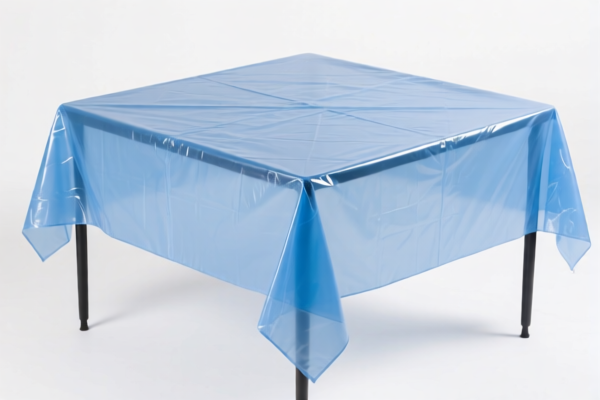
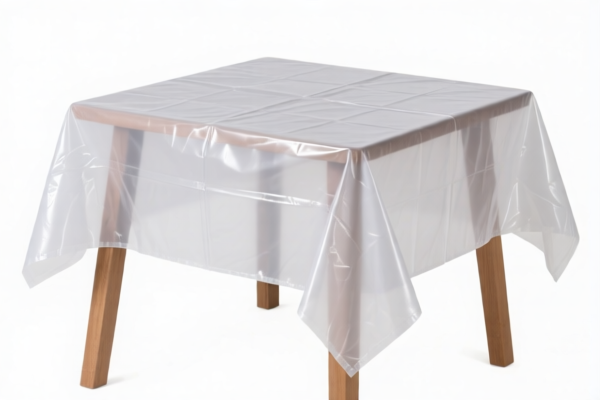
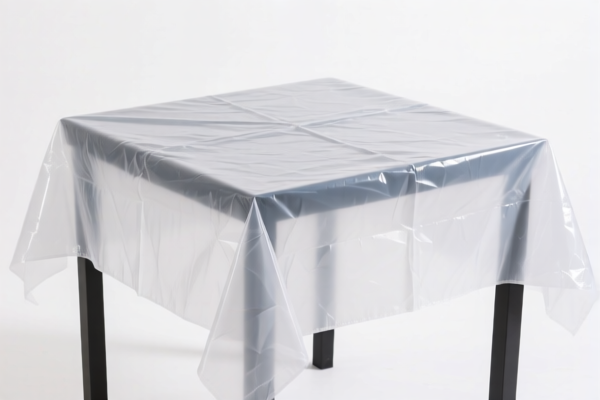
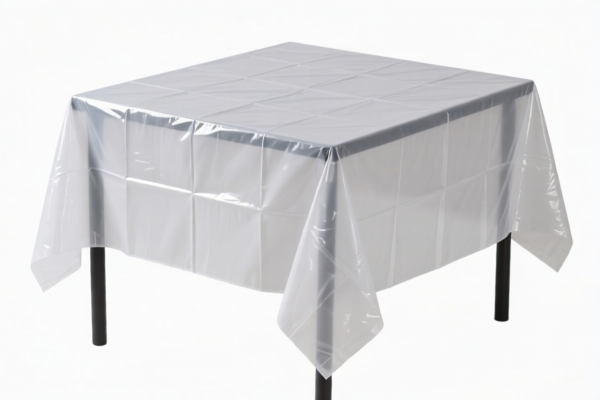
AI Analysis
🧵 Plastic Anti-Static Tablecloth (Polypropylene & PVC Variants)
🌐 HS Code Reference & Customs Clearance Guide | 2026 Latest Tariff Analysis | Professional Level Clearance Strategy 📌 I. Product Definition & Classification: Do You Really Understand "Plastic Tablecloths"?
Plastic tablecloths are ubiquitous in commercial catering, industrial packaging, and household use. In international trade, their classification hinges strictly on material composition and physical form.
1. Pure Plastic Sheets/Films (Homogeneous) If the tablecloth is made entirely of plastic (e.g., Polypropylene, Polyethylene) without textile backing: * It is classified as a plastic sheet, film, or strip. * Key Category: Chapter 39 (Plastics and Articles Thereof).
2. Plastic-Coated Textiles (Heterogeneous) If the tablecloth is a fabric (textile) that has been impregnated, coated, covered, or laminated with plastic (e.g., PVC-coated polyester): * It is classified as a textile fabric coated with plastic. * Key Category: Chapter 59 (Impregnated, Coated, Covered or Laminated Textile Fabrics).
⚠️ Critical Distinction Point:
- If the base material is 100% plastic (no woven/knitted fabric base) → Chapter 39.
- If the base material is fabric with a plastic layer (PVC/PP coating) → Chapter 59.
- "Anti-static" is a functional property, not a material definition. It does not change the HS Code but may trigger specific inspection requirements.
📦 II. HS Code Classification Details (2026 Latest Tariff Authority Comparison)
Based on the provided data, here are the four most likely HS Codes for Plastic Anti-Static Tablecloths, categorized by material structure.
| HS Code | Product Description | Applicable Scenario | Material Structure |
|---|---|---|---|
3920.20.00.55 |
Plastic tablecloth, Polypropylene (PP) sheet/film | 100% PP plastic sheet, non-woven or woven plastic film | ✅ 100% Plastic (PP) |
5903.10.20.10 |
Plastic tablecloth, PVC-coated textile | Fabric base (e.g., polyester) with PVC coating/lamination | ✅ Textile + PVC Coating |
3920.10.00.00 |
Plastic tablecloth, Ethylene Polymer (PE) sheet/film | 100% PE plastic sheet/film/strip | ✅ 100% Plastic (PE) |
5903.10.20.90 |
Plastic tablecloth, Other Plastic-Coated Textiles | Fabric base with other plastic coatings (not PVC specific) | ✅ Textile + Other Plastic |
3921.19.00.90 |
Anti-static Plastic Sheet (Note: Misclassification Risk) | Sometimes incorrectly declared as "Anti-static plate" | ⚠️ High Risk of Error |
🔍 Key Insight:
-3920Series: For pure plastic films/sheets (PP, PE, etc.). These are considered "plastics and articles thereof." -5903Series: For textile fabrics coated with plastics (primarily PVC). These are considered "textiles." -3921.19.00.90: This code is for "Other plates, sheets, film, foil, and strip." It is often a "catch-all" but can lead to disputes if the anti-static nature isn't properly documented. The provided data notes this as a potential "bottom logic" classification for anti-static plastic plates.
💰 III. 2026 Latest Tariff Rate Breakdown (Including Additional Taxes & Policy Surcharges)
✅ Applicable Country: United States (US)
✅ Country of Origin: China (CN)
✅ Effective Time: November 10, 2025 onwards (including subsequent imports)
🎯 1. 3920.20.00.55 & 3920.10.00.00 — Pure Plastic Tablecloths (PP/PE)
| Item | Detail |
|---|---|
| Basic Tariff | 4.2% (ad valorem) |
| Section 301 Surcharge | +25.0% (USITC Footnote 9903.88.01) |
| IEEPA Surcharge (122 Clause) | +10.0% (Targeting specific Chinese imports) |
| Total Tariff Rate | 39.2% |
| Tax Calculation | CIF Value × 39.2% |
| De Minimis Exemption | ❌ Not Eligible (deny_de_minimis) |
| Legal Basis Path | IEEPA:9903.01.25 → USITC:3920.xx.xx.xx → FOOTNOTE:9903.88.01 |
📌 Explanation:
- The 4.2% is the standard Most Favored Nation (MFN) rate for plastic sheets. - The 25% is the standard Section 301 tariff on Chinese plastic goods. - The 10% is the additional "122 Clause" tariff, bringing the total to 39.2%. - Impact: This is a high-cost entry. Margin compression is inevitable unless pricing is adjusted.
🎯 2. 5903.10.20.10 & 5903.10.20.90 — PVC-Coated Textile Tablecloths
| Item | Detail |
|---|---|
| Basic Tariff | 0.0% |
| Section 301 Surcharge | +25.0% |
| IEEPA Surcharge (122 Clause) | +10.0% |
| Total Tariff Rate | 35.0% |
| Tax Calculation | CIF Value × 35.0% |
| De Minimis Exemption | ❌ Not Eligible (deny_de_minimis) |
| Legal Basis Path | IEEPA:9903.01.25 → USITC:5903.10.20.xx → FOOTNOTE:9903.88.01 |
📌 Explanation:
- Textile coatings often have a lower basic tariff (0%) compared to pure plastics. - However, the 25% + 10% surcharges still apply heavily. - Savings: Compared to pure plastic (3920), this classification saves 4.2% in basic duties, resulting in a 35.0% total rate vs. 39.2%.
🎯 3. 3921.19.00.90 — Anti-Static Plastic Sheet (General/Other)
| Item | Detail |
|---|---|
| Basic Tariff | 6.5% |
| Section 301 Surcharge | +25.0% |
| IEEPA Surcharge (122 Clause) | +10.0% |
| Total Tariff Rate | 41.5% |
| Tax Calculation | CIF Value × 41.5% |
| De Minimis Exemption | ❌ Not Eligible |
| Legal Basis Path | IEEPA:9903.01.25 → USITC:3921.19.00.90 |
📌 Warning:
- This is the highest tariff among the options. - It is often used as a "catch-all" or misclassification for anti-static products. - Recommendation: Avoid this code if3920(pure plastic) or5903(coated textile) accurately describes the product. It is a last-resort classification.
🛠️ IV. Customs Clearance Practical Advice (Battle-Tested Pitfall Avoidance)
✅ 1. Preparation Checklist (Essential Documents)
| Document | Required | Explanation |
|---|---|---|
| ✅ Product Specification Sheet | ✔️ | Must specify: Material (PP, PE, PVC), Coating Thickness, Anti-Static Properties (e.g., surface resistivity). |
| ✅ Material Composition Statement | ✔️ | Crucial: Declare if it is 100% plastic or textile with plastic coating. This determines Chapter 39 vs. Chapter 59. |
| ✅ Product Photos | ✔️ | Clear images showing texture, packaging, and any labels indicating "Anti-Static." |
| ✅ Commercial Invoice | ✔️ | Must match the HS Code description exactly. Avoid vague terms like "Tablecloth"; use "Polypropylene Anti-Static Tablecloth." |
| ✅ Packing List | ✔️ | Include weight and dimensions for volume calculation. |
| ✅ Third-Party Test Report | ✔️ | If claiming "Anti-Static," provide test reports (e.g., ASTM D257) to prove functionality, which may help in classification disputes. |
✅ 2. Declaration Tips (Key Mantras)
🔥 "Material Defines Code, Coating Defines Chapter, Anti-Static is Just a Feature!"
| Scenario | Correct Declaration | Wrong Declaration |
|---|---|---|
| 100% PP Film Tablecloth | 3920.20.00.55Description: "Polypropylene Anti-Static Tablecloth, Film Form" |
"Anti-Static Sheet" (Vague) |
| PVC-Coated Fabric Tablecloth | 5903.10.20.10Description: "PVC-Coated Polyester Anti-Static Tablecloth" |
"Plastic Tablecloth" (Ambiguous) |
| PE Film Tablecloth | 3920.10.00.00Description: "Polyethylene Anti-Static Tablecloth, Sheet Form" |
"Plastic Wrap" (Misleading) |
| Unclear/Mixed Material | 3921.19.00.90 (With high risk) |
Do not guess; seek pre-ruling. |
✅ 3. Special Considerations for "Anti-Static" Products
| Issue | Handling Advice |
|---|---|
| Functionality vs. Material | Anti-static treatment is a functional add-on. It does not change the base material classification. Focus on PP/PE/PVC. |
| Customs Inspection | High-tariff goods (39.2% - 41.5%) are subject to rigorous inspection. Ensure samples match declared specs. |
| Misclassification Risk | Do not use 3921.19.00.90 (41.5%) if 3920 (39.2%) or 5903 (35.0%) applies. Incorrect classification can lead to penalties and back-taxes. |
| Pre-Ruling Recommendation | For large shipments, apply for an Advance Ruling with the CBP, providing material samples and technical sheets. |
🌍 V. Global Market Customs Comparison (2026 Latest)
| Country/Region | Recommended HS Code | Estimated Tariff (China Origin) | Key Certification | Notes |
|---|---|---|---|---|
| 🇺🇸 USA | 3920 or 5903 |
39.2% or 35.0% | FDA (if food contact) | High tariffs due to 301 + 122 Clause. |
| 🇨🇳 China | 3920 or 5903 |
4.2% or 0.0% | CCC (if applicable) | No Section 301 surcharge. |
| 🇪🇺 EU | 3920 or 5903 |
4.0% or 3.5% | REACH + RoHS | No additional punitive tariffs. |
| 🇬🇧 UK | 3920 or 5903 |
4.0% or 3.5% | UKCA + RoHS | Post-Brexit tariffs align closely with EU. |
| 🇦🇺 Australia | 3920 or 5903 |
5.0% | RCM | No special punitive tariffs. |
📌 Conclusion:
- The USA is the most challenging market for plastic tablecloths from China due to the 39.2% / 35.0% effective tariff rate. - Europe/Asia/Australia remain significantly more cost-effective. - Consider supply chain diversification (e.g., sourcing from Vietnam or Thailand) if shipping to the US to mitigate tariff impact, subject to origin rules.
📌 VI. Common Errors & Pitfall Avoidance (Lessons Learned)
❌ Error 1: Declaring a PVC-coated fabric as 100% Plastic (3920)
👉 Consequence: Customs may reclassify to 5903 (35.0%) or impose penalties for misdeclaration. If declared as 3920 but actually 5903, the tax difference is small, but the legal risk is high.
❌ Error 2: Using 3921.19.00.90 (41.5%) when 3920 (39.2%) is applicable
👉 Consequence: Overpaying 2.3% in duties unnecessarily. Always choose the most specific code.
❌ Error 3: Ignoring the 122 Clause (10%) in cost calculations
👉 Consequence: Profit margins are wiped out if only the 25% Section 301 is considered. Total tax is 39.2% or 35.0%.
❌ Error 4: Vague Description: "Tablecloth"
👉 Consequence: Customs may classify it as the highest possible rate or demand extensive documentation.
✅ Correct Description: "Anti-Static Tablecloth, 100% Polypropylene Film, Transparent, Roll Form, for Industrial Use"
🎯 VII. Conclusion: Precision in Classification Saves Money!
🎯 Remember the Mantra:
🔹 "Pure Plastic goes to 3920 (39.2%), Coated Fabric goes to 5903 (35.0%), Avoid 3921 (41.5%) unless necessary!"
🔹 "Anti-Static is a feature, not a material. Declare the base material accurately."
🔹 "39.2% vs 35.0%: Every cent counts in low-margin goods!"
📌 Pro Tip:
If your tablecloth is exported to the US, ensure you have test reports proving the material composition. If it is PVC-coated textile, declare it under 5903.10.20.10 to save 4.2% in basic duties compared to pure plastic sheets.
📣 Immediate Action Required:
📞 Contact your customs broker with product photos and material specs.
🚀 Apply for a CBP Advance Ruling if shipping large volumes to the US to secure the correct HS Code and avoid audits.
💼 Your profit margin depends on accurate classification!
Customer Reviews
About HS Code Classification
The Harmonized System (HS) is an internationally standardized nomenclature developed by the World Customs Organization (WCO) to classify traded products. Over 200 countries use the HS system as the basis for customs tariffs, trade statistics, and import/export regulations.
Each HS code follows a hierarchical structure:
- Chapter (2 digits) — Broad category of goods (e.g., Chapter 84: Machinery and Mechanical Appliances)
- Heading (4 digits) — More specific grouping within the chapter
- Subheading (6 digits) — Internationally standardized breakdown, used by all WCO member countries
- National subdivisions (8-10 digits) — Country-specific extensions for further classification, such as US HTSUS 10-digit codes
Correct HS code classification is essential for smooth customs clearance, accurate duty payment, and compliance with trade regulations. Misclassification can lead to customs delays, overpayment of duties, or penalties.
When importing from CN to US, the applicable tariff rates may include:
- Most-Favored-Nation (MFN) rate — The standard duty rate applied to WTO members
- General rate — Applied to countries without trade agreements
- Trade remedy duties — Additional tariffs such as Section 301 (anti-dumping), Section 232 (national security), or countervailing duties
The information provided on this page is for reference purposes only. For official classification, please consult with your local customs authority or a licensed customs broker.